
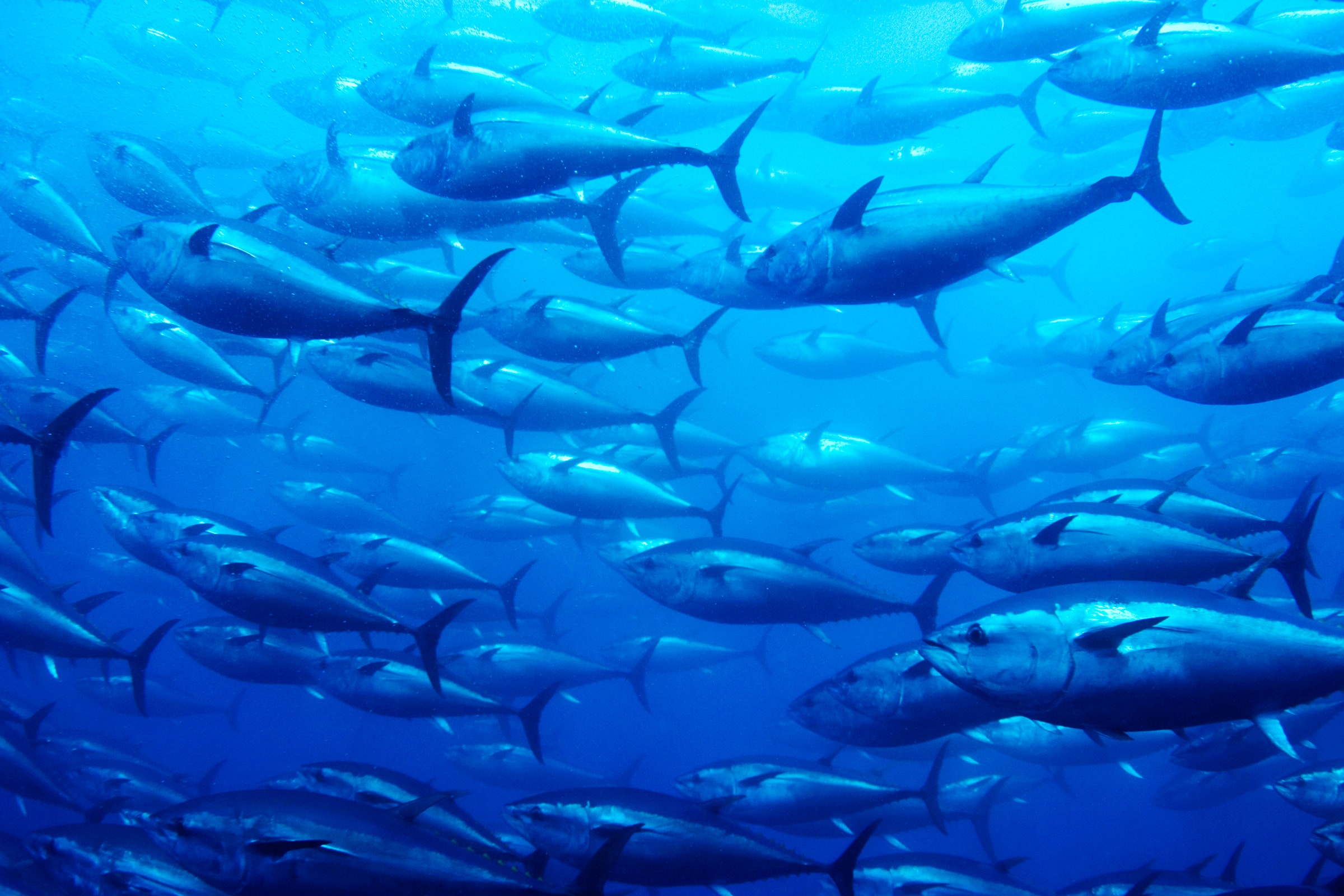
Scientists have discovered that leaving big fish in the sea can lower the amount of carbon dioxide (CO2) released into the atmosphere.
How does leaving big fish in the ocean help reduce CO2? When a fish dies in the sea, it sinks to the bottom, sequestrating all the carbon it contains with it to the grave. This natural process is a form of ‘blue carbon’—carbon captured and stored by the oceans and coastal ecosystems worldwide.
Gaël Mariani, the study’s lead author, said:
When a fish is caught, the carbon it contains is partly emitted into the atmosphere as CO2 a few days or weeks after.

Mariani conducted a world-first study revealing how ocean fisheries have emitted at least 730 million metric tons of CO2 into Earth’s atmosphere since 1950. In 2014 alone, approximately 20.4 metric tons of CO2 were released, comparable to the annual emissions of 4.5 million vehicles.
According to co-author Professor David Mouillot, fisheries’ carbon footprint is 25% higher than previous industry approximations. “Fishing boats produce greenhouse gases by consuming fuel. And now we know that extracting fish releases additional CO2 that would otherwise remain captive in the ocean,” added Prof. Mouillot.
Larger fish, such as sharks, mackerel, tuna, and swordfish, are around 10 to 15% carbon.

Prof Mouillot explained:
When these fish die, they sink rapidly. As a result, most of the carbon they contain is sequestered at the bottom of the sea for thousands or even millions of years. They are therefore carbon sinks—the size of which has never been estimated before.
Unfortunately, this phenomenon— known as a blue carbon pump—is gradually and significantly threatened by industrial fishing.
Until now, this phenomenon has been overlooked and happens in regions where fishing isn’t economically profitable, including the North Indian Ocean, South Atlantic, and Central Pacific. “Fishing boats sometimes go to very remote areas—with enormous fuel consumption—even though the fish caught in these areas are not profitable and fishing is only viable thanks to subsidies,” added Mariani.
The study’s findings strongly suggest the urgent need for more reasoned fishing. “We need to fish better,” urged Prof. Mouillot.
Mariani said:
The annihilation of the blue carbon pump represented by large fish suggests new protection and management measures must be put in place so that more large fish can remain a carbon sink and no longer become an additional CO2 source. And in doing so, we further reduce CO2 emissions by burning less fuel.
The study was published on October 28 in Science Advances.


