
Plants are incredibly communicative, but their signals are often subtle before they become catastrophic. If you can identify the early signs of nutrient problems before plants start dying, you can steer your garden back to health with precision and ease. It’s about moving away from guesswork and toward science-backed, nature-conscious approaches to plant health.
TL;DR: Decoding Early Plant Distress Signals
| Visual Signal | Potential Deficiency | Location on Plant |
|---|---|---|
| Interveinal Yellowing | Magnesium or Iron | Old growth (Mg) / New growth (Fe) |
| Purple/Darkened Stems | Phosphorus | Stems and underside of leaves |
| Pale Green Overall | Nitrogen | Starting with the oldest leaves |
| Brown, “Burnt” Edges | Potassium (or Overfeed) | Outer margins of fan leaves |
| Twisted/Deformed Tips | Calcium | Emerging new growth |
The Language of Plants (Why Timing is Everything)
The difference between a record-breaking harvest and a disappointing one often comes down to just a few days of observation.
When you recognize the early signs of nutrient problems before plants start to die, you catch a metabolic “hiccup” before it becomes a systemic failure.
Plants don’t just “get sick” overnight. They undergo a process of reallocation, moving nutrients from one part of their body to another to survive. Understanding this movement is the key to an accurate diagnosis.
1. The Subtle Shift in Leaf Pigmentation
The most common sign of nutrient problems before plants start dying is chlorosis, or the loss of green color. However, not all yellowing is created equal.
If you notice that the veins remain dark green while the spaces between them turn pale, you are seeing “interveinal chlorosis.”
This is a classic early warning of magnesium or iron issues. Catching this while the leaf is still supple allows you to adjust your nutrient solution before the tissue becomes necrotic and brittle.
2. Identifying “Mobile” vs. “Immobile” Nutrient Cues
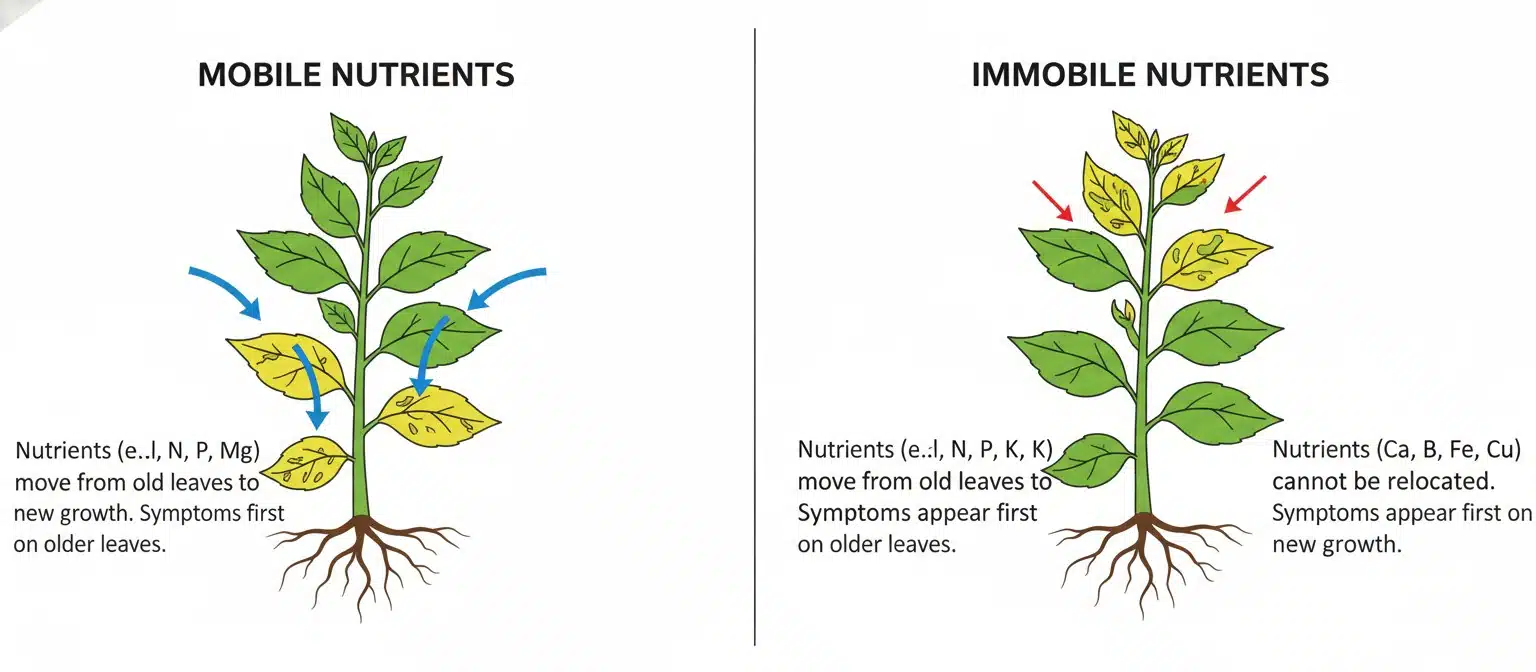
To truly master nutrient problems before plants start dying, you must understand nutrient mobility. Mobile nutrients (such as nitrogen, phosphorus, and magnesium) can be translocated by the plant from old leaves to new growth.
Therefore, if the bottom of your plant is yellowing while the top looks fine, the plant is “cannibalizing” itself to survive.
Conversely, immobile nutrients like calcium and boron cannot move. If your new leaves are coming out twisted or spotted while the old leaves look perfect, the plant is struggling to pull fresh minerals from the root zone. This distinction is vital for choosing the right corrective measure.
3. Texture and Surface Changes
Beyond color, the leaf’s texture provides deep insight into problems before plants start to die. Tiny brown spots that look like “rust” often indicate a calcium or manganese deficiency.
If the edges of the leaves feel dry and papery even though the plant is well-watered, it may be the start of a potassium deficiency.
A nature-focused approach to fixing these issues emphasizes checking the pH of your growing medium first. Instead of “bombing” the plant with more chemicals, consider that often the nutrients are present, but the plant is “locked out” because the environment is too acidic or alkaline.
4. Abnormal Growth Patterns and Tip Dieback
When plants start dying, it often begins at the very tip of the plant, such as the leaf. If you notice the growth tip of your plant looks “hooked” or stops growing entirely, this is a major red flag.
Often, these structural collapses are exacerbated by stagnant air or high temperatures, which can be managed with a professional grow tent climate control system for stabilization.
Because calcium and other immobile minerals rely on steady transpiration, a balanced climate ensures these building blocks reach the most active parts of the plant before the cells collapse.
5. The “Hidden” Signs in the Root Zone
Sometimes, the early signs of nutrient problems before plants start dying aren’t visible on the leaves at all. If you are growing in a system where you can inspect the roots, look for color changes there. Healthy roots should be bright white and “fuzzy.” If they begin to look tannish or slimy or to lack fine root hairs, the plant is likely suffering from a buildup of salts or an oxygen deficiency.
Restoring Balance and Plant Health
Once you’ve spotted the signs, intervention must be swift but measured. A three-step reset approach is often effective:
- Flush: Use pH-balanced water to clear the “slate” of the growing medium.
- Analyze: Use a calibrated meter to check the PPM (parts per million) of your runoff.
- Re-introduce: Start back with a diluted, high-quality nutrient solution that matches the plant’s current life stage.
Conclusion (Cultivating Resilience and Success)
Growing is a journey of constant learning. Recognizing the early signs of nutrient problems before plants start dying is what separates the beginner from the master grower.
Focusing on quality, durability, and performance in your gardening practices will help you succeed from coast to coast.
Don’t wait for the leaves to fall; listen to what they are telling you today. With the right observation and the support of science-backed horticultural solutions, your passion will continue to thrive, and your harvests will remain abundant.

Frequently Asked Questions
1. Why are the bottom leaves of my plant turning yellow?
This is often a sign of a mobile nutrient deficiency, typically nitrogen. The plant is moving its stored nitrogen from the old, bottom leaves to support new growth at the top.
2. Is purple stem growth always a sign of a problem?
Not always. Some genetics naturally produce purple stems. However, if the stems turn purple and growth is stunted, it is a common early sign of a phosphorus deficiency, especially at cooler temperatures.
3. How quickly should I see a change after fixing a nutrient problem?
In most cases, you will see the “spread” of symptoms stop within 3 to 5 days. New growth should appear healthy and green, though older, heavily damaged leaves may never fully recover their color.


