
Cooking with gas feels familiar. The blue flame flickers on, and dinner comes together, filling the kitchen with warmth and the scent of home. Yet every time that flame ignites, it triggers a quiet chemical shift in the air you breathe. This change doesn’t happen in a dramatic or cinematic way, but rather in a quiet, chemical shift.
Operating a gas stove means using a combustion appliance. When the fuel burns, it mixes with oxygen to release heat alongside invisible byproducts that linger in your kitchen. Two of the most important byproducts are carbon monoxide, often shortened to CO, and nitrogen dioxide, known as NO2. According to federal data on common indoor combustion pollutants, these gases are common indoor air contaminants when fuel is burned inside the home.
Across countless kitchens, the shift in air quality is subtle. A parent cooking pasta on a rainy evening may not notice anything unusual. A renter in a small apartment might simply crack a window and assume that is enough. However, ventilation through open windows often fails to clear concentrated chemical plumes once the house is sealed again while the invisible plume keeps mixing into the room. Hours later, the air in a bedroom down the hall can still contain elevated levels, reflecting the way nitrogen dioxide persists in unventilated spaces after the cooking is done.
This guide explains what CO and NO2 actually are, why ventilation is the most powerful lever most households have, and how to build a simple plan that reduces risk tonight, this weekend, and over the long term.
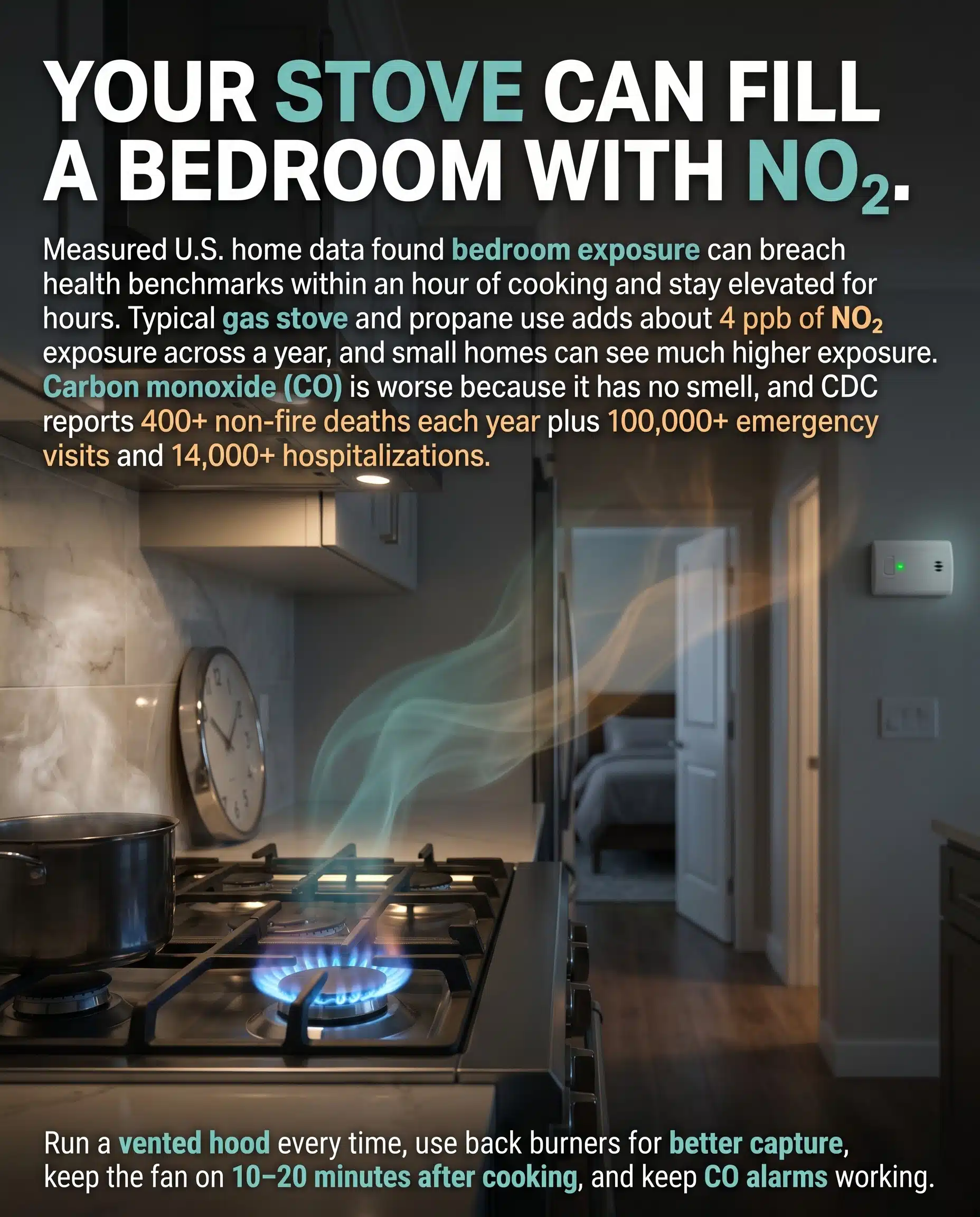
Carbon Monoxide and Nitrogen Dioxide: Understanding Indoor Air Risks
These pollutants behave differently in the body. Understanding that clinical difference clears away much of the confusion around gas stove safety.
Carbon Monoxide Hazards: Detecting the Odorless Risk
Carbon monoxide is dangerous because the human body cannot detect it by smell, taste, or sight. The Centers for Disease Control and Prevention explains in its clinical assessment of CO poisoning that CO interferes with the blood’s ability to carry oxygen. The first signs of exposure often mirror a mild bug: you might feel a headache, sudden dizziness, or a wave of nausea. Mistaking these signs for common fatigue or minor bugs makes carbon monoxide exposure uniquely dangerous.
On a winter evening, the oven might run for an extended period while baking. The kitchen feels warm and normal. If a malfunction or poor ventilation allows CO to build up, the first clue might be a sudden wave of dizziness that is easy to dismiss as fatigue.
Installing a working carbon monoxide alarm is a mandatory safety step. Such sensors serve as baseline safety devices in any home using combustion appliances. In homes that also have a gas furnace or water heater, a multi-gas safety detector adds another layer of detection for multiple fuel-related risks.
Outdoor standards for CO exist under the EPA’s National Ambient Air Quality Standards program, but indoor levels are not regulated in the same way. That distinction matters. Indoor safety relies on prevention and detection rather than enforcement thresholds.
Nitrogen Dioxide Risks: Lung Irritation and Asthma Symptoms
Nitrogen dioxide forms when natural gas burns at high temperatures. Unlike carbon monoxide, experts usually connect nitrogen dioxide standards to lung irritation and long-term breathing patterns. Evaluating short spikes and long-term exposure levels helps researchers track health outcomes like increased asthma symptoms, especially in children.
Recent data highlights why we should be mindful of how air travels through our homes. In one study measuring more than 100 U.S. homes, the gas and propane stove nitrogen dioxide measurements revealed some startling patterns:
- Cooking often pushes indoor NO2 into ranges used by public health experts to signal high risk.
- These pollutants frequently drift beyond the kitchen when airflow is limited.
Research confirms that even standard cooking sessions can impact your total air quality. For a family with a child who already struggles with wheezing during allergy season, that information shifts the question from “Is gas cooking allowed?” to “How can cooking habits reduce unnecessary exposure?”

Kitchen Air Quality Chemistry: Gas Stove Pollution Facts
Gas Stove Indoor Air Quick Facts: CO, NO2, and Ventilation Basics
Quick facts help when someone asks, “Is it safe to use a gas stove without a vent hood?” Such facts provide clarity when a kitchen feels normal, yet a mild headache or scratchy throat shows up later and gets blamed on stress or dry weather. This summary provides a fast reality check on kitchen pollution before diving into ventilation details.
- Gas stoves are combustion appliances that release CO and NO2 during standard cooking.
- Carbon monoxide can build up quickly in malfunctioning or poorly ventilated conditions; understanding how CO concentrates indoors helps explain why active detection is vital.
- Alarms work best when placed correctly; effective CO detector locations usually include areas that keep sleeping quarters covered.
- Nitrogen dioxide levels can spike during cooking and drift past the kitchen doorway, as a peer-reviewed stove NO2 exposure study describes.
- Venting cooking air to the outdoors is one of the most direct ways to lower combustion byproducts in the room.
- Recirculating range hoods are not equivalent to ducted hoods that exhaust outside, so performance depends on capture, airflow, and how consistently the fan runs.
- When outdoor air is smoky, pollen-heavy, or traffic-stale, smart HVAC controls that track indoor air can help time ventilation instead of guessing.
Taken together, these points boil down to one idea: flame creates byproducts, and airflow decides whether they stay indoors. The goal is not perfection. It is cutting the biggest peaks in exposure during the minutes when cooking emissions are highest. The next section explains the simple physics behind that, so the steps feel practical in apartments, condos, and houses.
The Physics of Kitchen Air Mixing
Effective gas cooking requires more than just heat; it depends on how air flows, mixes, and dilutes within your home.
Thermal Plumes: How Cooking Pollution Spreads
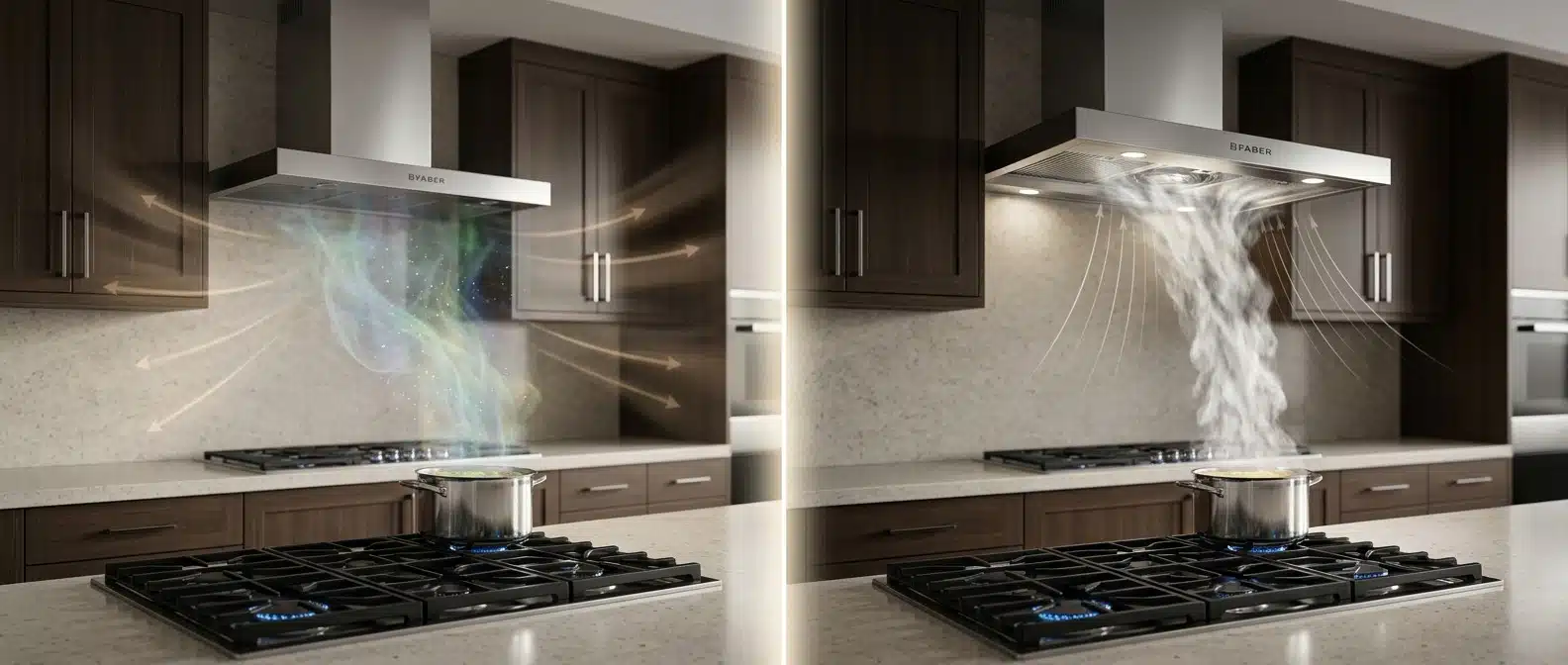
When a burner ignites, a plume of heated air carries combustion gases toward your ceiling. Without a steady exhaust path, this concentrated pollution spreads through your kitchen in seconds.
Capture and Dilution: Reducing Exposure to Exhaust
If a range hood pulls the plume into a duct and exhausts it outside, much of the pollution leaves the home. If airflow is weak or absent, the plume spreads outward, mixing with room air.
Steam from a pot is a good stand-in for what is happening. Without a fan, it drifts across cabinets and ceilings. With a strong exhaust fan, it is pulled upward and out, and range hood timing and burner placement tips show how small habits can improve capture without changing what ends up on the plate. The same physical principle applies to nitrogen dioxide and carbon monoxide.
Detecting Invisible Gases Without Sensors
In a compact apartment kitchen with closed windows, the plume can drift into a hallway within minutes. Later, someone settling into a bedroom might notice a faint lingering cooking odor. While that scent proves air is moving, your nose won’t catch carbon monoxide or nitrogen dioxide. Maintaining consistent ventilation remains a safety requirement, not a lifestyle preference.
In plain terms, federal guidance on improving indoor air quality while cooking emphasizes increasing ventilation and exhausting air outdoors. That recommendation is grounded in the physics of capture and dilution rather than in political debate.

Range Hood Performance: Why Proper Ventilation Matters
Simply having a range hood above your stove isn’t enough to keep your air clean. True protection depends on how well the system captures the rising plume and where that air goes.
Ducted vs. Recirculating Range Hoods: What Removes Gas?
A ducted hood connects to an exterior vent and expels air outside the home. A recirculating hood helps trap grease and odors, but it won’t stop nitrogen dioxide. Most standard filters are built to catch particles, leaving invisible combustion gases behind. The EPA’s indoor air resources consistently prioritize exhausting to the outdoors for combustion sources because that approach removes gases from the indoor environment.
A technical analysis of gas stove airflow explains how air moves through different systems. It shows that hood shape and ducting often matter more than the numbers on a spec sheet.
In a rental kitchen, a recirculating hood might run every night during a quick sauté. The kitchen may look clear, but without an exterior duct, the nitrogen dioxide remains in the indoor air volume. Over time, that pattern adds up.
Understanding Range Hood Capture Efficiency
Capture efficiency refers to how much of the pollution plume a hood actually draws in. ASHRAE has described standardized ways to measure capture performance, highlighting that hood design, airflow rate, and burner placement all matter.
Try using your back burners instead of the front ones. The hood can catch the rising plume more easily when the flame is centered underneath it. Running the fan at a sufficient speed and turning it on before ignition can also increase effectiveness.
A household that installed a sleek stainless hood years ago may assume it is high-performing. Yet if the duct is partially blocked or the fan is rarely used, the system’s real-world capture efficiency may be far lower than expected.
HVI Ratings and Verified Airflow Performance
The HVI range hood brochure highlights how installation affects performance. Factors like duct width, the number of bends, and total length change how efficiently contaminants leave your home. Products listed in the Home Ventilating Institute certified directory provide verified airflow ratings and sound levels. While testing labels aren’t a guarantee of perfection, they provide a reliable way to choose a hood that actually protects your family.
Sound level matters too. If a hood is excessively loud, people are less likely to use it consistently. A lower fan setting used every night can be more protective than a powerful fan that stays off. A slightly quieter, well-ducted hood that runs during every cooking session may outperform a powerful but rarely used fan.
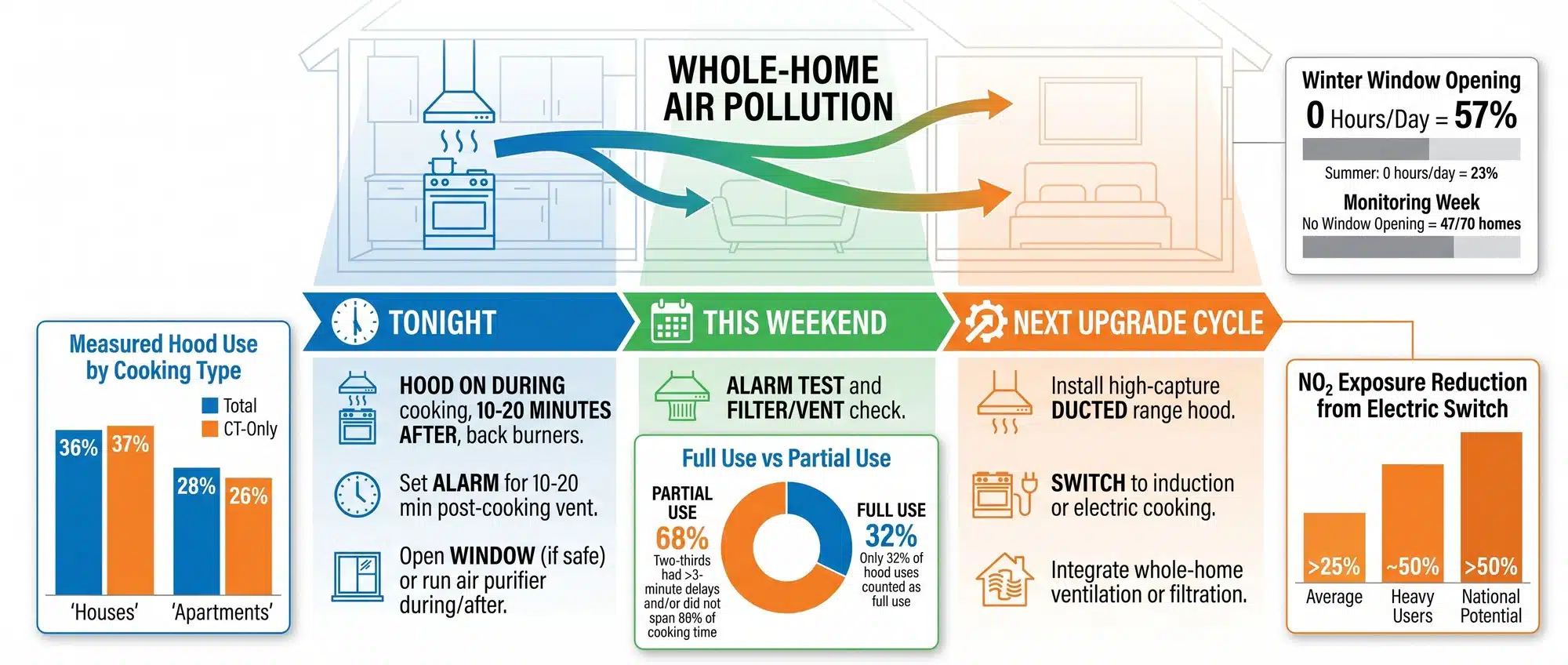
Whole-Home Air Pollution: A 72-Hour Plan for Cleaner Air
Cross-Room Contamination and Air Movement
Why Cooking Pollution Travels Beyond the Stove
Recent indoor air research confirms that kitchen pollution travels quickly through the entire house. Warm air rises and drifts through natural leaks and HVAC pathways, mixing with the air in your living spaces and bedrooms.
Measuring Nitrogen Dioxide Levels in Bedrooms
In a Stanford analysis, NO2 persistence data shows that cooking emissions frequently show up in bedrooms far from the stove, especially when airflow is limited. In smaller homes or apartments, air mixes more quickly, meaning cooking emissions may influence the entire living space, even behind a closed door.
While these findings aren’t a cause for panic, they prove that ventilation choices in one room influence air quality everywhere. As morning arrives, no visible trace of cooking remains. In a studio apartment where the bed sits just beyond a partial wall from the kitchenette, a late-night stir-fry can feel harmless because nothing looks smoky.
If someone in the home has asthma, migraines, or a baby who naps in a back room, that whole-home reality makes the hood and airflow plan more than a kitchen preference.
Improving Your Air Quality: A Step-by-Step Plan
Practical advice is only useful when it changes how you cook tonight. A simple three-step plan can translate indoor air quality advice into a routine that works with real life, including noisy fans, tight kitchens, and days when outdoor air is not great.
Instant Improvements: Reducing Exposure Tonight
These simple changes help clear your kitchen air the moment you ignite the burner:
- Turn on the range hood every time you use a burner or the oven.
- Leave the fan running for several minutes after you finish cooking to clear residual gases.
- Use back burners whenever possible to improve the hood’s capture efficiency.
- Crack a nearby window slightly to increase air exchange if the outdoor air is clear.
Drawing the plume away while it’s still concentrated helps shave down the peak exposure window for your family.
Federal air quality advice and state-level ventilation guidelines both emphasize this principle: removing contaminants at the source protects the entire household.
Weekend Safety Audit: Testing Alarms and Filters
- Verify your smoke and carbon monoxide alarm coverage in your home, replace batteries if needed, and follow recommended sensor replacement dates so expired components do not quietly lose reliability.
- Confirm whether the hood vents outdoors or recirculates. If unsure, check for an exterior vent cap or consult building management.
- Clean grease filters to maintain airflow.
A small investment of time can transform a decorative appliance into a functional protective system. It also helps to check that the exterior vent is not blocked by lint, nesting debris, or a stuck damper, because a hood cannot exhaust what it cannot move.
Future Upgrades: Ducted Ventilation and Induction Cooking
Long-term structural improvements can significantly lower your risk profile. If you are planning a renovation, consider these technical upgrades:
- Prioritize a ducted hood that exhausts pollutants directly to the outdoors.
- Transition to induction cooking; research on electrifying your kitchen shows it can drastically cut NO2 levels.
- Assess your electric home infrastructure to see what a switch to high-performance appliances requires.
- Examine individual room air quality fixes to help you identify effective changes without a major overhaul.
Electrification represents one option in a layered approach to home health. For renters, even a consistent hood routine and a verified CO alarm setup can deliver a meaningful reduction in risk without changing the stove.

Common Indoor Air Quality Mistakes and Gas Stove Safety Myths
Habits That Increase Your Indoor Air Pollution
Pollution spikes often stem from small defaults that feel reasonable in the moment, like silencing a loud fan. If the goal is lower CO and NO2 exposure, this list shows where everyday habits quietly work against that goal.
- Cooking without any ventilation because the hood is noisy.
- Assuming a recirculating hood removes combustion gases.
- Running the hood only during visible smoke rather than during all flame use.
- Ignoring expired or missing carbon monoxide alarms.
- Relying solely on portable air purifiers for gas removal, even though the federal overview of residential air cleaners explains why mechanical filtration is strongest for particles, not combustion gases.
- Your system’s pressure and airflow can change significantly if you install high-efficiency HVAC filters like MERV 11 or MERV 13 without checking total system compatibility first.
- Standard high-efficiency particulate filters are built for particle control and won’t remove nitrogen dioxide or carbon monoxide.
In many homes, these mistakes stem from misunderstanding rather than negligence. The fix is usually a small shift in routine, not an expensive renovation. Once the hood becomes as automatic as turning on a light, exposure drops during the moments that matter most.
Separating Fact from Fiction in the Gas Stove Debate
Public discussion around gas stoves has at times focused on the idea of a nationwide ban. In early 2023, the Consumer Product Safety Commission chair’s statement on gas stoves clarified there was no proceeding to ban gas stoves, while also acknowledging the importance of studying indoor air hazards.
That distinction matters. In the Government Accountability Office report on stove hazards and recalls, a federal review of appliance hazards and recalls shows how mechanical failures can turn routine cooking into a risk. The practical question for households is mechanical: how does air move, and how can exposure be reduced with available tools?
Separating long-term policy debates from tonight’s reality offers a more practical perspective on the headlines. Even if a home keeps a gas stove for years, ventilation, alarm reliability, and maintenance habits are still the levers that lower risk across income levels, apartment layouts, and family situations.
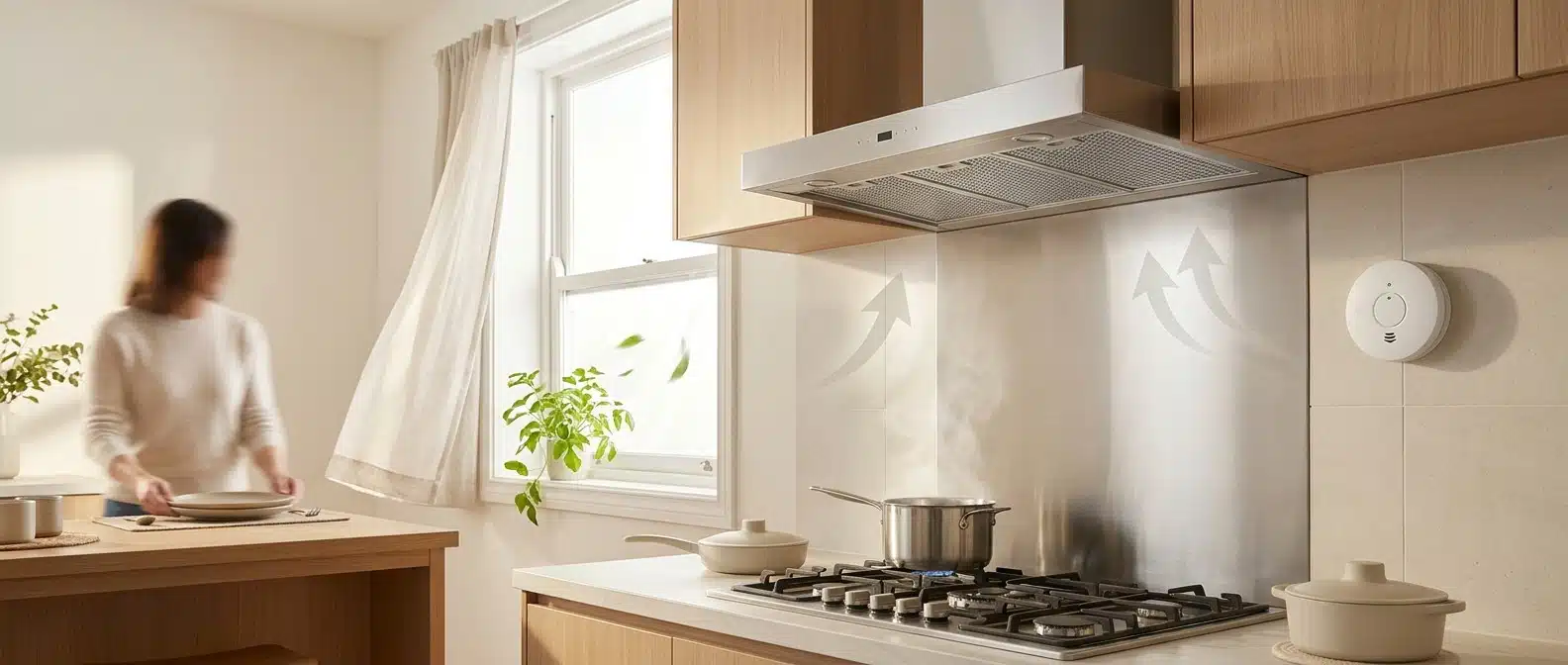
Protecting Your Family with Smarter Gas Stove Ventilation
Cleaner kitchen air starts when you turn a mechanical necessity into a daily safety habit. While the blue flame is a centerpiece of many homes, managing the invisible gases it produces—like nitrogen dioxide and carbon monoxide—ensures your kitchen remains a healthy place for everyone. By prioritizing a ducted range hood and staying consistent with airflow, you’re not just following a guide; you’re actively reducing respiratory irritants that could otherwise drift into bedrooms and living spaces.
Viewing your ventilation strategy as a layered defense helps maintain high indoor air quality. Whether you’re a renter cracking a window or a homeowner upgrading to an induction cooktop, every small shift in how air moves helps dilute pollutants. A kitchen is truly the heart of the home, and when you manage the air intentionally, the benefits for your family’s long-term wellness extend far beyond the final bite of a single meal.
Frequently Asked Questions About Kitchen Air Quality
Is it safe to use a gas stove without a vent hood?
Using a gas stove without a hood increases your exposure to indoor air contaminants. Health experts strongly recommend venting air outdoors during every cooking session to clear out nitrogen dioxide and carbon monoxide spikes.
Do recirculating range hoods remove nitrogen dioxide?
No, recirculating hoods typically use charcoal filters that trap odors and grease but do not remove combustion gases. To truly lower nitrogen dioxide levels, you need a ducted system that exhausts air to the outside.
Why do cooking smells and gases show up in other rooms?
Warm air from your stove rises and drifts through the house via natural airflow and HVAC pathways. Research shows that without proper exhaust, nitrogen dioxide can reach elevated levels in bedrooms far from the kitchen.
Do I need a carbon monoxide alarm for my gas stove?
Yes, a working carbon monoxide alarm is a baseline safety requirement. The federal CO poisoning prevention guide spells out the safety basics that keep small problems from turning dangerous.
Can a portable air purifier fix gas stove pollution?
Most portable air purifiers are designed for particles like dust or smoke, not gases. Technical data on smoke filtration also makes it clear why airflow and room volume matter when the goal is cleaner indoor air.


