
Gardens function as much more than simple decoration. Every sprout serves as the first note in a long ecological chord that reaches insects, birds, soil life, and the weather above your yard. A chickadee breeding study helps make that concrete: when neighborhoods favor nonnative ornamentals, the supply of insect food often craters, leaving nestlings hungry during their most critical growth window.
Detailed analysis below breaks down what eco-friendly garden plants are, why they work, and how to apply a simple fifteen-plant system that keeps blooms coming from early spring to late fall without turning your week into a garden maintenance marathon. That food-web logic is also why a home garden can become the cornerstone of sustainable living even when the only space is a narrow side yard, a townhouse strip by the sidewalk, or a few balcony containers.
Habitat sanctuaries require little more than intentional plant selection. Selecting pollinator-friendly flowers and region-fit natives builds a functional network that anchors monarch butterfly recovery while nourishing the entire local food web. A simple fifteen-plant bloom calendar keeps your yard thriving from early spring through the first frost without a heavy maintenance burden.
Choices ranging from sprawling suburban plots to compact balcony containers help cool urban streets, capture stormwater runoff, and restore vital links in neighborhood biodiversity. These home gardens anchor sustainable living by serving as ecological stepping stones.
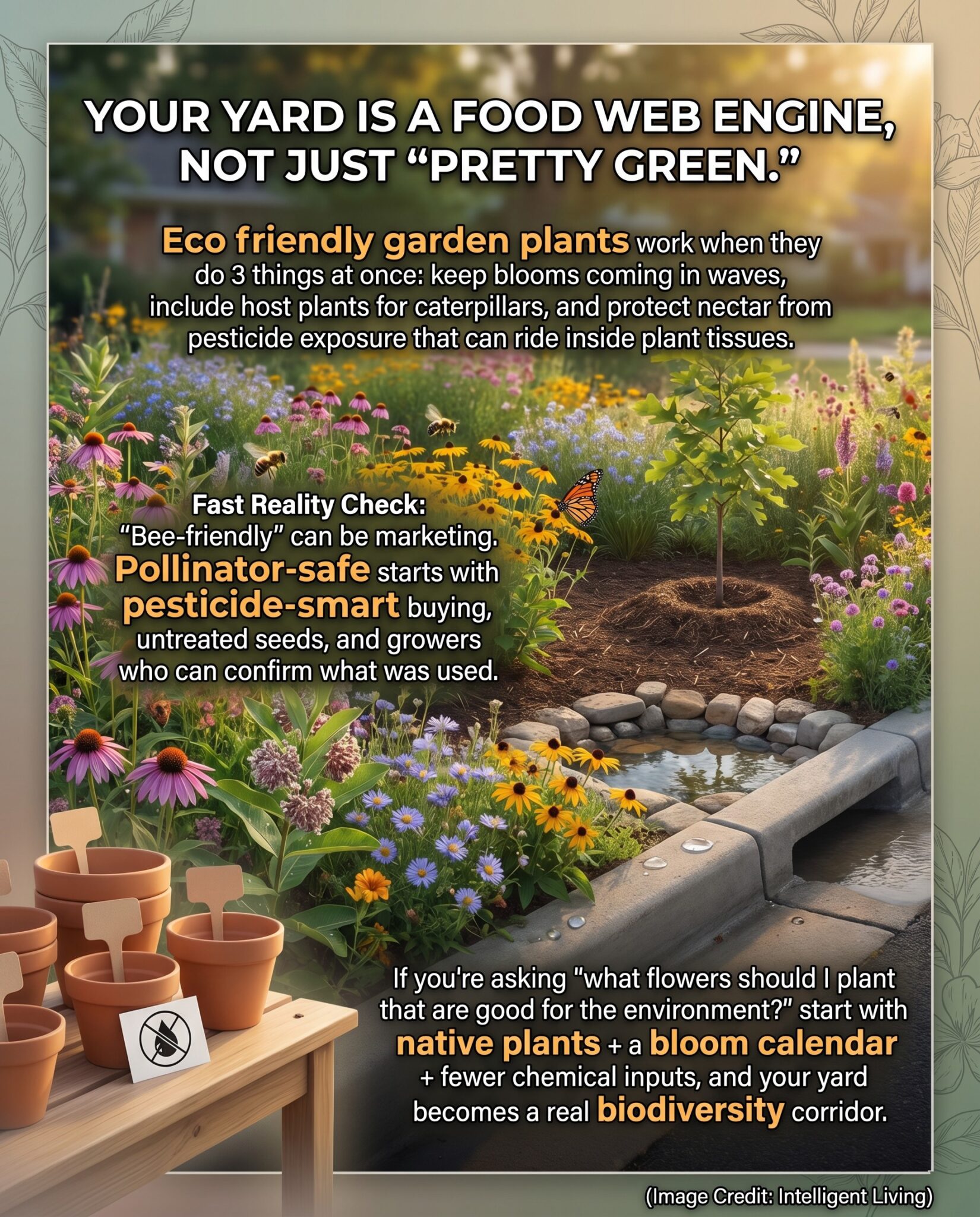
Essential Quick Facts: Building Your Sustainable Habitat Sanctuary
- Biodiversity Matters: Roughly 75% of wild plants and global food crops depend on animal pollination for survival. Evidence linking pollinator health to food security confirms that ecosystem resilience protects the global food supply.
- A Practical Minimum: A functional plan keeps blooms coming in waves. Maintaining a continuous succession of bee-visited blooms from early spring to hard frost supports a wider range of bees over the full season.
- Retail Reality: Pesticide residues can show up in nursery ornamentals. Shielding pollinators from chemical exposure helps translate risk into simple buying and timing decisions.
- High-Value Genera: The criteria for healthy urban habitats highlight genera such as milkweed, goldenrod, asters, and sedges as consistently useful building blocks for pollinator habitat.
- More than Flowers: Trees and vegetation help mitigate urban heat and runoff while improving neighborhood comfort during hot spells.
- Sustainable Yard Math: Immediate soil-building actions include applying a modest compost top-dressing, establishing permanent mulch rings, and retaining leaf litter in designated habitat areas. Using low-input landscaping techniques slashes chemical use, while mulch, deep roots, and improved drainage naturally reduce watering needs.

The Short List: Top Pollinator-Friendly Flower Choices for Starters
“What flowers should I plant that are good for the environment? “Why?” is a common question with a surprisingly simple answer rooted in ecology. Identifying outdoor plant choices that help the environment makes eco-friendly gardening easier when choices follow ecological rules.
- Pollinator-friendly flower choices for home gardens prioritize region-fit natives, a mix of bloom times, and at least a few host plants that feed caterpillars.
- Local-fit native plants enrich ecosystems because species belonging in a landscape require fewer chemical interventions and sustain a broader spectrum of local life.
- Starter strategies succeed by staying simple: pick a short list of high-value plants and place them where sun, moisture, and soil match what they evolved to handle.
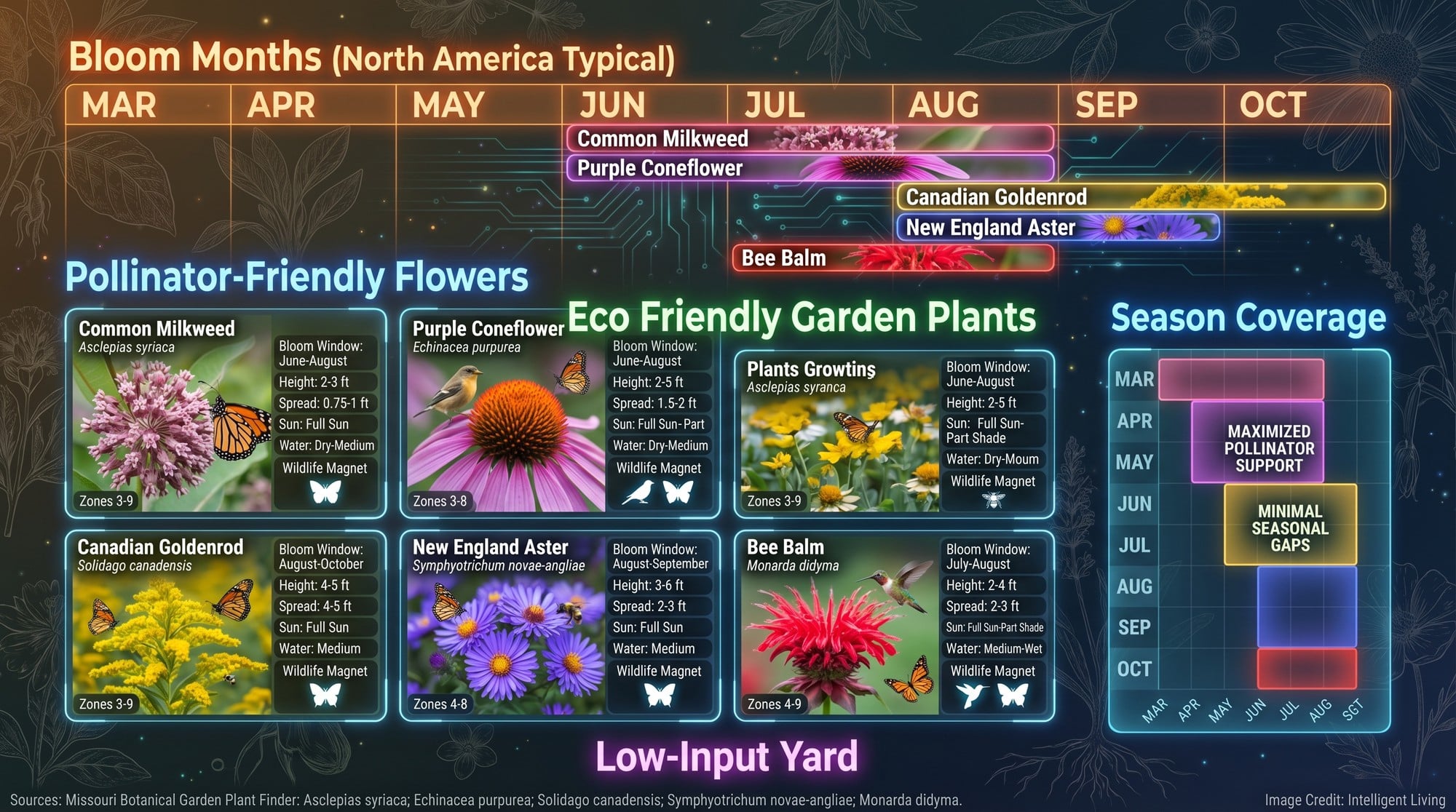
High-Value Native Wildflowers and Perennials for Season-Long Nectar
Milkweed (Asclepias): Host plant for monarch caterpillars; midseason bloom; excellent in sunny beds and pollinator borders. Evidence confirms that milkweed anchors monarch butterfly recovery in vanished habitat corridors. Clustering milkweed increases its impact; egg-laying monarchs locate these dense stands far more effectively than isolated, solitary plants.
Echinacea (Coneflower): Long bloom, drought tolerant, great for seed-eating birds later in the season; blooms mid- to late. Ideal growing conditions for coneflowers ensure long-term success when aligned with specific sun and soil profiles before you dig. Coneflowers provide a resilient, low-maintenance backbone for climate-resilient gardening, offering high-impact benefits without demanding a constant maintenance schedule.
Solidago (Goldenrod): Late-season nectar source that supports many native bees; ideal in larger sunny swaths or naturalized edges. Using goldenrod as a late-season pollinator fuel supports beneficial insects well beyond the bee population. Goldenrod also helps answer the fall version of “what eco friendly garden plants should I grow?” because it keeps nectar flowing when many beds go quiet.
Symphyotrichum (Asters): Late bloomers that keep pollinators fed into autumn and provide structure for overwintering insects. Referencing New England aster bloom timing ensures your front-yard planting looks intentional into October, not tired.
Monarda (Bee Balm): Midseason nectar magnet; attracts hummingbirds and bumblebees; suits garden beds and wildlife borders. Selecting bee balm as a rain-garden-friendly plant helps when soil swings between wet and dry extremes. Bee balm also makes the “plants that help the environment” question feel tangible, because you can often spot bumblebees working it within days of peak bloom.
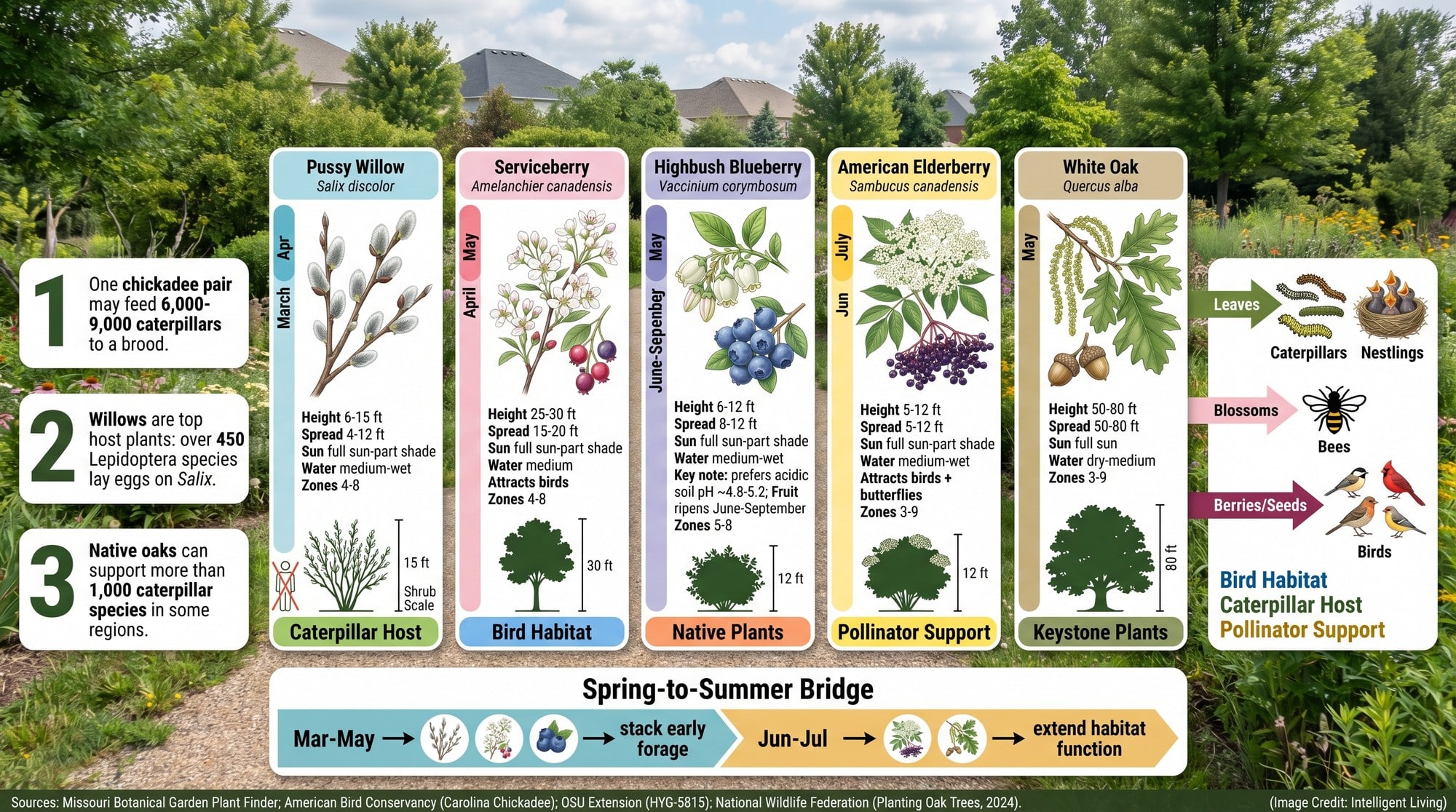
Keystone Shrubs and Trees Multiply Bird and Insect Habitat
Salix (Willow): Early pollen and nectar source for emerging spring bees; planting a willow near a wet area boosts early-season food availability. Observing how pussy willow catkins bloom before leaves highlights their value to early foragers needing food. Willow serves as a high-leverage choice for providing early-season forage before most perennials even break dormancy.
Quercus (Oak): While not a flower, oaks support a large range of caterpillars and are keystone trees for birds over generations. Understanding why sustaining bird populations with native foliage clarifies how native species host the insects many birds rely on to raise young. Even one oak in a neighborhood can become a long-term “insect pantry” that boosts food availability beyond the yard line.
Vaccinium (Blueberry): Spring flowers for pollinators, edible fruit for people and birds, and autumn color fit multi-use gardens. Identifying how blueberry flowers attract native bee pollinators helps support both home gardens and nearby habitat corridors. Blueberries are also a practical answer for families who want sustainable plants to grow with a clear food payoff.
Amelanchier (Serviceberry): Early white blossoms feed spring pollinators, and the summer berries pull in birds, which makes it a strong “one-plant, multiple benefits” shrub or small tree. Matching serviceberry bloom and fruit timing helps integrate it into street-facing yards.
Sambucus (American Elderberry): Flower clusters feed a range of insects, and the fruit can support birds and home food projects when conditions fit. Elderberry’s preference for riparian edges makes it a natural fit for rain-garden-adjacent areas and streamside properties.

Native Grasses and Sedges for Soil Health and Larval Support
Carex (Sedges): Underused habitat plants that stabilize soils, host larvae, and perform well in wet areas like rain garden edges. Using birdfoot sedge as a larval host contributes to pollinator gardens in ways that do not look flashy but still matter. Sedges also solve a common small-yard problem, because they can fill the “shady edge” without demanding constant watering.
Schizachyrium (Little Bluestem): A warm-season grass offering seed and structure for insects and birds; great for low-input prairie-style areas. Planting guides for clump-forming grasses ensure a durable species rather than a weekly-mowed patch. Little bluestem also holds winter structure, which is useful for people who want habitat value without a bare, muddy offseason.
Panicum virgatum (Switchgrass): A deep-rooted native grass that tolerates a range of conditions and adds erosion control and cover in mixed plantings. Switchgrass varieties for erosion control are useful when choosing a grass that handles summer heat while still supporting wildlife cover.
Sporobolus heterolepis (Prairie Dropseed): A dense clumping grass that stays tidy, tolerates drought once established, and works well in front-yard plantings that need a clean look. Noting prairie dropseed drought tolerance helps set expectations for the first season.
Elymus canadensis (Canada Wildrye): A cool-season native bunchgrass with fast establishment that can stabilize disturbed soils and add early-season structure. Establishing Canada wildrye in a timely manner stabilizes disturbed soil and provides immediate structure for new garden plans.

Compact Native Plant Picks for Container Gardens and Small Spaces
Compact natives like Viola for early-season host value, Penstemon for long blooms, and dwarf Salvia thrive on balconies and small yards. Maximizing biodiversity on urban balconies makes it easier to fit sun, wind protection, and watering routines into a small layout. Container planting also lets people test eco-friendly garden plants without committing to a full bed, which is useful when you are still learning what survives heat, shade, and afternoon wind.
Clumping native pots make a measurable difference at the neighborhood scale, especially when placed where pollinators can spot them from the street. Vertical systems like a four-square-foot garden tower add more growing surface without turning a balcony into a jungle.
Container Checklist for Pollinator-Friendly Plants
- Choose pots that are large enough to buffer heat and drying, especially on south-facing balconies.
- Prioritize drainage first, because soggy roots kill more container natives than drought.
- Group plants by water needs so watering is consistent and not guesswork.
- Include at least one early bloomer and one late bloomer so the balcony is not a seasonal dead zone.
- Avoid routine pesticide use, since container nectar and pollen can concentrate exposure.

Applying Your 15-Plant Bloom Calendar as a Native System
How to Execute the Fifteen-Plant Bloom Calendar for Continuous Success
Lists without timing become decorative impulses. Build your calendar by picking five species for each phase: early bloomers, midseason anchors, and late-fall nectar sources. This sequencing aligns with restoration standards for seasonal forage to keep forage available from spring through fall. Consistency remains the primary goal—pollinators thrive on reliable forage sequences rather than a brief, singular burst of early spring bloom.
How to Build Your Calendar
- Map sun exposure and soil moisture for your site on a single page. This prevents a common beginner failure where drought-tolerant plants end up in soggy corners and moisture-loving plants bake beside reflective pavement.
- Choose one early, one mid, and one late plant for each of five micro-areas so the fifteen plants are distributed across conditions. This spacing also helps if you are working with a rental yard where only a few areas are available.
- Note host versus nectar function next to each plant, and lean into plant diversity in the garden so the bed feeds more than one kind of insect. A simple mix of host and nectar plants is often the difference between a garden that looks alive and one that looks pretty but quiet.
A Simple Worksheet You Can Copy
- Sunny Bed:
- Early: {Viola}
- Mid: {Echinacea}
- Late: {Solidago}
- Dry Edge:
- Early: {Penstemon}
- Mid: {Monarda}
- Late: {Symphyotrichum}
- Moist Pocket or Rain Garden Edge:
- Early: {Salix}
- Mid: {Vaccinium}
- Late: {Carex}
Seed packets in your kitchen drawer can hold these calendars for months. By midsummer, even small planting patches spaced across a lawn start to feel like a corridor, with bees moving between islands of bloom instead of disappearing after the first flush.

Avoiding the ‘Bee-Friendly’ Trap: Pesticide-Smart Native Plant Buying
Assuming a pretty pollinator sticker guarantees plant safety is a common mistake; the reality of retail nursery stock is often far messier. Samples of retail plants sold with ‘pollinator-friendly’ stickers often reveal hidden residues of systemic insecticides. The Lentola retail plant residue study explains why a sticker is not the same thing as a safer nectar and pollen supply. Policy cues matter too, and restricting neonicotinoid use shows how some regions treat these chemicals as a special category of risk.
What Systemic Insecticides Mean for Habitat
Systemic insecticides saturate plant tissues, turning nectar and pollen into carriers for chemical residues. Xerces explains how neonicotinoids migrate internally even in visually healthy plants. For pollinators, that exposure can reduce foraging, learning, or survival depending on dose and mix, and mixtures can complicate risk in ways that are hard to see from a label.
A Shopper’s Decision Tree
- Opt for seeds or bare-root plants during your first season to ensure chemical purity.
- Question growers directly about systemic insecticide use before committing to a purchase.
- Shift to local native-plant nurseries if a vendor cannot confirm their treatment history.
- Begin with a single untreated patch to observe which variety of bees it attracts.
Neighborhood plant swaps prioritizing bare-root starts improve transparency and eliminate chemical unknowns. Forage quality also matters, as bee nutrition signals in pollen show that diverse, season-long plantings result in stronger, healthier colonies.

Eco-Friendly Yard Engineering: Managing Rainwater and Urban Heat
Plants as Infrastructure (Rain Gardens, Runoff, Shade, and Heat)
Healthy watersheds often look like gardens. In dense neighborhoods, Stockholm tree pits manage stormwater to show how planting design functions like infrastructure, not decoration. Plant choices affect how your property handles water and heat: deep-rooted natives and rain garden plantings slow and soak runoff, while trees and shrubs reduce local temperatures and energy demand. Even small yards can reduce runoff when plant roots and soil structure replace compacted turf.
Rain Gardens: What they Do and What to Plant
Rain gardens function as planted depressions that capture pavement runoff. These systems allow water to soak into the ground instead of overwhelming local storm drains. Proper placement for runoff capture covers practical details like safe placement and soil infiltration, while DIY rain garden design choices help home projects hold up in real storms. Maximize rain garden success by grouping plants by zone; place resilient, moisture-tolerant species near the inlet and drought-hardy plants along the upper edges.
Shade Trees and Cooling Co-Benefits
Strategically placed trees lower summer temperatures on homes and sidewalks, reducing the need for artificial cooling. You can cool an outdoor space naturally using shade, airflow, and planting layout, while nature-based urban design systems clarify how these ideas scale beyond a single yard. Pairing canopy shade with understory natives can also reduce soil evaporation, which quietly lowers watering needs.
Prioritizing Soil Health as the Invisible Growth Multiplier
A robust soil system makes eco-friendly plantings easier. Gardens following soil health principles need less irrigation and fewer interventions over time because water infiltrates better and roots access nutrients more steadily. Healthy soil acts as an immune system for your garden; robust earth reduces the environmental stress that typically invites pest infestations.
Four Simple Soil Rules for Gardeners
- Keep living roots in the ground as long as practical.
- Minimize soil disturbance by limiting deep rototilling.
- Maintain soil cover with mulch or low-growing plants.
- Boost biodiversity with compost and a mix of plant types.
Immediate soil-building actions include applying a modest compost top-dressing, establishing permanent mulch rings, and retaining leaf litter in designated habitat areas. Establishing composting to build soil fertility turns kitchen scraps into slow-release nutrients without synthetic spikes.
- Low-input maintenance gets easier when yard routines follow eco-friendly outdoor care routines such as targeted watering, fewer chemical inputs, and seasonal soil cover.
- Zero-waste habits like seed saving, leaf mold, and material reuse fit naturally with zero-waste garden habits when the goal is steady soil improvement without constant store runs.
- Steady moisture and fewer weeds result from these habits over several seasons.
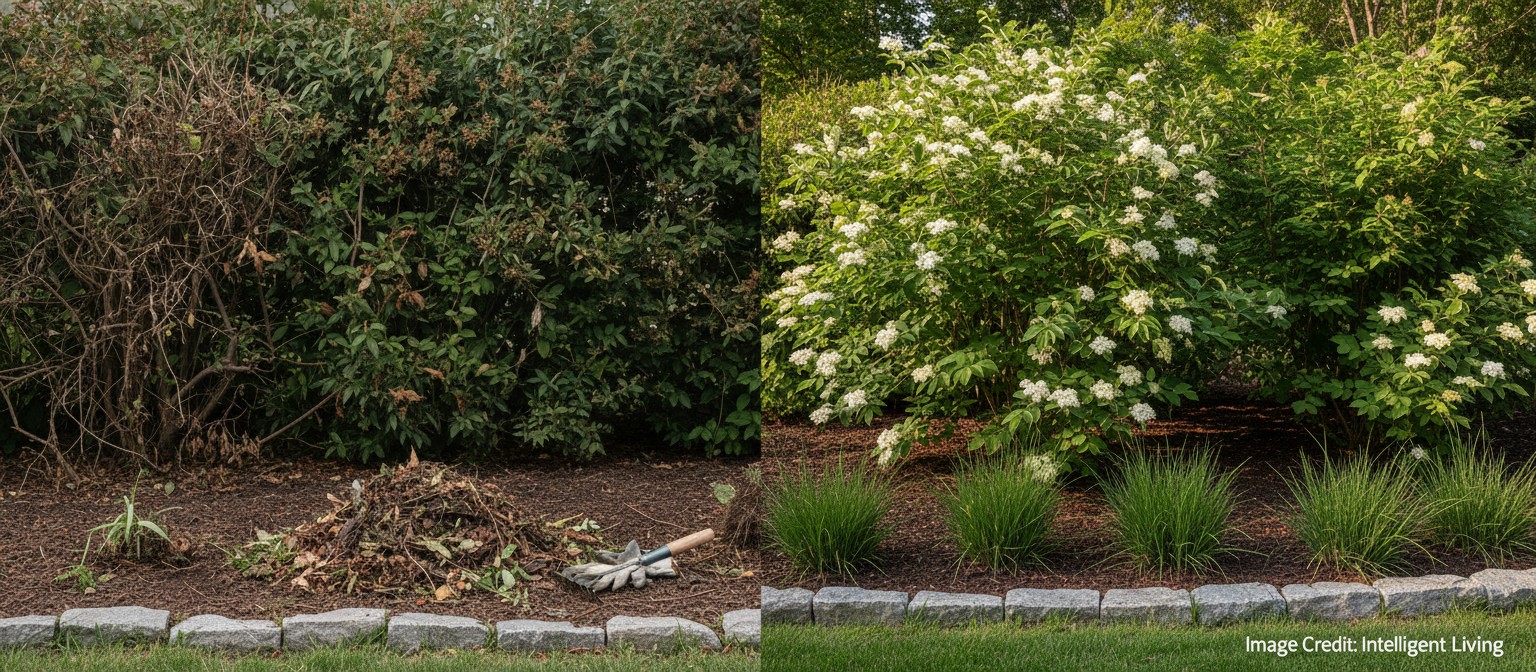
Invasive Landscape Plant Alternatives for Safer Ecosystem Restoration
Matching native shrubs to landscape roles starting with native species helps pair safe substitutions with weed control routines that avoid blanket sprays relying on mulch, competition, and timing. A quick check with your state extension or invasive species council is a time saver because “invasive” is highly regional.
Example Swap Table
- Invasive: Japanese Barberry
- Alternative: Serviceberry or a region-fit native shrub with a similar structure
- Invasive: Burning Bush
- Alternative: A native viburnum species that fits your local conditions
- Invasive: Multiflora Rose
- Alternative: A native rose species or an edible berry shrub
Consulting regional extension swap lists early prevents new pollinator gardens from triggering unintended invasive spread.
Sustainable Bee Lawns and Micro-Habitats for Every Property
Bee lawns and microhabitats provide habitat stepping stones where full native beds aren’t practical. A bee lawn replaces part of a turf area with low-growing flowering plants while keeping mowing norms. Local examples like bee-friendly habitat incentives show how lawn conversions can move from niche to neighborhood-normal.
Where Bee Lawns Make Sense
Bee lawns work best where foot traffic is moderate and the goal is a softer lawn surface. They are a practical answer for renters and busy families who want eco-friendly garden plants on-site but cannot rip out turf.
What to Expect from a Bee Lawn
Bee lawns require less water and offer nectar sources throughout the season. North Dakota State University suggests a simple mowing target, with bee lawn mowing every two to three weeks often allowing flowers to open long enough to be useful. Anticipate a different texture underfoot and a slower maintenance rhythm. Mow less frequently to let small flowering patches persist.
Micro-Habitats that Take Ten Minutes
Pairing a bee lawn with one small feature significantly boosts its ecological impact, especially during summer heatwaves.
- Using a bee-water dish with landing stones reduces drowning risk while keeping hydration available.
- Establishing a sheltered corner for a basic bee hotel building can support solitary bees that nest in cavities.

Climate-Resilient Gardening: Scaling Habitat Restoration Across Streets
Neighborhoods that adopt intentional bloom calendars witness immediate ecological shifts. In early spring, your yard becomes a vital pit stop for emerging foragers, while midsummer canopy cover keeps sidewalks cooler. Small design changes that turn a backyard habitat sanctuary plan into a reality eventually scale into block-level restoration when residents coordinate their planting windows.
The result is visible in the small moments—richer insect life, reduced stormwater peaks during downpours, and a yard that feels alive rather than static. Modest habits at the house scale yield measurable ecological outcomes once individual patches connect into a whole. Shifting toward sustainable landscaping anchors a resilient future for the local community.
FAQ: Expert Answers on Biodiversity and Sustainable Landscaping
Which Pollinator-Friendly Flower Genera Offer the Best Ecosystem Value?
Stick to high-value genera like milkweed, asters, and goldenrod to ensure your yard provides both nectar and host sites for native insects.
Can I Grow Eco-Friendly Garden Plants Successfully in Containers?
Yes. Compact natives like Penstemon and dwarf Salvia thrive in pots, provided you prioritize drainage and consistent watering during dry spells.
Why Is a Rain Garden Essential for Sustainable Stormwater Management?
A rain garden captures pavement runoff in a shallow depression, allowing water to soak into the soil and filtering pollutants before they reach local watersheds.
Are Retail Plants Labeled ‘Bee-Friendly’ Actually Safe for Pollinators?
Not always. Many nursery plants contain systemic insecticide residues; it is safer to buy from native-specialty growers or start with untreated seeds.
How Do I Choose the Right Native Plants for Local Biodiversity?
Check the Xerces regional pollinator-friendly plant lists to match your specific ecoregion and local soil conditions for the best results.


