
For most of the last hundred years, biologists have argued about how many kinds of gentoo penguin exist. Some argued for one species with a scatter of subspecies. Others insisted there were four, or five, or six separate lineages. The argument never ended, because the birds themselves would not settle it. They look almost identical, they live in places almost nobody visits, and until now nobody had compared their entire genomes across the whole species’ range at once.
That has now changed. A team led by researchers at the University of Chile and UC Berkeley has re-sequenced the genomes of 64 gentoo penguins from 10 breeding colonies spread across the Southern Ocean in a study published in Communications Biology that compared genomes across almost the entire species’ range. The team’s conclusion is unambiguous: gentoos are four separate species, not one. One of the four, Pygoscelis kerguelensis, has been formally described for the first time.
It is the first new penguin species named in more than a century. And the timing is uncomfortable. The same analysis that created a new species also concluded that three of the four face severe habitat loss by 2050 and that the reason the world’s conservation bodies currently treat the gentoo as Least Concern is a statistical artifact of counting one large, thriving population alongside several small, isolated ones.
The naming gets tidier, though. Gentoos are not, in fact, one species, and the name Pygoscelis papua has been attached to the whole complex since 1781, when Johann Reinhold Forster described it from the Falklands. Forster assumed the bird occurred in Papua, New Guinea, some 6,000 kilometers north of the nearest gentoos, which is where the misnomer comes from. No penguins live in New Guinea, and the four-species split does not correct the error.
There is a pleasing detail buried in the formal species description. The holotype, the single preserved specimen that anchors the name Pygoscelis kerguelensis to the scientific record, is a museum skin collected by a man named Robert Hall on Kerguelen Island on 31 December 1897. The bird that officially names a species discovered in 2026 was collected before electric light reached the island, let alone a DNA sequencer. The full species description is published alongside the study.

That is not a quirk of the archive. It is the explanation. The Kerguelen archipelago, known in French as the Îles Kerguelen and in English as the Desolation Islands after the whalers who wrecked on them, lies in the southern Indian Ocean with no permanent civilian population, roughly 3,000 kilometers from the nearest other inhabited land. It is the kind of place where a distinct population can persist for hundreds of thousands of years, unseen, because almost nobody is there to look.
What the DNA Actually Found
The study sequenced whole genomes at an average coverage of about 11.7 times, yielding more than 9.1 million single nucleotide polymorphisms, the individual letter changes that distinguish one population from another. From that data, four evolutionary lineages emerged cleanly, separated by the Antarctic Polar Front, the boundary in the Southern Ocean where temperature and salinity shift sharply enough to constrain where marine animals can travel.
Genetic differentiation between the four lineages ran between 0.1 and 0.3 in FST, a measure of how strongly populations are genetically separated. Roughly 19% of genetic variance in the dataset was attributable to lineage membership alone. The researchers put the initial split at somewhere between 300,000 and 500,000 years ago, with a time-calibrated analysis placing the shared ancestral node further back still, at roughly 800,000 years.
Here is how the four species divide up and where each one lives:
| Species | Where it lives | Position vs. Polar Front | Share of global abundance |
|---|---|---|---|
| Pygoscelis papua (northern gentoo) | Falkland/Malvinas Islands, Martillo Island, Isla de los Estados | North | 24% |
| Pygoscelis ellsworthi (southern gentoo) | Antarctic Peninsula, South Orkneys, South Shetlands, South Georgia | South | 65% |
| Pygoscelis taeniata (eastern gentoo) | Crozet, Marion and Macquarie islands | North | 2% |
| Pygoscelis kerguelensis (southeastern gentoo) | Kerguelen Islands, probably Heard Island | On the Front | 9% |
The eastern gentoo is the smallest of the four by a wide margin, accounting for roughly 2% of the global population. The southeastern, the newly named species, accounts for about 9%. Between them, those two small lineages represent just over a tenth of all gentoos on Earth, and they are the two most exposed to climate-driven change in this analysis.
That imbalance is easier to see than to describe. Roughly two-thirds of the world’s gentoos are a single species, while the smallest lineage is barely visible at a global scale.
Seabirds are the worst possible candidates for this kind of detective work. They are among the most mobile animals alive, and ocean-going species generally have weak genetic structure between populations, because individuals move and interbreed across enormous distances. Every assumption in ornithology says gentoos should be one interbreeding population spread thinly across the ocean.
Gentoos broke that rule because of lifestyle. They are extraordinarily site-faithful, returning to the same nesting grounds year after year, sometimes shifting only slightly when nesting material becomes trampled. Their diet is unusually broad: rather than specializing in krill, as their close relatives the Adélie and chinstrap penguins do, gentoos eat almost anything they can chase down, including fish, krill, squid, and cuttlefish.
That combination is the engine of the whole story. Because food is available close to home, a gentoo never needs to travel far to find it. Because it never needs to travel far, it does not need to move between colonies to breed. And because it stays put, natural selection has centuries, and then thousands of years, to grind away at the small genetic differences that make one island’s gentoos slightly better suited to that island’s water than another’s.
This is the opposite of the flexible-eater story that usually gets told about gentoos. Their general diet is usually presented as an advantage, and it is one: while krill populations fall, gentoos living alongside Adélies and emperors on the Antarctic Peninsula have increased in number. But the same dietary breadth that lets them cope with a collapsing food supply also kept them close to home long enough to become four separate species. The advantage created the problem.

The Antarctic Polar Front did the physical work on top of that. North of the Front, waters are warmer and saltier. South of it, they are colder. It is a moving boundary rather than a wall, and gentoos can cross it, but the research found traces of historical gene flow between the lineages, including migration edges running from South America to Crozet and Marion and, more strongly, to Kerguelen. Even limited contact slowed and could not prevent the divergence.
The Kerguelen birds turned out to sit in an unusual position, which may explain part of why the population looked odd to earlier researchers. They carried the highest genetic diversity of any colony in the study, a signature of a population with a history of contact. An ancestry analysis also placed Kerguelen birds with three of the four groups rather than cleanly within one, indicating retained ancestral alleles or past interbreeding. Previous work had tentatively filed them under the eastern gentoo. The new data suggests that label was borrowed rather than earned.
Three other things in the study complicate the neat story and are worth clarifying:
- The lineages are not fully isolated. The historical gene flow described above has not entirely stopped, only slowed.
- Not every difference is a species. The authors also proposed two subspecies, a South Georgia gentoo within the southern lineage and an as-yet undescribed one on Crozet and Marion within the eastern lineage.
- Body size runs backwards. Colder populations are smaller, not larger, reversing the usual rule that bigger bodies hold heat better in cold climates.
None of this undermines the four-species conclusion. It is a reminder that species boundaries are judgments about where along a continuum to draw a line, and this study is drawing it at a particular point with particular evidence.
Two Island Colonies Looked Like Different Species, but Aren’t
Almost every account of this discovery has treated it as a clean sweep: four species, one of them brand new. The paper itself is more careful, and the nuance is genuinely important.
South Georgia and Macquarie Island have both been proposed as separate species at various points. This study declines to grant either that status.
South Georgian gentoos do look different. They diverge from the Antarctic Peninsula birds, and they cluster as a distinct genetic group in some analyses. But they still carry ancestral mitochondrial haplotypes shared with the southern gentoo, and the level of genetic divergence between them is markedly lower than between the four main lineages. The authors therefore treat South Georgia as a subspecies within the southern gentoo, Pygoscelis ellsworthi poncetii.
Macquarie Island birds tell a similar story, pointing the opposite way. They group tightly with the eastern gentoo, not as something separate from it, and their genome shows no sign of the mitochondrial distinctiveness that would justify splitting them off. The authors note the island received its first genomic characterization in this study, which is a reasonable explanation for why it has been ambiguous for so long.
There is a pending item too. The eastern gentoo on Crozet and Marion Islands is described as a subspecies that has not yet been formally named. So the revision is not fully complete on publication, and the total number of gentoos could still shift again as that description is finished and as taxonomic committees assess the proposal.
How Each Lineage’s Genes Match Its Island
Identifying a new species matters largely because of what its genes are already doing. The researchers found 105, 132, 195, and 165 genes under positive selection in the northern, southern, southeastern, and eastern lineages, respectively, and the pattern of what those genes do lines up remarkably well with where each population lives.
The southern gentoo, thriving in the coldest and darkest environment the genus occupies, showed selection in genes tied to heat generation through cardiac and muscle contraction, fat storage and lipid handling, and light perception. That last category is easy to overlook and quite telling: seabirds in polar regions cope with extreme seasonal swings in daylight and with light bouncing off ice, and genes involved in visual processing appear to be adapting to exactly that.
The eastern gentoo, living north of the Polar Front in waters of relatively low biological productivity, showed selection concentrated on energy efficiency. The enriched functions involved carbohydrate metabolism, blood vessel formation, mitochondrial activity, and lung development, the combination that supports staying underwater longer while spending as little energy as possible.
The northern gentoo, on the high-productivity South American coast, showed a different signature again, centered on digestion and on pathways involved in heart contraction and muscle excitation. The interpretation is that these are adaptations for sustained, high-volume foraging in rich water.
The southeastern gentoo, the new species, is the only lineage whose selection signals point primarily at the nervous system. Genes associated with neuronal plasticity and synaptic signaling were prominent, alongside muscle adaptation genes. The authors suggest this may relate to behavioral flexibility in an environment where the Polar Front shifts seasonally. It is the most speculative of the four interpretations, and the study is careful to frame it that way.
Body size follows a similar logic and in an unusual direction. Penguins from colder southern environments tend to be smaller, which is the reverse of Bergmann’s rule, the familiar pattern where larger bodies conserve heat in cold climates. Birds north of the Polar Front are generally larger, and Kerguelen and Macquarie birds sit in between, consistent with the mixed water conditions around them.
One more finding deserves attention because it may matter more than any of the others. The researchers found genes tied to vocal learning and adult vocal performance in the outlier regions of all four lineages, including several glutamate receptor genes. In birds with strong site-faithfulness and limited movement between colonies, divergent calls can reinforce assortative mating, the tendency to mate with similar individuals. If gentoos on different islands sound measurably different, that is a plausible mechanism for keeping the lineages apart even where geography is not absolute. It is also, potentially, a way to count birds without catching them: gentoos call loudly and are individually recognizable, which is part of why the authors argue this dataset has conservation value beyond classification.

The 2050 Problem: Habitat Loss for Three of Four Lineages
To work out what warming means for these birds, the team fed species distribution models with temperature, salinity, pH and primary productivity, then projected habitat suitability forward to 2050 under RCP 4.5, a mid-range emissions pathway representing intermediate stabilization rather than the worst case.
The projections were not good.
The northern, eastern, and southeastern lineages all face severe contraction of predicted suitable habitat, in many cases close to complete loss of suitable environmental space across large parts of their current range. The southeastern gentoo may retain some suitable habitat around Heard Island, which is the single hopeful detail in the model. The southern gentoo, uniquely, is projected to expand its range by roughly 9%, apparently benefiting from improving conditions in the central and southern Western Antarctic Peninsula.
There is a mechanism behind that last point, and it is a grim one. Emperor, Adélie, and chinstrap penguins are all expected to decline as sea ice disappears, taking with it the krill that grow beneath that ice. As those populations contract, space and prey open up for the southern gentoo, which is already expanding southward into the Antarctic Peninsula. The gentoo’s conservation outlook improves in part because its neighbors are doing worse.
There is a fisheries dimension to the same picture. The Southern Ocean krill fishery closed on 12 August 2026, the second consecutive season to end early after reaching a 620,000-tonne catch limit, and vessel tracking shows effort concentrating in the Bransfield and Gerlache straits and around the South Orkneys, close to the colonies that depend on that prey. It is worth being precise about what that does and does not show, because CCAMLR’s own stock assessment states that the trigger level is not linked to an assessment of krill biomass. An early closure measures how much was caught, not how much is left in the water.
Researchers are candid about the limits of the modeling. These are correlative models built on four environmental predictors, and they assume relative niche stability. They do not account for behavioral flexibility, microhabitat heterogeneity, prey switching, dispersal capacity, or the possibility that gentoos simply move to wherever they can. Adding bathymetry to the models produced a more optimistic picture, with more suitable habitat appearing in deeper water. The authors are explicit that these projections indicate a substantial reduction in predicted habitat suitability and should not be read as forecasts of extinction.
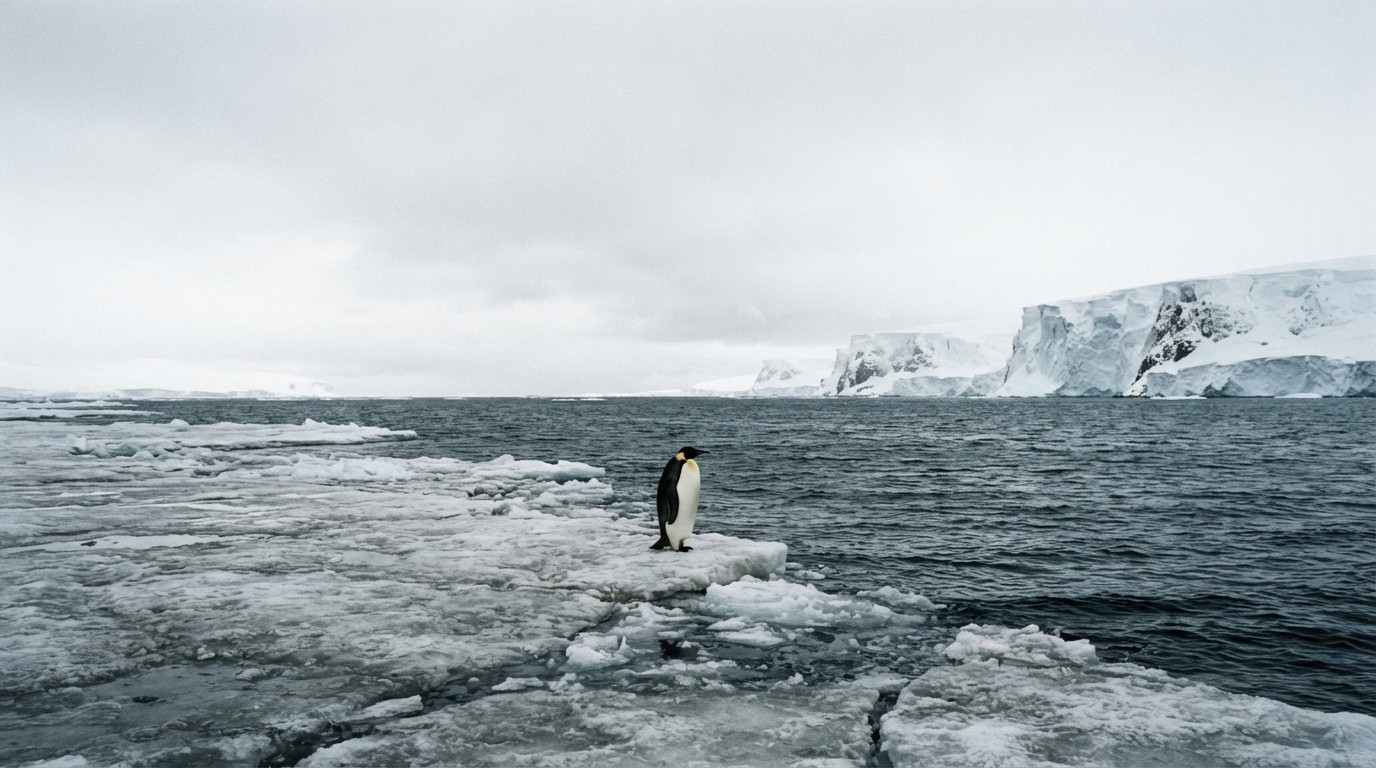
Isolated island species are the ones with no escape route. As Juliana Vianna, a senior author and professor of ecosystems and environment at Andrés Bello National University in Santiago, put it, island species that have really low population sizes could be compared with the sub-Antarctic gentoos, because they are endemic to these islands and will find no place to go after a change in their environment. Those islands are very isolated, and these penguins cannot adapt easily to colonize any other region.
Vianna is also blunt about where the responsibility lies. The gentoo is of most concern in the sub-Antarctic region, an area of widely separated islands north of Antarctica governed by numerous countries, including Chile, South Africa, France, the Netherlands, Australia, and New Zealand. It is very important that conservation institutions in all the different countries involved recognize and take appropriate action to save these three gentoo penguin species. The birds at highest risk are spread across half a dozen jurisdictions, and the legal instruments that would protect them do not yet recognize that they are three separate species.
Why “Least Concern” Is Now a Blunt Instrument
The gentoo penguin is currently listed as Least Concern by the IUCN Red List, on the basis of a very large range and a stable global population trend. The new research makes the awkwardness of that classification explicit.
Approximately 65% of all gentoos worldwide are the southern gentoo. The northern accounts for 24%, the southeastern for 9%, and the eastern for just 2%. The global status is, in the authors’ words, largely influenced by the southern gentoo. That one population is doing well, and it is doing well enough to drag the average up. Meanwhile, the eastern gentoo, at 2% of the total, is in demonstrable decline: on Macquarie Island breeding pairs have fallen by 50% over the last three generations, and on Possession Island in the Crozet archipelago, the monitored colony declined by 32.6% between 1992 and 2018.
This is the classic problem with averaging a metapopulation. When a widespread taxon is divided into independently evolving lineages with very different population sizes and opposite trajectories, a single global category conceals the thing that matters. The authors’ conclusion is blunt: extinction risk is not uniform across lineages, and conservation status should be reassessed independently for each.
Classification also shapes protection. Gentoos are not listed on any CITES appendix, so the three smaller lineages have no international mechanism obliging anyone to act on their behalf. The islands where the declines are happening are governed by several different administrations, and the risk is spread thinly across all of them.
A Century of Censuses Nobody Has Updated
There is a less poetic but possibly more consequential thread running through this paper, and it is the one most likely to be lost in coverage of a new species.
Census work in remote sub-Antarctic islands is extraordinarily expensive, and a population counted once has no reason to be recounted without funding. The consequence is unavoidable: conservation decisions about three of the four gentoo species are currently being made on data that cannot detect a crash.

- Crozet last comprehensively surveyed in 1981
- Kerguelen last surveyed in 1985, despite holding the entire newly described species
- Heard and South Georgia last surveyed in 1987
- Macquarie Island last surveyed in 2006
- Falkland/Malvinas last surveyed in 2010
The two documented declines sit in that list. Possession Island, in the Crozet archipelago, was down 32.6% between 1992 and 2018. Macquarie Island, one of the eastern gentoo’s three strongholds, has lost about half its breeding pairs over three generations. Both figures come from long-running monitoring programs rather than from the paper itself.
The more uncomfortable implication is that the discovery of a fourth species rests on population estimates that largely predate it. Counting a remote colony is slow and expensive, and a population counted once has no reason to be recounted without funding, so parts of the range are still being described using numbers gathered in the 1980s.
There is a useful second-order consequence, too. The same genomes that revealed four species are already being used to look for genetic traits linked to survival from avian influenza, which has affected penguin, bird, and mammal populations worldwide. Identifying which populations carry resistance and which carry vulnerability would let conservation bodies direct limited resources where they actually change the outcome. As Rauri Bowie of UC Berkeley put it, whole-genome sequencing has transformed our ability to look at adaptation from a perspective of how things diversify, but it also has very important conservation value.
Frequently Asked Questions
What is the new penguin species called?
The newly described species is Pygoscelis kerguelensis, commonly known as the southeastern gentoo penguin. It lives on the Kerguelen Islands in the southern Indian Ocean, and satellite tracking suggests it also uses Heard Island, so the authors treat both as one evolutionary unit. Its name derives from the Kerguelen Islands. The holotype, the preserved specimen anchoring the scientific name, is an adult male collected by Robert Hall on Kerguelen Island on 31 December 1897 and held at the American Museum of Natural History.
How many species of gentoo penguin are there?
Four, according to this study. The northern gentoo, Pygoscelis papua, is restricted to the Falkland/Malvinas Islands, Martillo Island, and Isla de los Estados in South America. The southern gentoo, P. ellsworthi, occupies the Antarctic Peninsula, the South Orkneys, the South Shetlands, and South Georgia and is the only one of the four living in Antarctica. The eastern gentoo, P. taeniata, occupies Crozet, Marion, and Macquarie Islands. The southeastern gentoo, P. kerguelensis, occupies Kerguelen and probably Heard Island. Note that this is a proposal: the classification has not yet been ratified by taxonomic committees.
Is the gentoo penguin endangered?
Not as a whole. The gentoo holds a Least Concern listing, and the global population numbers in the hundreds of thousands of breeding pairs. But the three smallest lineages are already declining, and the paper’s argument is that the label should not be applied to all four collectively.
Why did nobody find this new species sooner?
Because it looks exactly like the others, and because it lives somewhere almost nobody goes. Cryptic species are by definition hard to detect without genetic tools, since they are morphologically similar to their relatives. The Kerguelen archipelago is nearly 3,000 kilometers from the nearest permanently inhabited land, so a distinct population can persist for hundreds of thousands of years, evolving separately, essentially unobserved. Comparative genomics only became cheap and scalable enough to settle the argument recently.
What is the Antarctic Polar Front, and why does it matter here?
It is a boundary in the Southern Ocean where water temperature and salinity shift sharply enough to constrain the movement of marine animals. Gentoos are not the first penguins it has shaped. In the 2019 research that traced penguin origins, the rise of the circumpolar current around 12 million years ago helped carry ancestral penguins throughout the sub-Antarctic, eventually colonizing islands as far north as Africa and South America. The Front continues to structure where gentoo lineages live and how they forage.
Does a flexible diet help or hurt gentoos?
Both, depending on the timescale. Gentoos’ generalist diet means they can switch between fish, krill, squid, and cuttlefish as conditions change, which helps them as krill populations decline. But the same flexibility lets them forage close to home instead of travelling, which, combined with strong fidelity to nesting sites, kept gene flow between colonies extremely low. That is what allowed four species to diverge rather than one.
What Happens Next
The immediate task is bureaucratic as much as scientific. The Crozet and Marion subspecies still need describing, the four-species revision needs to pass through taxonomic committees, and the conservation implications need to reach the agencies that actually manage these islands. The study’s own recommendation, lineage-specific monitoring with separate IUCN assessments, is the practical expression of its central finding: that a category built for a single species is the wrong tool for four.
It is also worth sitting with the holotype for a moment. A bird collected on Kerguelen on 31 December 1897 spent most of the following century as a curiosity in a museum drawer, while scientists argued in journals about whether it was a different species at all. It is now, in the formal language of taxonomy, the individual that gives a new species its name. Given how few people will ever see Pygoscelis kerguelensis alive, that feels like an appropriate final role.
For contrast, our coverage of rapid penguin population collapse in the sub-Antarctic shows what a crash looks like when a monitored colony dwindles, and Antarctica’s first recorded heatwave covers the warming trends behind these projections.


