
Every polyester wash sends tiny plastic fibers down the drain. Most fixes stop at catching them. A lab team in Valencia, Spain asked a harder question. What if the fibers could be made gone, not just held? Their answer is plain to hold in your hand. Commercial sand, tiny silica beads coated with titanium dioxide, water moving through a lit tube, and patience.
The system comes from the Pama group at the Institute of Chemical Technology, a joint center of the Spanish National Research Council (CSIC) and the Universitat Politecnica de Valencia (UPV). It was built to clean water from domestic washes of polyester garments in a single stage that filters and then breaks the fibers down with light. That second step matters, because a filter alone leaves you with a clump of plastic to manage. This work reports full disappearance of PET microplastics in tap-water wash water, with treatment times longer than two and a half hours, at lab scale, with no detergent tested yet.
Why catching fibers is not enough
Polyester is PET, which is polyethylene terephthalate. That is the same plastic family used in bottles and cleaning product containers, spun here into textile fibers. Each wash flexes the fabric and sheds microfibers. Those fibers ride the outlet hose to the sewer.
A standard microplastics filter for the washing machine does useful work. It sits on the drain line and traps fibers before they leave the house. Our earlier look at the first dedicated microplastics filter for washing machines showed capture around 60 to 80 percent in its tests. Policy is moving the same way, as France now requires new machines to include a fiber capture solution, a shift we tracked in our guide to microfiber filter mandates and laundry pollution.
Capture still leaves a problem. The trapped lint must be emptied, binned, and kept out of drains. If a filter clogs, flow slows. If fibers slip through, they keep travelling. Treatment plants face the same trade on a larger scale, since much of what they catch ends up in sewage sludge, which is sometimes spread on farmland. Earlier lab studies of microplastic removal often broke plastics into smaller pieces, which risked making nanoplastics that are even harder to trap. The Valencia team set out to avoid that trade. They wanted retention plus full breakdown in one pass.
How the sand and light system works
Think of it in three calm steps. Trap, activate, break down.
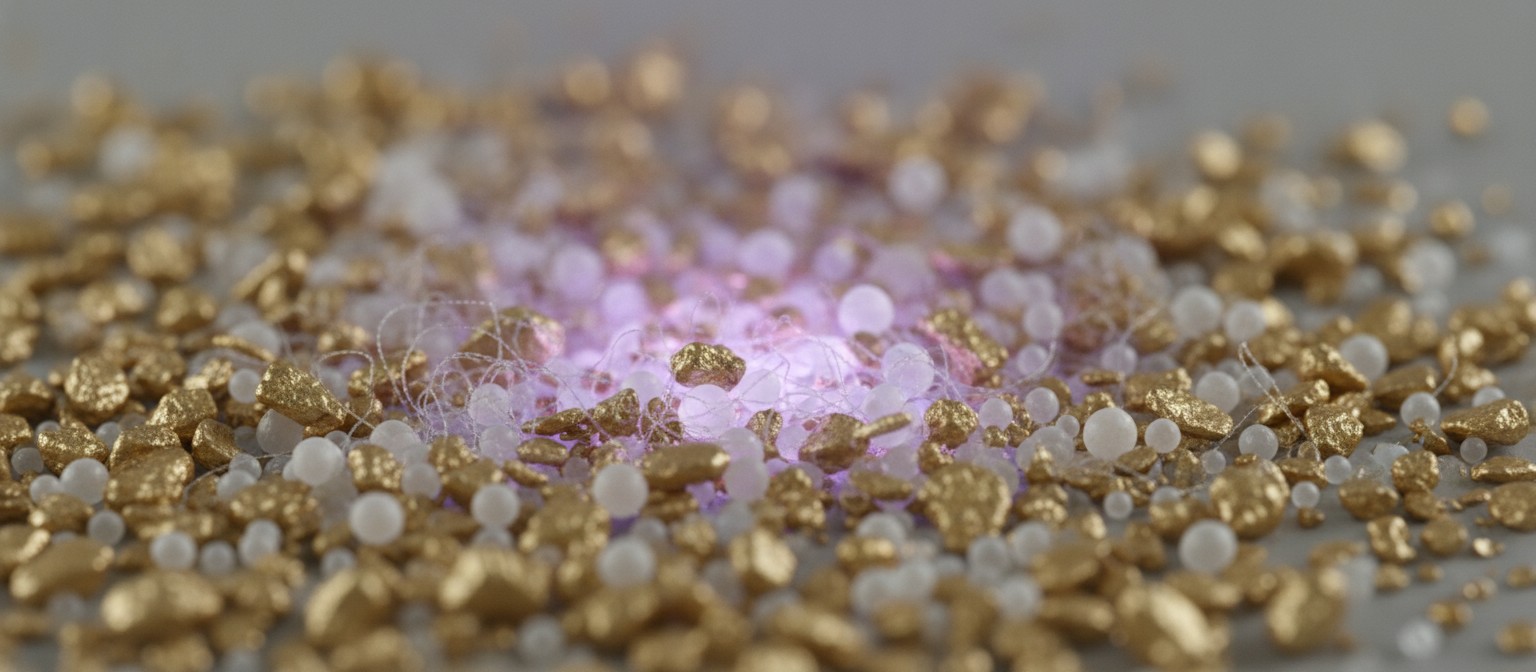
First, the trap. The bed is commercial sand mixed with silica microspheres coated with titanium dioxide, which is TiO2. TiO2 is a white mineral powder used in paint and sunscreen that can act as a photocatalyst. A photocatalyst is a material that speeds up a chemical reaction when light hits it, without being used up itself. Mineralization is the full breakdown of a plastic into much simpler compounds, rather than into smaller plastic crumbs.
Second, the activation. The material sits inside a continuous flow tubular reactor lit by UV LEDs. That phrase sounds complex. It means water keeps moving slowly through a clear tube packed with the sand mix while ultraviolet light shines on it. One laundry load of water equals many bathtubs of flow through a narrow path, so each fiber spends time close to the lit grains.
Third, the breakdown. Francisco Bosca, a CSIC researcher at the ITQ, explains the split job in plain terms. “The sand acts as a filter that retains the microplastics, while the ultraviolet light applied activates the titanium dioxide to generate substances capable of degrading the microplastics.” Maria Luisa Marin, ITQ researcher and UPV professor, adds that placing the material in the LED lit tube gives simultaneous retention and degradation. Analytical checks confirmed both the disappearance of the PET microplastics and their change into simpler compounds.
What 70 percent versus gone means for one wash
Without light, the sand bed held back only around 70 percent of the microplastics in the UPV tests, and the team notes it would in time clog. That is a familiar filter story. Good at first, then full.
With the UV LEDs on, the same bed kept working because light kept clearing what sand caught. The result was complete removal of the PET microplastics present in water from washing textiles with tap water, with no pH change and no added chemicals to help the reaction. The team treated more than 50 liters of such water with the same material, regenerating it between cycles. For a sense of scale, 50 liters is close to one full domestic wash volume pushed through again and again in the lab, not 50 separate family washes in a week. The time cost was real. Each treatment took longer than two and a half hours in these lab runs.
The chart above keeps the two cases side by side. Sand alone holds about seven in ten fibers and then faces clogging. Sand plus coated beads plus light reaches full disappearance in these tests because breakdown frees space as it goes. That is the difference between storing plastic and ending it.
Reusable material and clean water checks
Two practical checks set this work apart from a one-use cartridge.
- Reuse: the same sand and coated bead mix treated more than 50 liters across cycles, with a regeneration step between runs. The bed did not act as a throwaway.
- Clean outflow: no titanium was detected in the treated water. The TiO2 stayed on its silica support instead of washing out with the flow.
- Gentle chemistry: tests ran without altering pH and without adding chemicals to force the breakdown. The work came from real domestic polyester wash water made with tap water.
- Full breakdown signal: the checks pointed to conversion into simpler compounds, not shredding into nanoplastics.
These points were reported in the UPV release on the purification system and the peer-reviewed paper record at Chemical Engineering Journal DOI 10.1016/j.cej.2026.180838. The DOI link is given here as the bibliographic record. Fine numeric detail in this article follows the releases the team published in Spanish and English on November 4, 2026.
Honest limits: lab scale, no detergent, long hours
Every promise in this story arrives with its limit in the same sentence.
It is lab scale, so nothing here is a home washing machine product you can buy today. It was tested without detergent, so real wash water with surfactants and softeners remains untested. It needed treatment times longer than two and a half hours, so it cannot keep pace with a fast drain cycle without further optimization. The team says that optimization is still needed to improve performance.
This honesty helps readers and buyers. If you wash polyester today, the useful steps stay the same ones we listed in what you can do about microfibers. Wash full loads, choose cooler and gentler cycles, use a capture bag or an add on filter where it fits, and bin the lint in household trash. Those habits cut shedding now. The sand and light reactor is a look at what could handle the outflow later, not a reason to wash more polyester.
Where this could fit next
The researchers point to medium-term uses outside the home.
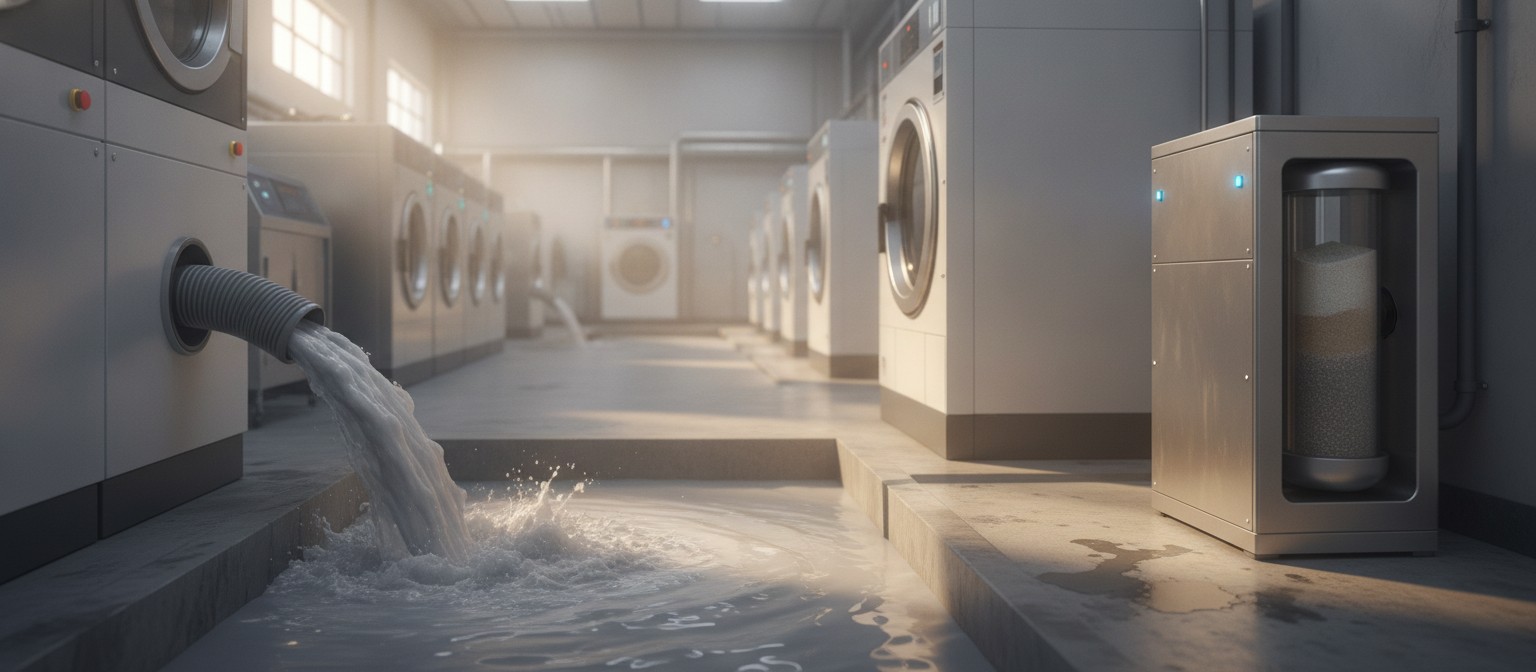
A complementary module could sit in three steadier places:
- Industrial laundries: steady warm flows with heavy fiber loads and room for long residence time.
- Textile industry processes: factory rinse water handled before it reaches public sewers.
- Wastewater treatment plants: a polishing step for streams with strong fiber signals, now being studied for waters such as the Albufera de Valencia lagoon.
That path makes sense for a slow, steady reactor. A factory or treatment plant can give water hours of residence time and can maintain a regeneration cycle. A home drain cannot. Scale will test cost, energy for UV LEDs, bed size, and how the chemistry holds up once detergent, dyes, and mixed fibers enter the mix. Until those trials exist, treat this as a working lab demonstration of mineralization, not a market device.
Frequently Asked Questions
Which fabrics release microplastics when washed?
Synthetics shed most, above all polyester, which is PET, plus nylon and acrylic. Natural fibers also shed, but they break down in the environment while plastics persist. Fleece and worn synthetics tend to shed more per wash.
Do water filters capture microplastics?
Yes, in part. Mesh and depth media filters trap many fibers, often in the tens to hundreds of micrometers range. In the Valencia tests, an unlit sand bed held around 70 percent and then faced clogging. Light driven breakdown is what lifted that result to full disappearance in the lab.
Can I buy this sand and light filter for my washing machine?
No. There is no home product today. The build is a lab-scale continuous flow tubular reactor, tested without detergent and with treatment times longer than two and a half hours. The team frames industrial laundries and treatment plants as the nearer term fit.
Does it create nanoplastics?
The team reports the opposite of partial breakdown. Lead author Carlos Company Domenech notes that earlier studies often described partial degradation that left nanoplastics, while these tests showed full degradation confirmed by several analytical techniques. Independent replication will still be needed.
Is titanium left in the treated water?
No titanium was detected in the treated water in these tests. The TiO2 coating stayed fixed to the silica microspheres through use and regeneration between cycles.
Laundry will keep shedding while closets stay full of polyester. Catching fibers helps today. Breaking them down would close the loop. Sand and light show one patient way that second step could work, if scale, detergent, and time can be solved in the open.

