
The cleanest-looking buildings on the grid may be burning gas out back. Across the United States, some AI data centers are adding on-site natural gas turbines on the customer side of the utility meter to get power in months instead of waiting years for a grid connection.
That setup is called behind the meter, which simply means the generator feeds the building directly without traveling over utility wires. It can be fast and legal, but it also means some of the fastest-growing gas use in America sits outside normal utility planning, utility emissions reports, and in some cases outside the air permits neighbors expect.
This is an explainer with receipts. Every site below separates what is confirmed in permits, filings, or on-the-record company statements from what is reported as planned.
What Behind the Meter Really Means
Normal grid power flows from a power plant, over high-voltage lines, through a substation, past your utility meter, and into a building. Behind the meter generation skips most of that path. The turbine sits next to or inside the data center property and wires directly into the building.
Industry also uses two related terms. A peaker is a plant that runs mainly during high-demand hours, not all day. An air permit is a state or local approval that sets limits on nitrogen oxides, carbon monoxide, fine particles, and other pollutants from combustion equipment.
Behind the meter does not mean off the grid entirely. Many sites use a mix, adding turbines for speed, for backup, or for round-the-clock baseload while grid upgrades are built. For context on scale, one megawatt of steady load powers roughly 750 U.S. homes.
Federal analysts now treat this as a core option, not an edge case. A Congressional Research Service explainer on how data centers get power lists, buying from the utility as the most common, but describes self-supply with behind-the-meter plants as a formal third path alongside utility supply and power purchase agreements.
Why AI Builders Choose Turbines Over Waiting
The driver is time. Large load interconnection queues now stretch three to seven years in major markets, while a data center building can rise in under two years. Turbines that can be trucked in and installed in modules close that gap.
Three forces point builders toward gas in particular:
- Speed of install. Small aeroderivative turbines, which are jet engine designs adapted for ground power, plus trailer-mounted mobile units, can be running in months. Large combined cycle plants take years.
- Dispatchable output. Dispatchable means the operator can turn it up or down on command, unlike solar or wind without large batteries. AI training needs steady power day and night for cooling and servers.
- Supply chain reality. Demand for small open cycle and aeroderivative units jumped as developers accepted higher fuel costs to avoid waiting, a shift detailed in fall 2025 and 2026 market reporting. Equipment makers report order books dominated by data center buyers.
Cleaner on-site options exist, but they are not yet as fast at this scale. Solid oxide fuel cells running on natural gas are already powering hundreds of megawatts of data centers, and hydrogen versions are moving from pilot to early commercial use, as covered in our look at fuel cells for data centers and a new low platinum catalyst. For many builders racing to add capacity in 2026, gas turbines remain the quickest path to firm electrons.
Confirmed Installations: Where Turbines Are Already Running
Confirmed means a permit, a utility filing, a securities filing, or an on-the-record company statement supports it. Reported means a tracker, news report, or company announcement describes a plan that has not yet cleared those hurdles. The table keeps the two apart.
| Site | What is confirmed | What is reported as planned |
|---|---|---|
| xAI Colossus, Memphis, Tennessee and Southaven, Mississippi | 35 trailer mounted turbines were photographed on site in 2024 and operated before full grid power arrived, while the company later drew about 150 megawatts from the grid after a substation upgrade. Mississippi regulators approved permanent turbines at Southaven in March 2026. | Reports describe up to 1.2 gigawatts of permanent turbine capacity at Southaven plus 27 additional temporary units, or enough for about 900,000 homes, but the temporary units are the subject of an April 2026 Clean Air Act lawsuit and are not confirmed as permitted. |
| Meta Prometheus, New Albany, Ohio with Williams Socrates plants | Williams is building two dedicated gas plants totaling 556 megawatts for Meta under a 10 year fixed price deal, with South in service in late July 2026 and North expected in late 2026, as disclosed in Williams securities filings. | Trackers describe the wider New Albany cluster at about 736 megawatts of on-site gas, or enough for about 552,000 homes, with the balance attributed to an EdgeConneX affiliate and reported as under construction, not confirmed operating. |
| Meta Hyperion, Richland Parish, Louisiana with Entergy | Louisiana regulators approved three combined cycle gas plants totaling about 3,000 megawatts for the project in August 2025, plus transmission, while an air permit change to add 44 gas water boilers alongside diesel backup was approved in June 2026. | Meta and trackers describe a larger campus vision of up to 5 to 7 gigawatts with up to 10 gas plants plus solar and possible nuclear, or enough for up to 5.25 million homes, but later phases are reported as proposed, not confirmed built. |
| Stargate and Crusoe, Abilene, Texas | Crusoe ordered 29 GE Vernova 35 megawatt aeroderivative turbines, including 10 units for Abilene, and separately agreed to procure around 750 megawatts of reciprocating engines for on-site generation at multiple sites. | Trackers list Abilene at about 1,200 megawatts of total planned capacity with a mix of grid power from AEP Texas and on-site gas, or enough for about 900,000 homes, but the full on-site share is reported as in progress, not confirmed operating. |
| Vantage VA2, Virginia | Virginia environmental officials confirm one approved air permit for a data center campus with on-site gas generation, the Vantage VA2 site, using eight mobile Solar Turbines units and reported as operating since September 2025. | A second application in Charles City is confirmed as received, not approved, while other Virginia proposals with turbines were withdrawn or voted down. |
The pattern is consistent. Builders confirm a first phase that solves an immediate interconnection delay, while trackers report a much larger buildout that depends on permits, equipment deliveries, and gas supply.
Reported Plans Versus What Is Actually Built
The gap between announcements and steel in the ground is large. That gap matters because headlines often cite the largest figure.
Analysts tracking permits, equipment orders, fuel contracts, and construction status put the U.S. behind the meter pipeline for data centers at more than 130 gigawatts of announced capacity, with gas accounting for more than 80 percent. The same work estimates only 22 to 32 gigawatts will realistically deploy by 2030, or roughly one quarter of new data center capacity in that period. A separate Enverus estimate cited in late 2026 puts behind-the-meter gas additions at 29.6 gigawatts through 2030, with data centers driving about 88 percent of demand.
Only a small share is operating today. One industry database found about 2 gigawatts, or 2.2 percent of announced behind-the-meter power, was operational in mid-2026. In plain terms, for every 50 megawatts announced, about one megawatt was actually running.
The Congressional Research Service reaches a similar caution. It notes gas turbines are by far the preferred option where new on-site generation has been proposed but adds that the extent to which proposed plants become operational remains to be seen in its review of data center electricity use and grid impacts.
For readers tracking why federal officials started counting data center power and how Maine paused large builds, this is the next layer. Even perfect counting of grid load misses turbines that never touch the utility meter.
The Permit and Monitoring Gap
Permits for on-site energy typically fall to state and local agencies because a data center has a discrete footprint. A federal review of permit requirements for data center energy infrastructure notes the rules depend on location, technology type, and whether the plant connects to the grid or sits behind the meter.
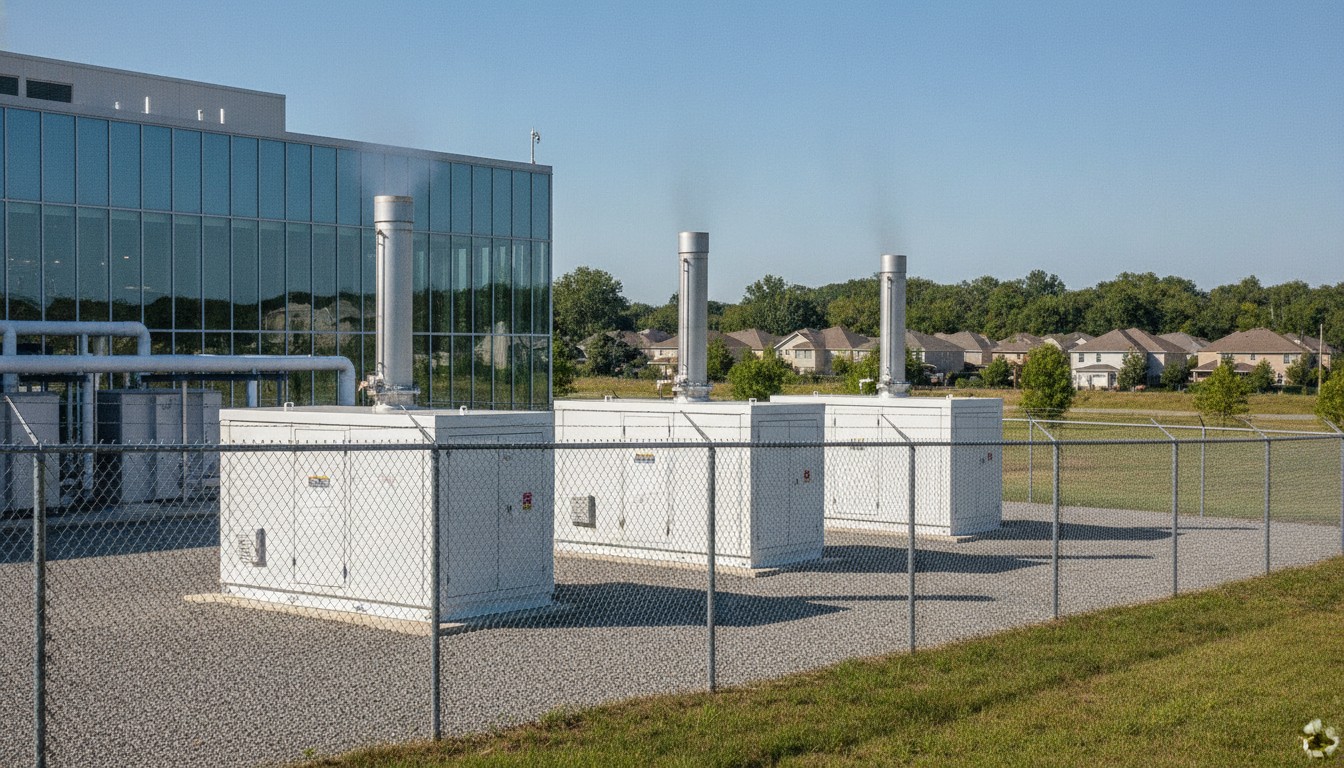
Three mechanics create the visibility gap:
- Thresholds written for big plants. Major source air permits often trigger around 25 megawatts or higher emission levels. A campus can install multiple smaller turbines that each sit below a threshold while the combined site exceeds it. Virginia reporting describes proposals spreading gas generation across four or five smaller turbines, and advocates warn the total can escape the strictest review.
- Mobile source positioning. Trailer-mounted turbines were, in some cases, treated as temporary or mobile equipment rather than permanent stationary sources. Mississippi records cited by trackers describe Southaven portable units operating under a mobile source position, while permanent units went through a separate permit vote in March 2026. EPA closed a commonly cited non-road engine allowance in January 2026, but units installed earlier remain contested.
- No utility gatekeeper. A utility owned plant must show need to a commission and goes through an interconnection study. A private behind the meter plant that does not sell to the public often skips both. Virginia utilities confirm data center customers face an average seven year wait for grid power, yet private turbines can proceed on a local air and land use path.
Memphis shows how this plays out. Community members reported rows of turbines in 2024, a public records request to the Shelby County Health Department initially found no permits, the company later applied for 15 units for continuous operation, and aerial images later showed 35 units on site, according to a detailed timeline of the Memphis air permit fight. The company later shifted some load to grid power as substations arrived and kept turbines for expansion and backup, but advocates filed suit in 2026 over units they say ran without permits.
Virginia shows the policy response. Only one campus scale gas permit had been approved by mid 2026, yet multiple proposals included turbines. Lawmakers debated tying tax exemptions to environmental performance and formed a task force to study behind the meter rules, while one large Prince William County proposal with turbines was rejected and another was withdrawn, as reported in Virginia reporting on whether private turbines skirt clean energy laws.
What This Means for Bills, Air, and Climate
Behind the meter changes who pays, who breathes what, and what counts toward climate goals.
- Bills. Private turbines can help a builder avoid grid upgrade fees, but they do not erase grid costs. Utilities still build substations and lines for the campus, and backup arrangements can shift costs if not structured well. That is why more than 300 organizations signed a voluntary pledge to build, bring, or buy their own power, as covered in our explainer on the power pledge and who pays for grid upgrades. The pledge has no enforcement mechanism.
- Air and noise. Gas turbines emit nitrogen oxides, carbon monoxide, and fine particles, plus steady low frequency noise. Diesel backup is dirtier per hour but runs rarely. Gas turbines used as primary power run thousands of hours, so total exposure can be higher even if hourly rates look cleaner. Neighbors near one Virginia site told local reporters they learned about turbines only after construction started.
- Climate accounting. Utility climate laws often cover utility owned generation, not private behind the meter plants. Virginia officials warned the state could appear on track for its clean economy goals while uncounted private gas grows outside the ledger. If a 25 megawatt threshold applies per unit rather than per campus, a 100 megawatt site split into five 20 megawatt blocks, enough for about 75,000 homes, could avoid the strictest carbon review.
None of this means every turbine is unpermitted or unsafe. It means the system was built to watch large central plants, not dozens of modular units behind warehouses. Until reporting catches up, the most honest question to ask about any project is simple. Show the permit, show the meter data, and show whether the number quoted is operating, under construction, or merely announced.
Frequently Asked Questions
What is a data center gas turbine?
It is a combustion turbine that burns natural gas to spin a generator and make electricity on or next to a data center site. Most data center units are small aeroderivative or mobile designs in the 2 to 38 megawatt range, far smaller than a utility combined cycle plant, but developers install many of them together to reach hundreds of megawatts.
Why are data centers using gas turbines instead of grid power?
Speed. Grid studies, substations, and transmission can take three to seven years. A set of modular turbines can be installed in months and then scaled as server halls open.
How many data center gas turbines are running in Memphis?
What is confirmed is 35 trailer mounted units operated at Colossus 1 before expanded grid power arrived, plus permanent units later permitted across the Memphis and Southaven campus. What is reported but contested is the exact count of temporary units running at any one time in 2026, with trackers citing up to 27 additional units at Southaven and advocates citing aerial counts above permitted levels. The lawsuit filed in April 2026 will test which units needed permits.
Who makes gas turbines for data centers?
Major suppliers include GE Vernova for aeroderivative turbines, Solar Turbines for midsize mobile and stationary units, Siemens Energy for industrial turbines, and Caterpillar and INNIO Jenbacher for reciprocating gas engines often paired with turbines. Crusoe publicly ordered 29 GE Vernova 35 megawatt units for data center sites including Abilene.
Do gas turbines make data centers louder or more polluting?
They add both noise and air emissions compared with a pure grid connection, but they are generally cleaner per hour and quieter than diesel backup. The key variable is run time, as backup diesel may run tens of hours per year while primary gas turbines can run thousands.
Can neighbors find permits for turbines near them?
Start with the state air agency, not the utility. In Oklahoma, for example, officials publish a dedicated data center page explaining that larger behind the meter units may need major source permits while smaller units face lighter review. In Virginia, only one campus scale approval existed by mid 2026, which shows how few projects clear the highest review even when many are proposed. Ask for the permit number, the rated megawatts per unit and per site, and the allowed hours per year.
What to Watch Next
Four filings will tell us more than any press release. First, air permits and amendments, which list unit counts, fuel, and allowed hours. Second, utility commission dockets, which show how much grid power a site actually takes. Third, securities filings from energy partners like Williams, which confirm in service dates and contract terms. Fourth, interconnection queues, which show when turbines shift from primary power to backup as substations arrive.
The under reported fact is not that turbines exist. It is that the fastest-growing gas fleet in tech may be the hardest to count, because it sits behind the meter where conventional tracking stops. Counting it unit by unit, permit by permit, is how neighbors, grid planners, and climate ledgers catch up. For context on siting pressure, see why data centers are hiding in unusual places to stay cool and why AI infrastructure is becoming a grid problem for cities.


