
Solid-state battery recycling is the industry’s next mismatch problem. The large recycling plants opening today use water and acid to recover metals from liquid electrolyte batteries. The next generation replaces that liquid with a ceramic or glassy layer, often a sulfide electrolyte, which is a sulfur-based solid conductor. That layer reacts with water, traps valuable metals, and needs a different separation logic. Short version: what works now will not carry straight over.
What changes when the electrolyte turns solid
A conventional lithium-ion cell holds a liquid electrolyte, meaning a flammable solvent that carries lithium ions between electrodes. A solid-state cell swaps that liquid for a solid electrolyte, meaning a thin ceramic, glass, or sulfide layer that does the same job without free liquid. The electrodes stay familiar, usually a nickel-rich cathode and a lithium metal or silicon anode, but they are now bonded tightly to that solid layer.
That bond is the recycling problem. Our solid-state versus lithium-ion comparison lays out how the two designs differ.
In today’s process, the liquid is drained or burned off, and the leftover metal-bearing powder, called black mass, goes to recovery. With a solid-state cell, the electrolyte stays. That solid layer adds elements such as phosphorus, sulfur, chlorine, lanthanum, and zirconium to the mix. Shredding then creates a more complex powder that standard lines were not tuned to sort.
Why sulfide chemistry breaks the standard recipe
Sulfide electrolyte is the leading candidate for car-ready solid-state cells because it conducts ions well and presses into thin layers. It is also the hardest to recycle. It absorbs moisture from air and can release hydrogen sulfide, a toxic gas with a rotten egg smell, when it meets water. That matters because hydrometallurgy, which is metal recovery using water-based acid leaching, depends on water at every step.
Mechanical behavior adds a second hurdle. Sulfides are soft and sticky compared with metal oxides. They smear across cathode particles during shredding instead of breaking clean. Sorting efficiency drops, and the recovered powder carries sulfur and phosphorus contamination that cathode makers will not accept.
Oxide electrolytes, such as garnet-type LLZO, which is short for lithium lanthanum zirconium oxide, pose the opposite issue. They are hard ceramics that need very high heat to process and contain multiple metals that complicate purification. Chloride-based cousins sit in the middle ground, easier to dissolve but sensitive to air. None of the three drops into existing lines without changes.
What today’s plants can and cannot handle
Operating plants such as Umicore’s hub in Belgium and SungEel HiMetal’s water-based recovery centers in Korea run a two-step route at commercial scale. Pyrometallurgy, which is smelting shredded batteries at high heat, recovers nickel, cobalt, and copper as an alloy. Hydrometallurgy then leaches the rest, including lithium, from the residue using acids. Combined recovery exceeds 90% for key metals from conventional cells, with annual capacities in the tens of thousands of tons. A 30,000-ton plant handles roughly 400,000 to 500,000 electric car packs per year in equivalent material, depending on pack size.
Pilot lines, including cylib’s demonstration facility in Aachen and the EU-funded S2taR project led by RWTH Aachen, test adaptations for solid-state scrap at hundreds to thousands of tons per year. Lab demos go further, showing selective dissolution of sulfide electrolytes such as Li6PS5Cl, an argyrodite of lithium, phosphorus, sulfur, and chlorine, in ethanol or other dry solvents at bench scale. The honesty line is this: operating plants handle today’s liquid cells now, pilots probe solid-state scrap in small volumes, and lab demos prove chemistry not yet run continuously.
Three recycling routes and how each adapts
Researchers group options into three families. Direct recycling keeps cathode crystals intact for reuse. Pyrometallurgy smelts. Hydrometallurgy dissolves. For solid-state cells, each needs rework.
- Dissolution and recrystallization: the sulfide layer is dissolved in a dry polar solvent while the cathode powder stays solid, then the solvent is evaporated to regrow the electrolyte. Lab studies on argyrodite dissolution and recrystallization report recovered conductivity close to new material after mild heating.
- Modified hydrometallurgy: water-free or low-water leaching under inert gas, meaning processing under nitrogen to keep moisture out, avoids hydrogen sulfide release. Some early designs rinse battery materials with ethanol before any acid step.
- Thermal conditioning first: controlled heating under nitrogen or carbon dioxide converts lithium into water-soluble compounds before shredding, so lithium is pulled out early instead of spreading through the powder.
A recent review in Materials Futures on solid-state recycling challenges concludes that sulfide and halide systems suit direct or dissolution routes best, while oxide systems lean toward adapted smelting plus leaching. No single route covers all three chemistries.
| Route | How it works in plain terms | Status for solid-state | Key limit |
|---|---|---|---|
| Dissolution and recrystallization | Dissolve only the solid electrolyte, filter, regrow it | Lab demo, argyrodite cells | Needs dry solvents, purity sensitive |
| Hydrometallurgy | Acid and water leaching of metals | Operating for liquid cells, pilot for solid-state | Water reacts with sulfides |
| Pyrometallurgy | High-heat smelting | Operating for liquid cells | Sulfur and phosphorus lost to slag or gas |
| Thermal conditioning plus leaching | Heat first, then gentle water wash for lithium | Pilot scale in S2taR project | Gas handling for hydrogen sulfide |
Sodium-ion adds a second curve
Sodium-ion, which is a battery chemistry that swaps lithium for abundant sodium, reaches recycling lines around the same time. Its materials are cheaper, so recovery margins are thinner. A closed-loop sodium electrolyte demo for Na3SbS4, a sulfide made of sodium, antimony, and sulfur, used ethanol dissolution plus vacuum heating to regrow the electrolyte with its crystal structure intact. That proves the same dissolution logic transfers, but the economics differ. When the metal is cheap, recyclers depend on volume and on regulations to get paid.
The practical point for planners: a plant built only for nickel-rich lithium cells will face two unfamiliar feeds at once, sulfide solid-state scrap with gas risk and sodium-ion scrap with low metal value. Lines need flexible pretreatment, meaning the shredding, drying, and sorting steps before chemical recovery, rather than a single fixed recipe.
What to build now so plants are ready
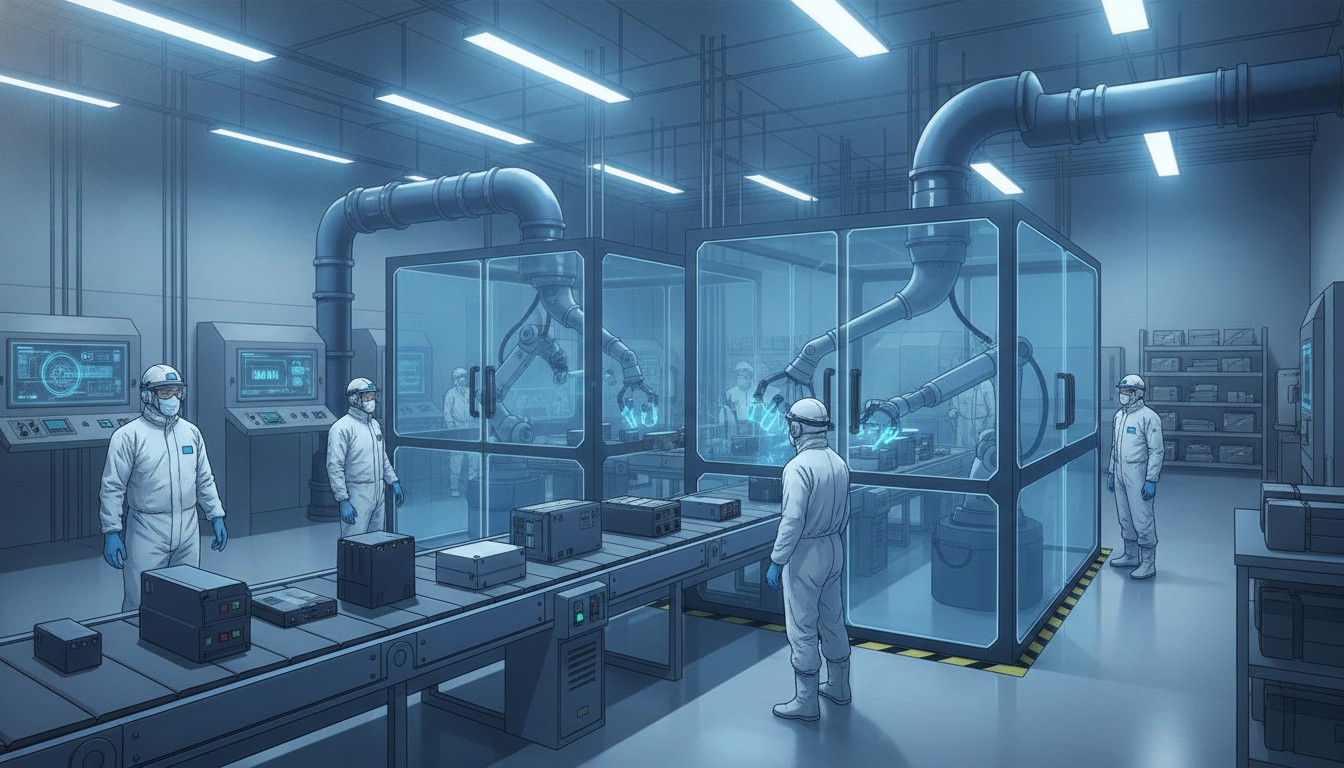
Three moves close the gap. First, design cells for disassembly, with packs that open without shredding the whole stack, so the reactive anode and solid layer can be separated early. Second, add dry-room pretreatment and gas capture to new plants, even if current feed does not need it, because retrofits cost more than spare space. Third, write chemistry-specific sampling into permits, so a load of sulfide cells triggers inert handling rather than the default water wash.
SK On’s sulfide pilot plant, which started in 2025 with commercial targets around 2029, shows the timeline. For context on who else is scaling, see our solid-state battery scoreboard for 2025 to 2026 and the first US plant producing lithium from recycled batteries. Recycling pilots trail cell pilots by a few years. That lag is normal, but only if recycling research runs in parallel instead of waiting for the first wave of dead solid-state packs.
Frequently Asked Questions
Are electric car batteries recyclable?
Yes for conventional lithium-ion. Operating plants recover most nickel, cobalt, copper, and lithium. Solid-state cells are recyclable in principle, but only pilots and lab demos handle them today.
Can solid-state batteries be recycled with current methods?
Partially. Smelting recovers some metals but loses sulfur, phosphorus, and much lithium value. Full recovery needs dry dissolution or modified water-free steps that most operating plants lack.
Why are sulfide electrolytes difficult to recycle?
They react with water and humid air, can release toxic hydrogen sulfide gas, and smear during shredding. Standard water-based leaching therefore needs redesign with dry solvents and inert gas.
What is direct recycling?
Direct recycling recovers cathode powder without breaking it down to raw metals, then refreshes it for new cells. For solid-state cells it often means dissolving only the electrolyte and leaving electrodes intact.
Do solid-state batteries degrade?
Yes, more slowly in theory because there is no liquid to dry out, but interfaces between the solid layer and electrodes still wear. That wear sets recycling timing, likely a decade or more after cars ship.
The bottom line
The plants opening today are good at yesterday’s battery. They shred, smelt, and leach liquid cells at scale. The coming battery keeps its electrolyte as a solid, and the leading sulfide version dislikes water, the core ingredient of current recovery. Pilots and lab demos point to workable fixes, from dry-solvent recovery to heat-first lithium capture, but those fixes live at a small scale. Build flexibility into plants now, and the mismatch stays a manageable upgrade instead of a stranded asset.


