
That yellow tint on your newborn’s nose can feel scary. You are tired, you are learning to feed, and now someone is talking about bilirubin levels. Take a breath.
New research from UC San Diego points to a small helper in this story: a sugar in breast milk called 3-prime-sialyllactose, or 3’SL for short. In a humanized mouse model, this milk sugar helped the newborn gut grow up faster and clear that yellow buildup. Here is what the study found, what it does not prove yet, and what it means for parents right now.
What that yellow tint really means
Jaundice is yellow skin and eyes in a newborn. It comes from bilirubin, a yellow leftover made when old red blood cells break down, like the peels left behind after you peel an orange. The body has to wrap up the waste and move it out.
Newborns make a lot of this waste at first. Their cleanup system is still waking up. So yellow builds up for a short time. This is very common. The UC San Diego team notes it affects up to 60% of full-term infants and up to 80% of preterm infants.
Most cases are mild and fade on their own. When bilirubin stays very high for too long, it can be harmful. In rare cases, it can reach the brain. That is why hospitals check bilirubin before discharge and ask you to come back quickly for a weight and color check. You can read how pediatricians describe what to watch for with jaundice in newborns.
The gut helps with cleanup too, not just the liver. The key tool is UGT1A1, a cleanup enzyme that tags bilirubin to make it water-soluble so it can leave in stool. Think of UGT1A1 as the mailroom worker who puts a shipping label on a package. Without the label, the package sits in the hallway.
Meet 3’SL, a tiny coach in milk
Sialyllactose is a small milk sugar built from sialic acid plus lactose. It is like a tiny message card attached to the milk sugar. It is part of a larger family called human milk oligosaccharides, or HMOs. These are complex sugars in human milk that babies cannot digest for energy.
So why make them? They feed good gut bacteria and help train the gut lining. Intelligent Living has covered how these milk sugars shape the gut microbiome well beyond infancy.

3’SL is one of the simplest sialylated HMOs. It is found in colostrum, the early thick milk, and in mature milk. Cow’s milk and standard formula have far less sialic acid. In this new study, the question was simple: does 3’SL help the newborn intestine mature and switch on its bilirubin cleanup?
What happened when mouse pups missed this sugar
This part is important: this was a mouse study, not a baby study. The mice were special humanized mice. They carried the human UGT1A1 gene, so they develop newborn jaundice much like human infants because that cleanup enzyme turns on late.
Researchers then fed pups milk without 3’SL. They did this by studying mothers that cannot make this sugar in their milk, working with UC San Diego’s Human Milk Institute. If these had been human babies, what parents would have noticed was slower thriving and deeper yellow.
In the humanized mouse model, pups without milk 3’SL showed:
- Lower survival in the newborn period
- Poorer growth and shorter small intestines
- More severe jaundice, with higher bilirubin in blood
- Much lower intestinal UGT1A1, the bilirubin tagging enzyme
- Gut genes that stayed less mature, with some pancreas-type genes switched on where they should not be
- Greater vulnerability to gut injury later in life
The full results were published Oct. 30, 2026 in the peer-reviewed journal Cellular and Molecular Gastroenterology and Hepatology, with the abstract indexed on PubMed under ID 42962888. The paper describes how maternal milk 3-prime-sialyllactose supports gut maturation. Senior author Robert Tukey, Distinguished Professor of Pharmacology at UC San Diego School of Medicine, said natural differences in milk sugar makeup might help explain why some infants get more yellow than others.
How a more grown-up gut clears yellow better
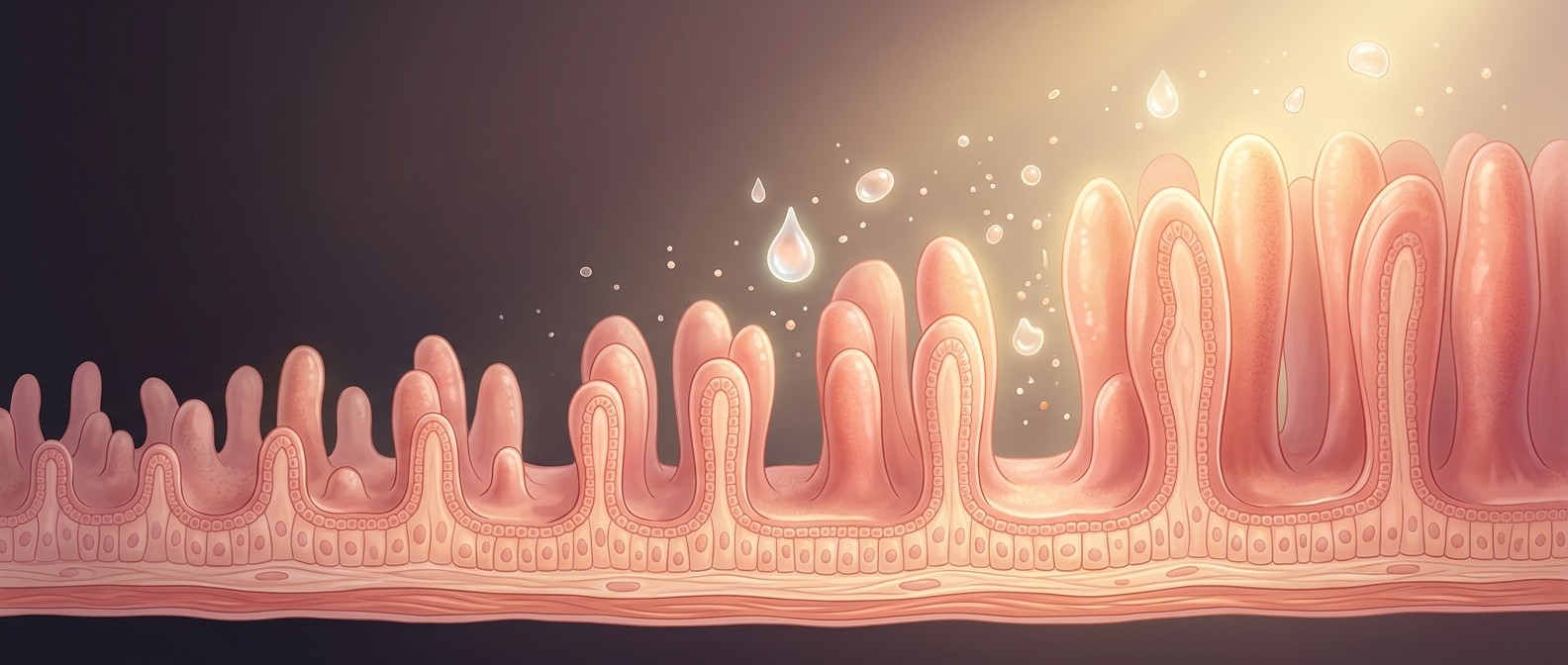
Picture the newborn gut as a new kitchen. The walls are thin. The staff is still training. Orders pile up. 3’SL looked like a trainer that helped staff learn their jobs faster in mice.
At the gene level, the team points to HNF4alpha. HNF4alpha is a master switch protein that tells gut cells to grow up and do adult jobs. It is the head chef calling out orders. When pups got 3’SL, this switch worked better. The gut made more UGT1A1 and looked more mature under the microscope.
Here are the terms in plain words:
| Word you will see | What it is, simply |
|---|---|
| Bilirubin | Yellow leftover from old red blood cells. Too much shows as yellow skin. |
| 3’SL (3-prime-sialyllactose) | A small sugar message in breast milk that seems to coach gut cells. |
| UGT1A1 | A cleanup enzyme that tags bilirubin so it can leave in poop. |
| HNF4alpha | A master switch that tells gut cells to mature and do their jobs. |
| St3gal4 | A gene that helps make 3’SL available. Without it, the signal is weak. |
Without the sugar, the chain broke down in mice. Less signal. Less maturation. Less UGT1A1. More yellow. That does not prove the same chain works exactly this way in human babies, but the humanized UGT1A1 pathway makes it worth testing further.
An early lesson the gut may remember
The most surprising part came later. Mice that lacked St3gal4, the gene linked to 3’SL supply, also had weaker guts as adults in this mouse model. When given a chemical that injures the colon, they lost more weight and survived less often.
Senior author Tukey put it this way in the UC San Diego release on the breast milk sugar and jaundice findings: “Our results suggest that early milk exposure could have lasting, systemic impacts on gut resilience.”
For parents, think of it like this. Early weeks may help set the tone for the gut. This is one more clue that milk is not just calories. It carries training notes. Other training notes include compounds like GML, a breast milk compound that slows harmful bacteria while letting helpful microbes grow.
Does this mean your milk causes jaundice?
No. This mouse study does not say breast milk causes jaundice. It hints at the opposite in mice: a part of breast milk helped reduce jaundice. Never stop, skip, delay, or change feeds because of yellow color alone. If you are worried about jaundice, feeding, sleepiness, or diapers, call your pediatrician the same day for a bilirubin check and feeding review.
Doctors describe two common feeding-related patterns. Early on, in the first few days, if feeding is still getting started, a baby may get fewer calories and poop less. MedlinePlus calls this breastfeeding jaundice, and it comes from low intake rather than from milk itself. Later, usually after day seven, some breastfed babies who are otherwise feeding well and gaining still stay a little yellow for weeks. This is often called breast milk jaundice, and its exact cause is still unknown. The UC San Diego team says that natural differences in milk makeup may play a role here too.
Milk makeup varies from parent to parent. The idea that natural variation in sugars like 3’SL could nudge jaundice risk is only a hypothesis from mice right now. It is not a test you can order. It is not a supplement you should buy. It is not a reason to stop breastfeeding. How you feed your baby is a personal choice, often shaped by health, work, and support. Fed is what matters, and any concerns about color, sleepiness, wet diapers, or feeding deserve a quick call to your pediatrician.
If you use formula, this is not bad news about you either. Researchers are already adding some HMOs to some formulas because early work shows supporting infant gut health in formula matters for long-term wellness. 3’SL is already listed as Generally Recognized as Safe in the US and is used in some formulas, but this new gut-maturation and jaundice link has not been shown in human infants and is not a reason to seek out any product.
Frequently Asked Questions
Is my breast milk causing jaundice?
In most cases, no. Jaundice comes from a newborn backlog of bilirubin plus a cleanup system that is still learning. Feeding struggles in the first days can make it linger because less stool leaves the body. If your baby is sleepy, hard to wake for feeds, has few wet diapers, or looks more yellow on chest, belly, or eyes, contact your pediatrician promptly for a bilirubin check. This article is information only and is not medical advice.
How is jaundice in newborn babies treated?
Many mild cases need no treatment beyond frequent feeds and close follow-up. When bilirubin is high, doctors use light therapy, often called phototherapy, which helps the skin break down bilirubin. Severe cases need hospital care and, rarely, exchange transfusion. Only your care team can decide. The mouse findings about 3’SL do not change current care.
Is 7 a high bilirubin level for newborns?
Parents often see a number like 7 mg/dL and worry. Whether that is high depends on your baby’s age in hours, gestational age, and risk factors. Doctors use hour-by-hour charts, not a single cutoff. A level that is fine on day four could be concerning on day one. Ask your pediatrician what the number means for your baby’s timing, and when to recheck.
Why is my breast milk yellow?
Early colostrum is often deep yellow or orange. That color comes from beta-carotene and concentrated nutrients, not from jaundice. Mature milk usually looks white, creamy white, or slightly blue-white, and can change color with diet. If you have questions about milk color plus a yellow baby, check with your care team rather than trying to judge by color alone.
The takeaway for tired parents
A tiny breast milk sugar coached the newborn gut in mice. With 3’SL, the gut matured faster, made more of its bilirubin cleanup enzyme, and cleared yellow better. Without it, pups grew less well and stayed more yellow, and adults showed weaker gut resilience.
Human babies are not mice. This humanized-mouse work gives scientists a clear lead: milk composition, not just milk volume, may shape jaundice risk and gut growth. The full UCSD paper is paywalled beyond its abstract, so human confirmation is still missing. The next step is human milk research, not home remedies or supplements.
For tonight, keep it simple. Feed often. Track diapers. Note the color spread. Keep follow-up visits. And bring worries early. Yellow is common, but you never have to sit with worry alone.


