
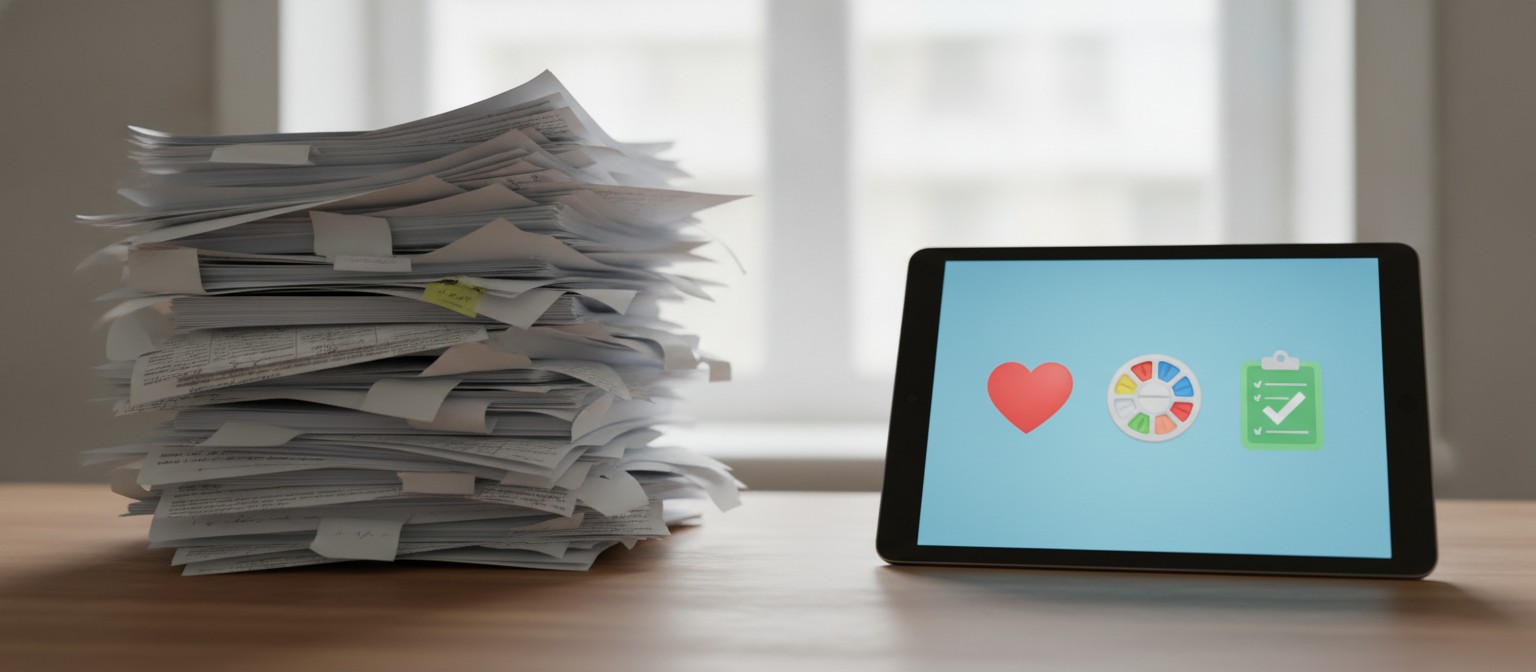
You’ve probably lived this. You leave a doctor’s office or a hospital with a stapled stack of paper, dense, jargon-heavy, printed in a font designed to fit everything on two pages rather than to be read. Maybe a nurse ran through instructions quickly while you were still processing the diagnosis. By the time you’re home, you’re not sure what you’re supposed to do, when, or why. That gap between information handed over and information understood is one of the quietest, most consequential failures in healthcare, and it’s finally starting to get fixed.
What Is Health Literacy?
Health literacy is the degree to which people can find, understand, and use health information to make decisions about their care. It isn’t about intelligence or education level, a brilliant engineer can be lost reading a discharge summary written in clinical shorthand.
The scale of the gap is striking. According to AHRQ, national assessment data found that only about 12% of adults have proficient health literacy, meaning the vast majority struggle, at least sometimes, to fully understand the health information they’re given. When most people can’t reliably interpret a medication label or follow written care instructions, education built on dense text is designed to fail.
Why Does Traditional Patient Education Fail?
Traditional patient education fails because it’s built for the provider’s convenience, not the patient’s comprehension. A pamphlet is cheap to print and easy to hand over, which is exactly why it persists, and exactly why it doesn’t work.
The specific failures are consistent: clinical jargon the patient can’t parse, one-size-fits-all content that ignores the individual’s condition and context, a passive format that asks nothing of the reader, and no check for whether any of it was understood. A patient can nod through instructions and retain almost none of them, and nobody finds out until something goes wrong. Patient education that only transmits information, without confirming it landed, isn’t really education.
What Does Good Digital Patient Education Look Like?
Good digital patient education is designed around understanding, not coverage. Instead of compressing everything onto a page, it breaks information into clear, manageable pieces a patient can actually absorb. Well-built health education content tends to share a set of features:
- Plain language that replaces clinical terms with words patients use.
- Visuals and animation that show a process or anatomy instead of describing it.
- Interactivity that asks the patient to engage, not just scroll.
- Teach-back and comprehension checks that confirm understanding.
- Accessibility and multilingual versions, so the content fits the actual patient.
The shift is from a document handed over and hoped-for, to learning content engineered so a frightened, distracted person can genuinely follow it.

Where Is Custom Healthcare E-Learning Used and Who Builds It?
Custom healthcare e-learning is used anywhere a patient or caregiver has to understand and act on something that matters. The highest-impact applications include chronic-condition self-management (diabetes, heart failure), pre- and post-procedure preparation, medication adherence, and caregiver training for families managing care at home.
Building this well is harder than it looks, because it has to be clinically accurate and genuinely understandable at once, a combination of medical rigor and instructional design that generic templates don’t deliver. Health systems and organizations increasingly turn to custom healthcare e-learning development to produce patient education that is both correct and comprehensible, pairing clinical expertise with the design that makes healthcare e-learning actually teach. The point isn’t fancier technology; it’s content built for how real patients learn.
Does Better Patient Education Actually Improve Outcomes?
Yes, understanding is directly tied to results, because patients who grasp their care are more able to follow it. The link runs the other way too: low health literacy is associated with worse outcomes, more errors, and higher readmission.
The National Academy of Medicine frames health literacy as an essential component of excellent patient outcomes, connecting a patient’s ability to understand their care to adherence, safety, and avoidable hospital returns. The practical implication is clear: when a heart-failure patient actually understands their medication and warning signs, they’re better equipped to manage their condition and stay out of the hospital. Better patient outcomes aren’t a side effect of good education, they’re often its whole purpose.
Health Education Is a Design Problem Worth Solving
For decades, the industry treated patient education as a formality, print the leaflet, check the box, move on. The result was predictable: information delivered, not understood, and patients left to manage serious conditions on guesswork. What’s changing is the recognition that making health information understandable is a design discipline, not a printing task. Custom e-learning won’t fix every gap in healthcare, but it addresses one that’s both enormous and fixable: the distance between what patients are told and what they actually understand. Close that gap, and people are simply better equipped to take care of themselves.


