
My dentist pointed at a molar and said the word “recession” the way you’d mention a leaky faucet. Minor. Watch it. That was four years ago, and I’ve since learned that watching it is exactly the wrong move. Gum tissue doesn’t announce itself. It retreats quietly, a fraction of a millimeter at a time, and by the time you notice a longer tooth in the mirror, the process has usually been running for years.
Here’s the good news buried under the bad: most of what accelerates recession is stuff you control. Brushing pressure, grinding at night, skipping cleanings when money gets tight. And the stuff you can’t control, like genetics and the slow march of time, is exactly where advanced gum care from a periodontist in Kansas City earns its keep, because a specialist measures tissue that a mirror can’t show you.
So let’s talk about the actual mechanics. Not the scary version, the useful one.
What’s really happening under the surface
Gums are not a sleeve that shrinks. They’re living tissue with a blood supply, and they sit on top of bone. When the bone underneath thins, the gum follows it down. That’s the part most people miss: recession is often a bone story wearing a gum costume.
According to the National Institute of Dental and Craniofacial Research, periodontal disease is one of the most common chronic conditions in adults, and its prevalence climbs steadily with age. The mechanism is boring and brutal. Plaque sits along the gumline, bacteria irritate the tissue, the body responds with inflammation, and chronic inflammation slowly breaks down the attachment between gum and tooth.
Time matters here, but not the way you’d guess. Aging alone doesn’t destroy gums. Aging plus decades of small unchecked irritations does. Two people can be the same age with completely different tissue levels, and the difference is usually a handful of habits stacked over twenty years.

Three everyday things that speed it up
Hard brushing. I did this for years. Medium bristles, scrubbing like I was cleaning a grill. Gum tissue is not grill. It responds to gentle, angled pressure at the gumline and punishes anything aggressive. Switch to soft, tilt the brush 45 degrees, and let the vibration or the motion do the work.
Clenching and grinding. You may do this entirely asleep. The force travels down through the tooth and into the supporting structures, and the tissue pays for it. If you wake up with a tight jaw or a dull ache near your ears, that’s a clue worth mentioning at your next visit.
Smoking, in any amount. The Centers for Disease Control and Prevention is blunt about tobacco’s role in gum disease, and the sneaky part is that smoking masks the early warning signs. Smokers tend to bleed less, so the tissue looks calmer while it is actually deteriorating faster. That false comfort has cost a lot of people a lot of bone.
Why “just get a cleaning” isn’t always the answer
Standard cleanings remove plaque above the gumline. Recession and periodontal disease live below it, in a pocket between the gum and the root that you cannot reach with floss no matter how virtuous you are. That pocket has a depth, measured in millimeters with a small probe, and depth is the number that matters.
Here’s what I’d tell a friend: if your hygienist reads numbers out loud during probing and you hear anything in the four-plus range in the same spot two visits running, that’s your cue to stop treating this as a cleaning problem. A general dentist can handle a lot, but a periodontist handles the tissue and bone architecture itself, which is a different skill set entirely.
The American Dental Association maintains consumer guidance on gum disease stages that’s worth ten minutes of your evening, mostly so you know which words to use when you call. Being able to say “I have a five-millimeter pocket on the lower right that hasn’t changed in two years” gets you a very different conversation than “my gums feel weird.”
The four-step routine that actually holds the line
None of this is exotic. All of it is boring and repeatable, which is why it works.
- Brush the gumline, not just the teeth. Two minutes, soft bristles, angled where tooth meets tissue. Electric helps if you tend to press, since most models stall out when you push too hard.
- Clean between the teeth with something other than floss if floss doesn’t happen. Interdental brushes, soft picks, whatever you’ll actually use daily. Perfect technique you skip beats sloppy technique you do.
- Write down your pocket numbers after each visit. A notes app is fine. Trends over two or three visits tell you more than any single reading.
- Address the forces. If you grind, ask about a nightguard. If you clench at your desk, set a reminder to unclench your jaw. Sounds silly. Helps.
That fourth one is the sleeper. I ignored it for two years because it felt like a stress problem dressed up as a dental problem. It was both.
Do gum grafts actually work?
Yes, when the tissue is thin enough to warrant one and the underlying cause is managed first. A graft covers exposed root, which reduces sensitivity and protects the tooth surface, but grafting over active inflammation is like painting a wall with a leak behind it. Fix the cause, then rebuild.
This is where the timeline gets honest. Recession doesn’t reverse on its own. What you’re buying with good care is a flatter line, a slower curve, and fewer surprises at sixty-five. Stability is the win, and stability is unglamorous.
What to actually do this month
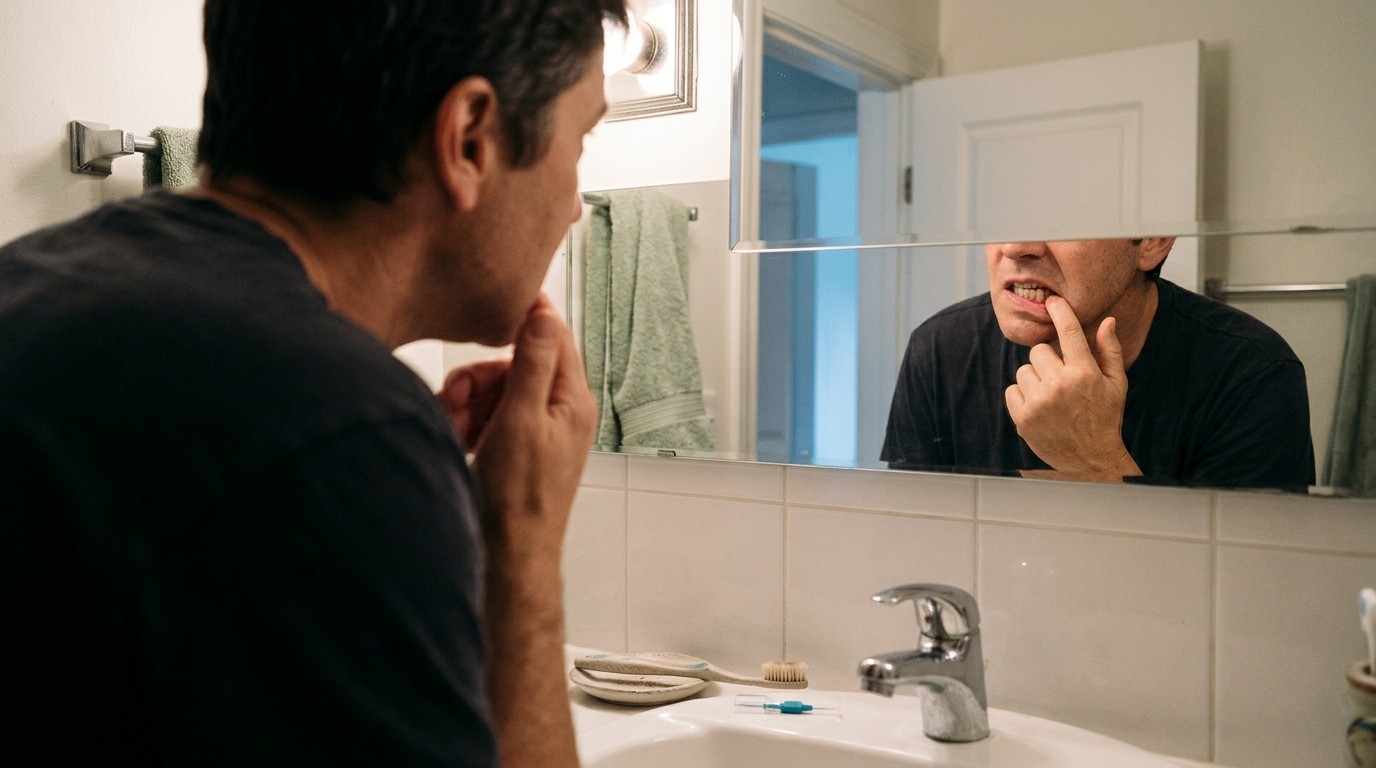
Look at your teeth in a bright mirror and check whether the gumline sits level across matching teeth on both sides. Run a fingernail gently along the gum edge, and notice any spot that feels sensitive or looks shinier and paler than the rest. Then book the visit you’ve been postponing and ask for your probing depths in writing.
One more thing worth saying plainly: nobody flosses perfectly, and shame is a terrible motivator for a habit that needs to last forty years. Consistency at 70 percent beats intensity that burns out by March.
Your gums are keeping a very slow, very quiet record of every choice. The question is whether you want to read it now, while the numbers are small, or later, when they aren’t. Which one are you picking?


