
Materials research moves forward through a chain of small, precise physical steps: transferring fluids without contamination, melting powders at extreme temperatures, grinding samples to uniform fineness, pressing pellets, cutting hard materials cleanly, and testing devices under tightly controlled conditions. Each step depends on equipment that is chosen as carefully as the experiment itself. This guide walks through the workhorse instruments that modern materials labs rely on, what each one does, and why their quality directly shapes the accuracy and repeatability of published results.
Essential Lab Equipment at a Glance
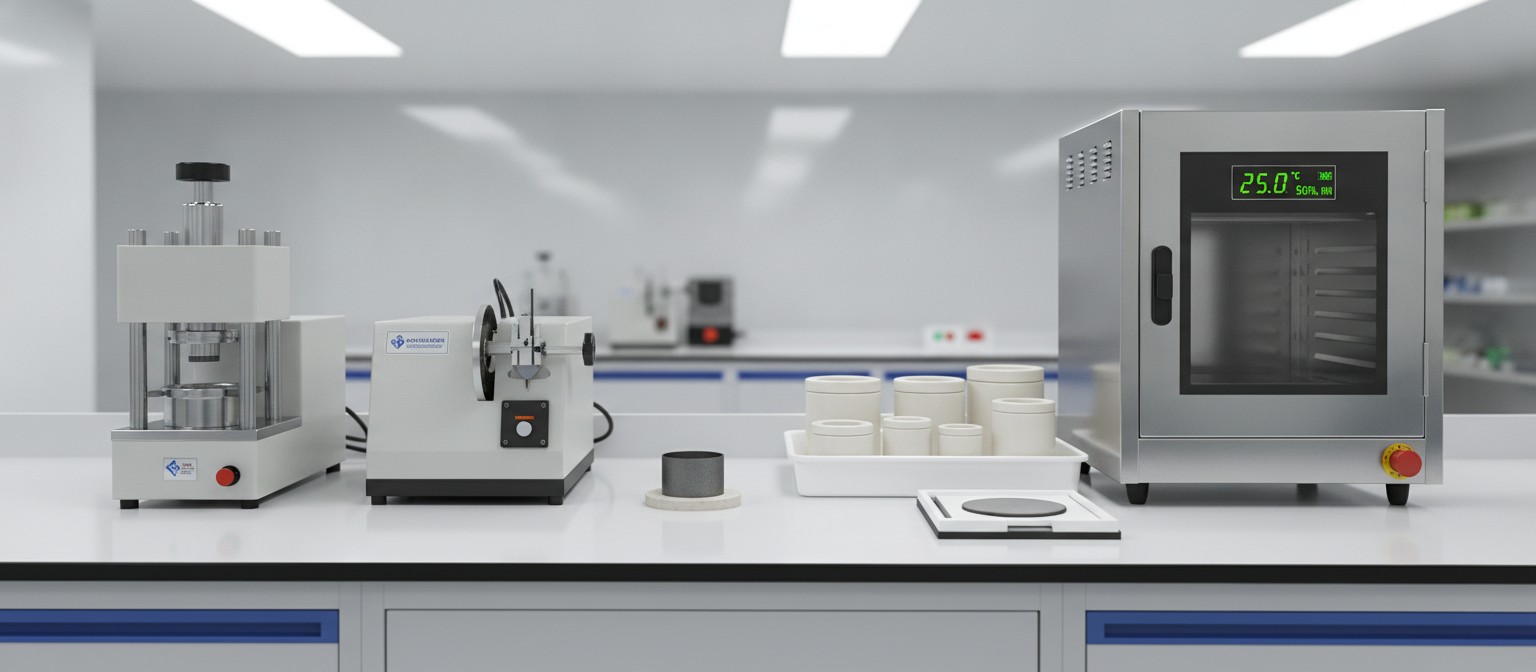
Before diving into individual instruments, here are the essential categories covered in this article, roughly in the order a sample flows through a lab. If you are still planning the lab itself, our guide on how to prepare for a major research project covers the organizational side:
- Peristaltic pumps for clean, accurate fluid transfer
- High purity crucibles for high-temperature melting and synthesis
- Planetary ball mills and zirconia jars for grinding and mixing powders
- Heated lab presses for forming pellets and solid samples
- Precision diamond saws for sectioning hard materials
- Constant temperature and humidity incubators for controlled-condition testing
- Single-crystal substrates, such as strontium titanate, for thin film research
Suppliers such as MSE Supplies, which stocks advanced materials and much of the equipment on this list, have made these categories a de facto checklist for labs building out a materials research program.
Peristaltic Pumps: Contamination-Free Fluid Transfer
A peristaltic pump moves liquid by mechanically squeezing a flexible tube, so the fluid never touches the pump mechanism itself. Only the tubing makes contact with the sample. That simple design solves two problems at once: it eliminates cross-contamination between samples, since the tube can be replaced cheaply between runs, and it handles aggressive or particle-laden liquids that would destroy an internal pump mechanism.
In materials labs, peristaltic pumps appear wherever precise, repeatable dosing matters, including sol-gel precursor feeds, slurry transport, and continuous dosing in flow reactors. Flow rate is controlled by motor speed and tube diameter, making the output highly predictable. The main engineering consideration is tubing selection: the tube material must resist the chemistry being pumped, and it has a finite flex life, so labs track and replace tubing on a schedule.
High Purity Crucibles: Graphite and Boron Nitride at High Temperatures
Whenever a material must be melted, sintered, or heat treated above about 1,000°C, the container matters as much as the furnace. An impure or reactive crucible can leach contaminants into a melt at exactly the temperatures where tiny impurity levels change a material’s properties.
- Graphite crucibles are workhorses for melting metals, valued for their thermal shock resistance and chemical inertness toward many molten metals.
- Boron nitride (BN) crucibles withstand extreme temperatures, do not wet most molten metals, and add essentially no contamination, which makes them the go-to choice for ultrapure melts and crystal growth work.
Matching crucible material to both temperature and melt chemistry is one of the most consequential sample-prep decisions a lab makes. A mismatched vessel does not just fail; it can quietly alter the composition of the very material being studied.
Planetary Ball Mills and Zirconia Jars: Grinding and Mixing Powders
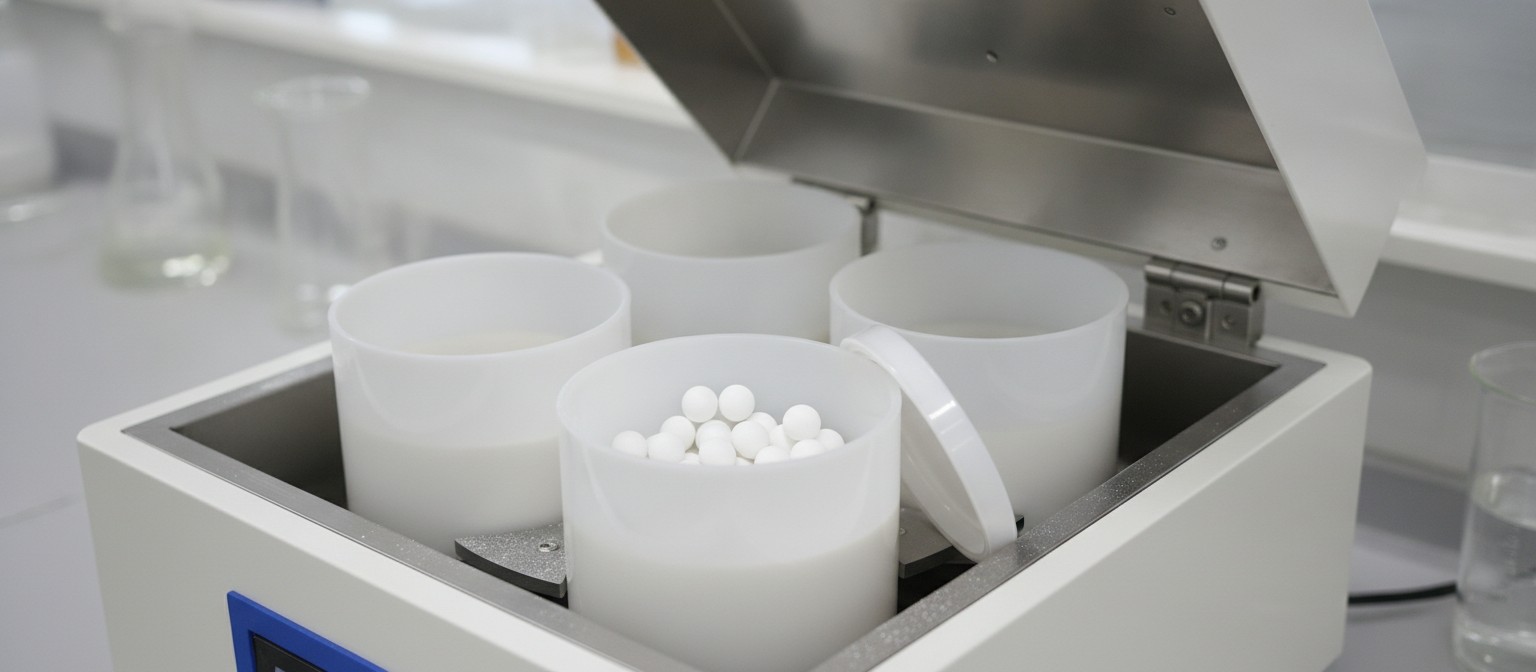
A planetary ball mill uses rapidly rotating jars mounted on a counter-rotating disk, so the grinding balls inside hit the powder from constantly changing directions. The result is extremely fine, homogeneous powder, often down to the nanometer range, which is essential for solid-state synthesis, battery electrode materials, and mechanical alloying.
The jar and ball material is the hidden variable here. Steel media gradually wears into the milled powder and introduces iron, which can distort trace-sensitive measurements. Zirconia (yttria-stabilized zirconium oxide) jars and balls avoid this problem because they are extremely hard, wear-resistant, and chemically inert, so the powder’s final composition stays true to the recipe. For analytical work where trace impurities matter, zirconia media is the usual baseline choice.
| Grind goal | Typical setup | Typical run time |
|---|---|---|
| Homogenizing a powder blend | Low speed, larger balls | 15 to 60 minutes |
| Fine grinding to micron scale | Medium speed, mixed ball sizes | 1 to 6 hours |
| Mechanical alloying or nano powder | High speed, high ball-to-powder ratio | 6 to 24 hours, often in cycles |
Heated Lab Presses: Making Pellets and Solid Samples
Heated laboratory presses combine heat and pressure in one fixture to compress powders into dense pellets, laminates, or test coupons. In sample preparation for X-ray fluorescence, infrared spectroscopy, and materials testing, pellet quality directly determines measurement quality: a poorly pressed pellet crumbles, gives inconsistent density, and produces noisy data.
Heated presses matter most for polymer and composite work, where the material must be held above its softening point while being compressed into a uniform, void-free plaque. Modern programmable presses control temperature, pressure ramp, and dwell time, so a pressing recipe becomes part of the experimental record, and results can be repeated exactly.
Precision Diamond Saws: Clean Cutting of Hard Materials
Ceramics, hardened steels, superalloys, glass, composites, and mineral samples eat ordinary saw blades. Precision cutting machines mount a thin diamond-rimmed blade and use slow feed rates with coolant, trading speed for surface quality. The payoff is a cut face with minimal sub-surface damage, no smeared edges, and clean geometry suitable for microscopy, fracture testing, or preparing specimens for further polishing.
In fracture mechanics and failure analysis, a fresh, damage-free cut surface can be the difference between measuring the material’s real properties and measuring the damage introduced by the preparation step itself.
Constant Temperature and Humidity Incubators: Controlled-Condition Testing
Many material behaviors only become measurable when temperature and humidity are held steady: coatings adhesion, corrosion behavior, concrete curing, polymer aging, and pharmaceutical stability all drift with ambient conditions. Constant temperature and humidity chambers hold a setpoint tightly for days or weeks, so a test run reflects material behavior rather than the weather outside the lab window.
A typical chamber reliably holds roughly 20 to 80 °C and 20 to 95 percent relative humidity, though exact ranges vary by model. For reliability testing, the key specifications are not just the setpoint range but temperature uniformity across the chamber volume and recovery speed after the door opens.
Crystal Substrates: Strontium Titanate and Thin Film Research
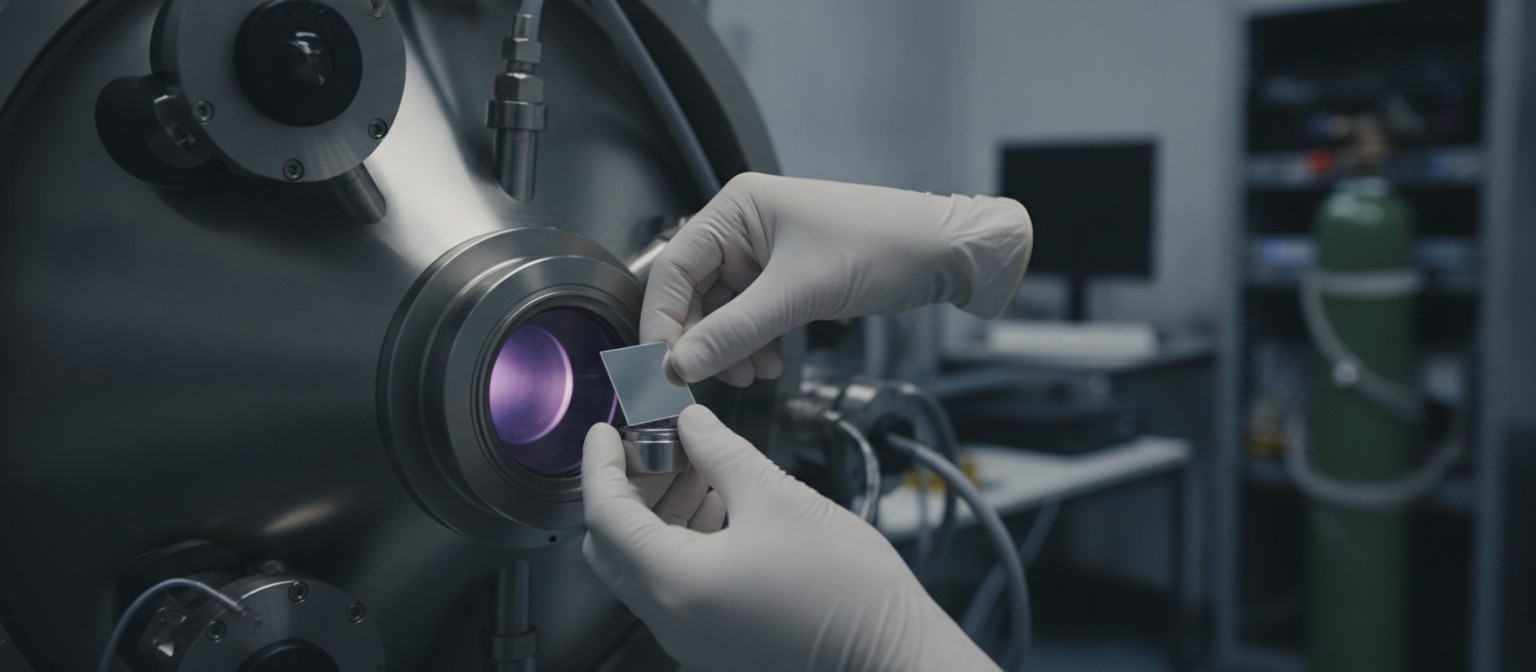
Thin film research, from high-temperature superconductors to oxide electronics, depends on a foundation that is nearly perfect: a single-crystal substrate whose atomic lattice matches the film being grown. Researchers deposit films on such substrates with controlled strain and minimal defects, so the properties they measure reflect the material itself rather than the messiness of an uncontrolled surface.
Strontium titanate (SrTiO3) is one of the most widely used substrates for this work. It has a perovskite crystal structure with a lattice parameter of about 3.905 angstroms, an excellent match for a broad family of functional oxides, including high-temperature superconductors, manganites, and layered oxide phases. When researchers at Sandia National Laboratories developed methods for transferring bismuth-based layered oxide thin films, they grew the films epitaxially on strontium titanate specifically to satisfy lattice matching and minimize defect formation, then transferred them to flexible supports for practical device use.
SrTiO3 also anchors the well-known two-dimensional electron gas that forms at its interface with lanthanum aluminate. Because bulk substrates are costly and limited in size, substrate quality, surface termination, and consistent growth conditions directly determine whether a device’s measured properties are intrinsic to the material or an artifact of the growth process.
Why Equipment Quality Determines Data Quality
A recurring pattern across all of this equipment is that small compromises compound. Milling media that wears into the sample, a crucible that contaminates a melt, a press that leaves voids in a pellet, a chamber that drifts by a few degrees, or a substrate with imperfect crystallinity does not usually cause an experiment to fail loudly. It causes results that are subtly wrong and difficult to reproduce.
Reproducibility reviews in fields from battery science to polymer analysis repeatedly identify sample preparation variance as a leading cause of inconsistent results between labs. This is why experienced labs invest in well-specified equipment and treat consumables like crucibles, milling jars, and crystal substrates as critical experimental components rather than afterthoughts. Repeatability is not just a habit; it is designed into the hardware choices at the start. The broader shift toward smart, automated laboratory instruments pushes in the same direction, since programmable equipment makes it easier to hold every precise recipe constant.
Frequently Asked Questions
What is the most important piece of lab equipment for materials research?
There is no single answer, because different steps dominate different projects. In practice, the grinding and high-temperature synthesis steps, handled by ball mills and crucible-equipped furnaces, tend to set quality ceilings, while presses, pumps, and controlled-condition chambers determine how consistent measurements are.
Why use zirconia milling jars instead of steel?
Steel media sheds iron into the milled powder, which changes composition and can distort measurements. Zirconia is hard, wear-resistant, and chemically inert, so it preserves the intended chemistry of the sample.
What makes boron nitride crucibles special?
Boron nitride withstands very high temperatures, resists wetting by most molten metals, and adds essentially no contamination, making it well-suited to ultrapure melts and crystal growth where impurity levels must stay minimal.
How do I choose the right crucible material?
Match the crucible to the highest temperature of the process and the chemistry of the melt. Graphite suits many metal melts, boron nitride suits ultrapure and non-wetting applications, and other specialized ceramics fill the gaps in between.
Conclusion
Materials research succeeds or fails on the reliability of its least glamorous steps. Accurate pumps, chemically clean crucibles and milling jars, precisely controlled presses and saws, stable test chambers, and near-perfect crystal substrates form the quiet infrastructure behind nearly every high-quality materials result. Investing in quality equipment is not a luxury; it is the foundation on which accurate, repeatable, reproducible science is built.


