
Quick test: think of the last time a friend admitted their clear aligners didn’t fix the problem. Now think of how often people quietly regret that. The second story is far more common than the first, mostly because clicking trays in and out four times a day is easy to promise and hard to do for eighteen months straight. The honest truth is that aligners are a great tool for a specific set of smiles and a mediocre tool for another set, and nobody tells you which bucket you’re in until you ask.
This is the question to settle before you look at prices: what does your particular bite actually require? The clearest place to start is a conversation about your treatment options with an orthodontist in Winnipeg, Manitoba, because the answer comes from your mouth, not from a trending search result. Still, you can walk in smarter. Here’s what separates the two paths.
What Braces Do That Aligners Struggle With
Fixed braces move teeth with controlled, continuous force. Little metal or ceramic brackets bond to each tooth, a wire threads through them, and the orthodontist tightens or changes that wire over time. Because the hardware is glued in place, it can be staged for problems aligners were never designed for: awkward rotations, teeth that need to travel sideways, molars that sit unevenly in the jaw.
Aligners are clear plastic trays that slide over your teeth and shift them through a series of planned positions. According to the US Food and Drug Administration, clear aligners are commonly used for mild to moderate orthodontic issues such as crowding and gaps between teeth, while more complex conditions may require traditional braces. That single sentence covers most of the confusion floating around online.
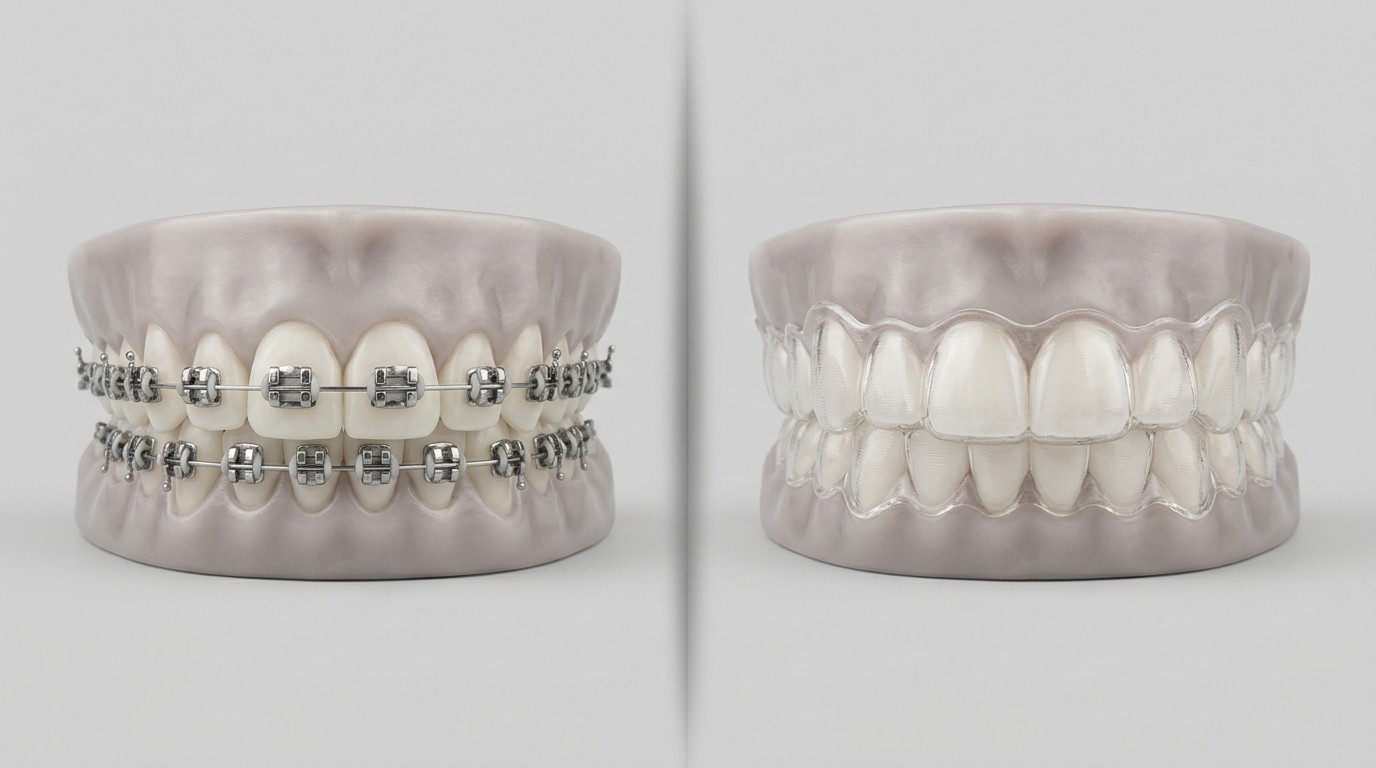
Here is the blunt version: if your orthodontist says either choice will work, ask two questions instead. Which one gives the better final result, and which one are you more likely to finish? In that scenario, the sensible pick is usually the option that needs less discipline. A mediocre appliance used perfectly beats a brilliant appliance abandoned in month six.
Three Questions That Sort You Into a Plan
A dental degree isn’t required to predict the answer. What’s required is honesty about three things.
- Are you willing to wear trays 20 to 22 hours a day? Eating, coffee, and snacks all mean taking them out. Most people overestimate how patient they’ll be by week three.
- How complex is the correction? Narrowing spaces, rotated front teeth, filler work around crowns and bridges, and crossbites push you toward brackets.
- Do you have a teenager who forgets homework? Aligners and school lunch bags have a well-documented history of separation.
If you answered “probably” to the first question, “messy” to the second, or “yes, that’s my kid” to the third, fixed braces deserve top of your list. That’s not a failure of modern tech. It’s a match problem.

A Case That Flips the Usual Advice
Picture a 41-year-old named Dana. She wants a straighter front row, has a mild overbite, and works in sales meetings all day. She picks clear aligners. Nine months in, her trays sit in a cup during client lunches more hours than they should, and the tracking stops fitting cleanly.
One practical approach is a rough but honest test called the Twelve-Hour Reality Check. For three days before your consultation, log every hour you’d have to remove trays. Count coffee, lunch, the office birthday cake, the evening wine, and the whole evening snack. If your total removal time lands above four hours a day, or you can’t get through a single workday without three separate removals, braces will save you from your own calendar. The test is rough, but it’s honest, and it costs nothing.
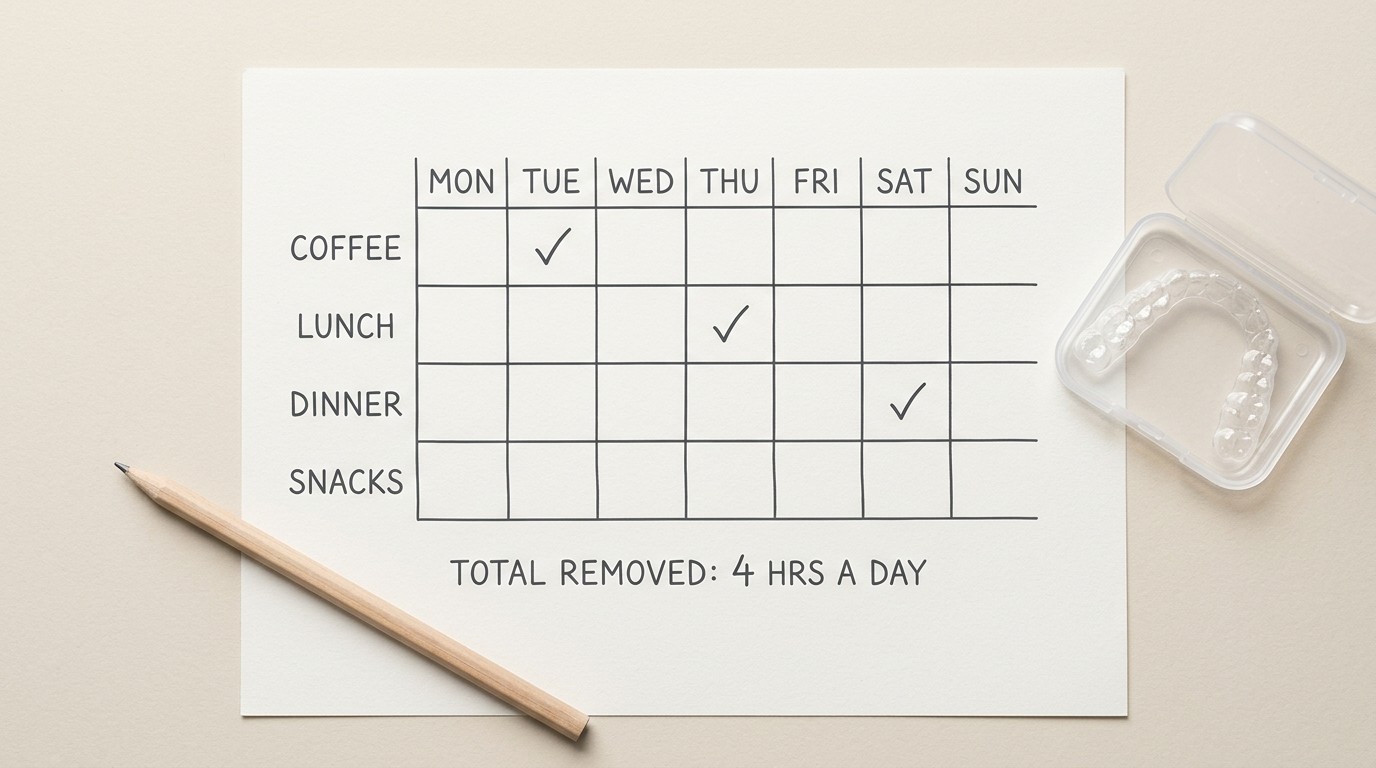
Dana switched to ceramic brackets and finished on schedule. The lesson wasn’t that aligners failed. It was that the plan ignored her workday.
The Case for Aligners, Without the Hype
None of this makes brackets the default. For a tidy, mild case in a disciplined adult who brushes well and travels for work, aligners are genuinely better: fewer sharp edges, no wire poking a cheek at 2 a.m., easier cleaning, and almost nobody notices them. Teenagers who play contact sports can wear a mouthguard without worrying about brackets catching a glove.
Adults weighing the two paths have more than metal and plastic to compare. A broader look at the Orthodontic treatment options for adults can choose from covers lingual brackets, self-ligating systems, and accelerated techniques, all of which change the trade-off between visibility and control.
Aligners also come with their own chore list. You clean trays, you keep up with scans or check-ins, and you cannot lose one without a call to the office. The Canadian Dental Association lays out the full menu of orthodontic appliances and notes that clear aligners are available for adults alongside ceramic and metal braces, which is a polite way of saying the wrong tool wastes months.
What the First Visit Should Actually Cover
Good consultations tend to follow the same shape. You’ll get records, which usually means x-rays, photos, and a scan of your bite. You’ll get a written diagnosis in plain language, not just “we recommend braces.” You should also see a comparison of your two realistic choices with an honest note about which one finishes more predictably for your mouth.
Bring this checklist to your consultation:
- Your Twelve-Hour Reality Check log
- Photos of your teeth from the front and each side
- A list of crowns, implants, or missing teeth
- Sports, band instruments, or jobs where a bracket could get in the way
- Two questions: what would go wrong if I picked the other option, and who covers a retainer in year two?
The retainer question matters more than people expect. The American Dental Association and most clinical guidance stress that retainers preserve and stabilize the results of treatment, so a cheap first-year plan can leave you paying for a fix in year three. Ask about that before you sign anything.
Cost, Time, and the Trap of the Cheapest Quote
Comparing quotes is tricky because the numbers hide different things. A low alignment quote may not include retainers, extra scans, or refinements. A braces quote might include everything and still come out cheaper over the full treatment. Look at the total package, the monthly plan, and whether the office offers interest-free payments, because a free consult is only useful if the total number is clear on page one.
Timelines also wobble. Braces for a moderate case usually run somewhere between a year and two years, and aligners can match that or beat it, but only when the trays actually get worn. Ask each office for a realistic range, then ask what happens if treatment runs long.
Badly spaced teeth can be harder to clean and easier to chip, which is the real reason to fix this now rather than at a milestone birthday. Straight teeth aren’t a vanity project. They’re easier to care for, and that matters for the next forty years of dental checkups.
How to Pick a Clinic You’ll Actually Finish With
The rule worth following: pick the orthodontist, then pick the appliance. Look for someone who explains why the other option won’t work for you, not just why theirs will. Sit through the consult and notice whether you feel rushed. Ask about emergency visits and how quickly you can get a broken wire fixed, because that tends to happen at the worst possible time.
Demand for orthodontic care has stayed steady across age groups for years, but no workforce statistic will reveal whether the person holding the tools listens to you. That becomes clear inside twenty minutes.
The Short Version
Aligners win on looks and comfort. Braces win on complexity, consistency, and anything requiring fine control. The right answer depends on your bite, your calendar, and whether you can keep a promise to yourself for a year and a half. Write down what you’d have to remove trays for this week. If the pile is taller than the tray, treat this as a sign.
What would have to be true about your daily routine for clear aligners to actually work? If you can’t answer that in one sentence, book a consult, bring your log, and ask the honest question, which is which option you’re least likely to quit.


