
For decades, suburban homeowners poured renovation budgets into cosmetic interior upgrades like granite surfaces and fresh tile. Today, shifting weather patterns and climbing utility costs require you to rethink your property priorities from the outside inward. Investing in a durable building envelope transforms your house into an energy-saving sanctuary that guards against destructive storm fronts.
Upgrading your exterior shield keeps indoor temperatures balanced across all four seasons while shrinking your carbon footprint. You protect your family’s comfort, slash monthly expenses, and build lasting structural resilience.
Why Does Roof Solar Reflectance Matter for Your Energy Bills?
Summer sun transforms standard asphalt shingles into massive heat radiators that bake attic spaces throughout the day. Solar radiation can heat a standard asphalt shingle roof surface to 140 degrees Fahrenheit or more, and the attic air beneath it climbs right along with it, forcing cooling equipment to run continuously without catching a break. Modern cool-roof shingles feature reflective mineral granules that bounce sunlight directly away from your roof deck before heat penetrates attic insulation.
The U.S. Department of Energy reports that reflective cool roofing materials can stay around 50 degrees Fahrenheit cooler than a conventional dark roof under strong midday sun. That thermal reduction keeps upper living levels significantly cooler throughout summer heatwaves. Your air conditioning system runs fewer cycles, reducing wear on compressor motors and cutting electric bills.
Combined with reflective shingles, continuous intake soffits and ridge vents purge residual heat through steady air circulation. Trapped heat escapes through high ridge outlets while pulling fresh air across the underside of roof sheathing. Your roof decking stays dry, preventing heat buildup and stopping moisture condensation that rots structural rafters.
What Upgrades Maximize Roof Deck Protection?
Pairing reflective surfaces with continuous airflow creates a complete thermal barrier above your ceiling drywall. You can optimize your roof system by targeting specific vulnerable zones across the structure.
- Install intake soffits: Continuous perforated eaves draw outdoor air upward to circulate along rafters.
- Add radiant barriers: Foil-faced panels reflect radiant heat downward away from conditioned ceilings.
- Upgrade ridge vents: Low-profile ridge caps release rising thermal air along the entire peak line.
- Seal attic penetrations: Expanding foam seals block heated air from creeping down into second-story bedrooms.
Balanced attic air movement prevents winter ice dams by keeping your roof surface at uniform outdoor temperatures. Snow melts evenly across the entire slope instead of freezing at cold eaves and backing up under shingles.
How Does Integrated Cladding Stop Thermal Energy Loss?
Traditional siding materials often leave structural wall studs exposed to outdoor temperature swings through direct thermal bridges. Wood framing members conduct outdoor chill straight into interior wall cavities, creating cold spots and forcing heating systems to work overtime.
Building envelope studies compiled by the U.S. Department of Energy show that adding continuous exterior insulation and cladding can lower cooling energy use by roughly 15 to 26 percent compared with a wall system built to older code specifications. Wrapping wall frames eliminates drafty corners and keeps room temperatures uniform across your floor plan, and the same principles carry over to the options outlined in this guide to roofing materials that save energy. Continuous thermal barriers stop interior wall sweating, protecting indoor air quality and stopping mold development.
Why Should You Align Your Exterior Remodeling Projects?
Piece-by-piece renovations frequently leave weak transition gaps between your roof edge, wall panels, and drainage system. Partnering with a skilled home exterior company coordinates your roof decking, siding corners, and gutter profiles under one master plan. A single skilled team aligns interlocking materials properly so water flows away from vulnerable building joints.
When different crews handle separate tasks, warranty coverage becomes murky if moisture leaks occur at adjoining seams. A coordinated crew installs custom step flashing, drip edges, and siding channels that work together as one cohesive drainage defense.
What Makes Impact-Resistant Siding Superior in Heavy Storms?
Standard vinyl siding turns brittle during freezing winters and cracks easily when severe storms drop large hail. Heavy wind gusts can grab loose siding edges, ripping whole panels away from wall sheathing and exposing framing to driving rain. Advanced composite panels utilize interlocking tongue-and-groove joints that stay locked together during severe wind gusts.
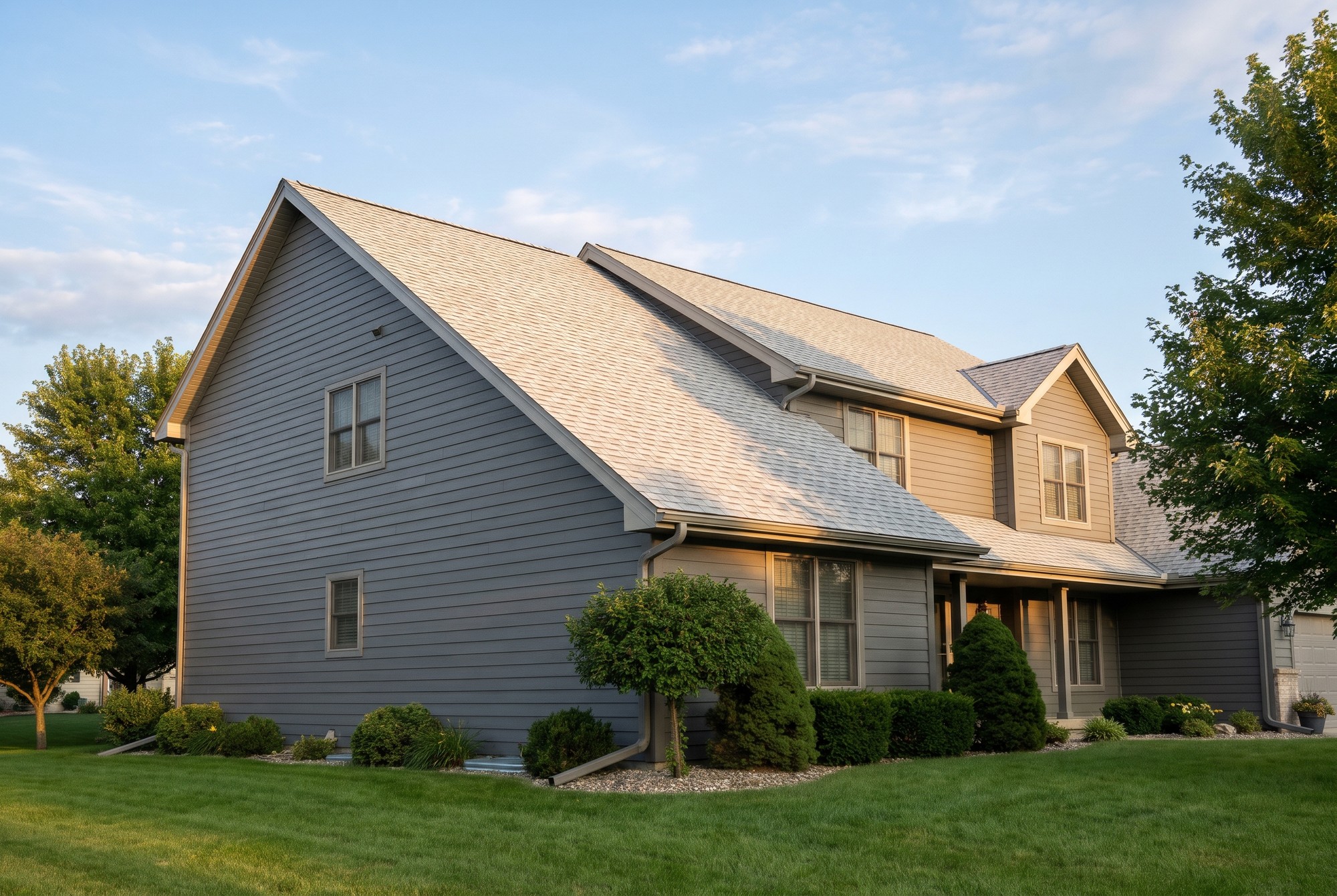
Heavy-gauge composite cladding absorbs impact energy from flying tree branches without cracking or puncturing. Dense core materials resist heavy physical blows that would leave metal siding dented and vinyl shattered into pieces. Choosing impact-rated materials shields your house frame from storm projectiles and prevents urgent mid-storm emergency repairs.
- Resist hail strikes: Impact-rated resin matrices absorb heavy hail blows without cracking exterior surfaces.
- Withstand wind uplift: Interlocking panel edges stay anchored firmly against powerful storm gusts.
- Block moisture absorption: Engineered composite formulas will not swell, soften, or rot during persistent storms.
- Maintain color integrity: Ultraviolet-resistant surface finishes protect exterior color from sun fading over decades.
How Do Self-Adhering Barriers Prevent Hidden Moisture Damage?
Wind-driven rain can push beneath primary siding and roofing layers during intense severe storms. Secondary weather barriers provide the true defense line that keeps structural wooden frames dry and sound. Self-adhering synthetic roof underlayments seal tightly around every nail penetration, stopping driven rain from reaching roof plywood if high winds strip away shingles.
Modern permeable house wraps allow indoor water vapor to escape outside while stopping liquid raindrops from entering wall cavities. Breathable wraps prevent trapped condensation that rots wall studs and destroys batt insulation efficiency. Flashing tapes sealed around window frames and door headers stop wind-driven rain from sneaking behind brick or composite veneers.
Why Are Oversized Gutters Crucial for Foundation Defense?
A resilient roof requires an equally capable drainage network to steer cascading water safely away from basement foundations. Standard five-inch gutters frequently overflow during cloudburst downpours, dumping torrents of water along foundation footing perimeters.
Directing roof water through oversized downspouts prevents pooling that saturates soil and cracks concrete foundation walls. Soil saturation around footings causes basement floor heave and dampness that ruins finished basements. Clean, seamless gutter runs paired with wide downspout extensions protect foundation stability and preserve surrounding garden grading.
How Do Envelope Upgrades Increase Suburban Property Value?
Modern home buyers look past fresh staging paint, paying close attention to building efficiency, roof age, and structural protection. Installing durable siding and energy-smart roofing signals to prospective purchasers that your home offers low future repair costs and predictable utility bills.
Insurance carriers frequently reward homeowners who install impact-rated exterior envelopes with significant annual premium discounts. Your upfront investment pays returns through lower energy bills, reduced insurance premiums, and reduced storm repair costs. Investing in whole-envelope resilience safeguards your immediate comfort while securing outstanding equity growth for your suburban property.
Viewing your home as an integrated, energy-efficient system maximizes indoor comfort and builds long-term asset value. Combining impact-resistant roofing, continuous thermal siding, and coordinated water management creates an impenetrable shield against unpredictable weather. Choosing modern exterior building materials safeguards your family while protecting your greatest investment for decades to come.


