
Every autumn, the same quiet negotiation happens in hallways across the country. A solid bookcase, a dining table with years left in it, and a chair that no longer fits the room—all of them need to go before the holidays, and all of them deserve better than the charity shop guessing game or, worse, the skip. The obstacle is rarely the furniture. It is the listing. Two dim photographs and the words “good condition” leave a buyer unable to answer the only questions that matter: how big is it really, what state is it honestly in, and would it work in my home?
Video answers those questions in under a minute, provided it is made with the same honesty the buyer hopes to find. This is a practical approach for households clearing space and for secondhand sellers alike, built around showing a piece clearly rather than selling it hard. The use-story transitions that make these videos persuasive can be drafted first with Kling 4.0 for secondhand furniture stories, as the tool for the first story-transition draft, before any final filming or editing takes place.
Photograph the truth first: size, surface and wear
Before any video, gather a set of real photographs that document the piece as evidence. Take one straight shot from each side in decent daylight, then take close shots of the details a buyer will zoom in on: corners, joints, handles, the underside if it tells a story. Then photograph the wear. The scuff on the leg, the ring mark on the top, and the drawer that sticks slightly. These are not flaws in the listing. They are the listing, because a buyer who has seen the wear in advance arrives expecting the piece they actually get.
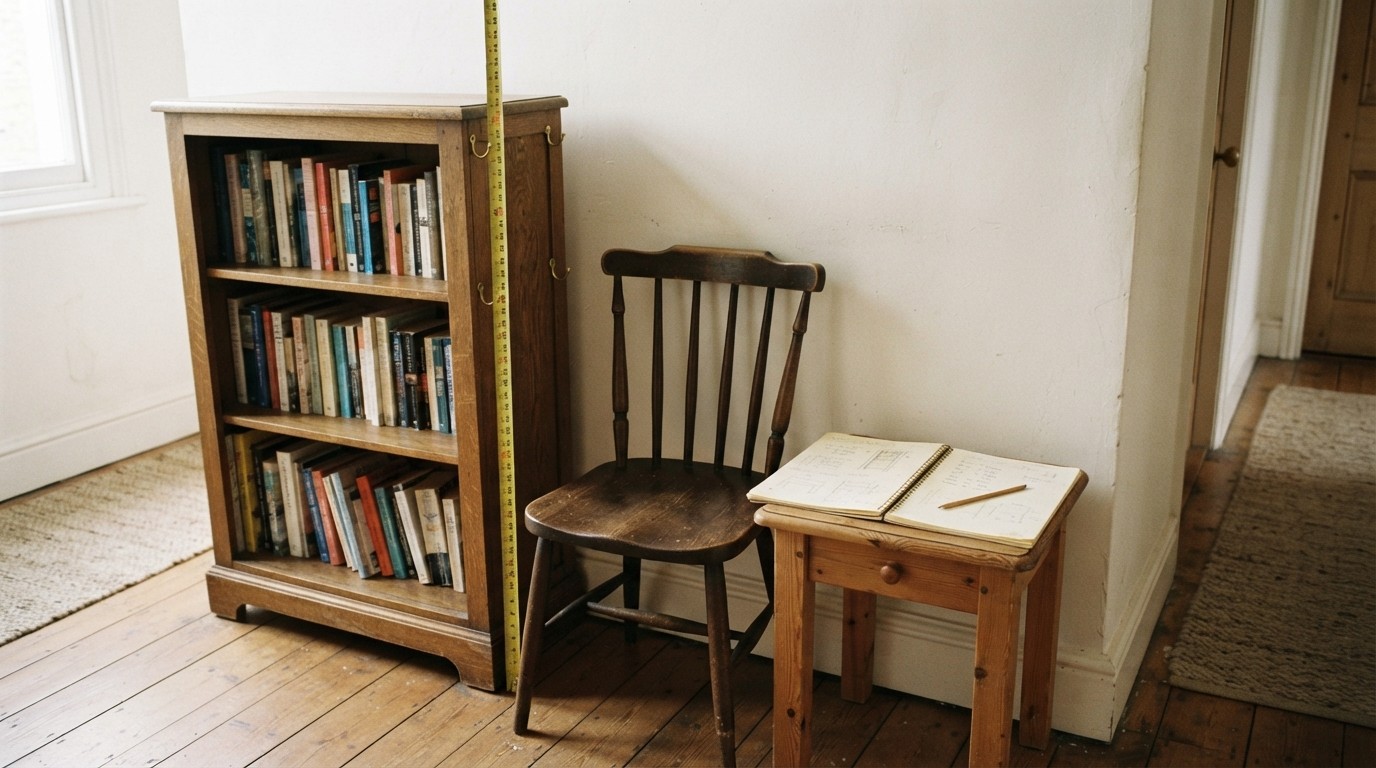
Measure the piece properly while you are at it: width, depth, height, and the internal dimensions of shelves or drawers. Write the numbers down rather than estimating from memory. During a pre-holiday declutter, when several pieces are moving at once, keep a simple note per item so measurements and photographs never get mixed between the table and the bookcase. This documentation folder becomes the source material for everything that follows, and it protects you as much as the buyer. That record gives both sides a clearer reference if questions arise.
Plan use-story transitions from the real material
A still photograph shows what a piece is. A short video can show what it is for. The most useful secondhand furniture video is a simple use story: the bookcase empty, then filled with books; the table folded, then opened for a family meal; the desk bare, then set up as a workspace. These transitions help a buyer project the piece into their own home, which is the moment a listing turns into a decision.
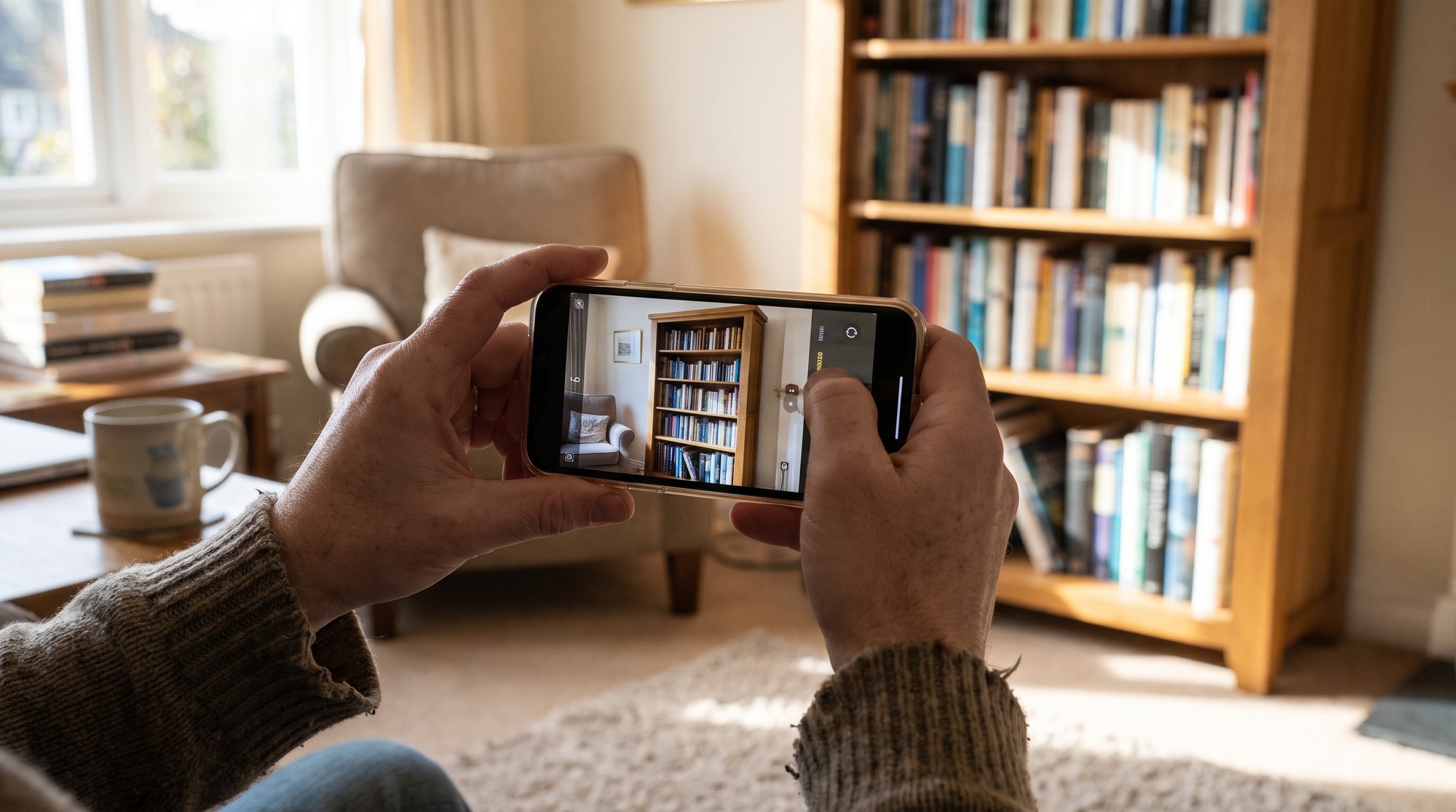
Plan those transitions on paper first, using only the photographs and footage you genuinely have. The draft stage lets you test the order and feel of the sequence before filming or editing the final version. New accounts normally get a small amount of free credit on sign-up, usually enough to test the structure once, though how much you receive and how long it lasts are set by the provider and can change. Label any shared generated transition as an AI-generated concept. Use real photos and footage for condition, dimensions and demonstrations. The rule for the final video is strict: the piece the buyer collects must be the piece in the video. Never use generation to erase a scratch, straighten a wobble, or swap in a better-looking version of the item. If a defect exists, it stays visible and gets mentioned. A clearer video should mean a clearer view of the truth, not a cosmetic filter over it.
When you film the final version, a few simple habits do more for clarity than any editing. Keep the camera level and move it slowly, because a swooping shot makes judging size and condition harder, not easier. Put a hand in frame when you open the drawer or lift the shelf, since hands give an honest sense of scale that numbers alone do not. Film the piece in ordinary room light rather than a flattering lamp glow, and say on camera or in the caption if a color looks different in person. Finally, include one wide shot of the whole piece in the room where it stands. Buyers are imagining it in a space of their own, and a piece floating against a blank wall gives them nothing to measure that imagination against.
State the repair notes and pickup terms in plain words
The second half of a good listing is logistics, and it belongs in the video captions as well as the text. Cover, without burying any of it:
- What has been repaired, replaced, or reinforced, and what has been left as it is.
- Known issues stated plainly, including anything a buyer should check in person.
- Whether the piece is dismantled for transport and whether you can help load it.
- Pickup location in general terms, available times, and whether delivery is possible at all.
- The price, and whether it is firm or open to reasonable offers.
Vague terms create the failed pickups and doorstep renegotiations that make people dread selling furniture. Clear terms give buyers information to weigh before arranging a handover. Disclose repairs and invite an inspection without promising how a buyer will respond.
A calmer way to clear a room
Nothing in this approach promises a faster sale, and it is worth being suspicious of any method that does. The aim is to give buyers enough accurate information to decide whether a visit is worthwhile; fewer journeys or a successful sale are not guaranteed. That matters beyond the money. Keeping good furniture in use, in real homes, for more of its working life is the quiet environmental win of the secondhand market, and it happens one honest listing at a time.
The scale of the alternative is stark. The US Environmental Protection Agency counted 12.1 million tons of furniture and furnishings entering the municipal waste stream in 2018, about 4.1 percent of the total, and 80.1 percent of that material went to landfill. Resale is the simplest way to keep a usable piece out of that figure, and organized buy-back schemes, such as the one IKEA ran for used furniture, show that it can happen at scale.
So, before the holidays turn your rooms upside down, give each departing piece careful documentation: true photographs, measured dimensions, a short video that shows it being useful, and terms written the way you would want to read them. A clear listing lets a prospective buyer judge whether the bookcase suits their next home.


