
A massive expansion of AI data centers is forcing a classic utility debate back to the forefront of our energy policy: when a massive new tech facility needs an immediate surge of electricity, who picks up the tab for the infrastructure? As tech companies rapidly scale the massive hardware systems behind our modern tools, the physical grid—the wires, substations, and generating plants—faces the same energy and environmental challenges defining sustainable AI across the country. This isn’t just a technical problem; it is a financial one that hits home for every person paying an electric bill.
In early March, the White House secured a pivotal agreement from the world’s leading AI and cloud providers. This commitment aims to safeguard families and small businesses from the heavy electricity grid infrastructure costs driven by intense computing demands. Reuters highlighted the rollout as a critical protective measure, arriving just as regulators and local utilities begin to manage a massive surge of new energy requests.
Maintaining a reliable power supply for every home requires more than just promises; it necessitates a structural change in how we finance grid modernization. By addressing the pricing frameworks today, the industry hopes to prevent cost-shifting tomorrow. This ensures that the progress of artificial intelligence doesn’t come at the expense of your monthly budget, keeping the focus on innovation rather than rising rates.

Federal Oversight: The Ratepayer Protection Pledge and Grid Accountability
Essential Insights: AI Infrastructure Costs and the National Ratepayer Framework
While the pledge is concise, it targets the most costly elements of the AI expansion: power supply, grid modernization, and the pricing frameworks that determine if costs remain with the developer or are distributed across every consumer’s bill. This framework directly addresses a common concern raised at public hearings: how will massive AI facilities impact local electricity prices?
- What: A voluntary commitment laid out in the published White House pledge language that frames who should pay for new grid capacity tied to data center demand.
- Who: Amazon, Google, and Meta appear in the list of tech giants backing the energy commitment within the administration’s fact sheet.
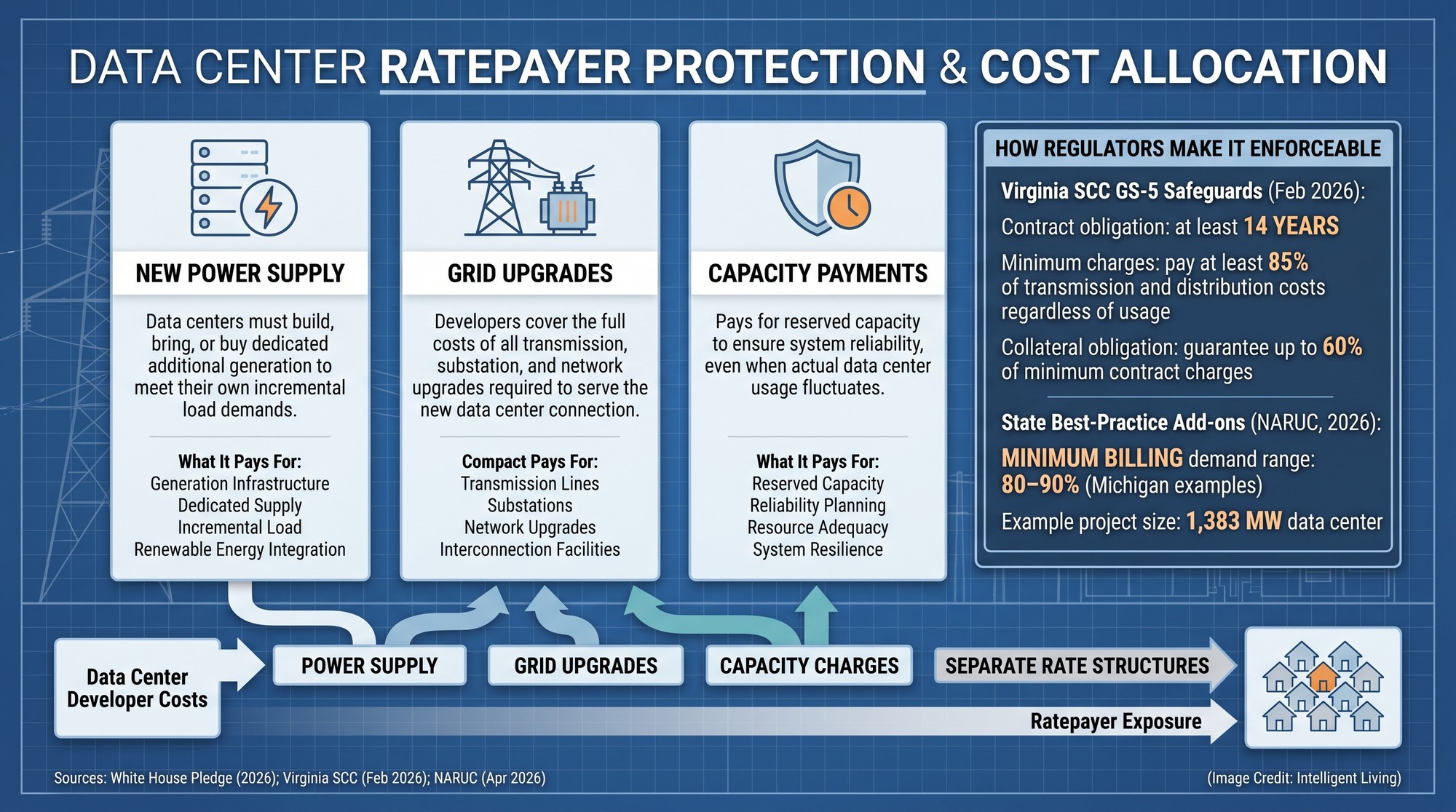
- Core promises: Pay for new power supply, cover transmission and delivery upgrades, and accept capacity-style charges even if actual usage swings.
- Why it matters: The Department of Energy’s data center demand modeling warns that data center electricity needs could rise sharply, which can force local officials to rewrite their energy plans in towns that never expected to power such massive industrial facilities.
- How rates get decided: Utility prices are typically set through state commission proceedings, and the foundational principles of electricity regulation explain why a single new “large load” can ripple into system-wide debates.
The pledge does not set one national electricity price or one national rulebook. Instead, it establishes a public baseline for managing massive new power requests during negotiations for supply and grid upgrades.
What Happened at the White House
The pledge frames a straightforward claim in plain language. Companies expanding AI infrastructure state they will not depend on residential customers to fund the system upgrades required to support their operations. This commitment is also explicitly embedded in the presidential proclamation for grid protection tied to the pledge. To put it plainly, a ratepayer is anyone with a monthly electric bill. The pledge aims to prevent these costs from shifting onto your home budget as grid investments accelerate.
The White House statement on managing electricity costs framed the agreement as consumer protection during a data center boom, even as the real-world outcomes will hinge on state rules, contract language, and how utilities assign costs when upgrades help more than one customer.
Core Commitments: Decoding the Three Pillars of Data Center Power Agreements
Securing New Power Capacity for Computing Loads
When data centers increase local energy usage, companies commit to bringing in fresh electricity sources rather than draining the power that neighborhoods already rely on. In practice, “new power” can mean new generating capacity, long-term procurement contracts, or dedicated supply built to serve the new load. Hydrogen is emerging as one of those dedicated options, as detailed in this overview of hydrogen fuel cells for data centers and the new low-platinum catalyst behind them.
Financing Local Grid Modernization and Energy Delivery
Additional electricity supply is only effective if the existing infrastructure can safely deliver that power to the facility. The pledge signals that signers expect to cover the cost of the transmission lines, substations, and other delivery upgrades tied to their specific interconnections, including the detailed technical grid studies required before any large facility is allowed to plug in.
Adopting Capacity Commitments to Ensure Long-Term Reliability
Utilities do not plan for average usage alone. They plan for peak conditions and reliability margins. Capacity-style payments mean paying for the ability to draw power when needed, not only for the kilowatt-hours used on a calm day, which is why these agreements function like a guarantee that the power will always be ready when it is needed most.
In practice, these arrangements often resemble special utility contracts for large loads, which is why these agreements function as a guarantee that the grid maintains a reliable safety margin during times of record-high energy usage.
Scaling Challenges: Why AI Computing Loads Strain Existing Grid Capacity
Why this is Happening Now (By the Numbers)
Measuring the Scale of U.S. Electricity Demand Growth
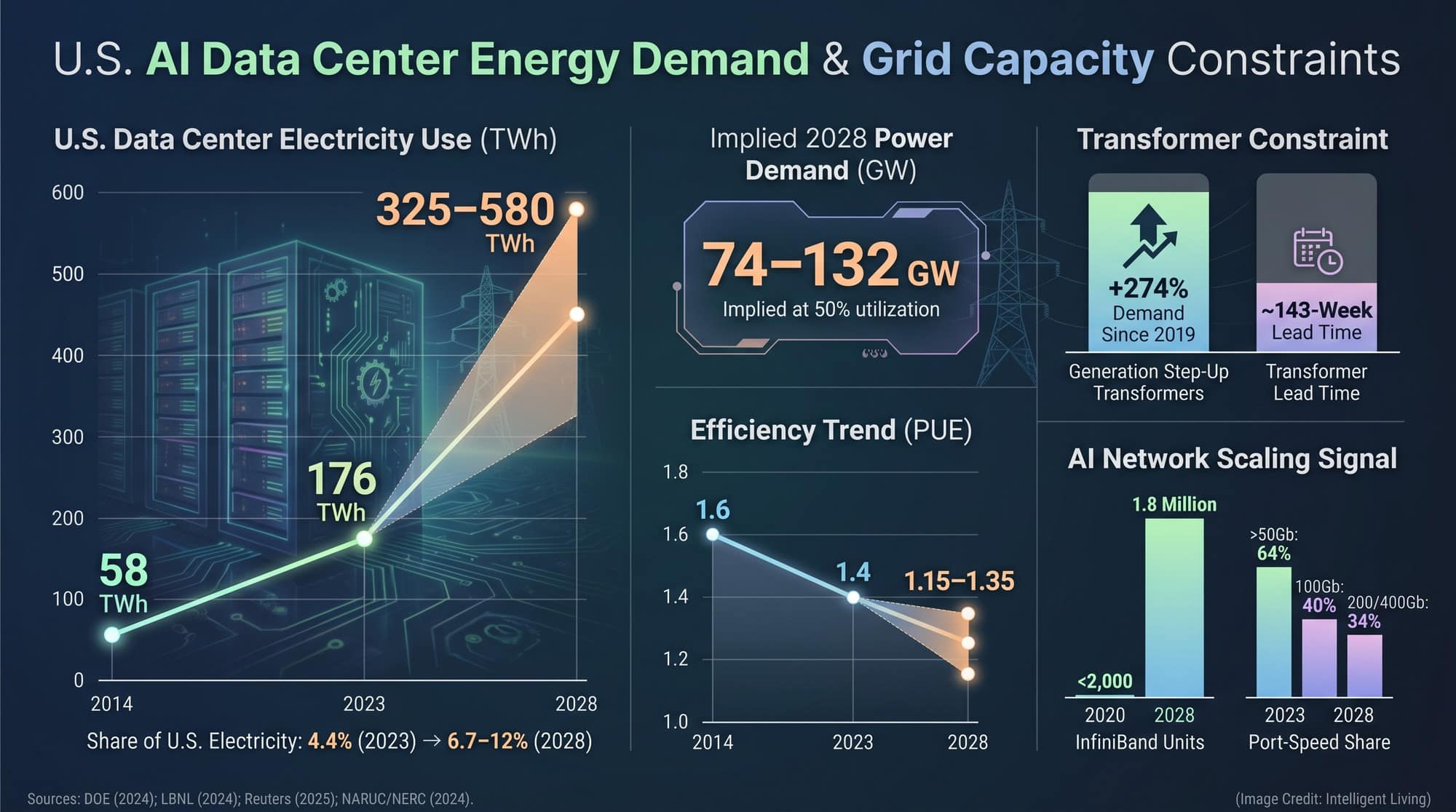
The sheer volume of energy required by U.S. data centers has moved the topic into the center of national infrastructure planning. The National Laboratory data on energy use suggests approximately 176 terawatt-hours of use in 2023, with projections climbing toward 580 terawatt-hours by 2028.
One terawatt-hour is equal to a billion kilowatt-hours—the same measurement you see every month on your electric bill. These differences in modeling decide whether the grid requires a manageable upgrade or a rapid buildout sprint. For a closer look at the environmental footprint, research into the hidden environmental costs of large-scale server cooling reveals the true scale of the challenge.
That is why efficiency per watt and cooling design details keep showing up in planning discussions, and strategies for cutting data center energy stress help explain why electricity demand is only part of the infrastructure story.
Uncertainty in Long-Term Load Forecasting Models
This broad range reflects deep uncertainty regarding the speed of AI expansion. These variables determine if the grid faces a manageable upgrade cycle or a crisis-level buildout. Technical advances such as liquid and immersion data center cooling technologies are becoming essential to manage these rising compute densities.
International Trends in Global Data Center Expansion
The expansion of AI is a worldwide phenomenon. This global trend compels governments and utilities to categorize massive computing sites alongside traditional heavy industry. Europe is now turning that categorization into public accountability with A-to-G energy and water grades for large data centres. The International Energy Agency’s AI forecast projects a significant rise in data center electricity use this decade.
Rising Pressure on Utility Planning and Grid Stability
Recent U.S. forecasting is also shifting. The EIA analysis of computing load growth identifies large computing centers as a key driver behind the strongest multi-year electricity demand growth in decades, even as major tech firms dominate global clean energy procurement to offset their impact. This is why scaling AI workloads creates complex energy challenges for smart city planning. Residents are increasingly encountering technical terms like “interconnection” and “load forecasting” at local meetings months or even years before the first construction equipment hits the site.
The Reality Check: What the Pledge Does Not Guarantee
Navigating the Gap Between Public Promises and State Regulations
Because the pledge is voluntary, actual enforcement depends on state utility commissions and contract terms. Companies are already pivoting, as seen in how Microsoft’s custom AI silicon targets energy efficiency and is designed to stabilize inference costs and grid impact. The challenges of data center cost allocation explain why a public commitment can still collide with long-standing regulatory structures, especially when a major grid upgrade ends up helping several different companies simultaneously.
Physical Constraints in the Transformer and Substation Supply Chain
There is also a physical reality that money cannot instantly erase. The supply bottlenecks for grid transformers highlight manufacturing and procurement constraints for key components, a critical factor when local residents want to know why grid construction projects are facing delays.
Advanced Risk Modeling for Emerging Industrial Computing Loads
Reliability planning is facing a period of intense transformation. As new requests flood the system, grid operators must address several critical factors to manage risks to grid reliability from massive loads:
- Concentrated Demand: Large clusters of servers create intense pressure on single points of the power grid.
- Scalability: Data centers can ramp up their power needs much faster than traditional factories or offices.
- Operational Sensitivity: Computing loads react differently to weather and grid stress than residential neighborhoods.
Research into the operational characteristics of emerging power loads also explains that data centers are unique because they can suddenly scale up their power use and put intense pressure on specific parts of the grid.
Economic Impacts: How Data Center Growth Reshapes Local Energy Costs
5 Ways This Could Affect Homes and Small Businesses
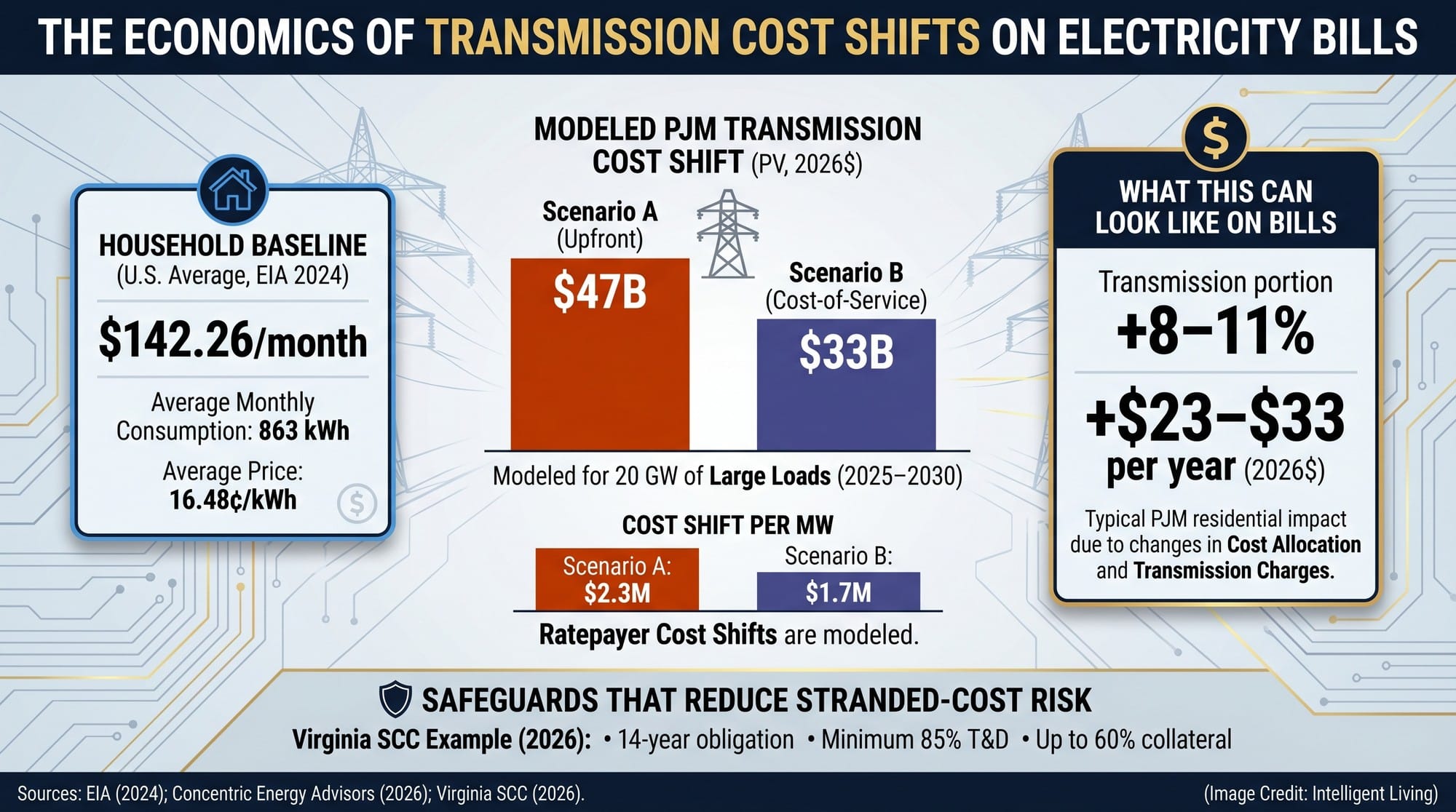
- Stabilizing Monthly Bills Through Targeted Cost Allocation: If regulators approve special rate structures that assign costs to the new load, average families might avoid having these massive infrastructure costs added to their own monthly bills, and time-of-use rate windows can become more valuable when peak demand is the expensive part of the bill.
- Impact of New Infrastructure on Local Land Use and Permitting: New infrastructure often concentrates in specific regions, leading to complex local discussions regarding land use and building permits in rural communities. This can spark intense local debates over land use and building permits, even in rural areas far from the big tech cities, while community microgrid pilot programs show how some cities are testing resilience upgrades at the block level.
- Legislative Responses and the Rise of Local Development Moratoriums: The Maine data center moratorium vote shows how quickly the debate can move from utility filings to legislative action, as communities implement temporary pauses to allow for comprehensive long-term grid planning.
- Prioritizing Sustainable Cooling Strategies for Large Data Centers: When electricity turns into heat, cooling becomes a planning issue, and water-smart data center cooling strategies explain why local water constraints can shape which designs are viable while using complex cooling methods needed to manage server heat.
- Addressing Technical Bottlenecks in the AI Infrastructure Buildout: Building new facilities is only half the battle; the centers cannot operate without the advanced computer chips that are currently in short supply. This hardware lag is central to the rapid development of specialized computer chips that defines modern data center capacity and highlights the shortage of advanced chip packaging as a concrete limit.
What to Watch Next
Watching how this promise unfolds requires a close look at the actual decisions made by state utility boards and local energy providers. Success in these areas will prove that the industry is moving beyond public relations toward genuine accountability:
- Contractual Integrity: Monitor whether utilities approve special rate structures that keep modernization costs tied to new developers rather than the public.
- Local Governance: Watch for more jurisdictions following the pattern of temporary development pauses to prioritize community grid planning.
- Supply Chain Resilience: Observe if equipment lead times improve enough to allow new capacity to arrive without straining existing resources.
In parallel, localized computing systems designed for smart cities are increasingly part of how cities talk about reliability, heat, and long-term power needs.

Final Assessment: Protecting Ratepayers in the Age of Artificial Intelligence
This commitment shows that the tech industry understands that the physical infrastructure behind AI is just as vital as the software itself. While the pledge offers a public promise to handle the heavy lifting of utility rate cases, it serves as an initial framework for a much longer conversation about our energy future. The real work now shifts to state commissions and local hearings, where custom rate structures will determine how fairly these costs are distributed.
Protecting the grid means more than just paying for new wires; it requires a collective focus on peak demand reliability and long-term sustainability. Tech companies are also incentivized to squeeze more work out of every megawatt. This drive for efficiency encourages cleaner operations without assuming the grid can expand overnight. The ultimate objective is ensuring that the energy revolution remains affordable and doesn’t create a surprise hole in your family’s monthly budget.
Frequently Asked: AI Data Center Impact on Home Electricity Rates
Will the AI boom make my electricity bill go up?
The primary goal of the new energy pledge is to prevent cost-shifting. By requiring tech companies to pay for their own grid upgrades, regulators aim to keep residential rates stable even as demand surges.
What exactly is the Ratepayer Protection Pledge?
It is a voluntary framework where companies like Microsoft and Google agree to “build, bring, or buy” the power they need. This ensures they don’t lean on existing electricity capacity that local communities already rely on.
How much power do these data centers actually need?
National estimates suggest demand could double or triple by 2028. This growth is driven by the high energy intensity of AI model training and the complex cooling methods needed to manage server heat that now run 24/7.
Why can’t utilities just build more power plants instantly?
Building new transmission lines and substations often faces interconnection bottlenecks and supply chain delays for transformers. It can take years to move from a planning document to a live power source.
Can these tech companies help the grid during emergencies?
Yes. Many facilities now use demand response to help stabilize the grid. During extreme weather, they can switch to backup power or use localized computing systems designed for smart cities to prevent neighborhood blackouts.


