
Data centres have long reported their energy use in technical filings that few people ever read. From August 2027, large facilities across the European Union will carry something far more public: a sustainability label graded A to G, much like the stickers on fridges and washing machines. Data centre energy efficiency is about to become visible and comparable because the European Commission adopted the common rating scheme on 21 September 2026, and it could reshape how the cloud industry talks about its appetite for electricity and water.
The move matters because data centre demand is growing fast, driven by AI workloads, streaming, and cloud services. Until now, comparing one facility with another has been difficult. Two buildings can report similar total consumption while wasting very different amounts of energy on cooling, lighting, and backup systems. The new labels are designed to strip away that ambiguity with two simple grades.
What the EU Announced
Key Facts at a Glance
- Two separate A to G grades, one for energy (PUE) and one for water (WUE), for every data centre above 500 kW of IT demand.
- An A grade means a PUE of 1.15 or below and a WUE of 0.1 or below; a G means a PUE above 1.9 and a WUE above 1.0.
- First labels are expected in August 2027, generated automatically from validated EU reporting data.
- A consultation on binding minimum performance standards runs until December, with legislation planned for mid-2027.
The scheme arrives as a Delegated Regulation under the recast Energy Efficiency Directive, building on the EU reporting database that began collecting operator data in 2024. Every data centre with at least 500 kW of installed IT power demand will receive two automatically generated grades each year, one for energy and one for water.
The first labels are expected in August 2027, calculated from validated reporting data. A review of the scheme is foreseen by the end of 2028. The act is currently in a two-month scrutiny period, during which the European Parliament and the Council can object, but they cannot amend the text. For background on how the grades are computed, legal analysis from Freshfields walks through the two ratings in detail.
How the A to G Grades Work
The energy grade comes from Power Usage Effectiveness, or PUE: total facility energy divided by the energy used by the IT equipment itself. A perfect score would be 1.0, meaning every watt goes to computing and none to cooling or overhead. In practice, values below 1.2 are considered excellent, 1.2 to 1.5 is good, and anything above 1.5 suggests room for improvement.
The water grade comes from Water Usage Effectiveness, or WUE: freshwater taken in divided by IT equipment energy. Under the Commission proposal, an A requires a PUE of 1.15 or below and a WUE of 0.1 or below, while a G means a PUE above 1.9 and a WUE above 1.0. The two grades are reported separately rather than combined into a single score, so a facility cannot hide heavy water use behind efficient electricity use, or vice versa.

What Else Gets Reported
Beyond the headline grades, the scheme also tracks the energy reuse factor, the renewable energy factor, waste heat reuse, and flexibility services provided to the grid. Operators already submit these indicators to the EU database, and the Commission says transparency should make it easier to compare facilities in the same region and to push waste heat into nearby buildings and heat networks. Readers interested in the technical side can explore how efficiency breakthroughs may ease data centre energy and water problems.
Why This Is Happening Now
Three pressures have converged. First, AI training and inference have pushed electricity demand sharply higher, turning data centres from background infrastructure into front-page politics. Second, drought years across southern Europe have made water-guzzling evaporative cooling controversial in water-stressed regions, and record-low reservoirs in the American West show how fast that stress can arrive. Third, the EU already has the reporting machinery in place, so converting filings into public grades is a comparatively cheap regulatory step with high visibility.
On the same day the rating scheme was adopted, the Commission opened a public consultation on binding minimum performance standards, with a legislative proposal planned for the second quarter of 2027. Ratings name and shame; standards would set a floor. The consultation runs until mid-December, and operators, municipalities, and civil society groups are all expected to weigh in.
Europe Is Not Alone: California Moved the Same Week
Remarkably, California acted within days of Brussels. On 21 September 2026, Governor Newsom signed seven bills described as the most comprehensive data centre laws in the United States, requiring monthly energy and water reporting, dedicated tariffs that assign grid upgrade costs to operators, and new clean energy procurement obligations. Legal summaries note that developers entering new transmission agreements from January 2027 will fall under the new tariff framework.
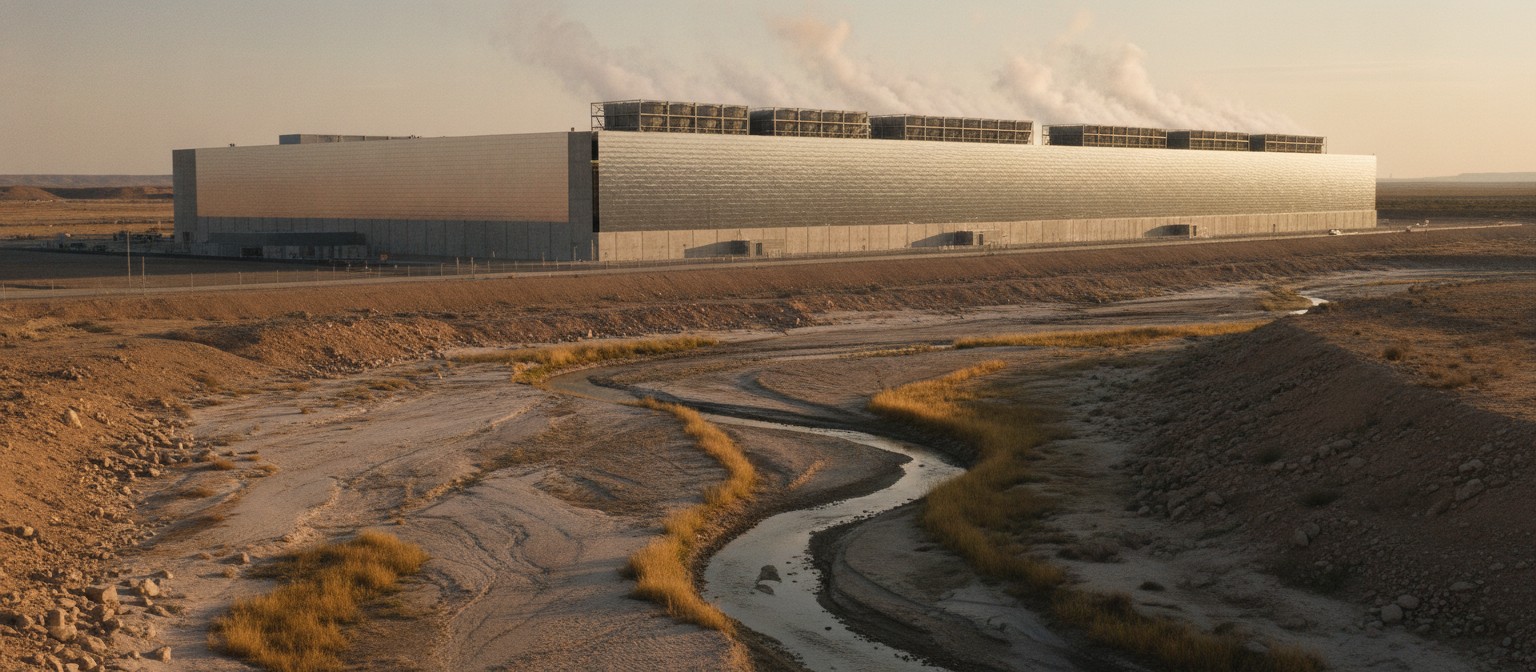
The parallel is striking: both jurisdictions are moving from voluntary disclosure to mandatory, facility-level accountability at almost exactly the same moment. Europe chose public letter grades; California chose cost allocation and procurement rules. Together they sketch a global template in which data centres must pay for the grids they strain and prove, in public, how efficiently they run. For the weirder side of the cooling challenge, see the unusual places data centres are hiding to stay cool.
What the Labels Mean for Operators and Neighbours
For operators, a public C or D grade next to a rival’s B becomes a commercial problem, especially when hyperscale customers publish their own Scope 3 emissions. Expect a rush of cooling retrofits, air-to-liquid conversions, and waste-heat partnerships as 2027 approaches.
For local communities, the labels offer something new: a number to point at. A town weighing planning permission for a 50 MW facility will be able to ask why a developer promises a B on energy but only a D on water, and whether dry cooling or water recycling could close the gap. That question lands differently once water scarcity starts reaching household budgets, as Stanford research on climate-driven water bills shows. More detail on practical water-saving approaches is covered in strategies for water-efficient and sustainable data centres.
What the Scheme Does Not Do
Grades describe operational efficiency, not absolute impact. A vast A-rated facility can still consume more electricity and water in total than a small D-rated one. The ratings also say little about embodied carbon in construction, the source of the electricity beyond the renewable factor, or the water stress of the local basin. Minimum performance standards, if adopted, would address some of this, but for now the labels are best read as a transparency tool rather than a verdict on sustainability.
Still, transparency is where every efficiency drive begins. Appliance labels did not end energy waste, but they made it visible, comparable, and eventually unfashionable. Data centres are about to get the same treatment.


