
As urban planners and engineers push towards greener, smarter cities, the focus is heavily skewed towards how we build. We look at energy-efficient designs, modernised grid capacity, and low-emission manufacturing. Yet true sustainability is not just about what we build today, but how long those structures can last tomorrow. Material degradation is a silent threat to global climate goals. The original IMPACT study, published by the Association for Materials Protection and Performance (AMPP) in 2016 and based on 2013 figures, put the global cost of material decay at approximately $2.5 trillion, equivalent to roughly 3.4 percent of global GDP at that time. While the financial loss is staggering, the environmental toll is equally severe. Protecting our infrastructure from premature decay has emerged as one of the most effective, yet under-discussed, strategies for reducing our global carbon footprint.
The Hidden Carbon Cost of Material Decay
When we think about sustainable cities, we often focus on the initial build. There is a lot of well-deserved excitement around the future of construction materials, with innovations like recycled steel, bamboo, and graphene promising to shrink the environmental footprint of new projects. However, the initial construction phase is only part of the equation. Once these structures are erected, they face a constant battle against environmental wear.
The reality of maintaining these physical assets is a massive challenge with staggering environmental penalties. When structures fail prematurely, we are forced to manufacture replacement materials. In fact, a landmark study published in npj Materials Degradation highlighted this massive burden, finding that replacing corroded steel accounts for 1.6 to 3.4 percent of total global carbon emissions. That replacement demand matters because steel itself carries a heavy footprint: manufacturing primary steel emits almost twice its own weight in carbon dioxide, averaging 1.85 tonnes of CO2 per tonne of steel. A 2025 review of building life cycle assessments noted that emissions during a building’s use stage, which includes maintenance, repair and replacement, often constitute the majority of its lifetime carbon footprint.
Why Maintenance is the Ultimate Green Strategy
Extending the lifespan of structural assets is fundamentally a sustainable practice. Global research estimates that between 15 and 35 percent of the cost of corrosion could be saved through the use of available corrosion control practices, and for a single national economy that adds up quickly. The Australasian Corrosion Association calculates that metal decay costs Australia approximately A$78 billion per year, based on an extrapolation of NACE International’s IMPACT findings. Put simply, a substantial share of that global deterioration bill is entirely preventable through proactive material preservation.
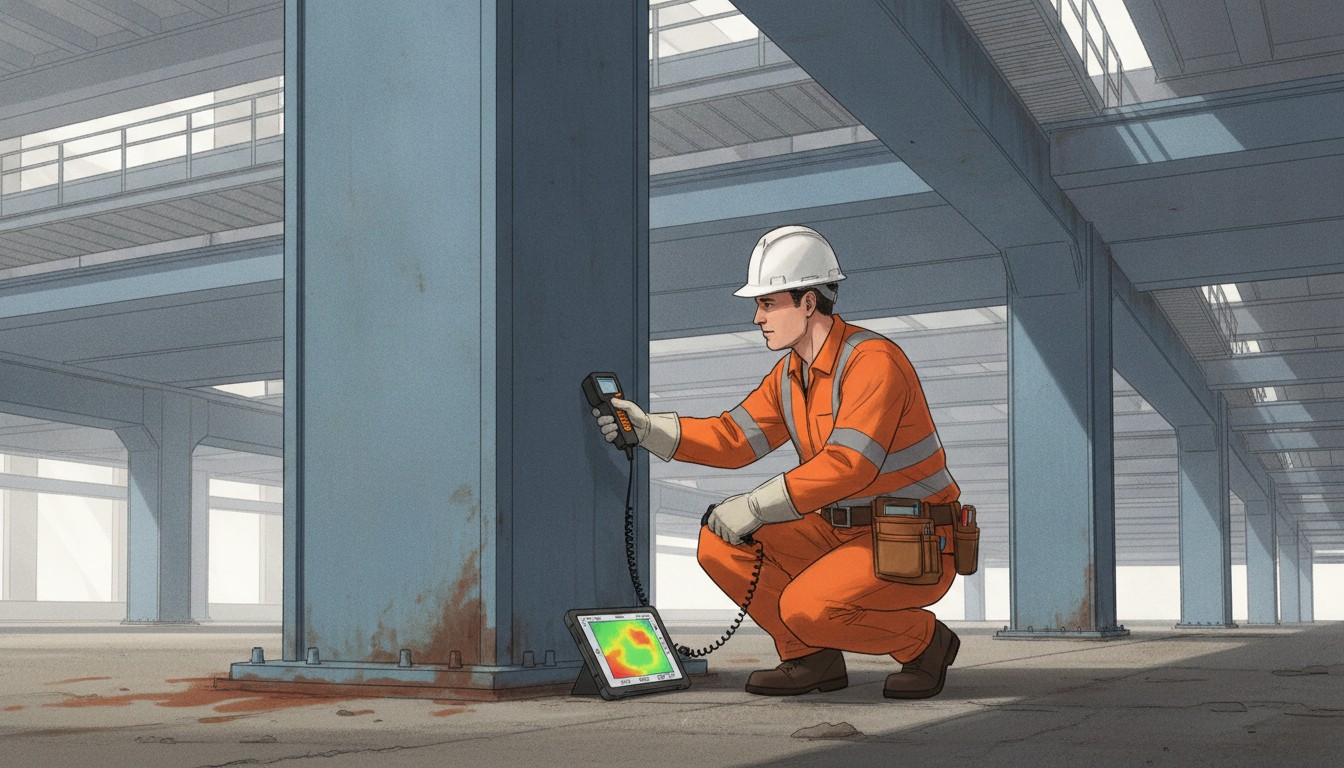
This makes early detection a critical priority for modern asset managers. By scheduling routine corrosion inspection services, engineers can identify early-stage structural degradation long before it requires a full-scale, carbon-heavy physical replacement. Modern diagnostic tools, including automated analysis and ultrasonic sensors, allow facility managers to treat minor surface wear before it compromises the core integrity of the material. Preserving existing concrete and steel is ultimately the most reliable carbon-saving strategy currently available to the construction and industrial sectors.
Protecting Renewable Energy Investments
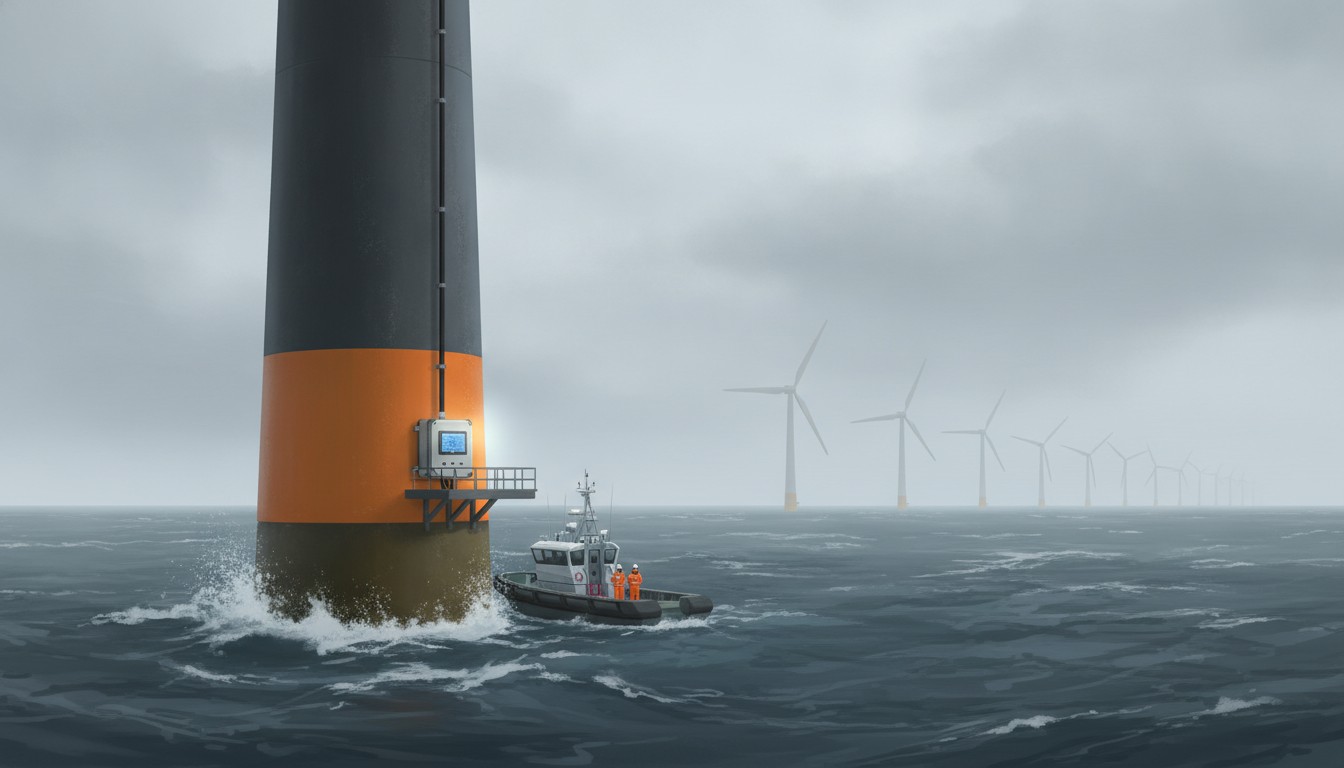
The transition to green energy is heavily reliant on massive physical infrastructure, from solar arrays to offshore wind turbines. Unfortunately, these assets are often located in highly corrosive environments. Without proactive preservation, the environmental benefits of these renewable energy systems can be severely undermined by the carbon cost of constant repairs.
The unique challenges facing green energy infrastructure include:
- High operational costs: Operation and maintenance activities account for 25 to 30 percent of the total lifecycle costs for offshore wind farms, according to technical analysis from the Technical University of Denmark.
- Aggressive marine degradation: The harsh, salt-laden marine environment makes maintaining offshore turbines substantially more expensive than their onshore equivalents, with maintenance costs roughly three times higher, as chartering research from the University of Strathclyde notes.
- Vibration threats: Constant vibration and moisture lead to fretting corrosion, which degrades turbine blade connections and threatens the intended quarter-century lifespan of the equipment.
- Logistical penalties: Unplanned offshore repairs carry an immense logistical penalty, with emergency vessel and crew mobilisation costs dwarfing the price of routine, planned maintenance campaigns.
A Future Built to Last
Global initiatives are beginning to recognise that building green must also mean building to last, echoing the case for extending machine life across industry. Steel, cement and concrete together account for just over half of all industrial emissions, which is why the United Nations Industrial Development Organization and the Clean Energy Ministerial launched the Industrial Deep Decarbonisation Initiative in 2021. The coalition is working to create demand for lower-emission materials and to push governments towards lifecycle longevity and low-carbon procurement in major projects.
The path to a sustainable future is not paved solely with new inventions. It is equally dependent on our ability to protect the investments we have already made. By shifting our focus from reactive rebuilding to proactive preservation, we can drastically reduce industrial emissions, save billions in economic resources, and ensure our green infrastructure serves generations to come.


