
AI writing assistants get most of the attention, but a quieter category has grown up beside them: tools that read a finished manuscript and report what is wrong with it, without writing a word.
For novelists, that difference matters. Many authors want help seeing the problems in their draft, not a machine that rewrites it. This piece looks at what manuscript analysis tools actually measure, how the main approaches differ, and where they fall short.
What “manuscript analysis” means
A manuscript analysis tool takes a long text, often a whole novel, and produces a report. Depending on the tool, that report covers some mix of:
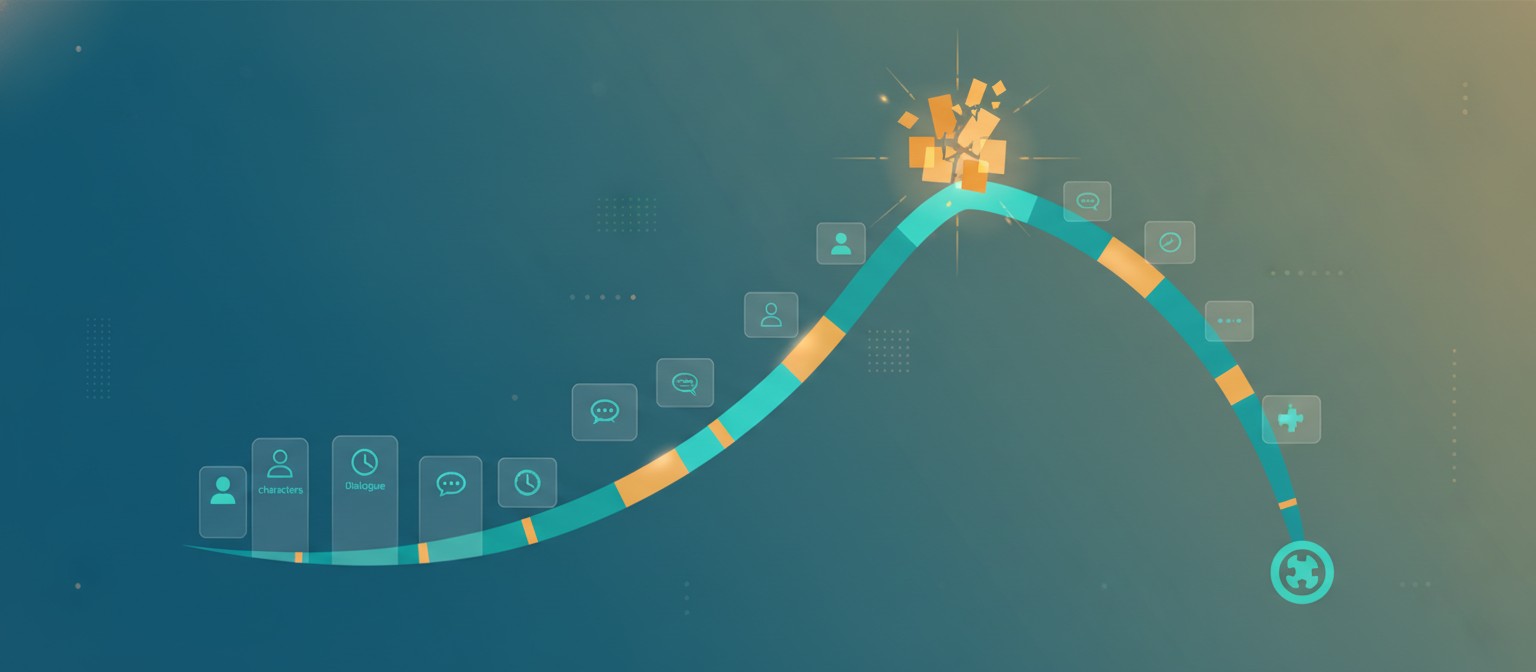
- Structure and pacing: where tension rises and falls, and whether the middle sags.
- Continuity: names, dates and facts that change between chapters.
- Character presence: who appears where, and who vanishes for too long.
- Prose patterns: repeated words, sentence length, dialogue tags, readability.
- Market comparison: how the book’s shape compares with published titles in its genre.
The appeal is scale. A human editor reading a 90,000-word novel takes weeks and costs real money. Software reads it in minutes and can be rerun after every revision.
Three approaches
The established tools in this space take noticeably different routes.
Report-based analysis treats each manuscript as a one-off job. You upload the book and receive a detailed report on things like emotional arc, pacing and character presence. Marlowe, from Authors A.I., is the best-known example, sold per report or as a small monthly bundle of credits.
Structure-first editing asks the writer to work scene by scene. Fictionary is built around this idea: it maps each scene’s elements and plots the story arc against a structural template, which suits writers who already think in beats.
Prose-first checking focuses on the sentence level, flagging overused words, adverbs, pacing at the paragraph scale and genre conventions. AutoCrit grew out of this approach and has added AI features over time.
Newer tools try to combine these, keeping the whole book in context so a problem in chapter 30 can be traced back to a setup in chapter 3. For a closer look at how the three established names compare on features and price, this side-by-side of Marlowe vs Fictionary vs AutoCrit goes through each in detail.
Pricing models shape how you revise
How a tool charges matters more than the headline price.
Per-report pricing feels cheap for one pass, but revision is iterative. Most drafts need several passes, and each full-manuscript report costs again. Subscription tools with a monthly allowance make rescanning normal rather than a decision.
As listed on vendor sites in November 2026, entry prices ranged from roughly $14 to $20 a month on yearly billing, with single reports around $30. Prices change often, so check before buying.
What these tools cannot do
Every tool in this category shares the same limits, and they are worth stating plainly.
- They measure, they do not judge taste. A tool can show that a chapter is slow. It cannot tell you whether the slowness is earned.
- Long context is still hard. Many tools sample text or summarize scenes to fit a whole novel into a model, so a detail buried late in a long chapter can be missed.
- Genre comparison is averaged. A book that breaks conventions on purpose will look “wrong” against a genre baseline.
- Privacy varies. Some services state clearly that manuscripts are not used for training; others are vague. For unpublished work, that statement matters.
How to test one before you commit
Most tools in this category offer a free tier, a trial or a cheap single report. A fair test takes an hour and avoids paying for the wrong approach.
- Use a chapter you know is weak. Your polished opening tells you little. A messy middle chapter shows whether the tool finds real problems.
- Write down the problems first. Before running the analysis, list what you already suspect is wrong. Then see whether the report finds those issues, misses them, or finds new ones.
- Check the specifics. Good reports point to exact passages. Vague advice such as “consider tightening the pacing” is not worth paying for.
- Run it twice. Revise one flagged problem and rescan. A useful tool should reflect the change, and the rescan cost tells you what a full revision cycle will really cost.
- Read the data terms. Look for where the manuscript is stored, for how long, and whether it can be used to train models.
Writers who already outline in beats tend to prefer structure-first tools. Writers who discover the story while drafting often get more from whole-book reports that show the shape after the fact.
Where they fit
The most sensible use is as a first pass before human feedback, not a replacement for it. Run the analysis, fix the structural problems it surfaces, then spend your beta readers’ and editor’s attention on what only people can judge.
Used that way, manuscript analysis is one of the more grounded uses of AI in creative work: it helps writers see their own book more clearly while leaving every word in their hands.


