
Every day, enormous amounts of heat escape into the air and water across the UK. It pours out of data centres, factories, sewage works and underground railways. It sits in rivers, flooded mine workings and the ground beneath our feet. Most of it is simply lost. At the same time, millions of homes burn gas to stay warm.
Heat networks aim to close that gap. Instead of every building running its own boiler, a central energy source supplies heat through insulated underground pipes to homes, offices, schools and hospitals nearby. Common across Scandinavia for decades, they remain relatively rare in Britain. That is starting to change.
Government Money Is Building the Pipes
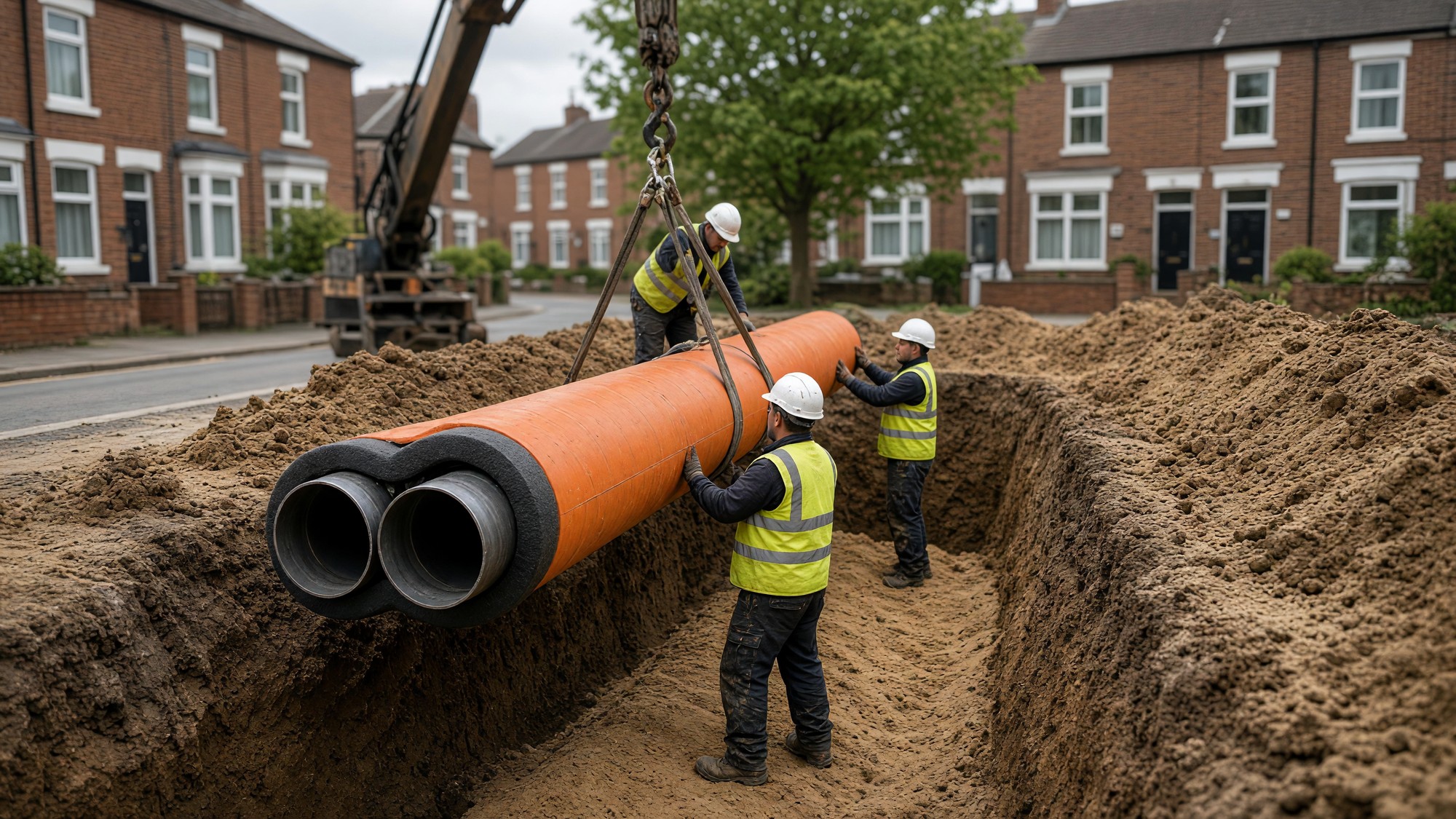
Heat networks are expensive to build, because so much of the cost comes up front in digging trenches and laying pipework. To help, England and Wales run a capital grant scheme for new and expanding low-carbon networks, and government heat network funding can now cover close to half of a project’s commercialisation and construction costs.
The Green Heat Network Fund launched in 2022 with an initial £288 million, has since been topped up and will continue to pay out until 2029/30. It runs in competitive rounds, with the next provisionally due in April 2027. Projects have to prove they cut carbon significantly, serve enough demand to be viable and do not charge households more than they would pay for a gas or comparable low-carbon alternative. Round 12 opened in June 2026 and closed to applications on 25 September 2026, and the scheme’s official grant guidance sets out the eligibility rules in full.
Where the Heat Comes From
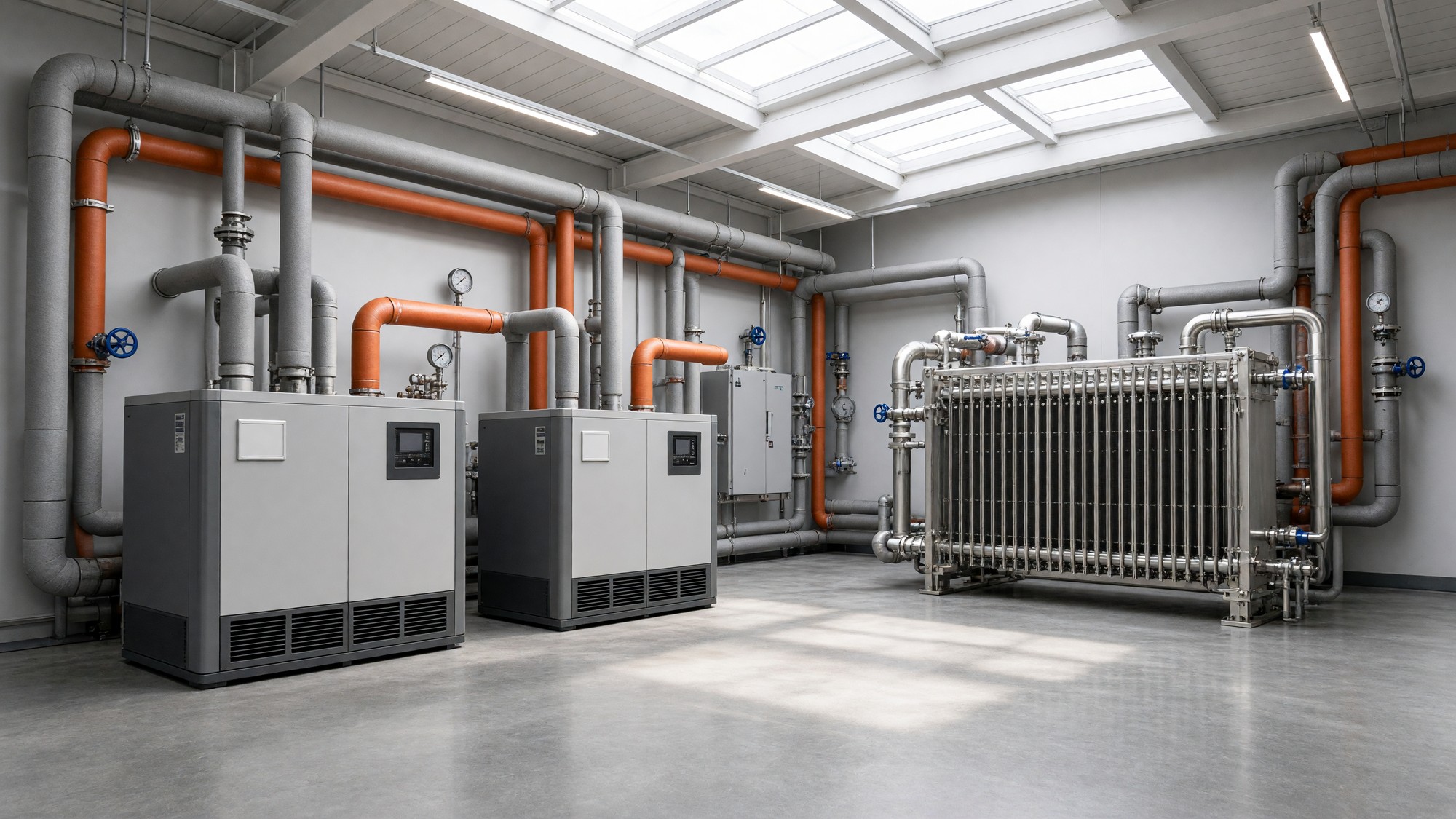
The most interesting part of the story is the heat sources. Large heat pumps can draw warmth from rivers, estuaries and treated wastewater, even in winter. Flooded former coal mines hold water that stays at a steady temperature all year. Industrial sites and data centres produce a constant stream of waste heat that can be captured and upgraded.
Because a single energy centre serves many buildings, it can use technology that would be impractical or too costly for one home, and as the electricity grid gets cleaner, heat networks powered by large heat pumps get cleaner with it.
Better Protection for Customers
One concern with heat networks has been that customers cannot switch suppliers the way they can with gas or electricity. That is being addressed. Ofgem, the energy regulator, has taken on oversight of the sector across Great Britain under the Heat Networks (Market Framework) Regulations 2025, and the first consumer protection conditions took effect in January 2026. Operators and suppliers must register with Ofgem by 26 January 2027, and new networks starting after that date need authorisation before they can trade. The aim is to give heat network customers protections on pricing, reliability and service similar to those enjoyed by other energy users.
Why Neighbourhoods Matter
Heat networks work best where buildings are close together and heat demand is high. Town centres, large housing developments, university campuses and hospital estates are ideal. New garden villages are increasingly being planned with networks built in from the start, which avoids the cost and disruption of retrofitting later.
For residents, the experience can be surprisingly ordinary. Instead of a boiler, a home has a compact heat interface unit, often the size of a kitchen cupboard, with no gas supply and no annual boiler service.
Heat networks supply only around 3% of the UK’s heat today, and the Climate Change Committee has recommended growing that share to 20% by 2050. The government’s own target is for networks to meet 7% of heat demand in England within a decade, roughly double the current level.
Not a Quick Fix
Heat networks are not a quick fix. They take years to plan, need careful engineering and depend on long-term commitments from councils, developers and businesses. Poorly designed older schemes have given some residents a bad experience, which is why regulation and stricter funding criteria matter.
But the logic is hard to argue with. The heat is already there. Capturing it, rather than letting it drift into the sky or the river, could help millions of people stay warm while cutting one of the largest sources of carbon emissions in the country.

