
Every day, the items we discard tell a story about our environmental footprint. While many homeowners are eager to adopt greener habits, the sheer volume of residential rubbish remains a significant global challenge. In the United States, the Environmental Protection Agency’s most recent full figures put the share of municipal solid waste going to landfill at about 50 percent, or roughly 146 million tons in 2018. Australia faces its own version of that problem, with millions of tonnes of household material still buried every year. This staggering figure highlights an urgent need for proactive diversion strategies at the household level. Taking control of household rubbish is a powerful way to mitigate environmental damage. Every small adjustment creates a ripple effect that benefits the immediate community and the broader ecosystem. Fortunately, shrinking your footprint is entirely achievable with a few smart, practical shifts in how you manage everyday goods, allowing you to preserve the value of materials and protect the local Australian environment.
Handling Major Clear-Outs Sustainably
Daily habits make a massive difference, but seasonal decluttering and home renovations present a completely different set of challenges. Items like broken whitegoods, heavy green waste, structural timber, and outdated electronics cannot simply go into standard council bins. In fact, Victoria’s landmark e-waste landfill ban makes it strictly illegal to dispose of any electronic item featuring a plug, battery, or cord in general household rubbish, forcing homeowners to rethink their disposal methods.
When tackling these larger projects, it is vital to rely on sustainable community disposal services rather than sending bulk items to local tips. For residents undertaking large clear-outs, engaging an eco-conscious provider for waste management in Melbourne ensures that materials like organics, e-waste, and renovation debris are processed and recovered responsibly. This proactive approach guarantees that items are diverted from overtaxed landfills whenever possible. Properly sorting these bulk loads means valuable resources are extracted and reintroduced into the economy, supporting state-wide diversion targets and keeping hazardous components out of local soil. Clean fill, metals, and untreated timber can all be recovered in this way, while treated or composite materials need specialist handling.
Building a Circular Mindset at Home
Transitioning away from a throwaway culture starts with how daily refuse is handled. Instead of discarding items at the first sign of wear, repairing them or repurposing their components keeps them functional for years longer. A well-structured routine for sorting and reusing goods can significantly reduce greenhouse gas emissions and keep valuable materials in circulation. A dedicated repair kit, a small area for donated items, and a calendar reminder for council collection days all help make the habit stick. If you are unsure where to begin, learning how to create a sustainable waste management system in your household provides an excellent framework for sorting recyclables and safely handling hazardous materials at home.
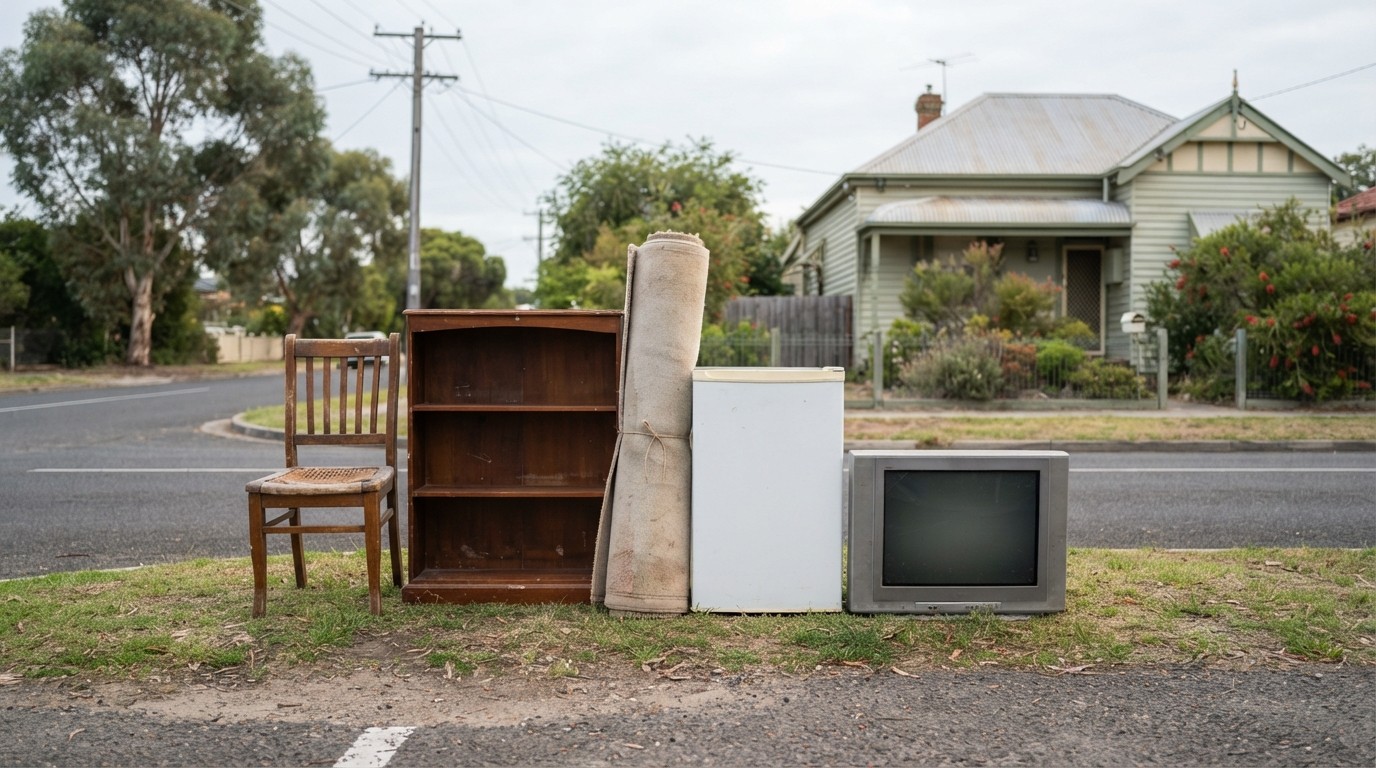
The financial and ecological benefits of this shift are already evident across the country. Gumtree’s Trading in the Circular Economy research valued Australia’s secondhand goods market at around $62 billion, and a 2026 report commissioned by eBay and prepared by Deloitte Access Economics estimates that Australians resold 216 million items in the previous 12 months, generating $30.3 billion in gross income. Yet despite this booming resale economy, an estimated 4,900 to 7,400 tonnes of genuinely reusable wooden furniture still goes into hard waste collections nationwide each year, with much of it ending up in landfill. The authors of that estimate scaled up Victorian and New South Wales data, and they note that Victoria alone collects 112,036 tonnes of kerbside hard waste annually through the 54 percent of councils that report it. Embracing repair, upcycling, and community donation can help divert these items from the tip and give them a second life.
Reuse also carries a practical payoff. Repairing, reselling, and repurposing what is already in the house keeps materials at their highest value far longer than recycling ever can, and it spares households the cost of a replacement purchase.
Targeted Strategies for Reducing Food and Packaging Rubbish
The kitchen is often the epicentre of household waste. Victorian households alone generate over 250,000 tonnes of avoidable food waste annually. This represents both a massive financial loss and a primary contributor to municipal landfill emissions, as organic matter breaks down in the absence of oxygen to release potent methane gases.
To combat this, households can implement several highly effective strategies to capture and divert kitchen refuse. These practical steps also cut the household grocery bill, since most wasted food has already been paid for.
- Plan your meals: Buying only what you need significantly cuts down on avoidable food spoilage and reduces the volume of lightweight plastic packaging you bring home.
- Use FOGO bins: The Food Organics and Garden Organics kerbside bin initiative is now offered by 75 percent of Victorian councils, with all households due to have access by 1 July 2027, so the service lets you compost kitchen scraps rather than sending them to landfill.
- Switch to reusable alternatives: Replace single-use plastics with beeswax wraps, glass storage containers, and washable cloth towels to instantly lower your daily rubbish output.
- Learn local recycling rules: Lightweighting in consumer packaging has changed the composition of dry recyclables, so always check council guidelines to ensure you are placing the right items in your commingled bin.
Each of these habits compounds. A household that plans meals, separates organics properly, and keeps packaging out of the general waste bin will typically cut the volume of its red-lid rubbish far more than any single change alone.
Looking Toward a Zero-Waste Future
Rethinking how we consume, reuse, and dispose of materials is an ongoing, rewarding journey. It is not about achieving absolute perfection overnight, but rather making consistent improvements in how we interact with the products we buy. Victoria’s circular economy policy, Recycling Victoria, sets a goal to divert 80 percent of waste from landfill by 2030, while the National Waste Policy Action Plan aims for an 80 percent average resource recovery rate from all waste streams, also by 2030. Meeting either target requires collective, dedicated action from every home. Whether you are improving your kitchen recycling habits, rescuing reusable furniture from the kerb, or hiring responsible disposal experts for your next renovation, every conscious choice matters. By adopting these smart strategies, a household can transform itself into a model of sustainable living and dramatically shrink its environmental footprint over time.
For households ready to go further, applying the household circular economy model to furniture, electronics, and clothing can extend the life of the items that carry the most embodied carbon.

