
Driver-assist features such as automatic emergency braking can prevent or soften many crashes, but they do not replace an attentive driver. The National Highway Traffic Safety Administration (NHTSA) says every vehicle for sale in the United States still requires the driver’s full attention at all times.
That gap between what the technology can do and what drivers assume it can do explains many of the questions that follow a crash, including who is responsible after a crash involving a car with safety features switched on. The sections below sort out which features work, where they fall short, and how Michigan law treats the driver.
What can driver-assist systems actually prevent?
Driver-assist systems are best at preventing specific, predictable crash types, especially rear-end collisions and some pedestrian crashes. The Insurance Institute for Highway Safety (IIHS) found that systems pairing forward collision warning with automatic braking cut rear-end crashes in half, and that forward collision warning alone reduces them by 27 percent. A separate IIHS study found that automatic braking that recognizes pedestrians reduces pedestrian crashes by 27 percent.
Federal regulators now treat the technology as a baseline. NHTSA’s 2024 rule requires automatic emergency braking, including pedestrian detection, on all new light vehicles by September 2029, and the agency estimates it will prevent at least 360 deaths and more than 24,000 injuries each year. IIHS also reports real-world crash reductions from lane departure prevention, blind spot detection, and rear crash prevention.
Those gains come with limits, though, and the limits vary by feature and by road conditions.
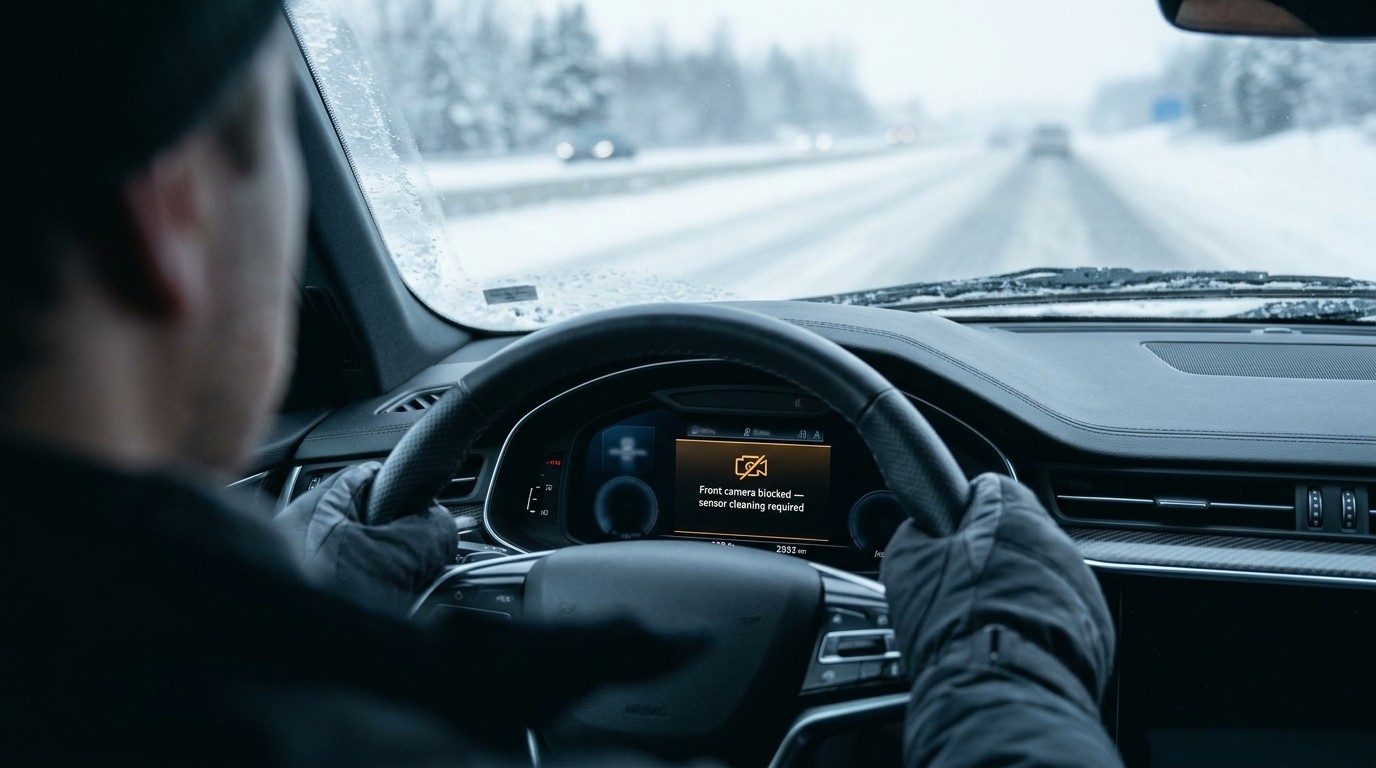
Vehicle makers also warn that snow, ice, heavy rain, glare, and dirt on a sensor can limit how well these systems work, which matters in a Michigan winter.
Is any car on Michigan roads truly self-driving?
Automated driving is graded on a 0 to 5 scale set by SAE International, and the numbers describe who is responsible for watching the road, not how many features a car has. At Levels 0 and 1, the vehicle can warn, brake on its own, or hold a lane, but the driver handles everything else. Level 2 is the first tier where one system steers and controls speed together, and the driver must keep watching the road and be ready to take over at any moment. Levels 3 through 5 shift that monitoring duty to the car itself, with human driving needed only after an alert in Level 3 and not needed at all in Levels 4 and 5.
No vehicle sold to consumers in the United States is fully self-driving. NHTSA states that even the highest level of driving automation available to consumers requires the full engagement and undivided attention of the driver, and the National Transportation Safety Board (NTSB) says drivers using partial automation must constantly supervise the driving environment and be ready to take control at any time.
Michigan law does allow automated vehicles on public roads. MCL 257.665(4) states that an automated motor vehicle may be operated on a street or highway in the state, and MCL 257.665(5) provides that an automated driving system capable of operating without a human operator is considered the driver for purposes of traffic laws while it is engaged. That provision addresses systems built to drive without a human. It does not turn a car with lane centering or adaptive cruise control into a vehicle that drives itself, so the person behind the wheel remains responsible for watching the road.
Distracted driving rules also still apply. Michigan’s hands-free law bars drivers from holding a phone or using it manually beyond a single touch, and the Office of Highway Safety Planning notes this holds even when the phone is mounted or connected to the vehicle’s built-in system.
How do drivers end up over-trusting driver-assist features?
Over-trust usually starts with feature names and marketing language that suggest more capability than the system has. A driver who believes the car handles the highway may glance at a phone, look away for longer stretches, or stop checking mirrors.
The NTSB has investigated crashes involving partial automation and has recommended that all new passenger vehicles with Level 2 partial automation include driver monitoring systems that minimize driver disengagement, a sign that regulators see inattention as a real hazard. Systems also behave differently from model to model, so the owner’s manual matters more than a friend’s description of how a similar car works.
A few habits keep the technology useful without leaning on it too much: read the manual for each feature, learn what the warning chimes and dashboard icons mean, keep hands on the wheel and eyes on the road, and turn systems off or take extra care when roads are snowy, icy, or poorly marked. Sensors should be kept clean, and any warning light on the dash should be checked before a long trip.
What should you do after a crash in a car with driver-assist features?
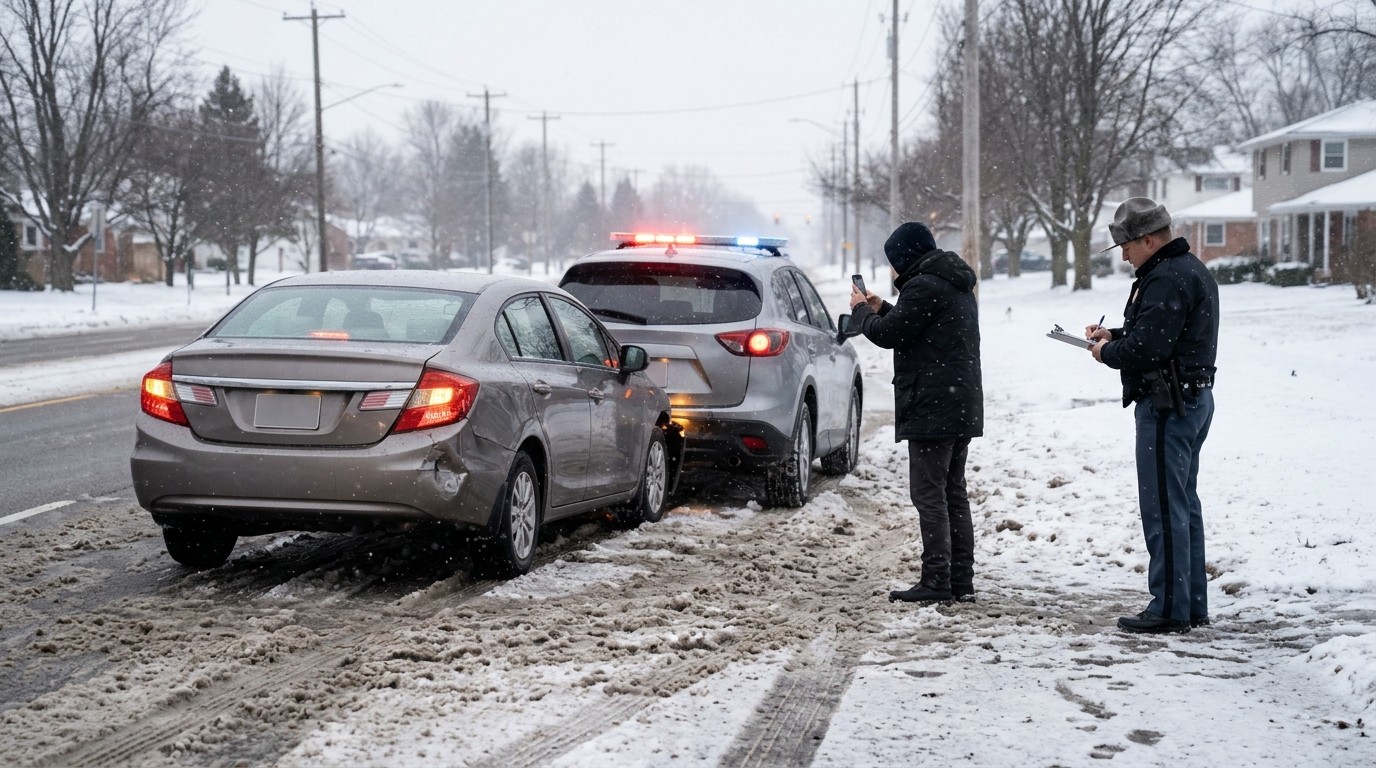
The steps are the same as after any crash, with a few additions: get to safety, call 911 if anyone is hurt, and have police create a report when the crash involves an injury, a death, or apparent property damage of $1,000 or more (MCL 257.622). Photograph the vehicles, the road, and the dashboard display, including any warning messages or indicators showing which features were active.
Write down what the system was doing as soon as possible. Note whether adaptive cruise or lane keeping was engaged, whether any alert sounded, and what the driver was doing in the moments before impact. Many modern vehicles record crash-related data, so avoid repairs, sales, or software resets until the vehicle’s condition and the data have been documented.
Under Michigan’s no-fault system, a person’s own insurer generally pays personal protection insurance (PIP) benefits for accident-related medical expenses regardless of who was at fault, with written notice due within one year (MCL 500.3145). Fault still matters in a lawsuit for pain and suffering, which is allowed only when the injury meets Michigan’s threshold (MCL 500.3135). Such a lawsuit is generally filed within three years (MCL 600.5805).
Before relying on any driver-assist feature in winter, take a few minutes to review how the car’s system handles snow and ice, clean the sensors, and treat the technology as a backup rather than the primary safety plan.


