
Choosing memory care for a parent, spouse, or friend is never easy. It’s important to find a place that offers the right level of medical care and attention while also allowing your loved one to maintain as much independence as possible. Safety is important, of course, but so are comfort, familiarity, and a nurturing environment.
What should you look for in a memory care setting? Beyond the gleaming lobby, extensive activity calendar, and tasty menu items, consider how staff interact with residents, how activities are modified for people with varying abilities, and how staff deal with challenges, such as agitated or confused residents or call-offs in the middle of the night.
Tour the Environment with Individual Needs in Mind
Before touring memory care communities, take some time to think about your loved one’s needs and write down a list of questions that will help determine whether or not a particular community will be a good fit. Keep in mind that dementia manifests differently in every person and each person’s needs change over time. A chatty individual, for example, may benefit from lots of social interaction, while someone who gets overstimulated in large, noisy groups may do better in a smaller setting with calmer surroundings. Consider:
- Mobility, balance, and fall risk
- Medical conditions and medication regimen
- Sleeping habits, including waking up in the middle of the night
- Eating habits, favorite foods, and fluid intake
- Interests, hobbies, and occupation
- Behaviors associated with dementia, such as agitation, wandering, fear, and frustration
- The role you and other family members plan to play, including how often you’ll visit
Armed with this information, you’ll be better prepared to ask relevant questions during facility tours. Instead of asking whether activities and assistance are available, for example, you can ask how the community caters to the needs of an individual who is similar to your loved one.

Is Memory Care Secure?
Many memory care communities, particularly those whose residents are at risk for becoming disoriented or lost, have secure units. While these units are certainly meant to keep residents safe, they shouldn’t be so restrictive that residents are unable to get up and move around or participate in social activities.
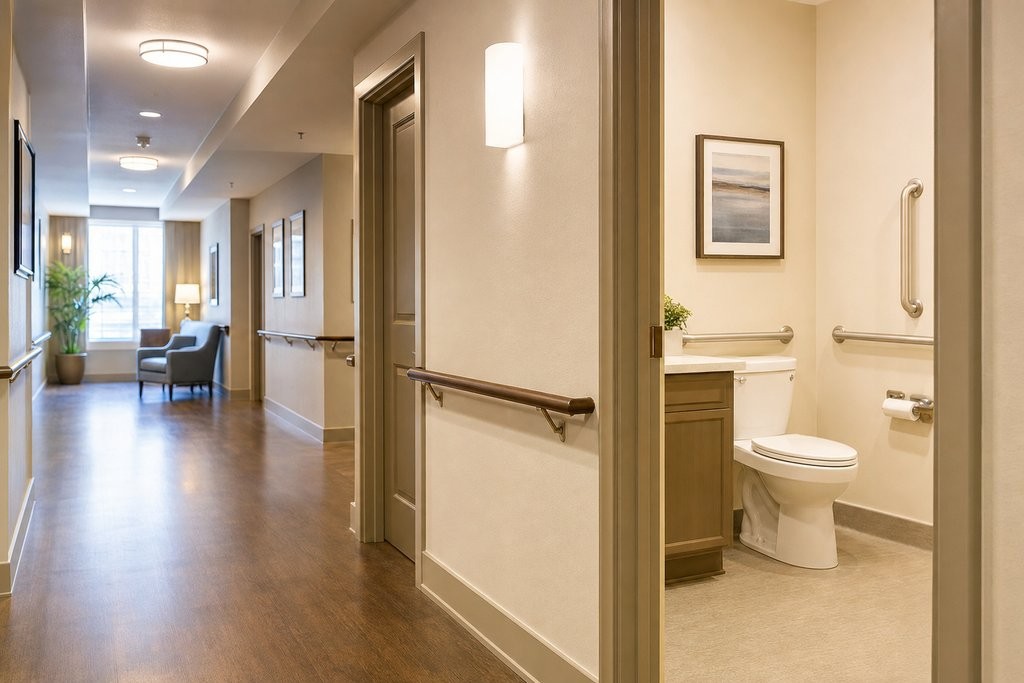
During your tour, pay attention to common areas, such as hallways, dining rooms, bathrooms, and outdoor spaces, if possible. Are these areas clutter-free and well lit? Are there trip hazards? Can wheelchairs and walkers easily maneuver through doorways and hallways? Are handrails easily accessible in hallways and bathrooms? Do bathrooms appear to be set up to accommodate individuals who may need assistance from staff?
If the community has a memory care unit with secured entrances/exits, ask staff how these doors are monitored. Do visitors have to check in/out? What happens if a resident tries to exit through one of these doors?
How Quickly Will Staff Respond if a Resident Calls for Assistance?
Find out who will respond if a resident hits the call button and no one comes immediately, how situations are escalated, and if staff will be on-site (as opposed to on call) in the middle of the night. Make sure you’re completely satisfied with staff responses—you want clear and concise answers, not lots of runaround.
Meaningful Activities and Trained Staff Matter
A full activities calendar is nice, but it’s important to dig deeper when touring memory care communities. Rather than simply asking whether activities are available, ask staff at each community—including a memory care provider in Salem, OR if you are comparing local options—about the types offered, how they are adapted for different abilities and stages of dementia, and whether engagement happens only at set times or throughout the day.
Music, exercise, gardening, housekeeping (think towel folding and setting the table), games, arts and crafts, spirituality, reminiscence, and getting outside when the weather permits are just a few examples of activities commonly enjoyed by people living with dementia. The best activities for people living with dementia give residents a sense of purpose without pressuring them to perform or keep up with others, an approach reflected in NIH guidance on adapting activities for people with Alzheimer’s disease.
Some ideas for modifying activities to meet the varying needs of residents include breaking tasks down into easy-to-follow steps, using visual cues, providing a quieter setting or alternative activity, and spending one-on-one time with residents who don’t like to participate in group settings.
Are Staff Trained to Care for Residents Around-the-Clock?
Memory care communities should employ trained staff 24 hours a day, seven days a week, but it’s still important to ask about staff availability and training. Some questions to consider:
How many staff are on-site at any given time?
What kind of dementia-specific training do staff receive? Consider asking about training related to the following topics:
- Communicating with and redirecting people living with dementia
- Transfer assistance and fall prevention
- Bathing and dressing assistance
- Medication assistance
- Responding to distressed/agitated residents
- Recognizing signs/symptoms of pain, dehydration, infection, etc.
How often does the community experience staff turnover, and how are staff shortages made up?
Staff should speak respectfully about residents and demonstrate compassion and patience during your tour. Consistency in care is also extremely important—the more familiar a caregiver is with a resident, the more likely he/she is to understand the person’s daily routine, form a trusting relationship, and notice changes in behavior/condition.

Confirm Communication, Care Limits and Costs
Because dementia is a progressive illness, it’s important to choose a community that’s prepared to adapt to changing needs. Ask staff how care plans are created and how often they’re updated. Will family be contacted if staff notice changes in mood, behavior, eating/drinking habits, mobility, etc.?
Memory care is one of several long-term care options for seniors, and it isn’t appropriate for everyone. Some communities aren’t able/equipped to care for residents who require extensive medical assistance. There’s nothing inherently wrong with either scenario, but it’s important that the community clearly communicates its capabilities/limitations prior to move-in.
Before You Sign Anything…
The best memory care communities strike a balance between structure and freedom, offering dementia-appropriate activities, a safe/secure environment, professionally trained staff, and plenty of one-on-one attention. Before your family member moves into any community, be sure you’re comfortable with their approach to daily activities and ask for a written explanation of all fees/costs (including costs that may fluctuate over time such as level of care, medications, transportation, sundries, move-in/deposit fees, etc.). Don’t be afraid to revisit a memory care community with a list of questions and request to see a sample care plan before signing a contract.

