
Sharing a home with cats and dogs brings plenty of joy, but it also puts furniture under constant pressure. Claws test the fabric, fur works its way into every seam, and jumping pets put more strain on frames than most furniture is designed to handle. When pieces wear out quickly, they usually end up being replaced, and that cycle is costly for both households and the environment.
According to the U.S. Environmental Protection Agency, Americans generated about 12.1 million tons of furniture and furnishings waste in 2018, and roughly 9.7 million tons of it went to landfills. Choosing furniture that can stand up to pets is one practical way to keep pieces in use for longer and reduce that waste. Buying secondhand where possible, and repairing rather than replacing when something does wear, keeps that footprint even lower. This guide explains what to look for, from frames and fabrics to cleaning habits that help furniture last.

Start With a Strong Frame
The frame is the part of a sofa or chair that takes the most stress in a pet household. Dogs leap onto cushions, cats launch themselves off the armrests, and larger breeds often settle in the same spot every day. A weak frame will start to creak, loosen at the joints, or sag long before the upholstery shows wear.
Kiln-dried hardwood is one of the most reliable frame materials because the drying process removes moisture that can cause wood to warp or crack over time. Metal frames are also strong and have the added advantage of resisting chewing, which matters in homes with puppies or anxious dogs. Softwoods and particleboard frames tend to be lighter and cheaper, but they are more likely to break under repeated impact.
Construction details matter as much as the material. Look for corner blocks that are glued and screwed into place, since glue alone can fail when a frame flexes again and again. A good test in a showroom is to lift one front corner of the sofa a few inches. If the opposite corner rises with it, the frame is rigid. If it twists, the frame is likely to loosen over time.
Choose Fabrics That Resist Claws and Stains
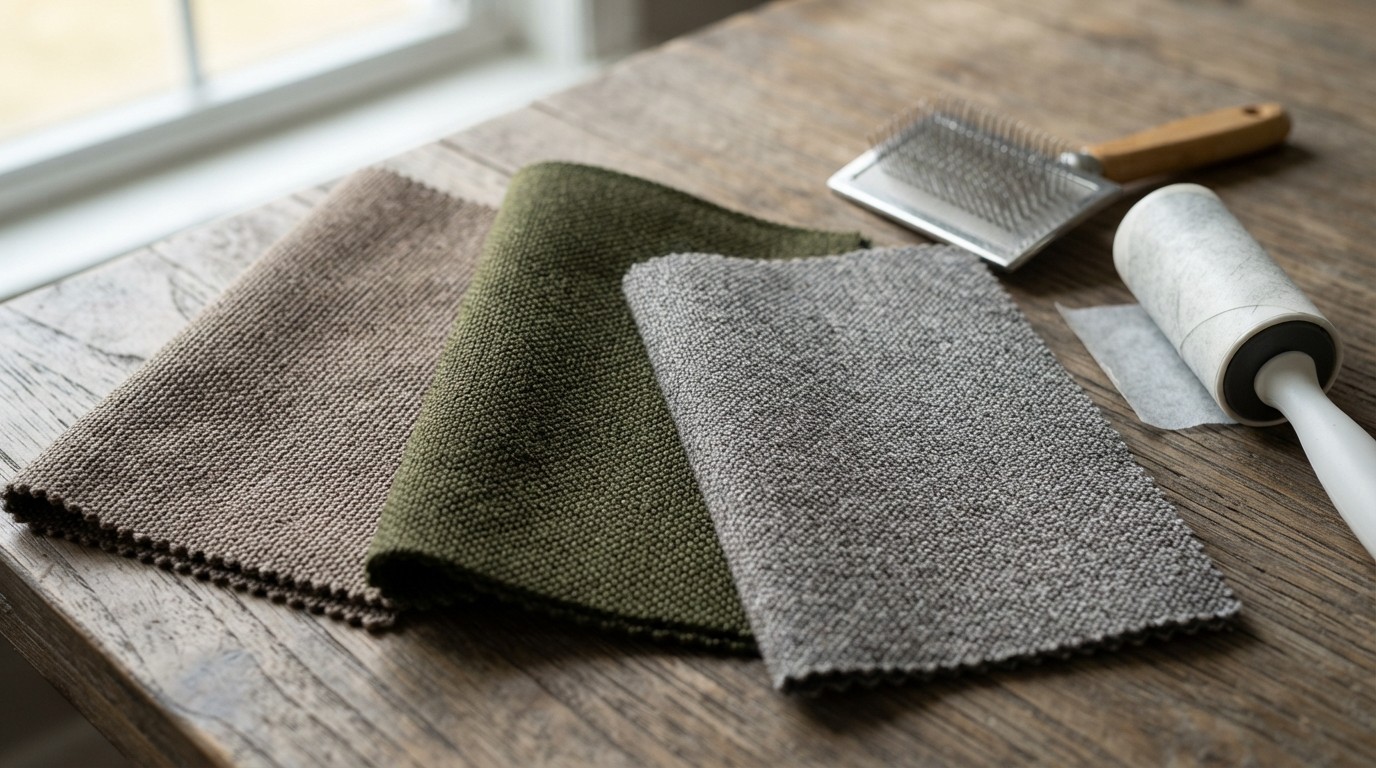
Upholstery is the first surface pets touch, so the right fabric can make a large difference in how long a piece looks good. The key is a tight, flat weave. Fabrics with loops or loose threads give claws something to catch on, which leads to pulls and snags that are difficult to repair.
Microfiber is a common choice for pet owners because its dense, fine fibers are difficult for claws to grip, and hair tends to sit on the surface rather than weaving into it. Performance fabrics, which are treated to resist liquids and stains, are useful in homes where accidents and muddy paws are part of daily life. Canvas and tightly woven synthetic blends also hold up well.
Some fabrics are better avoided. Loosely woven materials such as tweed and bouclé snag easily, while velvet and silk show every mark and can be damaged by cleaning. Leather is easy to wipe down, but it can scratch, so it suits homes with calmer pets better than households with active cats.
Color plays a role too. Mid-tone and patterned fabrics hide fur and minor wear between cleanings, while very light or very dark solid colors make every hair visible.
What to Look for in Reclining Furniture
Recliners are a popular choice for comfort, but they bring extra considerations in a pet household because they have moving parts. Fur, crumbs, and small toys can find their way into the mechanism and cause the recline motion to stick or strain over time.
The most practical features to look for are a covered or enclosed mechanism, minimal gaps between the seat and the base, and removable, washable cushion covers. Many pet friendly reclining sofas now combine these features with tightly woven or treated fabrics, which helps keep fur out of the moving parts and makes everyday cleaning much easier.
For powered recliners, consider where pets usually rest. Cats in particular like to hide in small spaces, and some may crawl underneath furniture. Check that the space around the footrest is clear before reclining or closing the seat, and keep power cords routed along the wall and out of reach of pets that chew. Manual recliners avoid cords altogether, but they need a smooth lever action so they do not become difficult to operate as the mechanism wears.
Plan the Size and Placement
Furniture in a pet-friendly home often needs to fit both people and animals at the same time. If a dog or cat regularly joins you on the sofa, a deeper seat or a slightly wider piece prevents everyone from competing for space. It is also worth planning for how long the piece will stay in the house, since durable construction and a shape that suits the room are what make furniture longevity achievable in a busy household.
Placement also affects how quickly furniture wears. Pieces positioned in strong direct sunlight can fade, and pets that like to watch the window will often climb the back of a sofa that sits beneath it. Leaving clear space around reclining furniture lets pets pass safely when the footrest is extended. Before buying, measure doorways, hallways, and the space in front of the piece so it fits both the room and the way your household moves through it.
Cleaning Habits That Extend Furniture Life
Regular, gentle care keeps pet furniture looking good and prevents small problems from becoming permanent damage. A quick daily pass with a lint roller or rubber pet-hair brush stops fur from building up, while a weekly vacuum with a crevice tool clears the seams, cushions, and the area underneath the seat.
When accidents happen, blot the spot right away instead of rubbing it, since rubbing pushes the stain deeper into the fibers. Enzyme-based cleaners break down organic stains and odors, which also discourages pets from returning to the same spot. Removable covers should be washed according to the manufacturer’s instructions, usually on a cool, gentle cycle, and air-dried to prevent shrinking.
The products you use matter as much as the routine. Pets lie on, lick, and walk across the surfaces in your home, so it makes sense to choose non-toxic cleaners for pet homes for both furniture and floors. Gentle, pet-safe formulas protect animals while also being easier on delicate fabrics.

Small Habits That Protect Your Furniture
Some of the most effective ways to protect furniture have little to do with the furniture itself. Giving cats a sturdy scratching post near their favorite seat redirects clawing away from the upholstery. Keeping nails trimmed reduces snags and scratches for both cats and dogs.
Washable throws or furniture covers on a pet’s preferred spot take most of the daily wear and can be laundered far more easily than the sofa underneath. Providing pets with their own comfortable bed nearby can also reduce how much time they spend on the main furniture. Over months and years, these small habits add up to furniture that stays in good condition for much longer.
Conclusion
A pet-friendly home does not have to mean worn-out furniture or frequent replacements. By choosing a strong frame, a tightly woven or treated fabric, and reclining mechanisms designed to keep fur out, you can find pieces that handle daily life with pets. Pair those choices with regular cleaning, pet-safe products, and a few simple habits, and your furniture will stay comfortable for your household while keeping more of it out of the landfill.

