
If pets live in your home, floors serve as much more than a simple walking surface. These surfaces act as nap zones, high-speed play tracks, food courts, and, occasionally, emergency bathrooms. When searching for the best pet-safe floor cleaner for sealed hardwood or vinyl plank, the most critical question involves what ends up on paws and what gets licked off during grooming later.
Animal health safety has become a priority because pet-centric households are no longer a niche market. Market data regarding US pet industry spending projects a rise to $158 billion in 2025, with a steady climb toward $165 billion in 2026, signaling that millions of families are shopping with animal health in mind. A concurrent market forecast for natural household cleaners highlights a strong shift toward non-toxic alternatives through 2030 as more homeowners seek to eliminate harsh odors and toxic residues from their daily mopping routines. Industry data confirms that “pet-safe floor cleaner” has evolved into an essential daily-life search term.
Building ingredient literacy protects against surprises that appear long after the floor is dry, ranging from fragrance sensitivity to health risks associated with common household products that surface after repeated exposure. The guide provides a clear “cleaning vs. disinfecting” rule, an ingredient decoder, and a buying guide tailored to the way real, busy homes function.

Understanding Pet Safety: Paw Residue and Non-Toxic Floor Care
Why Floor Cleaning Residue Poses Risks in Pet-Friendly Households
Recent research on quaternary ammonium compounds in household dust highlights how these chemicals build up in residential spaces, particularly in homes that undergo frequent disinfection. Leftover film does not simply stay on the floor. Residue rides along on paws and inevitably surfaces during grooming cycles.
Feline households face unique challenges because cats are meticulous groomers. Certain disinfectant ingredients can cause severe injuries to the mouth and throat if ingested. Warnings from veterinary toxicology experts note that disinfectant residue on paws and coats becomes a primary health risk when cats clean themselves shortly after walking across a treated floor.
Imagine finishing the entryway only to have your pet sprint across the damp tile while you’re distracted by a phone call. In a cat home, those paw prints can turn into licking minutes later.
Essential Facts for Choosing a Safe Floor Cleaner for Dogs and Cats
Selecting a pet-safe floor cleaner for sealed hardwood, tile, or vinyl plank becomes easier when following a few core principles. People often ask, “Is floor cleaner safe once it dries?” While drying is essential, using low-residue formulas and proper dilution ratios prevents surfaces from becoming a secondary risk later.
Daily floor disinfection might seem necessary when dogs track in outdoor mess, but the real solution usually involves smarter cleaning rather than stronger chemicals. Once you sort out when disinfecting is actually necessary, the ingredient decoder and the mopping routine become much easier to follow.
- “Pet-safe” usually means safer when used exactly as directed. Treat every floor product as off-limits until the surface is dry and the smell has cleared.
- “Clean,” “sanitize,” and “disinfect” are not the same category of product. Disinfectants are built to kill specific germs, so they tend to rely on stronger active ingredients.
- Identifying products that are a poor fit for cat-heavy environments is easier after consulting veterinary guidelines for feline-safe disinfectants.
- Indoor exposure adds up over time. Maintaining optimal indoor air quality serves as a reminder that habits, surfaces, and air are all connected.
- Neutral-pH, water-based cleaners designed for sealed surfaces often make the most sense for routine mopping because they focus on lifting soil, not delivering disinfectant chemistry.
If you have ever stood in the cleaning aisle thinking, “Do I need to disinfect my floors because my dog tracks everything inside?” you are not alone. The answer depends on the situation, not your anxiety level, and that choice determines which ingredients you bring home.

Purchasing Guide Best Pet-Safe Floor Cleaners by Household Type
These picks are organized by how people actually live. Each product appears only once to keep decisions simple. Standard maintenance protocols for hardwood flooring often caution against steam mops due to moisture risk, so treat any steam use on wood as a warranty-level decision.

Top Neutral-pH Cleaners for Hardwood and Laminate Floors
Bona Pet-Mess Cat Floor Cleaner
Best for cat households asking what floor cleaner is safe for cats on sealed hardwood, laminate, and tile. It focuses on everyday soil removal, so it fits the “clean first” approach without pushing heavy disinfectant chemistry.
Bona Pet-Mess Dog Floor Cleaner
Best for removing muddy paw prints from vinyl plank or laminate. This formula ensures a residue-free finish and eliminates lingering odors without the use of harsh scents.
Aunt Fannie’s Vinegar-Based Floor Wash
Best for shoppers who want a vinegar-forward cleaner for sealed floors and a simpler-feeling cleaning routine. In cat-heavy homes, keep fragrance sensitivity in mind and stick to good ventilation and full dry time.

Concentrated No-Rinse Solutions for High-Traffic Pet Households
OdoBan No-Rinse Neutral Floor Concentrate
Best for high-traffic homes where you want a large-format concentrate that is easy to mix and does not require rinsing when used correctly. It suits routine mopping on sealed hardwood, laminate, and tile.
Ecolab No-Rinse Neutral Floor Cleaner Concentrate
Best for people who want a commercial neutral-pH concentrate for vinyl plank, tile, or sealed wood. It works well for large homes where cost per clean matters.
O-Cedar Pre-Measured Floor Cleaner Pacs
Best for anyone who prefers portion packs so measuring does not turn into guesswork. Pre-measured cleaning helps reduce residue buildup from “just a little extra” pouring.
Best Enzymatic Cleaners for Pet Messes and Odor Removal
Nature’s Miracle Hard Floor Pet Mess Cleaner
Best for sealed floors after accidents when odor control is the real issue. It is a useful companion to a neutral-pH routine cleaner, especially during puppy training phases.
Rocco and Roxie Stain and Odor Eliminator
Best for spot-treating organic messes before a full mop, particularly in apartments where lingering smells feel impossible to escape. It is the kind of backup you keep for the surprise puddle behind the couch.
BISSELL CrossWave Pet Multi-Surface Formula
Best for homes already using a compatible BISSELL multi-surface cleaning machine. It fits a “clean often, clean lightly” routine that keeps floors manageable without deep chemical cycles.
Chemical-Free Mopping: Steam Cleaners for Sealed Hard Surfaces
Steam provides a powerful alternative for keeping tile and other water-safe surfaces clean without the need for scented sprays. Using high-temperature vapor allows you to:
- Loosen stubborn surface grime quickly.
- Sanitize floors using only water.
- Reduce your household reliance on solvent-heavy or scented cleaning agents.
Shark Steam-and-Scrub Hard-Floor Mop
Best for households that want water-only cleaning on manufacturer-approved sealed floors. Steam can help loosen grime so you can use fewer scented or solvent-heavy products.
BISSELL PowerFresh Deluxe Steam Mop
Best for quick refresh cleans on sealed surfaces when you want a lower-residue approach. It is especially useful in kitchens where spills happen fast.
Shark Steam-and-Pickup 3-in-1 Mop
Best for small homes where one tool needs to pick up debris and handle wet cleaning. It is designed for people who want fewer steps between “crumbs everywhere” and “floor is livable.”
How to Clean Pet Floors Safely: When to Disinfect, What to Avoid, and How to Mop
Distinguishing Between Surface Cleaning and Pathogen Disinfection
Routine Floor Maintenance: Cleaning for Daily Soil Removal
Daily floor care in pet-centric households focuses on removing surface soil, particulate matter, and organic spills. These habits represent standard maintenance protocols rather than emergency sanitation procedures.
When Disinfecting is Necessary for Animal Health and Safety
Learning to tell the difference between these two cleaning styles helps keep your pets healthy and your floors clear of residue. Checking for EPA-certified safer product labels narrows down your shopping options, though these labels don’t always serve as a complete pet-safety guarantee.
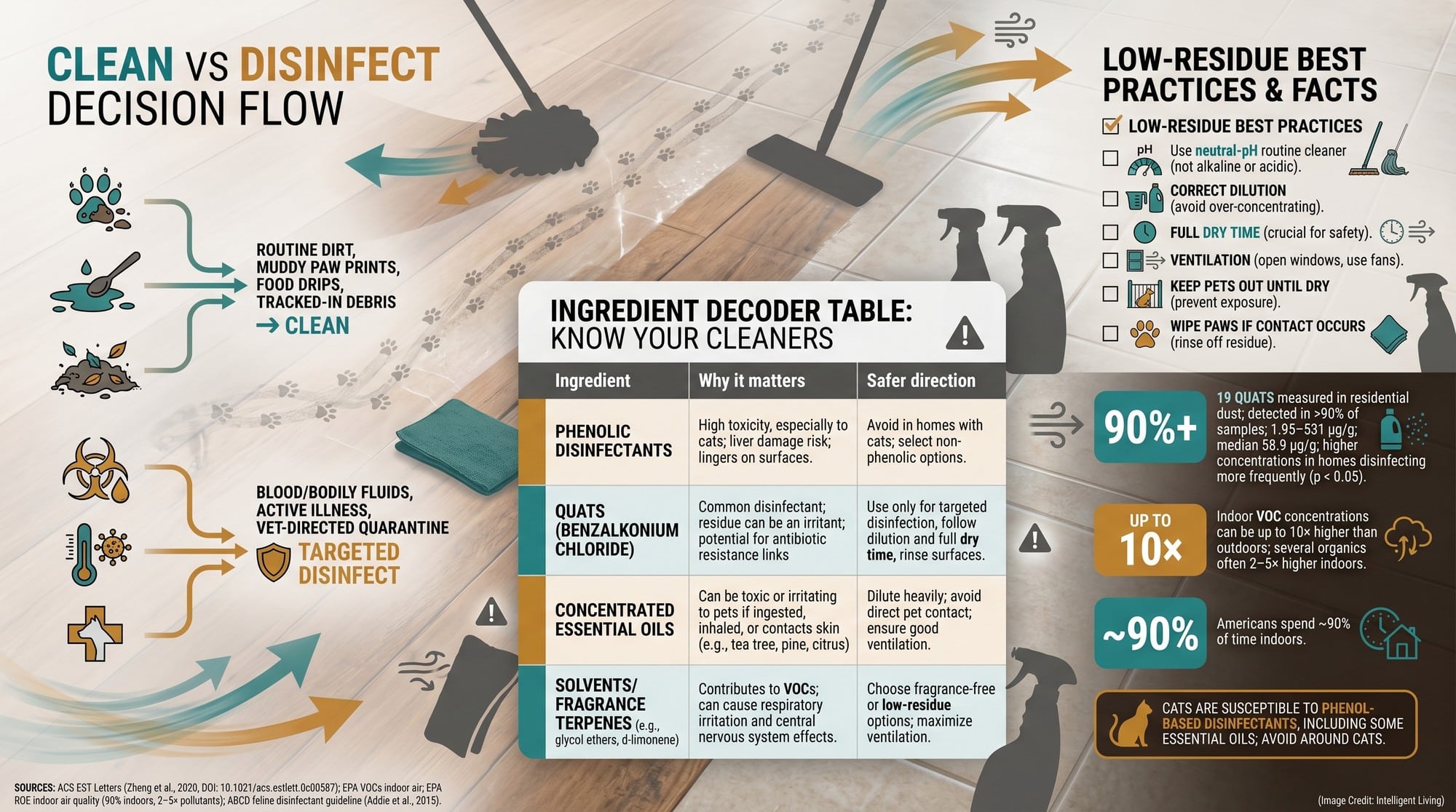
Following cdc protocols for household hygiene clarifies the process: cleaning removes surface dirt and lowers germ counts, while disinfecting is a specific step used to kill pathogens. Removing muddy paw prints from tile is a standard cleaning job, whereas sanitizing a surface after a biological accident requires targeted disinfection. Recognizing the difference ensures the right tools are used for specific risks.
Why Toxic Disinfectant Residue Can Impact Pet Grooming
Using disinfectants too often on floors creates unintended health risks, especially when animals lick their paws after walking through treated areas. Learning about the distinct categories of sanitizers and disinfectants makes it clear why these products require strict handling and shouldn’t be used for every routine mess.
Proper dwell time for disinfectant efficacy ensures the surface remains wet long enough for the product to do its job, which serves as a reminder to avoid casual spray-and-wipe habits. Selecting the best pet-safe floor cleaner for small apartments involves balancing effective soil removal with residue management and pet grooming patterns.
Ingredients to Avoid in Floor Cleaners: Pet-Safe Decoder Table
Checking the back of a cleaning bottle is the fastest way to improve household safety. If a label prominently features the word ‘disinfects’ alongside benzalkonium chloride, you are likely holding a quat-based disinfectant rather than a routine floor cleaner. For routine pet-safe floor care, the actual formulation matters more than scent or marketing promises.
| Ingredient Group | Common Label Terms | Why It Matters In Pet Homes | Safer Direction |
|---|---|---|---|
| Phenolic Disinfectants | phenol, cresol, some pine-oil disinfectants | Merck indicates that phenols act as protoplasmic poisons and must be used with extreme caution around animals | Avoid for routine floor cleaning in cat homes; reserve disinfectants for justified need |
| Quats (Quaternary Ammonium Compounds) | benzalkonium chloride, alkyl dimethyl ammonium chloride, “antibacterial” disinfectant language | A published feline case report describes severe intoxication caused by benzalkonium chloride following floor exposure. | Use routine cleaners for daily soil; if disinfecting is needed, keep pets out until fully dry |
| Concentrated Essential Oils | tea tree, eucalyptus, clove, peppermint, citrus oils | Veterinary data confirms that toxicosis from concentrated essential oils poses a specific risk to cats and birds. | Prefer fragrance-free or low-fragrance formulas; never use concentrated oils on floors |
| Solvents and Fragrance Terpenes | glycol ethers, butoxyethanol, d-limonene, pine oil | Evaluating hazardous ingredients in cleaning products helps identify how solvents and terpenes affect pets. | Choose simpler formulas, ventilate, and avoid strong lingering scents |
Prioritizing transparency in household cleaning ingredients makes shopping easier because you start spotting disinfectant actives and solvent-heavy formulas early. When a bottle leads with “disinfects” and the ingredients list includes benzalkonium chloride, you are likely holding a quat-based disinfectant, not an everyday floor cleaner. For routine cleaning, the distinction between these categories matters more than the scent or the marketing claims on the front label.
How to Mop Safely with Pets: A Low-Residue 7-Step Routine
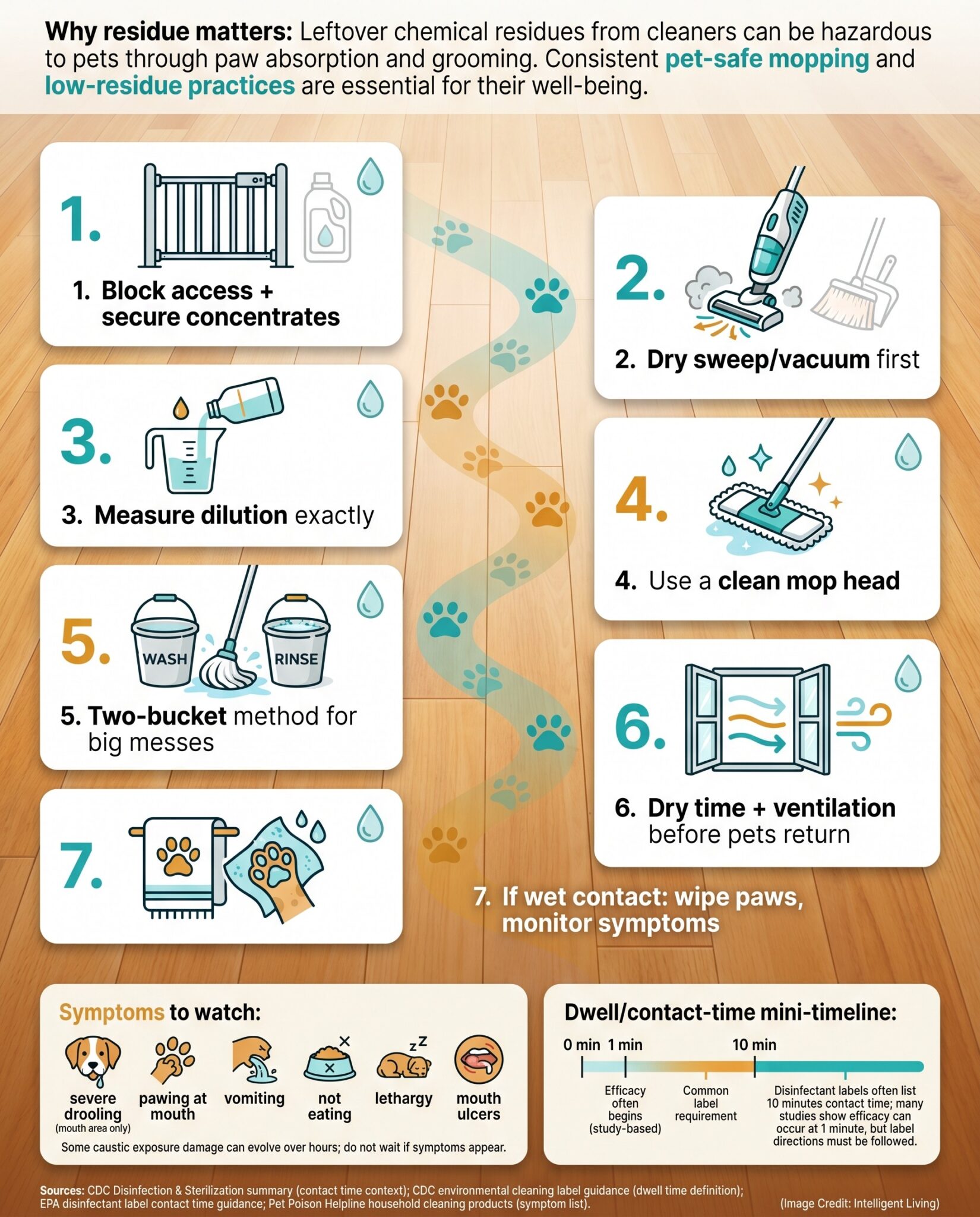
Establishing a safe mopping routine prevents accidental ingestion and ensures a clean home. Follow these steps to minimize chemical exposure:
Before You Start: Reduce Residue and Keep Pets Out
- Block access first. Put pets in a room, behind a gate, or outdoors.
- Maintaining secure storage for hazardous cleaning supplies ensures that curious noses do not encounter danger.
- Perform a dry clean before mopping. Vacuuming or sweeping prevents grit from damaging the floor finish.
- This foundational step also assists with the removal of fine post-renovation dust by eliminating particles that tend to resurface.
- Measure concentrates precisely.
- Over-pouring increases residue and can leave sticky films.
- Use a clean mop head.
- A dirty mop spreads residue and odor instead of removing it.
- For bigger messes, use a two-bucket method.
- One bucket stays clean, one collects dirty water.
- Respect drying time.
- Floors should be dry and odor-free before paws return.
- Monitoring a comprehensive list of household pet toxins ensures you can identify critical symptoms fast.
- Especially if a pet walks through a damp area.
After You Finish: Dry Time, Ventilation, and Paw Checks
A low-residue routine often feels unremarkable, which indicates a job well done. Crack a window to improve airflow, keep rooms closed until surfaces are dry, and perform a quick paw check if pets return early.
Rainy weeks require a slightly different tactical approach. Keeping a towel near the door transforms the search for the ‘best floor cleaner for dogs’ into a simple, effective plan: wipe paws first, mop second, and wait for the floor to dry before resuming play.

Improving Home Health: Indoor Air Quality and Sustainable Habits
Managing Indoor Air Quality And VOC Levels in Pet Homes
Fragrance Risks and VOC Exposure Near Floor Surfaces
Mopping your floors impacts more than just the surface; it also changes the air your family breathes. Exposure to accumulated indoor volatile organic compounds often peaks during cleaning, sometimes reaching levels significantly higher than the air outside. In pet homes, airborne safety matters because pets breathe closer to the floor and spend more hours in the same rooms. If you are searching for a fragrance-free floor cleaner for cats, low-odor routines and steady ventilation often make a bigger difference than a single “fresh” scent.
Environmental Impact: Disinfectant Chemistry in Wastewater
Disinfectant ingredients can also show up beyond your home. Environmental tracking of chemical sanitizers in wastewater reveals the broader impact of heavy disinfectant use. Reserving heavy disinfectant chemistry for major messes instead of daily paw prints significantly lowers your home’s total chemical footprint.
Eco-Friendly Swaps to Reduce Cleaning Chemical Loads
Making the switch to sustainable spring cleaning alternatives naturally reduces the need for aggressive, harsh chemical cycles in your home. Implementing effective non-toxic cleaning solutions like vinegar and baking soda provides a safer approach, though feline households must remain cautious with concentrated essential oil additives.
Implementing practical indoor air quality improvements is an effective way to manage fragrance-heavy odors. You should also evaluate the chemical warnings on air fresheners to understand their long-term impact on your home environment. For households trying to cut chemical load without turning life into a chemistry lab, adopting green cleaning routines for the home pairs effectively with pet-safe habits, and sustainable zero-waste cleaning habits help reduce how often new plastic enters your home.

Safer Mopping Habits for Healthier Pet Homes
Establishing a practical mopping routine protects pet health without turning the home into a laboratory. Prioritizing routine soil removal over aggressive disinfection minimizes the chemical load on walking surfaces. Selecting neutral-pH cleaners and avoiding high-risk ingredients like phenols or quats ensures the home remains a safe environment for animals that explore the world through their paws and noses.
Mopping at night often ends with a dog rolling across the living room as if it were a freshly made bed. This relatable moment is a reminder that a dry floor isn’t just a goal—it’s the finish line for a safe cleaning routine. Maintaining a low-residue finish and ensuring complete dry time keeps paws safe from ingestion risks. These repeatable daily animal health safety protocols provide peace of mind, proving that a hygienic home is achievable with simple, non-toxic habits.
Frequently Asked Questions About Pet-Safe Floor Care
What floor cleaner is safest for dogs and cats?
A water-based, neutral-pH cleaner is the safest routine choice. Always ensure the surface is dry to the touch before allowing pets to return to the room.
Is vinegar safe for mopping in pet homes?
Diluted white vinegar works well on many sealed floors. Proper ventilation is necessary during use, and pets should stay away until the floor is fully dry.
Why are phenolic disinfectants dangerous for cats?
Cats are uniquely sensitive to phenols, which act as protoplasmic poisons. Since cats groom their paws, they can easily ingest toxic residues left behind on damp floors.
Should I disinfect my floors every day?
No. Routine mopping is usually sufficient for dirt and allergens. Reserve disinfection for specific contamination events or when directed by a veterinarian.
What are the symptoms of cleaning product exposure in pets?
These warning signs of cleaning product ingestion require immediate attention and professional guidance. Seek veterinary assistance immediately if you notice heavy drooling, pawing at the mouth, or vomiting.
Disclosure: This post contains affiliate links, which means we may receive a commission if you click a link and purchase something that we have recommended. While clicking these links won’t cost you any extra money, they will help us keep this site up and running! Thank you for your support.
Brands: want your product considered for review or a sponsored feature? We accept review units and sponsored placements with clear disclosure. Contact us with specs, availability, and what makes it genuinely useful for sustainable living. Sponsored links are labeled and marked appropriately.
https://www.intelligentliving.co/product-reviews-brand-partnerships/


