
Two people with similar tattoos can receive very different quotes from the same clinic. That gap confuses patients and fuels the suspicion that pricing is random. It is not. Every provider builds a quote from a handful of measurable factors, and once you understand them, the tattoo removal cost you are offered starts to make sense and becomes easier to compare.
This guide breaks the calculation into its parts: the price of each session, the number of sessions you need, and the extra charges that sit outside the laser itself. You will also see a worked example and a checklist of questions to take to your consultation.
The Basic Formula Behind Every Quote
Price Per Session Multiplied by Session Count
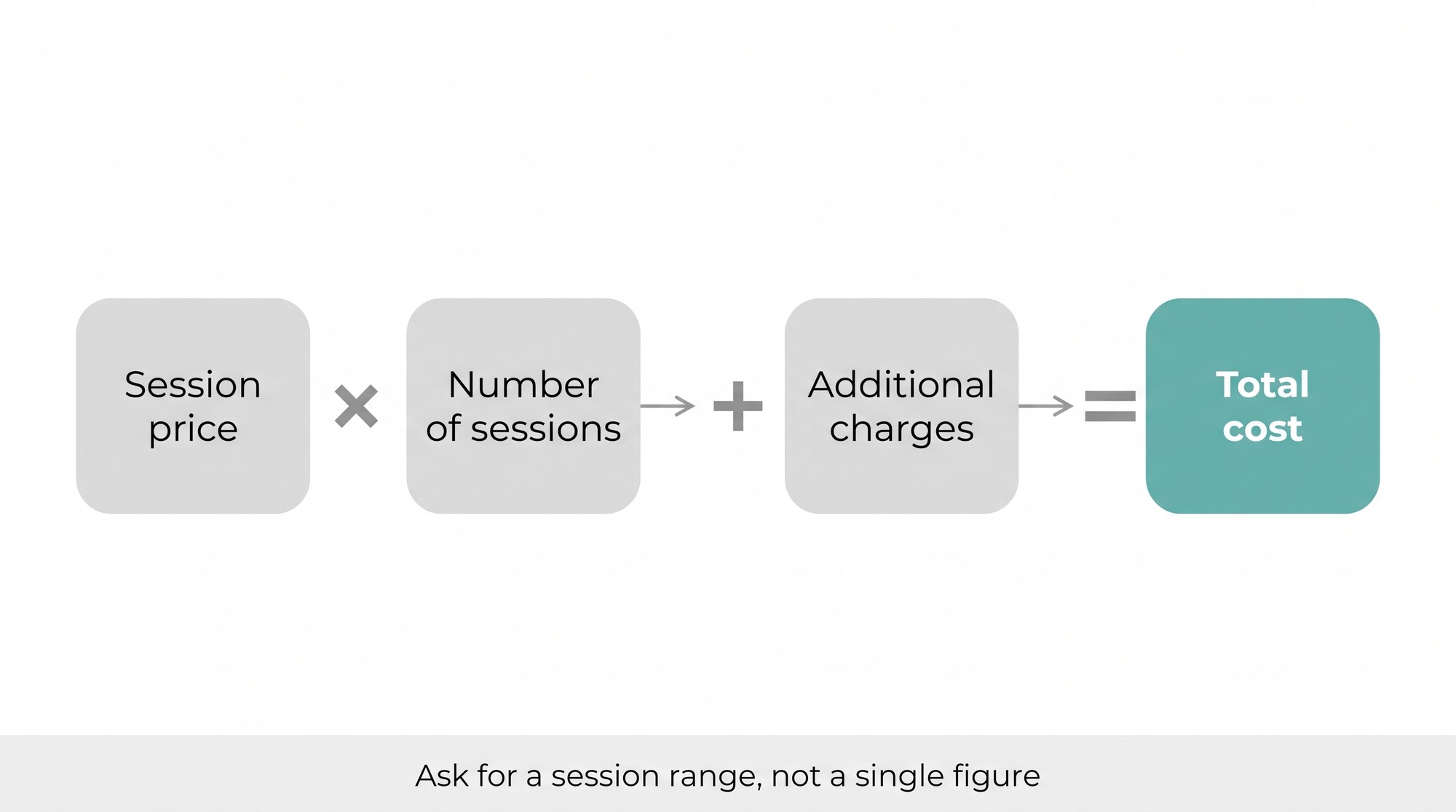
Almost every quote follows one simple structure. Your total equals the price of one session multiplied by the number of sessions, plus any extras. Most studios charge per session, not per tattoo, so the figure you see on a price list is only the first half of the sum.
The second half, session count, is the uncertain part. Clinics estimate it from your tattoo and your skin, then refine the estimate as treatment progresses. Treat the early number as a forecast, not a promise.
Why Sessions Are Spaced Weeks Apart
Your body clears shattered ink particles slowly through the lymphatic system. Clinics therefore space visits roughly six to eight weeks apart so the skin can heal and the immune system can work. That schedule stretches treatment over many months, which affects how you plan your budget and your calendar.
The Factors That Set Your Session Price
Size of the Tattoo
Size has the strongest influence on price. The smallest designs, such as a finger symbol, sit at the bottom of a clinic’s price list, while a full sleeve or a back piece sits at the top. Providers generally price by the total area a tattoo covers, so ask which size bands or measurements your clinic uses.
Laser Technology
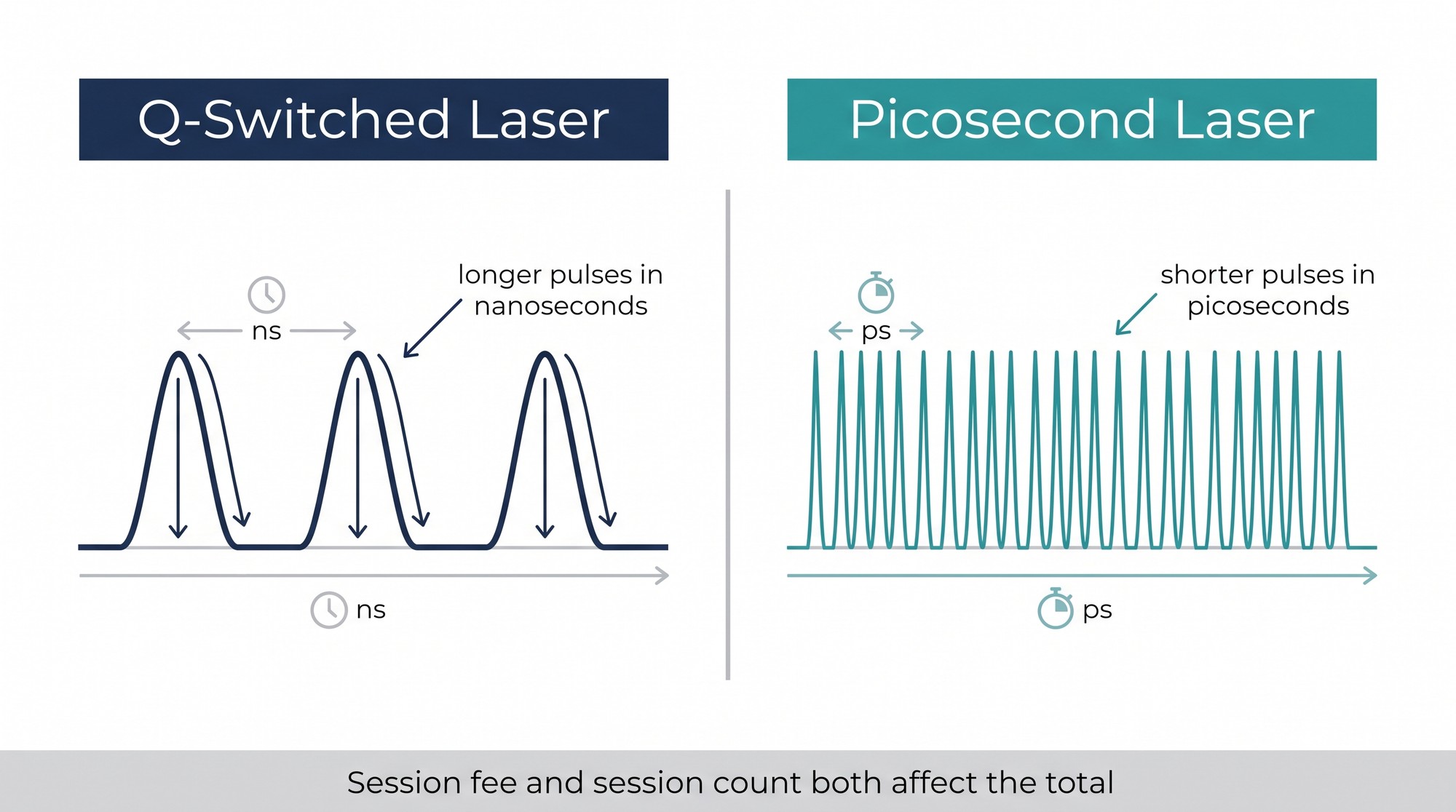
The device also shapes your quote. Picosecond lasers fire faster pulses and can break down ink efficiently, especially stubborn colours, but their high purchase price often lifts the cost per session. Older Q-switched machines usually cost less per visit and may suit simple black tattoos well. A pricier device can still save money if it reduces your total number of visits.
Location and Provider Expertise
Clinic overheads, local competition, and practitioner qualifications all move the price. A medical clinic with trained clinicians typically charges more than a small studio, and a major city costs more than a smaller town. A lower price can be reasonable, but check training, hygiene standards, and aftercare support before you judge value.
The Factors That Decide How Many Sessions You Need
Ink Colour and Density
Black and dark blue ink absorb laser energy readily and tend to fade first. Greens, yellows and lighter pigments respond more slowly. Dense, professional ink usually needs more visits than light amateur work.
Skin Tone and Immune Response
Your skin colour affects which laser settings are safe, and your immune system affects how fast the body removes ink. People with darker skin often need gentler settings, which can add sessions. Healthy habits, good circulation and sun protection can support steadier results.
Tattoo Age and Location on the Body
Older tattoos often fade more easily than fresh ones. Location matters too. Ink on the torso and upper arms, where blood flow is strong, typically clears faster than ink on hands, feet or lower legs.
A Worked Example of Tattoo Removal Pricing
The numbers below are illustrative only, not real quotes. Imagine a medium forearm tattoo in black and grey ink. A clinic using a standard laser charges $300 per session and expects eight visits, which totals $2,400. A second clinic with a picosecond laser charges $360 per session but expects six visits, which totals $2,160.
The higher session price produced the lower total in this case. That does not hold for every tattoo, but it shows why the per-session figure alone tells you very little. Always ask for the expected visit range before you compare clinics.
Costs That Sit Outside the Quote
Comparing What Is and Is Not Included
Check each quote for these common add-ons and exclusions:
- Consultation fee: Some clinics waive it when you book treatment; others charge separately.
- Test patch: A small trial area may carry its own fee, though it helps confirm how your skin reacts.
- Numbing products: Topical anaesthetic may be included or billed per visit.
- Aftercare supplies: Dressings, ointments and sun protection add to your total, so confirm whether the clinic supplies them.
- Extra sessions: Some packages cap the number of visits while others charge for each additional appointment.
Prepaid packages deserve special attention. Some shops offer flat-rate packages for a fixed number of sessions at a discount. Read the refund terms, the expiry date and what happens if you need more visits than the package covers.
Smart Ways to Control the Total
Start with an in-person assessment instead of relying on online price lists. Collect written estimates from at least two clinics. Ask each one to state the likely session range, the laser used and the policy for additional visits. Follow aftercare instructions closely, protect the area from sun and avoid picking at scabs, because complications can add appointments and cost.
A consultation at any provider generally involves assessing the tattoo, setting out realistic expectations and outlining a likely treatment path. Clinics such as Bio Aesthetic Clinic differ in how clearly they explain the likely number of sessions, the laser involved and the charges that sit outside the quoted fee, so those explanations are worth comparing between providers, not just the headline prices.
Key Takeaways Before You Book
Tattoo removal cost comes from a straightforward formula with several uncertain inputs. Session price depends on size, technology and clinic, while session count depends on ink, skin, age and body location. Ask for an estimated range, check what the quote includes, and compare the total cost instead of the price of a single visit. Prepare your budget for the full timeline, and choose a provider who explains the uncertainty openly.

