
Commercial buildings work hard every single day of the year. Doors open and close hundreds of times, delivery trucks come and go, and heating and cooling systems run for long hours to keep tenants and staff comfortable. Over time, this steady use creates wear that is easy to miss.
A cracked seal, a slow leak, or a loose panel rarely draws attention on its own, yet each one can grow into a costly repair if it is left alone. Property managers who learn where these problems hide and how to deal with them early protect both the building and the business that depends on it.
Seasonal Changes Expose Weak Points in Large Facilities
Once the long and stormy summer winds down, commercial buildings often reveal wear that went unnoticed during busier months. During the fall, cooler nights push rodents to seek warm shelter indoors, just as storm-damaged door seals, gaps around utility lines, and growing piles of seasonal stock give them easy ways in.
A seasonal pest check is a practical way to find these weak spots before they lead to contamination or lost inventory. By following fall rodent inspection tips for warehouses, facility managers can find weak entry points at loading docks, roll-up doors, pallet stacks, and break areas. Adding this review to the yearly calendar keeps small gaps from becoming expensive repairs later.
Why Small Defects Turn Into Expensive Repairs
Most serious building failures start as minor issues. A drip under a sink becomes a soaked subfloor. A loose roof flashing lets in a little water each time it rains until the insulation below is ruined. Because these problems develop slowly, they often stay hidden behind walls, above ceilings, or under flooring until the damage is obvious.
The cost of waiting is rarely limited to the repair itself. Damaged materials may need to be removed and replaced, operations may have to pause while work is done, and tenants may grow frustrated with repeated disruptions. Catching a defect while it is still small usually means a quicker fix, a lower bill, and far less disturbance to the people who use the building.
Water Intrusion and Moisture Damage
Water is one of the most destructive forces a commercial property faces. It can enter through roofs, windows, foundations, and plumbing, and it often travels some distance before it shows up as a stain or a puddle. By then, it may have already soaked into drywall, wood framing, or ceiling tiles.
Managers should watch for warning signs such as musty smells, peeling paint, bubbling wall surfaces, and discolored ceiling tiles. Damp areas near exterior walls or around mechanical rooms deserve close attention. Fixing the source of the moisture, rather than simply cleaning up the visible damage, is the only way to stop the problem from returning. Tracking where hidden water damage begins, and inspecting the areas most prone to silent leaks, makes early detection far more likely.
Roofs, Gutters, and Exterior Walls
The building envelope protects everything inside, so its condition matters a great deal. Flat commercial roofs are especially prone to pooling water, blistered membranes, and clogged drains. Gutters and downspouts packed with leaves and debris can push water back toward the walls and foundation.
Exterior walls deserve the same care. Cracks in masonry, failing caulk around windows, and gaps where pipes and cables pass through the wall all create openings for water, air, and unwanted pests. Walking the perimeter of the property on a regular basis and checking the roof after major storms helps managers spot these issues before they spread.

Mechanical Systems That Fail Without Warning
Heating, ventilation, and air conditioning equipment often runs out of sight on rooftops or in back rooms. Because of this, managers may not notice a struggling unit until it stops working completely. Strange noises, uneven temperatures across the building, rising energy bills, and frequent cycling are all signs that a system needs attention.
Routine servicing makes a very real difference. Changing filters, cleaning coils, checking belts, and clearing condensate lines keep equipment running smoothly and extend its working life.
Building a Routine Walk-Through Schedule
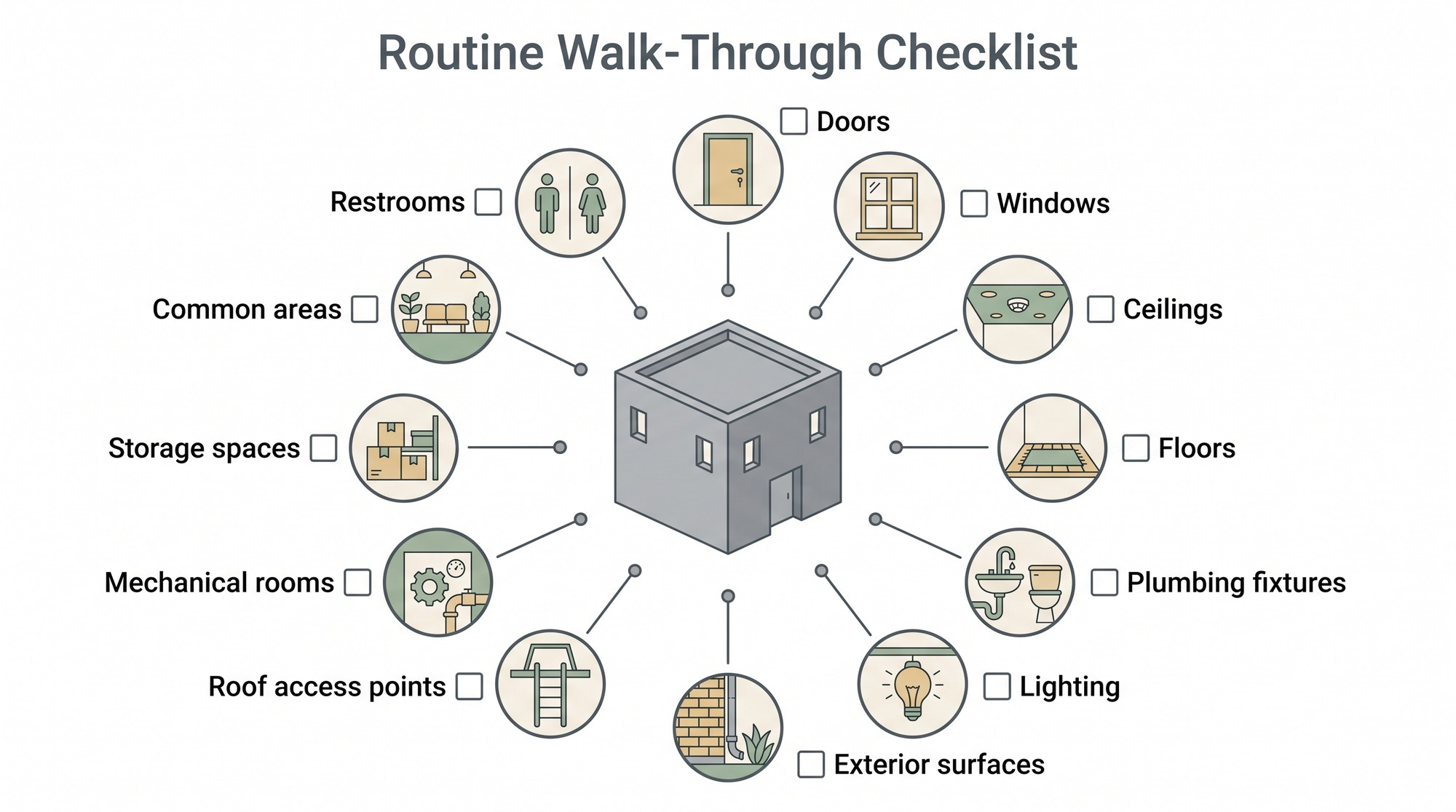
A regular walk-through gives managers a reliable way to find hidden problems before they grow. The schedule does not need to be complicated. Weekly checks might cover common areas, restrooms, and entrances, while monthly reviews can include mechanical rooms, roof access points, and storage spaces.
A simple checklist keeps each walk-through consistent and makes it easier to compare conditions over time. It should cover doors, windows, ceilings, floors, plumbing fixtures, lighting, and exterior surfaces. When the same person or team handles these reviews, they become familiar with the building and are quicker to notice when something has changed.
Using Staff Reports and Records to Spot Patterns
The people who work in a building every day are often the first to notice a problem. Encouraging staff and tenants to report leaks, odd smells, strange sounds, or damaged surfaces gives managers an early warning system at no extra cost. A clear and easy reporting process, such as a shared form or a dedicated email address, makes it more likely that people will speak up.
Keeping written records of every repair and report is just as important. Over time, these records reveal patterns, such as a section of roof that leaks after every heavy storm or a unit that needs repeated repairs. Those patterns help managers decide when a quick fix is no longer enough, and a larger replacement makes more sense.
Planning a Maintenance Budget Around Priorities
No property has unlimited funds, so managers need to decide which repairs come first. Issues that affect safety, building structure, or the ability to operate should rank highest. Problems that could cause wider damage if left alone, such as active leaks, come next. Cosmetic work can usually wait until the more pressing items are handled.
Setting aside money each year for planned maintenance reduces the shock of sudden failures. It also allows managers to replace aging equipment on their own timeline rather than during an emergency, which keeps the building in steady working order.

