
A vial of polystyrene powder stirred in water next to a drop of methyl orange, a light yellow dye used in laboratories, slowly bled its color over ten days. By the end, the solution had gone nearly colorless, losing almost 90 percent of the dye’s original hue. Run the same test in methanol, ethanol, acetonitrile, or DMF, and nothing comparable happens. Water was the missing ingredient.
For decades, the working assumption in materials science and toxicology has been simple: commodity plastics sit in water and stay inert. They degrade slowly under light or chemicals, but the polymer surface itself is passive. A new study published in Nature on October 14, 2026, disrupts that assumption. Led by Wei Min, a professor of chemistry and biomedical engineering at Columbia University, and Teresa Head-Gordon at the University of California, Berkeley, the team showed that ordinary commodity microplastics generate reactive chemicals at their surface the moment they meet water and that those chemicals damage nearby proteins and red blood cells in the lab.
The stakes are not abstract. Microplastics, fragments under 5 millimeters, have been detected across ecosystems and inside human tissues. The human evidence is still observational, but it is striking: a 2024 study in the New England Journal of Medicine found plastic fragments inside the plaque lining patients’ carotid arteries, and those patients carried roughly four and a half times the risk of a heart attack, stroke, or death over the next 34 months. Until now, the mechanistic bridge between a polymer surface and cellular injury remained largely speculative. This study proposes one, at least in a test tube.
Key Takeaways
- Microplastics spontaneously generate reactive oxygen species, especially hydroxyl radicals, at their surface in water, contradicting the long-held assumption that plastics are chemically inert.
- Radical activity tracked interfacial hydrophobicity (Pearson r = 0.93) and was sharply suppressed by surfactants (r = -0.99), pointing to a mechanism driven by the plastic-water interface itself.
- Laboratory experiments showed protein aggregation and red blood cell rupture that correlated with plastic surface activity, but the study does not demonstrate harm in living people.
- The findings propose a design principle: the plastic-water interface should be treated as a chemical variable when engineering safer, more sustainable plastics.
What the Study Found: Microplastics Are Not Chemically Inert
The dye that faded
The paper, titled “Intrinsic physicochemical activity at microplastic-water interfaces,” appeared in Nature volume 658, pages 650 to 657, and is open access. Naixin Qian, a postdoctoral researcher in Min’s lab, is a lead author, and Beizhan Yan of Columbia’s Lamont-Doherty Earth Observatory is a co-author. The dye experiment formed the opening act. Researchers stirred 10 milligrams per milliliter of polystyrene powder with 20 micromolar methyl orange, an azo dye, in water for ten days. The dye’s light yellow color faded to nearly nothing, a loss of almost 90 percent. The same mixture in methanol, ethanol, acetonitrile, or DMF showed no comparable degradation.
Radicals caught at the surface
Seeing the dye fade is suggestive, but not proof of a mechanism. The team turned to electron spin resonance spectroscopy with a radical trap called DMPO, which captures short-lived radicals so they can be detected. The signal included hydroxyl radicals, highly reactive oxygen species with an unpaired electron that can attack nearby molecules. A second tool, a fluorogenic sensor called APF, lit up concentrated at the particle surfaces under a confocal microscope and kept brightening over time, indicating a sustained reaction rather than a one-off burst. A lower-bound estimate put interfacial hydroxyl radical production at roughly 0.1 to 1 nanomolar per minute.
Six plastics, one pattern
The researchers tested six commodity plastics: polypropylene (PP), polyethylene (PE), polystyrene (PS), polyvinyl chloride (PVC), polyethylene terephthalate (PET), and poly(methyl methacrylate) (PMMA). All six generated radicals in water. The polyolefins, PE and PP, were the most reactive, while PET and PMMA were the least. Radical activity also tracked the water contact angle, a measure of hydrophobicity, or how strongly a surface repels water, with a correlation of Pearson r = 0.93. The more hydrophobic the surface, the more chemistry it set off.
Inside the Chemistry: Why Water Becomes the Aggressor
Reactive oxygen species, or ROS, are a family of molecules that carry unpaired electrons and can strip or add electrons to neighboring atoms, breaking bonds in the process. The question is how a polymer surface, which contains no obvious redox catalyst, manages to produce them in plain water. The authors turned to molecular dynamics simulations and ab initio quantum chemistry calculations, work led by Head-Gordon’s group at Berkeley.
The simulations showed that water molecules sitting near a hydrophobic surface lose part of their usual hydrogen-bond network. They become “undercoordinated,” meaning each water molecule has fewer neighboring partners than it does in the bulk liquid. Those disordered interfacial water molecules sit close enough to the surface for the hydroxide ions among them to shed an electron far more easily than they would in the bulk liquid, priming the water for oxidation. The authors note that the effect rhymes with microdroplet chemistry, the finding that water interfaces can speed up reactions that stall in bulk liquid.

Dangling bonds and partial solvation
The calculations focused on hydroxide ions, the charged partners of hydroxyl radicals. In bulk water, oxidizing a hydroxide ion into a hydroxyl radical costs roughly 207 to 210 kcal/mol, an energy barrier that is effectively insurmountable at room temperature. But within about 5 angstroms of a hydrophobic interface, the same reaction drops well below 100 kcal/mol. The interface does the work.
The share of “dangling” hydroxyl groups, those pointing outward into the interfacial water instead of being fully solvated, correlated with measured radical activity at r = 0.94. Polystyrene showed 21.0 percent dangling OH groups, PVC 15.8 percent, PET 10.7 percent, and PMMA 9.7 percent, with the polyolefins highest. More dangling bonds, more radical production.
The surfactant test
To confirm that water, not some other factor, drove the chemistry, the team added 0.1 percent Triton X-100, a non-ionic surfactant that coats the particle surface. Radical generation dropped sharply. The zeta potential of polystyrene, a measure of the net electrical charge at a particle’s surface in liquid, pushed toward zero, under -5 mV.
Surface enrichment of a positively charged dye fell, and the APF sensor largely failed to convert over 16 hours. Across four surfactant concentrations, chemical activity and zeta potential moved in opposite directions, at r = -0.99. Polystyrene also carried a large negative zeta potential in pure water alone, meaning water itself charges the interface. The mechanism is distinct from the pathways usually blamed for plastic degradation, such as photoirradiation or chemical oxidation.
What the Radicals Do to Proteins and Blood Cells
Reactive oxygen species are not just a footnote in the mechanism. Naixin Qian put it plainly: “ROS are textbook examples of the kinds of molecules that can damage animal and human tissue.” The team tested whether the interfacial radicals could harm biomolecules and cells, and within the controlled conditions of the experiment, the answer was yes.
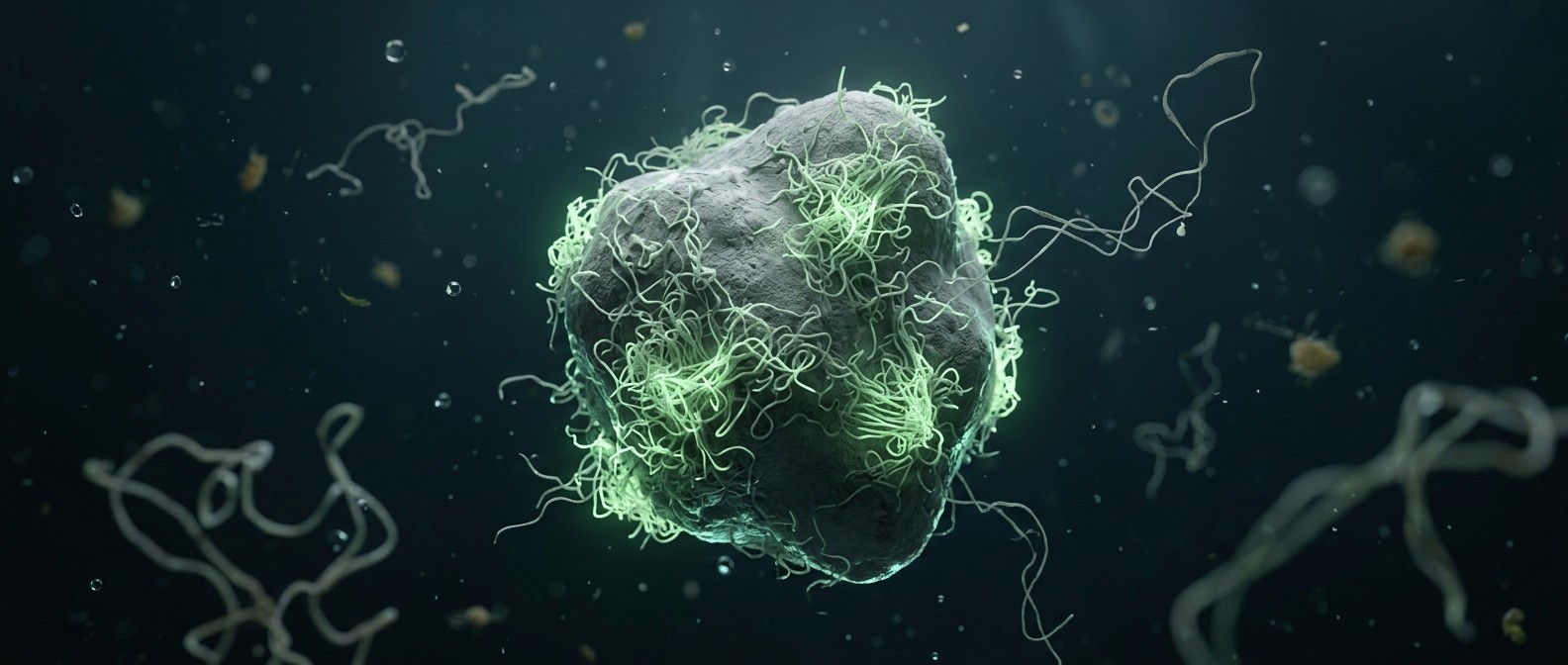
They mixed microplastic particles with positively charged wheat germ agglutinin, negatively charged R-phycoerythrin, and DNA oligomers. All three partitioned to the plastic surfaces. The more hydrophobic PP pulled in more biomolecules than the hydrophilic PMMA, and a surfactant coating reduced the effect. The pattern held: the surface chemistry, not just the physical presence of the particle, governed what stuck to it.
Proteins clump at the surface
Lysozyme, a well-studied antimicrobial protein, was incubated with polystyrene microplastics and read out with a thioflavin T assay that fluoresces when proteins misfold and aggregate. Aggregates formed at the plastic surface. Adding caffeine, a known radical scavenger, completely suppressed them, and a surfactant coating did the same. Across the six plastic types, the degree of aggregation tracked interfacial activity at r = 0.68.
Red blood cells rupture in the lab
Mouse red blood cells incubated with polystyrene particles fragmented into helmet-shaped structures called schistocytes, a hallmark of membrane damage. The hemoglobin released into the surrounding fluid showed hemolytic activity that varied by plastic type and tracked interfacial activity at r = 0.75. Earlier research found that immune cells die three times faster when exposed to microplastics. The rupture of red blood cells at the plastic surface adds another layer of cellular stress, at least in vitro. The authors stress that these are laboratory observations, not clinical findings.
Where the Microplastics in Your Body Come From
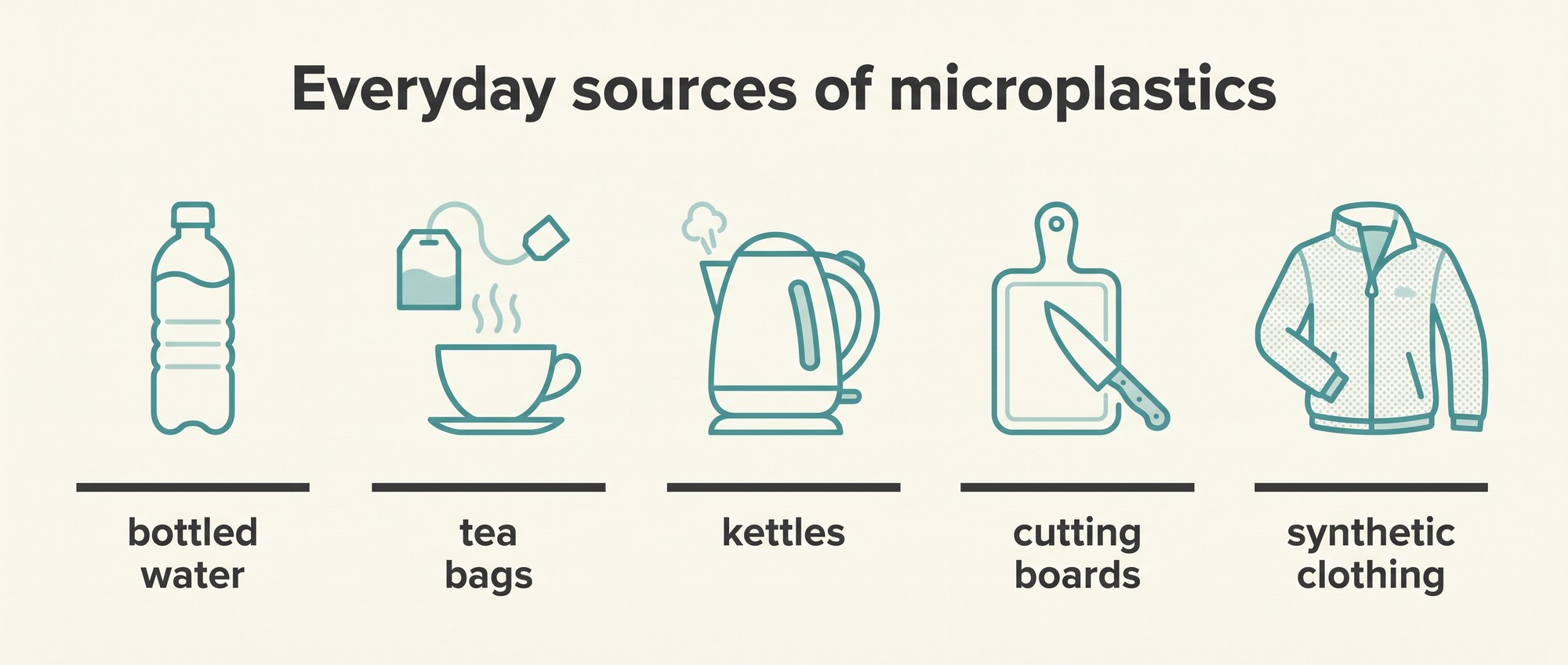
The study is about chemistry at a surface, not about where the particles come from. But the context matters. Microplastics enter the human body through multiple routes, many of them everyday:
- Microwave heating of food in plastic containers and packaging
- Sunlight exposure of bottled water during storage and transport
- Discharges from plastic manufacturing facilities and laundromats
- Wear and shedding from clothing, cookware, and flexible packaging
Earlier work by Min’s group in 2024 used a laser-based microscope and found that an average liter of bottled water held about 240,000 detectable plastic fragments, mostly nanoplastics, which was 10 to 100 times more than previous estimates. An electric kettle can shed nanoplastics into every boil. Tea bags, it turns out, shed billions of microplastic particles into the cup. And bottle-fed infants are ingesting microplastics on a daily basis through their formula. The global diet carries these particles into the body, and research has even linked dietary microplastic exposure to fertility concerns.
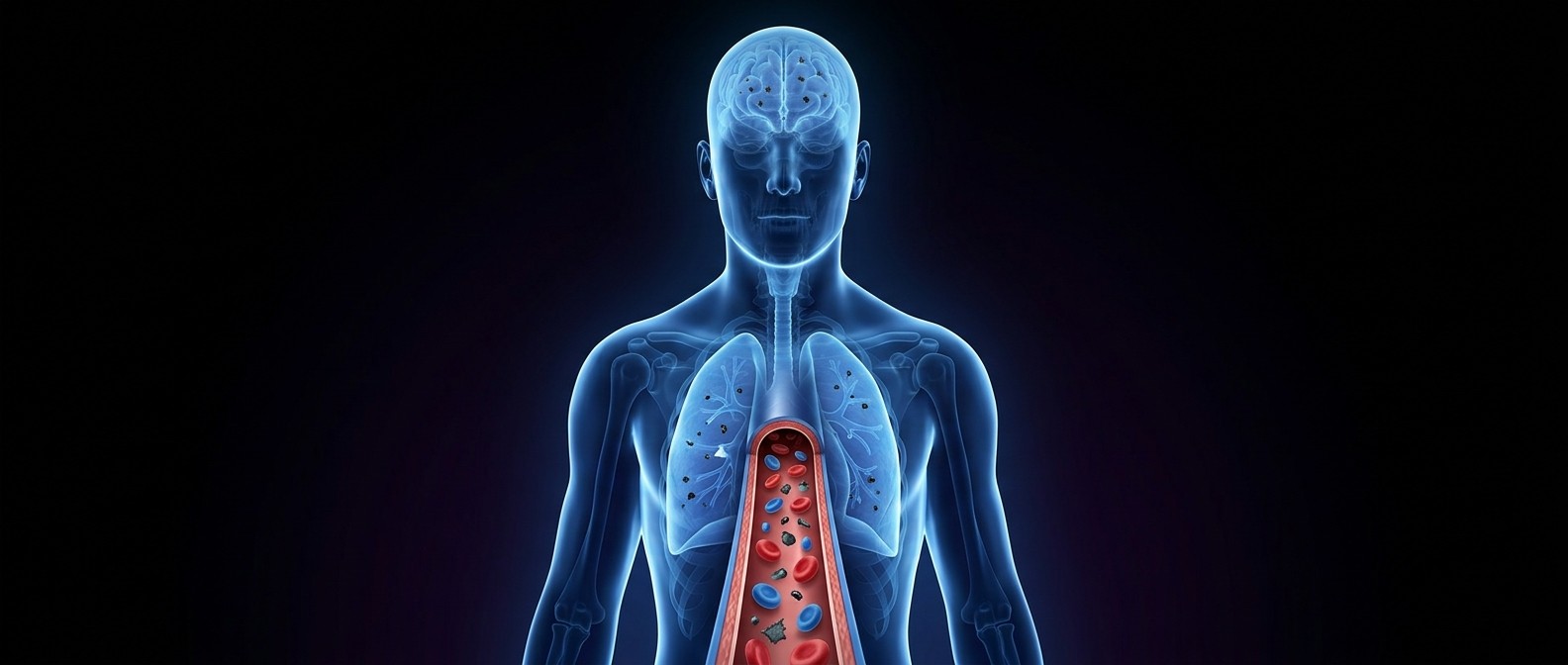
Human blood is roughly 50 percent water. Human cells are generally 60 to 80 percent water. Whatever the entry route, once a microplastic fragment is in the body, it is sitting in an aqueous environment. That is where the chemistry in this study takes over.
Can You Get Rid of Microplastics in Your Body?
The honest answer, given what this study provides, is that there is no established medical protocol for clearing microplastics from human tissue. The paper is a mechanistic study. It shows how a plastic surface behaves in water and what that does to nearby molecules and cells. It does not test a removal strategy, and it does not track where a particle ends up after it enters the bloodstream.
What the study does suggest is that surface chemistry matters. If a particle’s interaction with water can be dampened by a surfactant coating in the lab, the authors argue, then surface-water interactions belong on the short list of variables engineers design around when they build safer plastics. That is a manufacturing conversation, not a personal health intervention. For now, the practical levers already known—choosing glass over plastic for hot drinks, avoiding microwaving food in single-use containers, and filtering drinking water—remain the most direct steps an individual can take.
Frequently Asked Questions
Are microplastics harmful to you?
The evidence is layered. In the lab, this study shows commodity microplastics generating reactive oxygen species in water, and those radicals are clumping proteins and rupturing red blood cells. In human populations, studies have correlated microplastic exposure with reproductive damage, cardiovascular problems, neurological disease, inflammatory bowel disease, and cancer. Correlation is not causation, and the lab findings have not been reproduced in a living person. The proposed mechanism is plausible, but it remains a hypothesis. Whether the microplastics that stick around in human organs cause damage is a separate, unanswered question.
Are Ziploc bags full of microplastics?
This study tested no branded products. It tested commodity polyethylene, the base material in many flexible plastic bags, and found PE among the two most reactive plastics in water. So the material class carries a highly hydrophobic surface where this chemistry is expected to operate. Whether a given bag sheds particles into your food depends on thickness, age, and handling, which was outside this study. Treat it as a property of the material, not a verdict on one product.
Is coffee full of microplastics?
The study does not test coffee. The broader picture is that microplastics enter drinks through several routes: the tea bag, the kettle, the storage container, and the bottle. A kettle with plastic components releases nanoplastics into the water, and tea bags shed billions of particles per cup. A ceramic mug and a glass bottle remove several of those vectors. “Full of microplastics” is not what the data say; “detectable across the food and water chain” is closer.
Can microplastics cause cancer?
There is no demonstrated causal link from a specific plastic type to a specific cancer in humans. What exists is epidemiological work reporting associations between microplastic exposure and increased cancer risk, with findings appearing in the New England Journal of Medicine, Nature Medicine, and Nature Health. The mechanism proposed here, interfacial radicals damaging proteins and stressing cells, is one plausible route by which chronic low-level exposure could contribute to oncogenic signaling over time. It is a hypothesis, not a finding, and this study includes no cancer data.
The Bottom Line: What This Changes, and What It Doesn’t
What the study does not show
It does not show that drinking bottled water will damage your cells the way a vial of polystyrene powder stirred with dye did. It does not show that someone who ingests microplastics daily accumulates hydroxyl radical damage at the rates measured in the lab. It includes no animal toxicity studies, long-term exposure data, or human clinical outcomes. The radical production, the protein aggregation, and the schistocyte formation all happened in a controlled aqueous environment at known concentrations and time points. Extrapolating from a test tube to a living body is the step the authors flag as next.
What would settle it
What the field needs next is a chain of evidence with no gaps: in vivo studies showing the same interfacial chemistry operating at the concentrations and residence times found in human blood; biomarkers of oxidative protein damage that rise with measured microplastic burden; and dose-response curves in animal models that can be compared against the epidemiological associations already on file. Regulatory pressure is building too, through the EPA’s decision to add microplastics to a federal drinking water contaminant candidate list and the federal government’s $144 million program targeting toxic microplastics in the human body. Each step would close a gap this paper, for all its elegance, leaves open.
What the study does change is the starting point of the conversation. For thirty years, the default question about a plastic in the environment has been “how does it break down?” The implicit answer was that a polymer only broke down when something outside it attacked the material. This work reframes the question: “what does the surface do to the water around it, before any degradation happens?” The answer, at least in the lab, is that the surface is not waiting to be attacked. It is doing chemistry. And the chemistry is driven by the same property, hydrophobicity, that makes a polymer useful as a packaging material in the first place.
Teresa Head-Gordon, whose group supplied the computational core of the paper, framed the long-term implication in terms of engineering: “Our fundamental work that the most hydrophobic microplastics interacting with water can drive chemical reactivity could ultimately lead to new engineering solutions by redesigning the chemistry of these commodity plastics to reduce the toxic outcomes on health and the environment.” That is a research and regulatory goal, not a consumer instruction. But it does shift the burden. The design of the next generation of packaging, bottles, and textiles now has a new variable to minimize: the radical chemistry at the plastic-water interface.
Wei Min put it more plainly, and it is the line to hold onto.
“Water is a key active player here, rather than just a spectator. It’s integral to making these microplastics reactive. Water molecules become chemically active when they come into contact with plastic, which is hydrophobic.”
Wei Min, professor of chemistry and biomedical engineering, Columbia University
The plastic was never the aggressor on its own. It is the partnership, polymer and water, that sets the reaction in motion. Understanding that partnership, and designing around it, is where the next round of research, regulation, and material science will have to start.

