
We expect a moment of comfort when the kettle clicks. That routine morning cup should offer peace. Yet recent research reveals that brand-new plastic kettles can shed a burst of tiny nanoparticles into hot water during initial uses. A study on polypropylene kettles demonstrated the pervasiveness of this issue. The study discovered that repeated boils cause a drop in nanoparticle counts, yet this clear signal prompts consumers to reassess the equipment they use on a daily basis.
Nanoplastics are smaller than dust, moving through modern life from packaging to clothing fibers. They do not announce themselves and often slip through ordinary conversations about safety.
This guide’s aim is not to cause alarm but to provide clarity and control. We will simplify the science, communicate the statistics in understandable language, and outline changes that significantly reduce exposure without disrupting your daily routine.
If you are looking for a quick answer, it is this: focus on reducing high-heat and high-wear plastic contact points first. Choose smarter materials where it counts, lean on filtration where it helps, and build a few new habits that stick.
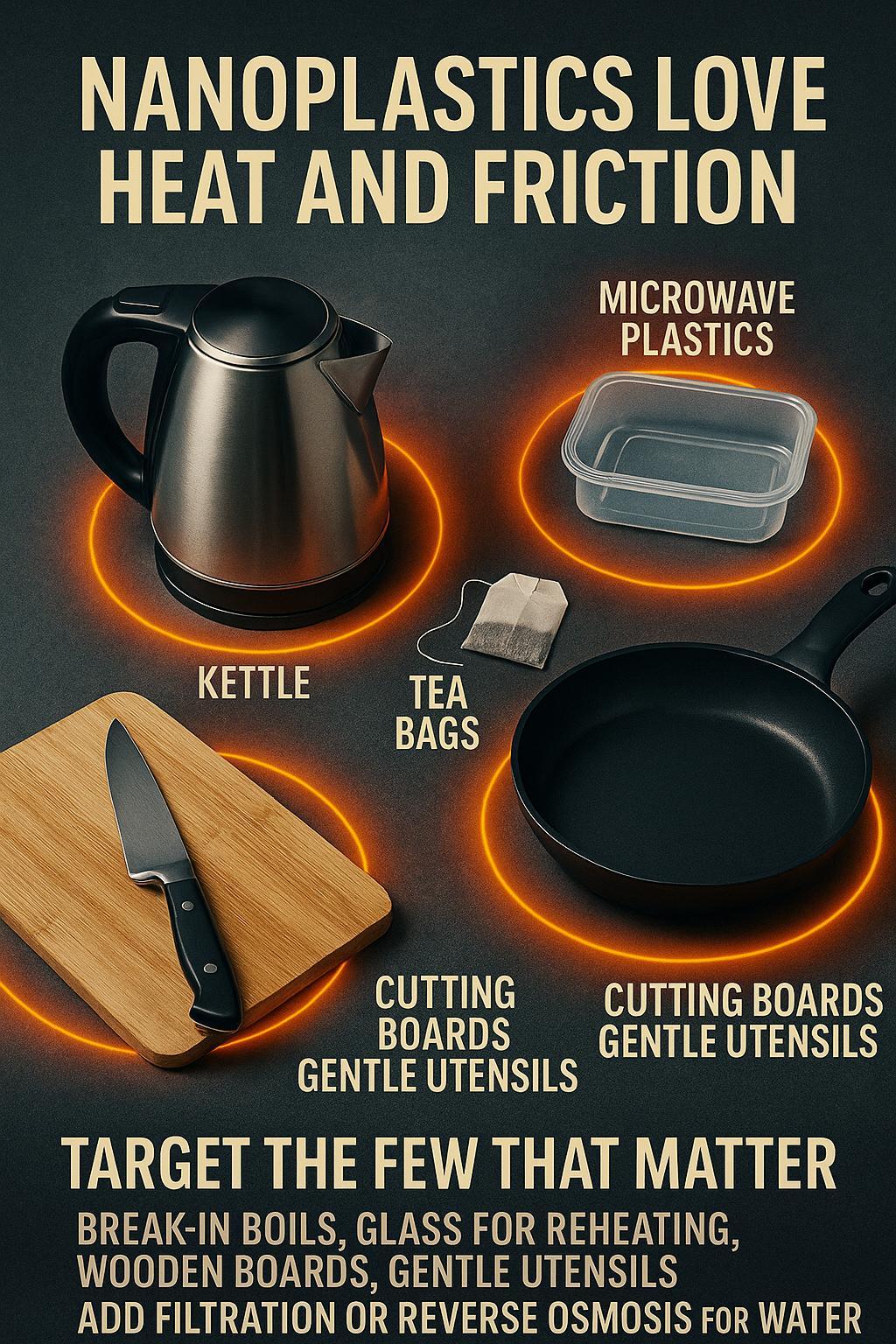
Nanoplastics in the Kitchen: Essential Fast Facts
- First Boils Matter Most: New plastic kettles tend to shed the highest loads during early use. Particle release tapers over time, as documented by the Nature study above.
- Order of Magnitude: Billions of nanoparticles may be found in a first-use cup. This contrasts with hundreds of thousands of particles per liter in some bottled waters reported by researchers. Targeted swaps matter more than chasing perfection.
- Heat and Friction Drive Release: High temperatures and physical wear increase particle shedding. This affects many plastics used in kettles, tea accessories, utensils, and cutting boards.
- Exposure Is Not Equal: The biggest wins come from replacing plastic at boiling, simmering, or steaming stages. You do not need to ban every plastic item in your home.
- Filters Can Help: Evidence-based guidance on advanced water filtration options can address multiple contaminants, including microplastics. Reports often support the idea that tap water over bottled water is a better strategy where local water is safe.

Your Morning Kettle Might be Serving Nanoplastics
The New Study that Finally Counted Them
Scientists analyzed water boiled in new polypropylene kettles and directly measured micro- and nanoplastic particles with modern lab tools. They reported the sharpest release in the earliest boils, followed by a decline toward a lower, persistent baseline. Therefore, a short “break-in” period where discarding the first several boils can meaningfully reduce what ends up in your cup.
How the Scientists Measured It
Researchers used particle counting and imaging methods designed for the nanoscale, then confirmed the plastic’s chemical identity. The goal was to pin down how much material enters hot water under normal use, not to spark panic. This data allows for better product guidance and safer designs.
Why the First Few Boils are the Worst
Manufacturing and molding leave loose residues on a plastic surface. Heat and turbulence during early boils dislodge those residues most readily. As surfaces stabilize and mineral scale gradually forms in some regions, the steep early release flattens into a slower trickle.
Simple steps like filling, boiling, and discarding several times before regular use help move past this early high phase.
Water Hardness and Scaling
If your tap water is moderately hard, a thin mineral layer can build over time on interior walls. That layer can act like a partial shield between water and plastic. It is not a fix, and it will not stop all release. However, it is one more reason the first handful of cycles behave differently than the hundredth.
What “Billions of Particles” Really Means for a Cup
“Billions” sounds cinematic until you translate it.
A typical tea mug holds roughly 250 milliliters. Particle counts reported from first-use scenarios can add up quickly at that volume. After a brief break-in period, the numbers fall significantly. The right response is to choose materials wisely and to adopt a short start-up routine before daily use, not to fear the kettle.

What Exactly Are Nanoplastics, and Why Size Matters
Micro Versus Nano in Plain Language
Microplastics are tiny plastic fragments or fibers you can sometimes see under a simple microscope. Nanoplastics are smaller still, typically below one micrometer.
At this scale, particles behave more like invisible dust than crumbs. That small size helps them move with water currents and makes them harder to count with older tools.
Why Definitions Can Feel Fuzzy
Different labs draw the micro-to-nano line at slightly different sizes depending on instruments and protocols. What matters for everyday decisions is not the exact cutoff. The focus should be on the simple idea that the smaller the particle, the easier it is to miss without modern measurements.
Why Size Under One Micrometer Matters
Smaller particles have more surface area relative to their mass, which may influence how they interact with surrounding chemicals. They can also pass through some filters that stop larger fragments, which is why today’s research leans on specialized detectors. Product standards need to keep pace with the instruments scientists now use.
How Much Plastic Actually Ends Up in Your Drink?
Plastic Kettles Versus Bottled Water
When you compare a first-use cup from a new plastic kettle with a liter of bottled water from studies using nanoscale imaging, you find different orders of magnitude and different sources. Kitchen habits that tame the initial kettle phase can trim your daily intake quickly.
However, choosing filtered tap over bottled water in many regions reduces another large slice of exposure.
Where Tap Water Fits in the Picture
Tap systems vary by city, source water, and treatment. The most effective general strategy involves testing or reviewing your local water report, then pairing it with a filter that targets your main concerns. A home reverse osmosis filtration system can address a wide range of contaminants in addition to microplastics where appropriate. High-quality pitcher or under-sink units offer practical steps for renters.
What Science Really Knows (and Does Not) About Health Risks
What Health Agencies Currently Say
Global health bodies emphasize evidence that is still developing. Reviews note that micro- and nanoplastics show up in many environments and foods, but they also stress the need for better exposure data and standardized methods before drawing firm conclusions about population-level harm.
That balanced stance supports a precautionary approach without overstating what the science can prove today.
What Researchers are Finding in People and the Environment
Independent investigations have reported plastic particles in human tissues and airways. One analysis found that microplastics can persist inside human organs, while other reports have documented plastic particles deeper in the lungs. These signals do not equal confirmed disease from everyday exposure. Nevertheless, they justify common-sense steps at the kitchen level.
Why Precaution without Panic Makes Sense
The sensible path is to reduce exposure where it is easy and impactful. The goal is not to aim for zero at any cost. Replace plastic at boil-and-steam steps first. Prefer filtered tap over routine bottled purchases. Swap plastic food containers for glass or stainless, especially for hot and acidic foods. Filtration concepts from new materials to acoustic separation and targeted capture devices continue to evolve. These projects show how measurement drives better design, which ultimately brings safer products to your sink.

Major Household Sources of Plastic Particle Release
Plastic Tea Bags, Coffee Pods, and Hot Drink Gear
Some premium tea bags are made from nylon or PET rather than paper. When steeped at typical brewing temperatures, these plastics can shed extremely high numbers of particles into the cup. One laboratory study reported that a single plastic tea bag released billions of microplastics and nanoplastics during brewing. Reusable metal strainers and paper tea bags avoid that issue entirely and preserve flavor.
Practical Alternatives
To avoid plastic shedding, choose practical alternatives:
- Loose-leaf tea with stainless steel or cotton strainers.
- Paper tea bags without plastic sealing.
- Refillable metal coffee capsules.
If you use plastic-lined pods, let your machine cool briefly between cycles to reduce heat stress. Material choice matters because nylon tea bags have been shown to shed billions of microplastic particles.
Food Storage and Cookware
Heating plastic containers accelerates particle release. Experiments have shown that microwaving certain baby-food containers produced very high particle counts, which is why most pediatric guidance recommends glass for reheating whenever possible. Experimental work confirms that reheating in glass is the safer default, according to University of Nebraska researchers.
Nonstick Pans and Polymer Coatings
Scratched or overheated nonstick pans can shed PTFE particles into food. A recent investigation documented microplastic contamination from polymer-coated cookware. Context from a PubMed-indexed investigation underscores the value of gentler utensils and timely pan replacement.
Cutting Boards and Utensils
Knife strokes on plastic cutting boards shave off tiny fragments that can end up in food or go down the drain. Emerging research estimates that frequent use can generate large yearly exposures, especially with older boards and heavy chopping. A recent synthesis of kitchen studies reviews this issue, and a 2024 systematic review of microplastic emissions provides the broader picture. Produce can also carry particles taken up from soil, as demonstrated in research on microplastics in fruits and vegetables.
Smarter Prep Surfaces
Use wood or bamboo for most produce and ready-to-eat items, reserve plastic boards for raw meats, and retire any board that shows deep grooves. Switch to silicone or wood utensils when cooking in nonstick pans.
Microfibers and Indoor Dust
Synthetic clothing sheds microfibers that accumulate on floors and shelves. Those fibers can be resuspended during cleaning and settle on food prep areas. Adding capture at the source helps, as microplastic levels in indoor air have been shown to exceed outdoor levels in some homes. Start with a washing-machine filter and simple laundry tweaks, guided by research on microfiber pollution and practical steps.
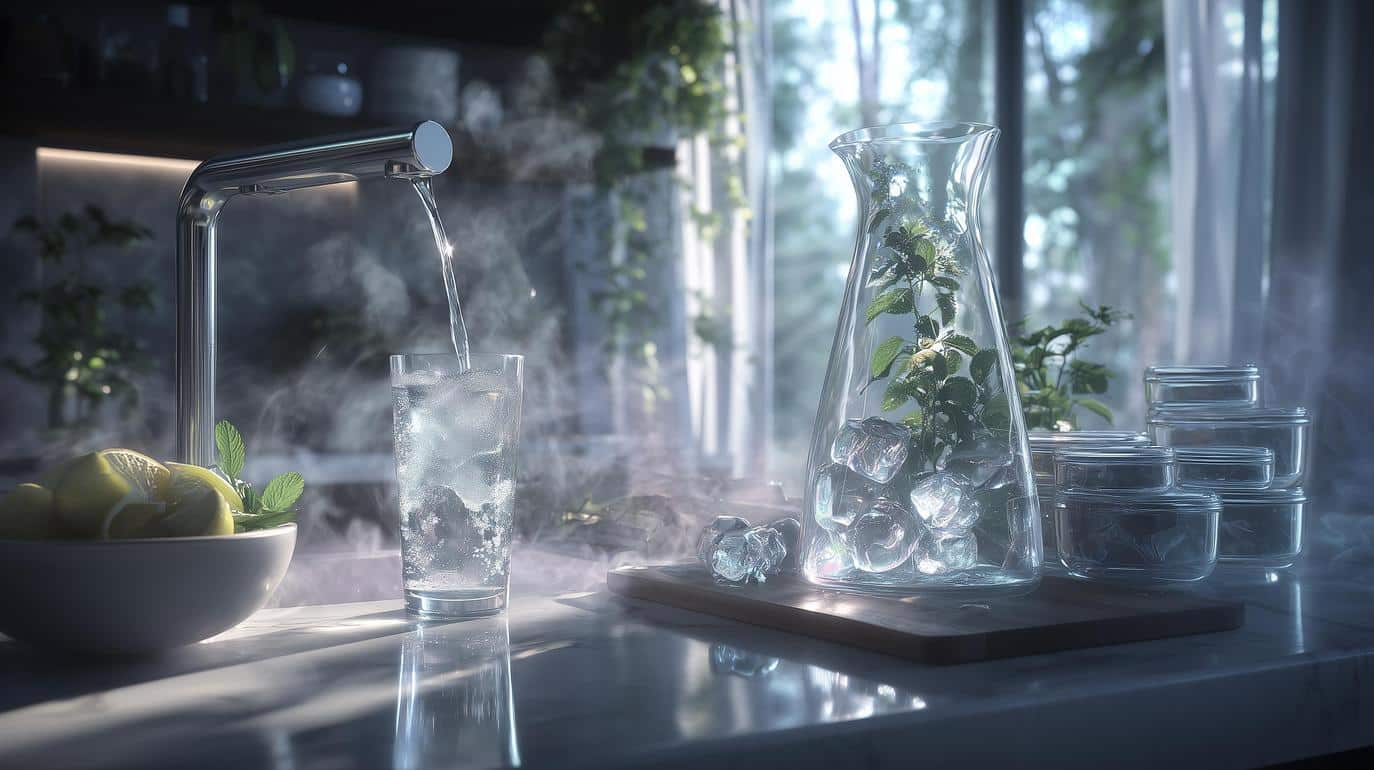
Build a Nano-Smarter Kitchen: High-Impact Swaps & Habits
Better Kettles and Hot Drink Routines
If you own a plastic kettle, run several full boils and discard the water before everyday use. Then, switch to normal routines. When replacing, look for stainless steel bodies or glass models where water touches minimal plastic. For tea, choose loose-leaf or paper filter options and avoid nylon or PET bags. Reusable drinkware needs similar care. Follow the manufacturer’s hot-liquid and dishwasher instructions, and replace bottles when scratches, clouding, or damaged components make them difficult to clean. Our Tritan plastic safety guide explains when a worn bottle should be retired.
Small Habits that Add Up
Let hot water sit for a minute before pouring over plastic components, avoid vigorous scrubbing of plastic interiors, and descale gently to preserve any protective mineral film.
Bottled Water versus Filtered Tap and Reverse Osmosis
For many readers the fastest exposure win is to shift away from routine bottled water. A 2024 analysis using advanced imaging detected on the order of hundreds of thousands of plastic particles per liter in popular brands. A brief from the National Institutes of Health summarizes the nanoscale counts reported in popular brands. Where local tap water is safe, pair it with a good filter. Renters can start with pitchers and under-sink units, while homeowners often consider a home reverse osmosis system for broad contaminant removal.
Containers and Prep Gear
Store hot or acidic foods in glass or stainless steel rather than plastic, and microwave only in glass. Replace deeply scarred plastic boards, switch to wood or bamboo for most prep, and keep metal utensils off nonstick coatings to extend their life.
Filtration Solutions: The Race to Filter Nanoplastics
Filters from the Lab
Material scientists are rapidly turning measurements into solutions. Methods include using engineered egg-white aerogels to trap microplastics in water, living microrobot swarms that actively capture microplastics with magnetically guided fish-schooling motion, and sound-wave filtration concepts that use acoustics to separate tiny particles from flowing water without dense membranes.
Ocean and River Helpers
Engineers are also targeting open-water hotspots. Projects like the YUNA microplastic-filter buoy complement shoreline tools such as giant beach vacuums designed to remove microplastics from sand. Research teams are also testing underwater drones that can detect microplastics for smarter cleanup.
What Might Come Next in Everyday Appliances
The same principles can migrate into home gear. Expect more explicit labeling, pre-use instructions, built-in filtration, and new materials that resist particle shedding. As standards catch up with measurement tools, a kettle or coffee maker that quietly reduces exposure could become the default.

You will Never Get to Zero Nanoplastics, and that’s Okay
Focus on Big Wins Instead of Perfection
Achieving zero plastic particles is not a realistic goal. Prioritize the small set of changes that cut the largest share of exposure: swap the kettle material, prefer filtered tap over bottled when feasible, and stop heating food in plastic. These steps deliver outsized gains with minimal disruption.
Keep Perspective with Reality
A reality-grounded perspective means staying anchored to what data can support. Health agencies consistently note that methods are evolving and risk estimates remain uncertain. The World Health Organization drinking-water review provides perspective on how experts balance caution with practical application.
Cutting Nanoplastics: High-Impact Kitchen Habits
A handful of decisions carry most of the benefit, prioritizing prevention over an impossible goal of zero exposure. The core strategy involves retiring heavily worn plastic from high-heat tasks, reheating food exclusively in glass, and favoring filtered tap instead of routine bottled purchases. Focusing efforts on these steps delivers outsized gains with minimal disruption to your routine.
When upgrading appliances, look for designs with stainless steel or glass water paths and prioritize clear instructions for first use. Committing to these small, durable habits provides peace of mind, ensuring your kitchen respects both the available science and your family’s sanity while delivering cleaner cups and fewer particles.

Frequently Asked Questions About Nanoplastics
Are Plastic Kettles Safe to Use, or Should I Replace Mine Immediately?
You do not need to panic. If you own a plastic model, perform several boil-and-discard cycles before daily use, and consider switching to stainless steel or glass when it is time to replace it.
How Many Particles Are We Talking About in Bottled Water?
Advanced imaging has detected on the order of hundreds of thousands of tiny plastic particles in a liter of popular brands, according to peer-reviewed analyses.
Do Water Filters Catch Microplastics or Nanoplastics?
Capabilities vary by product, but multi-stage systems and reverse osmosis remove a broad range of contaminants. Start with local water reports, and consider multi-stage filtration or reverse osmosis if you need wider coverage.
Should I Stop Microwaving Food in Plastic Containers?
Microwaving accelerates particle release from some plastics. Shift reheating to glass based on experiments that show higher particle release from microwaved plastics.
Are Plastic Tea Bags Really a Problem?
Some are. Lab work has shown that certain nylon or PET tea bags shed enormous particle counts during brewing, which is why loose-leaf or paper options are a safer default based on laboratory findings.
What About Cutting Boards and Utensils?
Plastic boards release fragments with every knife stroke. Use wood or bamboo for produce and ready-to-eat foods, reserve plastic for raw meat, and replace deeply worn boards. Recent kitchen studies highlight the substance as a recurring source.
Are Nonstick Pans Safe?
Polymer coatings can shed when scratched or overheated. Use gentler utensils, avoid high searing on older pans, and recent peer-reviewed studies on polymer-coated cookware provide perspective.
What Do Regulators Say About Health Risks Right Now?
Agencies emphasize uncertainty and the need for better methods rather than definitive harm at typical exposure levels. Current agency language appears in a statement from the FDA and in the WHO report referenced above.


