
YUDesign UPV has designed an anchor water filter buoy called YUNA with built-in microplastic-filtering technology. The design has won the James Dyson Award in Spain.
What is YUNA?
YUNA is an anchor buoy with a filter technology that collects and reduces microplastics.
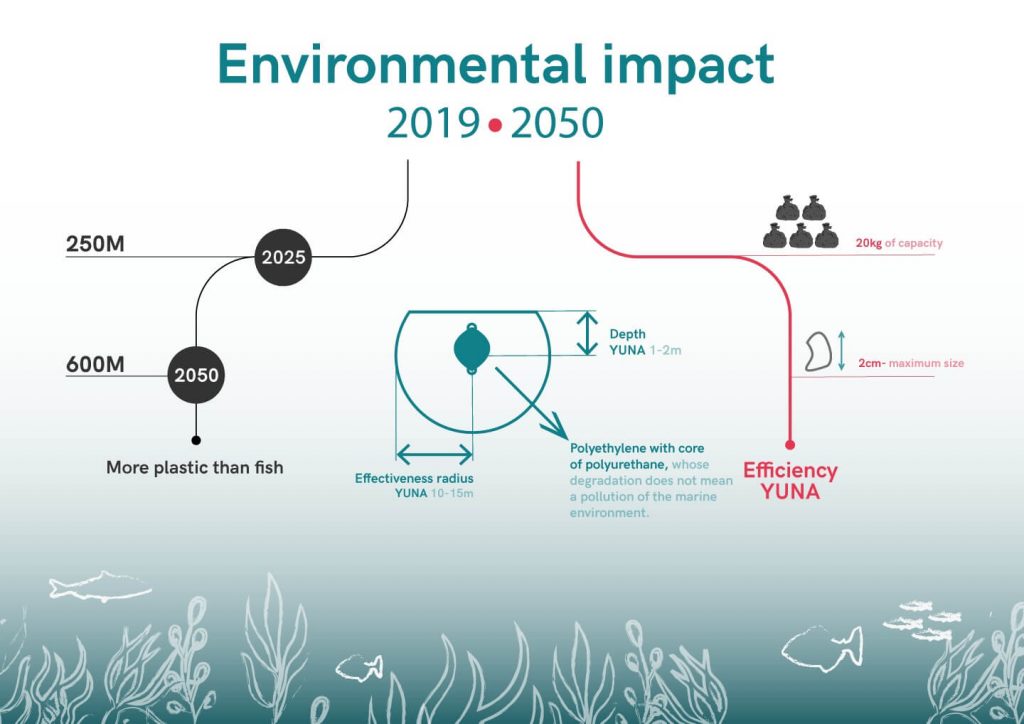
It provides a sustainable solution for the Mediterranean Sea and supported on a local scale by the circular economy. Designed to eradicate microplastics found along the coast. YUNA is an anchor buoy but functions as a water filter too.
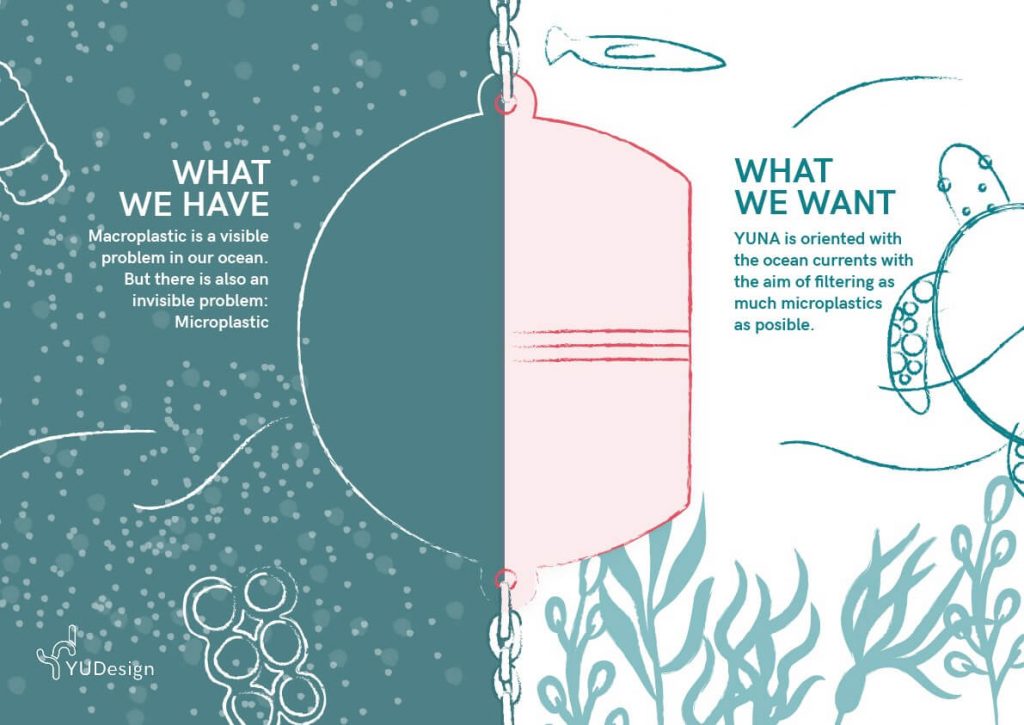
What Inspired YUNA?
Every year we dump tons of plastic into the oceans around the world. Microplastics have become a major concern in terms of long-term sustainability. Microplastics are highly toxic plastic particles with a diameter of less than 5 mm.
“In the period between now and 2050 there will be more plastic than fish in the sea.” “Each Meal we ingest contains over 114 microplastics.” These statements are but a few of the statements that have inspired YUDesign to come up with YUNA to clean our coasts. A team of 20 Engineering and Product Development students took part in the design and development of YUNA. (You can find the full list of student names here.)
“Protecting The Local” has been the main incentive for the realization of YUNA. Those who have seen first-hand how serious the plastic pollution problem is on the Mediterranean coast know full well the urgent need of such a device.
How Does It Work?

YUNA requires very little energy to function. They based the structure of its design on the ocean sunfish. This design was pursued because of the dynamic way it adapts to the course of changing sea currents. As the buoy spins around from the sea currents, it collects microplastics. The filter has multiple layers arranged by grammage from high to low to filter the plastics depending on its size.
Active charcoal and similar agents filter the tiniest particles that measure just a few microns. Once filtered, the microplastics be reused so they don’t return to the sea. Made from polythene, the buoy itself doesn’t pollute the environment. This creates a circular and very sustainable product. Costs can also be further reduced by manufacturing the two external pieces from just one mold.
Design Process
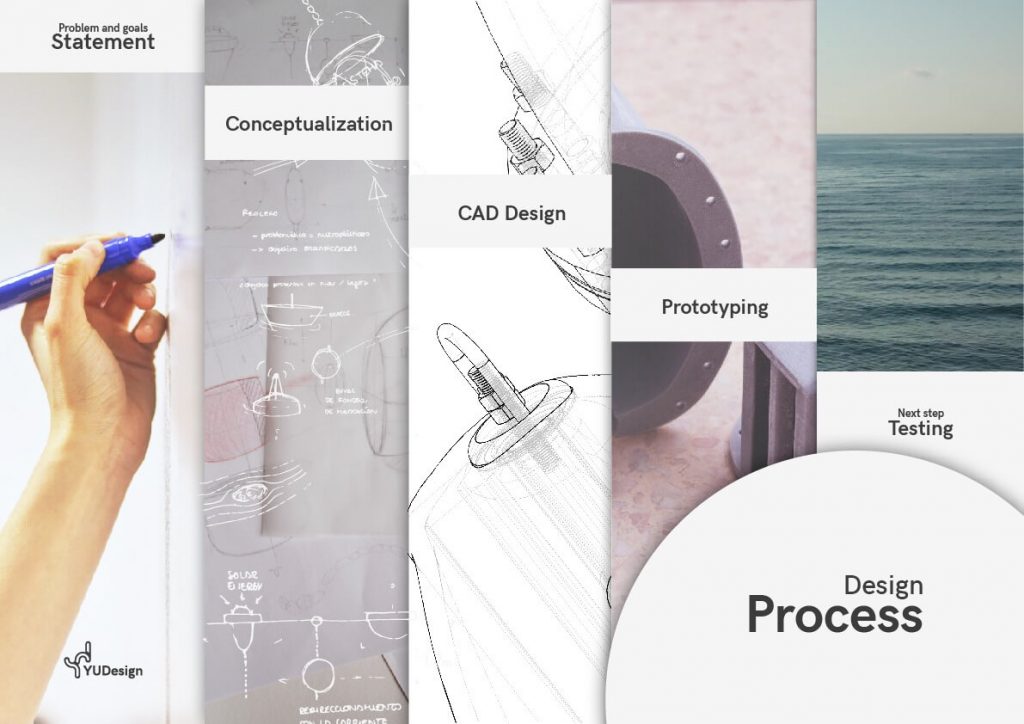
They chose the YUNA water filter buoy because of the growing problem with microplastics. They conducted market research to study the existing range of solutions. Some design sketches later helped them to decide that the most adequate design is a water buoy. Since water buoys are already present around beaches, it made the most sense.
They studied all technical aspects from the inside out, which produced a mock-up at scale 1:5 with a prototype of the filter system. During this process, the design team wanted to show YUNA to the world via social media, other challengers, and award considerations. They also took other events to raise awareness.
The team also wanted to highlight the fact that they received help and advice from organizations related to the Mediterranean coast and from teachers at their university. Collaboration and teamwork were undoubtedly the most important part of the process. Sound organization and distribution of roles guaranteed that it covered all aspects of the project.
What’s Different About YUNA?
Solutions for the microplastic crises exist, but only for preventing, raising awareness and cleanup projects for larger plastic pollution. This spurred on the innovative solution to eradicate microplastics from the coasts around the world. YUNA’s main goal is to become a product that inspires hope with an easy implementation in mind.
If the investment amount could increase by only 20% for ordinary buoys every company and the government can do their part to help the environment. YUDesign UPV has already achieved two of their goals, these are; to disseminate the products with the purpose of raising awareness about the microplastics issue, and to finish the conceptualization phase and layout of the product.
What Does The Future Hold?
YUNA’s next goal is the implementation of a prototype on the coast of Valencia. To achieve this goal, the team will have to test the filtering system to check and improve effectiveness. The team will also develop an app to keep a detailed analysis of how the buoy functions. They will form a startup company with a business plan they have created for the next three years. After that, they will keep eradicating the plastics from the ocean. They will cooperate with cleaning systems of bigger plastics. They will implement the buoy around more of the European coast. Plans include a filtering system for sewage treatment plants.


