
The first thing most people grab for a wound at home is a square of gauze. For a scrape that will close in a day or two, fine. For a wound that needs covering over several days, that habit is out of date, and it is the start of a chain of small errors that can keep a wound open far longer than it should be. Below are the mistakes that come up again and again in home care, with the fix for each.
Why Gauze Should Not Be Your Go-To for Multi-Day Wounds
For a wound that stays covered more than a few days, gauze is rarely the first pick anymore. Gauze dries out. Its fibers cling to the wound surface, and pulling the dressing off can tear away new tissue that has just formed. Every change becomes a small setback.
That does not make gauze useless. A shallow wound that barely weeps may do fine under plain gauze alone. Its more common role now is as a secondary layer, sitting on top of a dressing that does the actual work of managing moisture.
The fix: if the wound will need covering for more than a few days, ask whoever is overseeing it which primary dressing suits it, and keep the gauze for the outer layer.
Hydrogel on a Wet Wound
Hydrogel adds moisture. That is its whole purpose, and it is excellent on dry wounds that need help staying hydrated so they can heal.
Put it on a wound with moderate to heavy drainage and you are adding water to a flood. The surrounding skin soaks up the excess and turns pale and wrinkled, the way fingers look after a long bath. That is maceration, and macerated skin breaks down easily, which can make the wound bigger instead of smaller.
The fix is simple to say and takes a little practice to do: look at the old dressing when it comes off. If it is soaked, the wound is draining too much for hydrogel. A dry or barely damp dressing points the other way.
What Goes Wrong When a Pad Meets Hydrogel?
This one catches people who have picked the right dressing and then undone it. Pairing an absorbent layer directly with hydrogel can pull the gel away from the wound. The pad does what it was designed to do and wicks moisture, which means the gel ends up in the pad instead of on the tissue that needed it.
Ask the nurse or doctor what cover to use over a hydrogel. The goal is a layer that holds the gel in place without drinking it.
Alginate Needs a Cover
Alginate dressings are built for heavy drainage. Derived from seaweed, the fibers draw in drainage and turn to gel as they fill.
What they do not do well on their own is stay put or protect the wound from the outside world. Alginate usually needs a cover dressing such as foam or gauze on top. Left uncovered, it can shift or let fluid seep through to clothing and bedding.
So when a box of alginate shows up in the supplies, check that something to go over it came too.
Should You Start an Antimicrobial Dressing Yourself?
No.
Antimicrobial dressings, the ones containing silver or iodine, are typically used as short courses to deal with infection, and under clinical direction. They are tempting because they sound protective, and it is easy to assume more protection is always better. It is not. Using them without a reason, or for too long, can irritate tissue and delay healing, and it can mask signs that a wound needs a proper look.
If a wound looks infected, that is a reason to call a clinician, and the clinician decides whether an antimicrobial belongs in the plan and for how long.
Clinic Treatments Stay at the Clinic
Search online long enough and you will find descriptions of negative pressure wound therapy (the vacuum-style systems) and skin substitutes. They can help stubborn wounds a great deal. They are also treatments that need clinical judgment at every stage: deciding whether a wound qualifies and watching for problems once treatment starts. None of that is self-directed home care.
Improvised versions are a bad idea. If a wound seems to need something beyond the dressings above, that is a conversation for a wound specialist.
Building a Home Kit That Works
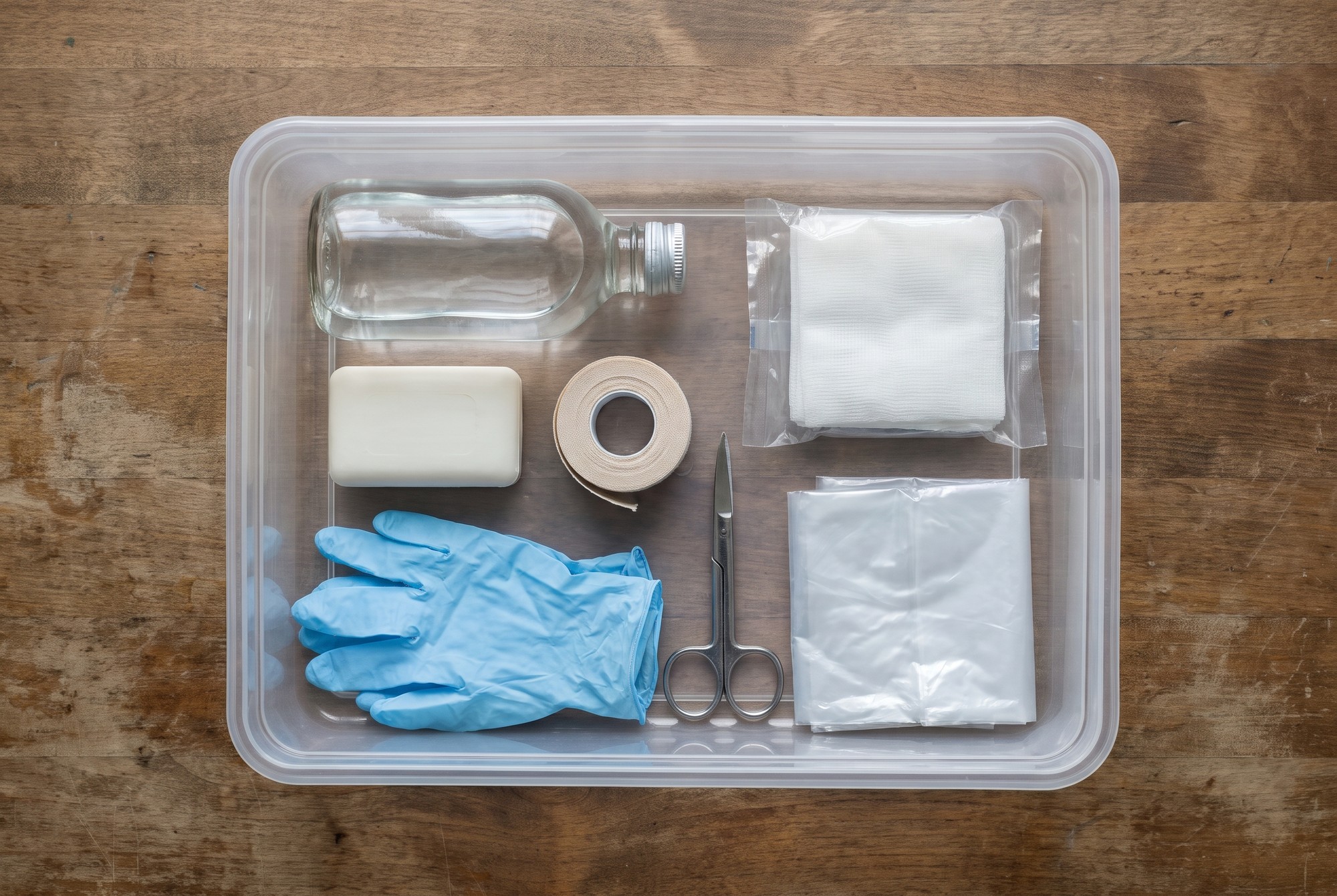
A careless kit leads to improvising, and improvising is how tissue paper and kitchen tape end up on open wounds. A basic home dressing kit commonly includes:
- saline, or access to clean running water
- mild soap
- gauze pads
- tape
- scissors
- gloves
- a trash bag for used dressings
Add whatever primary dressing the clinician has recommended, and keep enough on hand that a change never gets postponed because supplies ran out. Store everything in one dry container, and wash or wipe the scissors after each use.
Gloves matter more than people expect, and the hand washing that goes with them matters more still. Dressing changes at home go more smoothly, and more safely, when clean hands, a clean work surface and a fresh pair of gloves come before the old dressing is touched. So does the trash bag. Old dressings left on the bathroom counter are a hygiene problem nobody needs.
When Should the Holmdel Wound Center Get a Call?
Some signs mean home care has reached its edge: redness that spreads, warmth, swelling, a bad smell, drainage that changes color or volume, fever, or a wound that simply is not getting smaller after a couple of weeks. Wounds on people with diabetes or poor circulation deserve a lower threshold for calling. Waiting to see if things improve on their own is the most common way a manageable wound becomes a difficult one. For a step-by-step walkthrough of cleaning a new cut or scrape, see how to clean and protect a wound.
Not every wound needs a center’s help, but the ones that do are usually the ones where a home kit alone has stopped working. What a wound center assessment produces is a dressing plan matched to the specific wound: which primary layer, what goes over it, and how often it should be changed. That plan is what decides what belongs in the kit at home, and it is the difference between buying supplies by guesswork and buying the ones each layer was actually designed for. Bayshore Medical Center’s Center for Wound Healing is one such outpatient program in Holmdel, New Jersey, and Holmdel Wound Care sets out the wound types it treats and how an appointment is arranged.
Modern dressings like foams and hydrogels cost more per piece than a pack of gauze, and some take practice to apply well. They usually need changing less often, which can even out the cost and spares the wound some disturbance when the dressing matches the wound. Keeping the written dressing plan in the kit container, beside the supplies it calls for, means the next change follows the same routine instead of a guess.

