
The usual mistake is booking January because it’s the darkest month. More darkness sounds like more aurora. In Ilulissat, though, January averages about -13°C with 20 hours of darkness, which leaves very little daylight for the thing you came to do on a sledge. March is the better bet. Temperatures sit in the same range, but the sun stays up long enough to sled in daylight, and the nights are still dark enough for the lights.
Why March works
Dog sledding in Greenland runs from January to April. February and March are seen as the best mix of snow, daylight and aurora, and March tips that balance toward daylight.
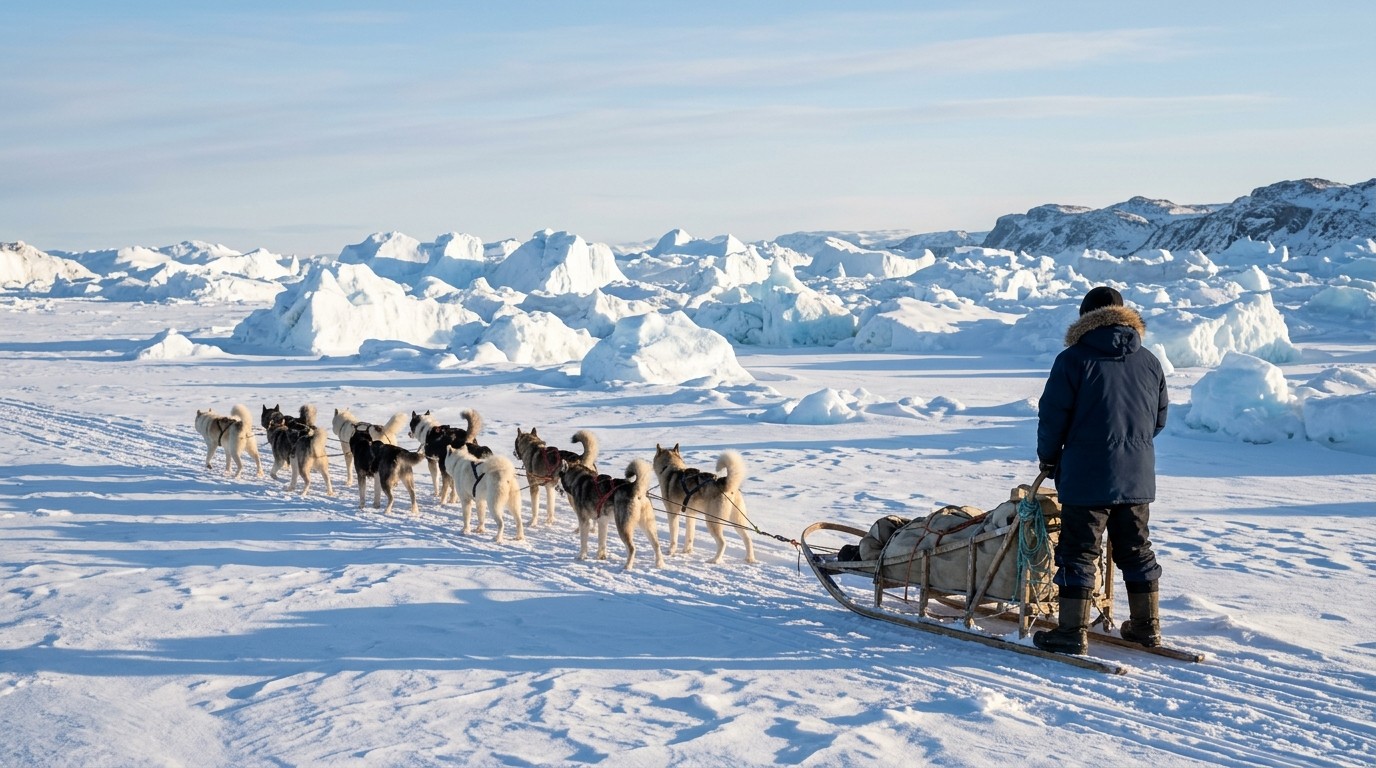
Averages for Ilulissat put March at about -14°C, with roughly 12 hours of daylight and 12 of darkness. That’s still properly cold. It’s also a completely different trip from January. You can sled in daylight, eat a slow dinner, and head out after dark with hours of night left for watching the sky. Nobody is fumbling with harnesses by headlamp at noon.
Operators also run northern lights tours most regularly in February and March, so the schedule works in your favour.
Picking a sledding tour
Ilulissat’s sledding tours come in two common lengths. Local operators run a 1.5-hour tour and a 4-hour option.
The short tour suits first-timers, families and anyone who wants the dogs and the speed without giving a whole morning to the cold. The 4-hour trip goes farther out and gives the team time to settle into a rhythm. It feels like travel, where the short one feels like a ride. If your trip has room for one sledding slot, take the long one. Ninety minutes passes faster than you’d think.
Browsing tours to Greenland is a handy way to compare Ilulissat itineraries that already pair a sledding outing with an evening aurora trip, so both fit neatly into the same stay. Putting the sled in daylight and the lights after dinner keeps each day easy to pace.
Gear and sea ice
Tours typically supply a parka, trousers and boots. That’s the windproof outer shell, and it matters on an open sledge. What goes underneath is up to you. Sitting still behind a dog team at speed is colder than walking at the same temperature, so dress for the wind rather than the thermometer.
- A thermal base layer, top and bottom, with no cotton.
- A wool or fleece mid layer.
- Warm mittens over thin liner gloves.
- A hat that covers your ears, plus a buff or face cover.
- Thick wool socks that still fit inside the supplied boots.
Routes depend on conditions. Traditional sledding routes run on sea ice, and sea ice varies. When the ice isn’t safe, the musher picks a different line or shortens the trip. That’s the musher’s call, and it’s the right one.
Aurora and igloo nights
Aurora tours leave after dark and drive away from the town lights. Clear skies matter more than anything else, so book the tour early in your stay. If the first night clouds over, you still have others to try.
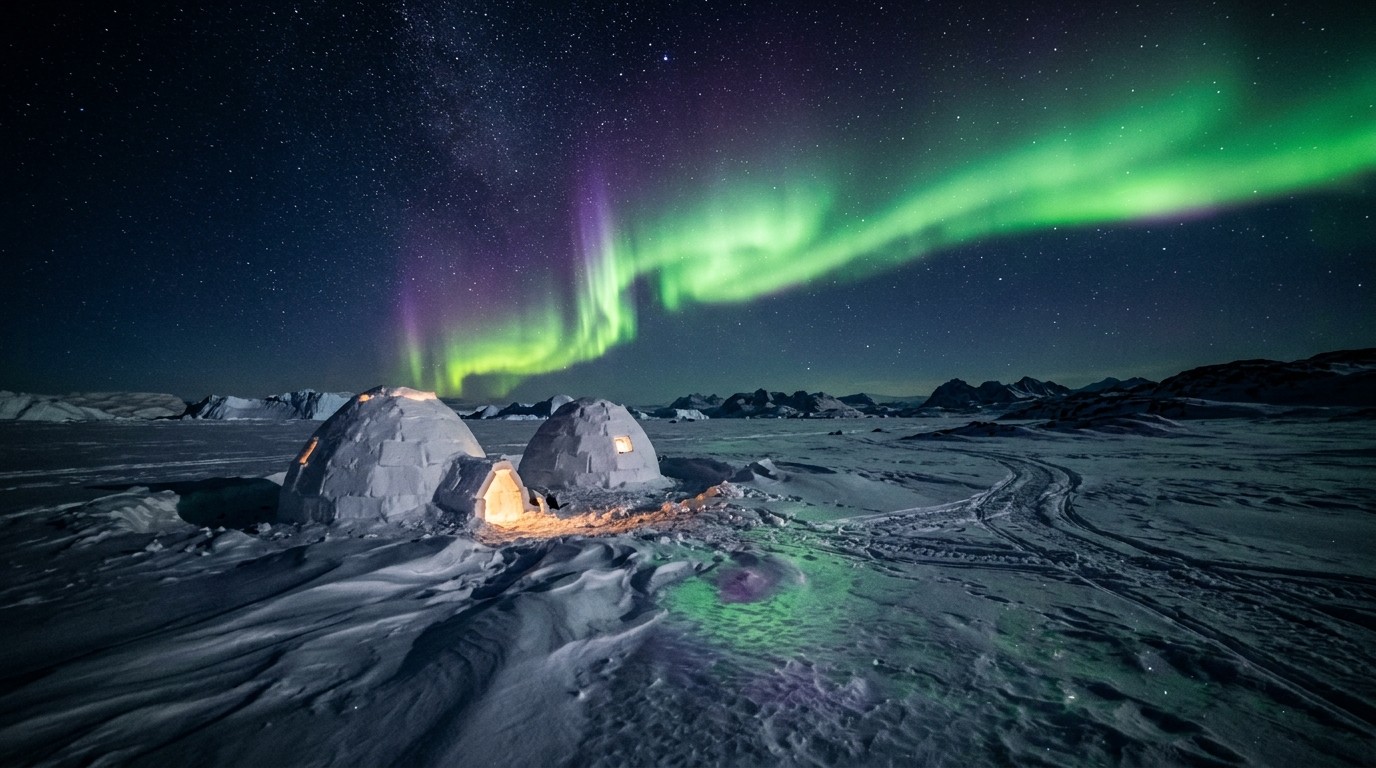
Some winter stays include a night in an igloo lodge, with northern lights viewing when the weather allows. It’s the most comfortable way to watch. You’re already out of town, there’s no late-night ride back, and you can step outside whenever the sky starts to move. If one splurge fits the budget, make it this.
Realistic expectations
No operator guarantees the northern lights. Not even on a clear night.
Solar activity decides whether the sky does anything, and plenty of cloudless evenings stay black. NOAA’s space weather forecasts show when a solar storm is on its way, but no forecast can promise clear air over Ilulissat. Treat a sighting as a bonus on a trip that’s already worth taking for the sledding.
The calendar has a hard edge too. In April, one operator warns, the lights are unlikely to be seen because the days are already too bright. Sledding carries on into April. The aurora mostly doesn’t. If both are on your list, late March is as far as you should push it.
Common questions
Is March too cold for children?
Averages around -14°C are manageable for kids who wear proper layers under the supplied parka and trousers. The 1.5-hour sledding tour suits them better than the 4-hour one.
Can you see the northern lights from Ilulissat town?
Sometimes, on strong nights. Tours head away from the town lights, which gives you a much better shot at fainter displays.
How many nights should you book?
Book several, so you get more than one chance at clear skies. A single night gives the aurora exactly one shot, and cloud can take that away.

