
Laser strikes targeting pilots and law enforcement personnel have become a growing concern worldwide. While most incidents cause only temporary visual disruption, even brief exposure to a handheld laser can threaten safety at a critical moment. Understanding how these threats occur and how they are managed is essential for aviation and public safety work.
Handheld lasers, especially laser pointers, continue to pose risks to pilots and officers, with pilot reports to the US Federal Aviation Administration (FAA) reaching 13,304 in 2023 and 12,840 in 2024. Individuals in cockpits or on patrol may experience sudden bursts of intense light that interrupt vision and concentration. Although media coverage often highlights cases of permanent eye damage, most incidents result in temporary effects such as glare, dazzle, or flash blindness. Distinguishing these effects and applying practical protective measures are crucial parts of an effective safety strategy.
The scale and nature of laser strike incidents
Across many countries, reported laser strikes on commercial and public safety aircraft remain at very high levels. Pilots have described being targeted during takeoff or landing, and law enforcement officers report distraction when driving or responding to incidents at night. Most of these attacks come from handheld devices operated from the ground, often by individuals unaware of the potential consequences.
FAA data shows thousands of laser strikes reported each year, concentrated around airports and flight paths. Reports fell to 10,994 in 2025, a decrease of about 14 percent from the previous year, but officials state the numbers are still too high. These events frequently occur in low-light conditions, which makes their impact more noticeable and hazardous. Even a momentary loss of vision can have serious consequences during takeoff, landing, or other time-critical operations.
Understanding temporary vision disruption versus lasting eye injury
When a person is exposed to a laser beam, several immediate visual effects can occur. Glare reduces contrast sensitivity, which can make it difficult to distinguish objects or read instruments. Dazzle is an overwhelming brightness that obscures part of the visual field. Flash blindness is a temporary loss of sight caused by overstimulation of the retina, lasting from a few seconds to several minutes. These effects can delay critical decisions and increase risk in high-pressure settings.
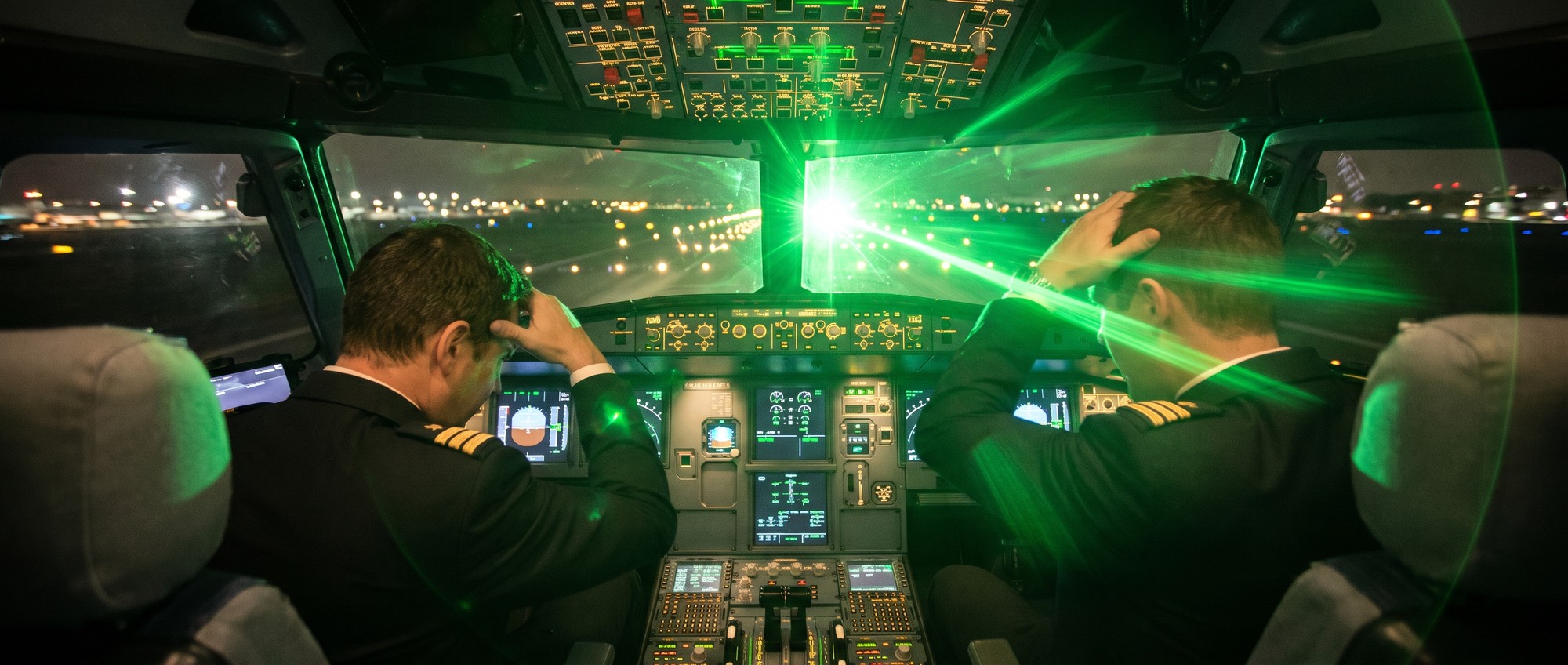
Temporary disruption differs significantly from permanent injury. True tissue damage, such as a retinal burn or a structural change detectable by medical examination, is rare and usually results from prolonged, close-range exposure to a high-powered laser. Most aircraft incidents occur at distances and power levels too low to cause lasting harm, though the FAA notes that pilots have reported hundreds of injuries since tracking began in 2010. Every exposure can still cause a dangerous distraction, especially during complex or time-critical tasks.
Why green lasers and glare-protective solutions matter
The growing use of green lasers in handheld devices increases risks for pilots and officers. The human eye is most sensitive to yellow-green light, peaking near 555 nanometers, so a common 532-nanometer green laser pointer appears far brighter than an equally powered red laser. FAA research notes that green light can appear as much as 30 times brighter than red light of equal irradiance. Pilots often describe intense green flashes that flood the cockpit and make it hard to interpret instruments or see runway lights.
To address these risks, manufacturers have developed a range of specialized eyewear solutions. Products such as laser glare protection and Green Laser Eyewear are designed to filter out the most disruptive laser wavelengths while preserving the wearer’s ability to read displays and see necessary indicators. Choosing the appropriate eyewear is a balance: it must reduce the intensity of incoming laser beams without diminishing the clarity of essential information. For example, a pilot’s glasses should block distracting light but not interfere with reading instruments in low-light conditions, and Green Laser Eyewear may be integrated into broader protective protocols.

Practical safety strategies and legal consequences
Effective management of laser threats goes beyond protective gear. Comprehensive training helps pilots and officers recognize and respond calmly to sudden visual disruptions, and Green Laser Eyewear can be introduced alongside drills that reinforce disciplined cockpit and patrol procedures. Organizations also use workplace modifications such as improved lighting and blackout curtains to reduce vulnerability, especially in high-risk environments near airports and major events.
In addition to operational safety steps, jurisdictions have introduced strict penalties for aiming lasers at aircraft or law enforcement vehicles. In aviation cases, reported laser strikes may bring FAA civil fines of up to 11,000 dollars per violation, up to 30,800 dollars for multiple violations, plus federal criminal penalties of up to five years in prison and a 250,000 dollar fine. By reporting all incidents promptly and supporting robust investigations, aviation and public safety organizations help deter future attacks and safeguard those tasked with protecting the public.


