
Running a hotel involves managing numerous responsibilities, from welcoming guests to maintaining clean rooms and comfortable facilities. Among these tasks, housekeeping plays an essential role in keeping daily operations organized and ensuring guest satisfaction. As hotels adopt digital solutions, smart housekeeping technology is making these responsibilities easier to manage.
Modern software helps hotel teams coordinate cleaning schedules, monitor room readiness, communicate effectively, and maintain consistent service standards. By simplifying everyday tasks, these tools allow hotels to operate more efficiently while keeping guests comfortable.
Simplify Daily Housekeeping Management
Housekeeping involves much more than cleaning guest rooms. Staff must prepare accommodations, replenish supplies, inspect facilities, and coordinate with other departments to keep everything running smoothly. Managing these responsibilities becomes easier when teams have access to organized digital systems.
Smart housekeeping technology allows managers to assign tasks, monitor progress, and communicate updates through a centralized platform. Instead of relying entirely on printed schedules or verbal instructions, employees can access the information they need directly from their mobile devices. For hotels looking to improve their cleaning operations, using a hotel cleaning services app can help simplify daily responsibilities and maintain consistent housekeeping standards.
Dedicated housekeeping management platforms, including services such as ResortCleaning, exist for exactly this kind of coordination: assignments, inspections, and interdepartmental updates held in one place instead of spread across paper schedules and phone calls.
These capabilities make daily housekeeping management more organized while allowing employees to focus on delivering quality service.
Improve Communication Between Hotel Departments
Effective communication is essential for smooth hotel operations. Housekeeping employees, maintenance teams, and front desk staff must work together to ensure rooms are prepared and guest requests are addressed promptly.
Smart housekeeping software provides a convenient way to share important updates. When a room has been cleaned, staff can update its status digitally, allowing other departments to access the latest information.
If an employee discovers a maintenance concern, they can report it through the system so the appropriate team can respond. This connected approach reduces unnecessary phone calls and repeated conversations, helping employees complete their responsibilities more efficiently.
Clear communication also supports teamwork. When everyone understands current priorities, departments can coordinate their activities and provide guests with a more consistent experience.
Make Room Cleaning Schedules More Efficient
Preparing guest rooms on time is one of the most important responsibilities in hotel housekeeping. Each room requires careful cleaning, inspection, and preparation before welcoming the next guest.
Digital scheduling tools help managers organize these tasks according to room availability, staffing levels, and operational priorities.
For example, rooms needed for upcoming arrivals can be prioritized while other cleaning assignments are distributed across available employees.
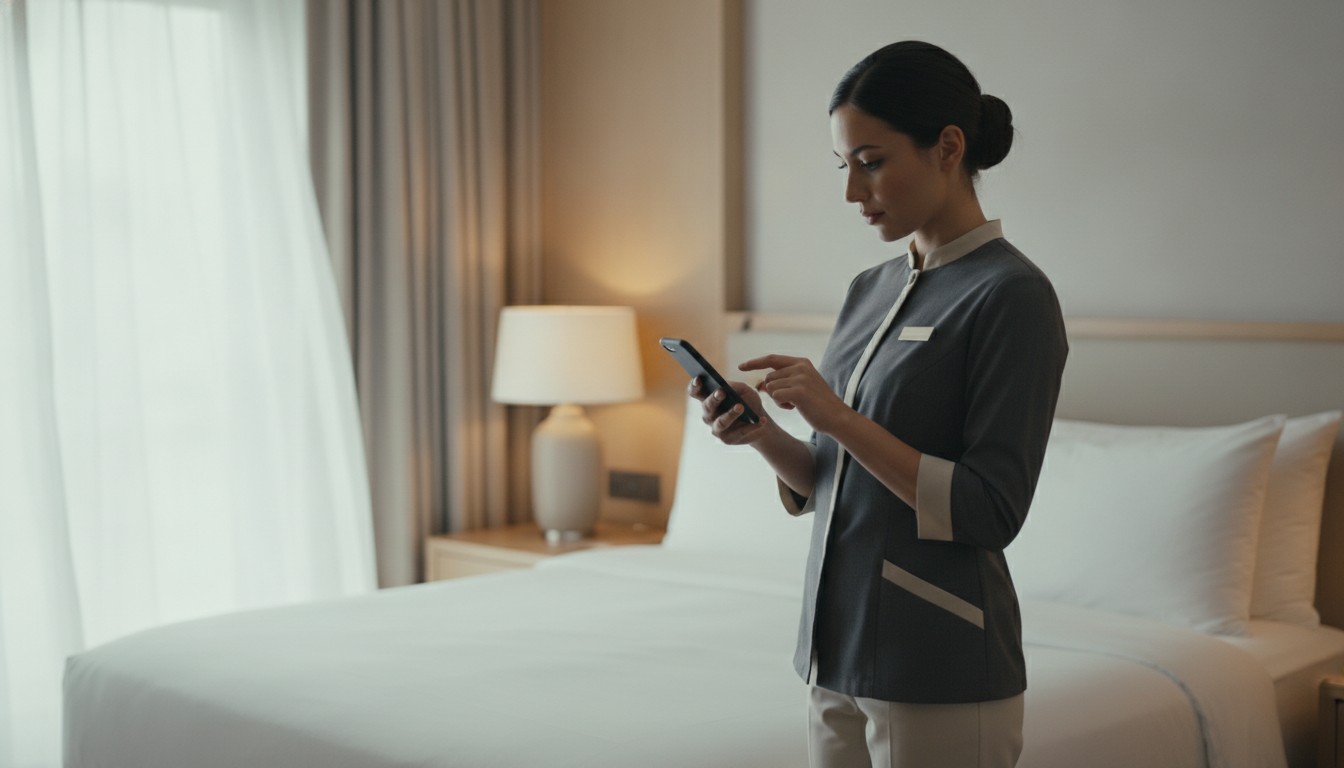
Mobile applications allow staff to review their schedules and receive updates throughout the day. Managers can also adjust assignments when additional assistance is required. This flexibility makes it easier to maintain an organized workflow, particularly during busy periods when multiple rooms need attention.
Better scheduling accuracy and task coordination help hotels prepare accommodations on time without compromising the cleanliness standards guests expect.
Maintain Consistent Cleaning Standards
A clean and comfortable environment contributes significantly to a positive hotel experience. Guests expect well-maintained rooms, fresh linens, spotless bathrooms, and welcoming shared spaces throughout their stay.
Smart housekeeping technology helps hotels maintain these expectations through digital checklists and inspection tools.
Managers can create cleaning procedures for different room types and facilities, ensuring employees understand the tasks required for each assignment.
For instance, a guest room checklist may include bathroom cleaning, linen replacement, surface sanitization, and verification of essential supplies.
Supervisors can review completed assignments and conduct inspections to confirm that established standards have been followed. Digital records also make it easier to identify areas that may require additional attention or staff training.
Consistent cleaning procedures help hotels create a reliable guest experience while supporting employees with clear expectations.
Support Housekeeping Staff With Better Tools
Housekeeping employees perform physically demanding work that requires attention to detail, time management, and coordination. Providing them with practical technology can ease that burden, much as automation has reshaped short-term rental operations by removing repetitive manual steps from property teams.
Mobile housekeeping applications allow employees to access assignments, review cleaning instructions, and report completed tasks without repeatedly returning to a central office. This convenience helps staff stay organized and reduces time spent searching for information.
Digital systems can also support training by providing standardized checklists that guide newer employees through established procedures. Managers benefit from improved visibility into workloads and can distribute assignments more evenly when necessary.
When employees have the right tools and clear instructions, they can concentrate on completing their work efficiently and maintaining high service standards.
Supporting staff through thoughtful technology also contributes to a more collaborative working environment.
Manage Supplies and Maintenance More Effectively
Hotel housekeeping depends on having essential supplies available when needed. Cleaning products, fresh linens, toiletries, and replacement items must be managed carefully to support daily operations.
Some housekeeping management platforms include inventory tools that help employees monitor supplies and communicate replenishment needs. These features can make it easier to maintain appropriate stock levels and plan purchasing activities.
Maintenance coordination is equally important. Housekeeping employees often notice small issues while preparing rooms, such as damaged fixtures, malfunctioning appliances, or furniture requiring attention.
Digital reporting tools allow staff to communicate these concerns directly to maintenance teams. Addressing such issues promptly helps hotels maintain comfortable accommodations and prevent minor problems from affecting the guest experience.

Combining housekeeping, inventory, and maintenance information within organized systems allows managers to oversee several important responsibilities more efficiently.
Use Operational Data to Improve Performance
Smart housekeeping technology does more than organize daily tasks. It can also provide valuable information about how efficiently hotel operations are functioning.
Digital platforms may record cleaning completion times, inspection results, staff assignments, and maintenance activities. Managers can review this information to identify patterns and understand where improvements may be beneficial.
For example, if certain room types regularly require additional cleaning time, managers can adjust schedules to reflect those requirements.
Inspection records may also highlight opportunities for additional training or improvements to cleaning procedures.
Having access to reliable operational information supports more informed decisions about staffing, scheduling, and resource allocation.
Rather than relying entirely on assumptions, hotel managers can evaluate actual performance and introduce practical improvements. That visibility is also why multi-unit hospitality brands are turning to digital workflows to keep standards consistent across every property.
Create a Better Experience for Hotel Guests
The ultimate purpose of efficient housekeeping is to provide guests with a clean, comfortable, and welcoming environment. Although visitors may never interact directly with housekeeping software, they can appreciate the results of well-organized hotel operations.
Rooms prepared on time, properly maintained facilities, and prompt responses to requests all contribute to a positive stay.
Smart technology supports these outcomes by helping employees communicate clearly, complete assignments efficiently, and maintain consistent cleaning standards. It also allows hotel managers to dedicate more attention to guest satisfaction and overall service quality.
As hospitality businesses continue adopting digital solutions, housekeeping technology will remain an important part of efficient hotel management.


