
Australian scientists are teaching synthetic membranes to behave a little more like plant roots. The goal is practical rather than poetic: pull valuable metals out of messy mining wastewater while leaving cleaner water behind. The system is called Bioderived Element Resource Separation Technology, or BERST, and early laboratory tests suggest the plant-inspired approach could one day help mine sites recover copper, lithium, nitrogen, and other resources that currently go to waste.
Why mining wastewater is a resource, not just waste
Mining uses enormous amounts of water. As that water flows across crushed rock, storage ponds, and underground tunnels, it dissolves valuable metals alongside toxic runoff. Mining engineers call this mixture mining-influenced water, a catch-all term for flooded pit water, dam seepage, and acidic drainage. Left untreated, it pollutes rivers and soil, yet it also holds the exact elements manufacturers need for electrical wiring, fertilisers, and batteries.
The ANU team views industrial wastewater as a low-grade resource that has already been pumped to the surface. Traditional treatment treats mine water as a disposal problem. By solving selective filtration, clean energy materials could be harvested in part from existing waste streams rather than exclusively from newly dug pits.
Water policy and mine rehabilitation debates increasingly focus on wastewater resource recovery for this reason. Mine operators must treat contaminated water regardless of whether they extract anything from it. Recovering saleable metals helps pay for environmental cleanup, especially after a mine closes and stops earning revenue while water treatment bills keep coming.
What BERST actually is
BERST stands for Bioderived Element Resource Separation Technology. It was developed by researchers in the Australian National University Research School of Biology, led by Professor Caitlin Byrt with Dr Samantha McGaughey and Dr Annamaria De Rosa, in collaboration with Rio Tinto. Commercial development is being pursued through the ANU spinout Membrane Transporter Engineers (MTE) Pty Ltd.
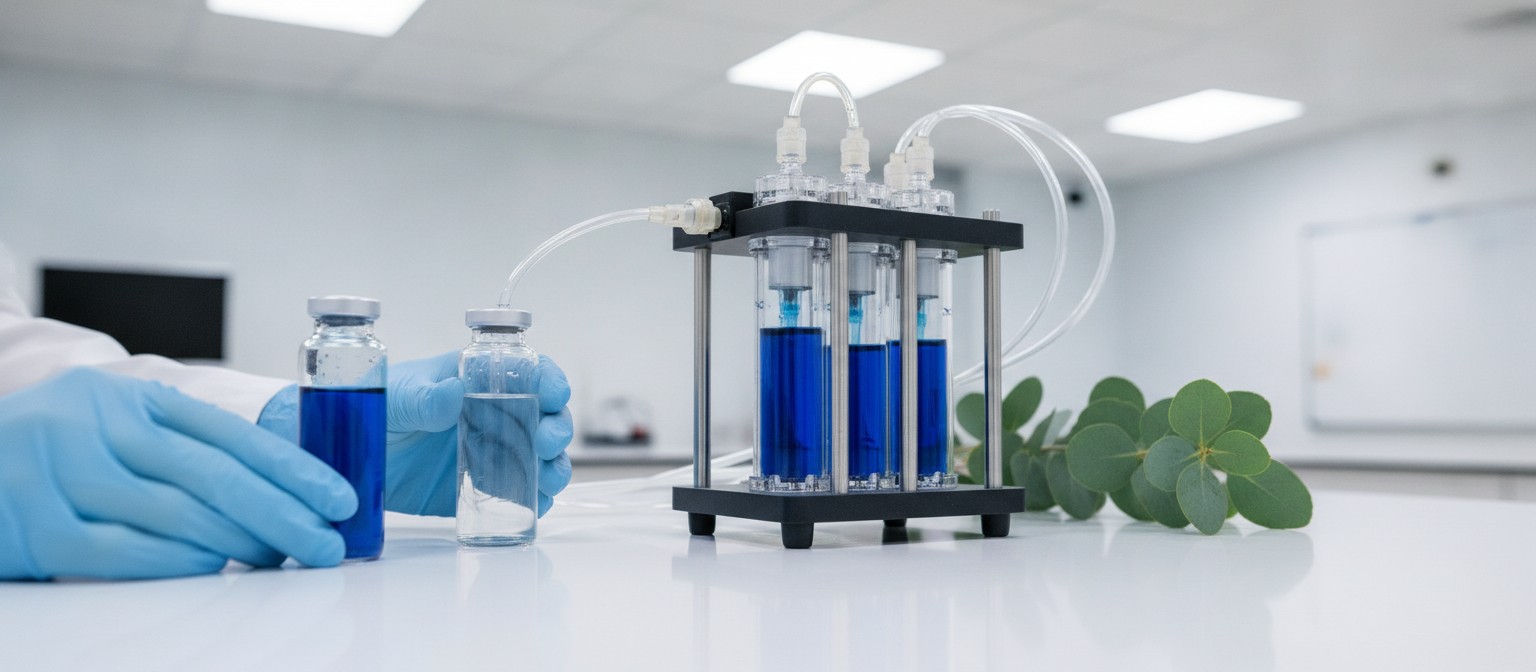
BERST is a modular biomimetic membrane system, meaning a synthetic filter modelled on living cells. Standard industrial membranes sort particles mainly by size or electrical charge. BERST embeds bioengineered, selective pore structures inspired by plant transport proteins into a synthetic filter, optimising those biological components for durability. The Mine Closure 2025 conference paper describing BERST outlines how the filter separates complex mine water into purified streams of metals, minerals, and clean water.
Modularity is central to the design. Engineers can swap in different protein-inspired units to target specific elements rather than building a single fixed filter for one metal. That flexibility suits real mine sites, where water chemistry varies between locations and shifts across seasons.
How plants taught membranes to choose
Plants cannot walk away from poor soil. Root and leaf membranes rely on specialised channel and transporter proteins to draw in essential nutrients while blocking or compartmentalising soil toxins. These proteins recognise specific ions and routinely distinguish between dissolved elements that look almost identical chemically.
Dr McGaughey notes that being rooted in place drove the evolution of such precise filtering. Plants developed diverse membrane transport proteins to capture scarce micronutrients without absorbing harmful compounds. Professor Byrt adds that mapping the molecular structures behind those plant mechanisms gives engineers a blueprint for synthetic separation systems.
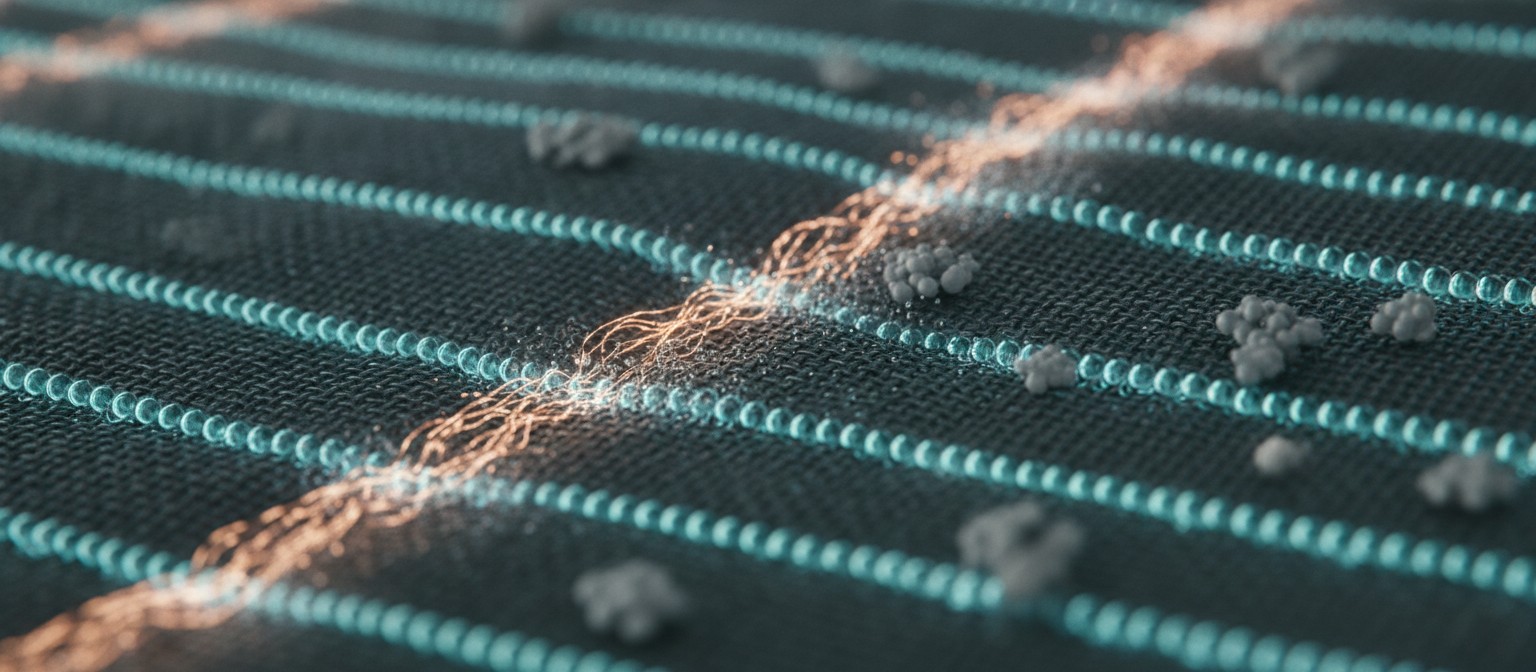
The ANU team adapted those molecular gatekeepers rather than copying a whole root. Their earlier New Phytologist review of molecular membrane separation in plants explains how water-channel proteins called aquaporins work alongside ion channels and transporters to sort molecules with high precision. BERST combines bioengineered versions of those proteins with nanotechnology, programming the membrane to grab target metals rather than relying on pore size or water pressure alone.
The distinction is familiar to anyone following lithium separation. Our coverage of cell-inspired nano-channels that filter lithium two to five times more selectively shows the same underlying challenge: sodium, potassium, magnesium and calcium travel with lithium and confuse simpler filters. Plant proteins are interesting because they evolved to make exactly these kinds of choices reliably.
What is actually dissolved in mining wastewater
Mining wastewater varies widely from site to site. Effluents from aquaculture, farming, and mining all carry different chemical loads, and even two pits on the same mining lease can differ in acidity, salt levels, and dissolved oxygen. Typical mine water contains copper, lithium, cobalt, manganese, zinc, rare earth elements, and nitrogen compounds, all mixed with much larger quantities of sodium, calcium, magnesium, and sulphate that get in the way of extraction.
Concentration matters more than presence. A metal can be valuable in principle but uneconomic to chase when it is extremely dilute or tangled with lookalike ions. That is why modern recovery research focuses on selectivity, throughput and product purity together, as our broader look at how brine mining secures lithium, magnesium and freshwater explains. BERST is aimed squarely at the first of those gates: choosing one target while leaving the rest behind.
Why copper, lithium and nitrogen come first
Copper and lithium headline the BERST story because they link mine waste directly to electrification. Copper remains the workhorse of wiring and motors. Lithium is central to batteries for electric vehicles and grid storage. Recovering either from a waste stream would reduce reliance on newly mined supply without removing the need for responsible primary mining.
Nitrogen has provided the first practical test case. The ANU team has already built a working membrane that recovers nitrogen from wastewater as a stepping stone towards a commercial system. Starting with nitrogen makes practical sense: the element is abundant in industrial and agricultural runoff, its water chemistry is straightforward, and capturing it for fertiliser prevents the nutrient pollution that triggers toxic algal blooms.
Programmability is the bigger long-term ambition. According to the ANU account of the BERST collaboration with Rio Tinto, each selective protein can be tuned to capture a specific metal or mineral. If a wastewater pond holds ten valuable elements, engineers could line up ten programmed membranes in parallel or one after another to extract each resource in turn. That multi-metal setup remains a design concept rather than a working plant, but it explains how a single platform could adapt to changing site chemistry.
| Target | Why it matters | BERST status reported |
|---|---|---|
| Copper | Wiring, motors and grid expansion for electrification | Named target for mining wastewater separation |
| Lithium | Batteries for vehicles and stationary storage | Named target for high purity recovery |
| Nitrogen resources | Fertiliser value and reduced nutrient pollution | Membrane already developed as stepping stone |
| Other metals and minerals | Cobalt, manganese, zinc and rare earths for diverse technologies | Programmable concept, not yet proven at scale |
| Clean water | Reuse, discharge quality and water security | Co-product aim alongside metal permeates |
Clean water is half the prize
Metal recovery dominates headlines, but clean water is just as valuable to mine operators and nearby towns. BERST separates contaminated mine water into concentrated mineral streams and clean water. For an active or closing mine, that dual output reduces the need to draw fresh groundwater, provides clean water for site reuse or safe release into local creeks, and shrinks the volume of toxic sludge left behind.
Acid mine drainage illustrates the scale of the environmental problem. Exposed sulphide rocks react with air and rainwater to create sulphuric acid, dissolving heavy metals into toxic runoff that can poison streams for decades. The United Nations ranks acid mine drainage among the world’s most severe water pollution threats, with hundreds of thousands of kilometres of waterways degraded globally. A filtration system that strips out dissolved metals while cleaning the water tackles both the cleanup bill and the ecological hazard at once.
A similar dual output logic appears in seawater work, where researchers have paired desalination with mineral harvest. Our earlier report on a desalination device that also harvests lithium and hydrogen from seawater showed how co-production can improve the economics of treating difficult water. BERST applies that thinking to mine water rather than the sea.
Lab scale today, shipping container tomorrow
Clear expectations matter when evaluating early laboratory breakthroughs. Published results in the Mine Closure 2025 paper confirm selective metal recovery at the laboratory prototype stage. In practice, that means small membrane sheets tested over short runs with carefully controlled liquids in a university lab, not an industrial plant filtering thousands of litres of muddy pit water every hour.
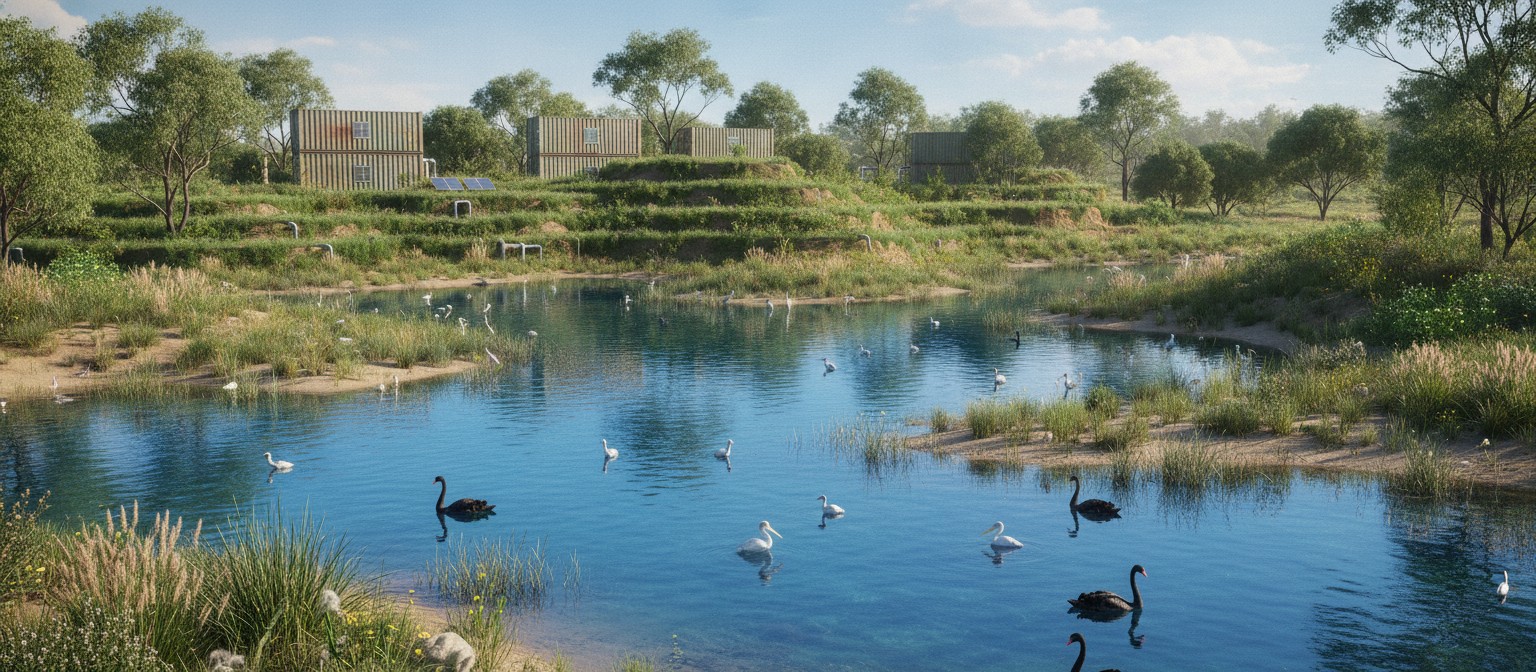
The physical scaling plan is nonetheless straightforward. Researchers designed the modules to scale from a two-litre portable filter up to a shipping container unit and eventually a permanent treatment plant. Portable container units suit remote Australian mine sites and abandoned pits where pouring concrete for a permanent facility makes no financial sense. A mining company can park a container unit beside a tailings dam and test real wastewater for months before committing capital to a full-scale plant.
Taking a biomimetic membrane from a lab bench to a mine site requires clearing four major engineering hurdles:
- Preventing mud, gypsum, and bacterial slime from clogging the membrane pores during continuous flow.
- Maintaining precise metal selectivity when harsh acids, salts, and competing ions attack the filter at once.
- Keeping delicate bioengineered proteins intact and active over months of industrial operation rather than hours.
- Manufacturing large sheets of protein-embedded membrane at a price that competes with conventional chemical precipitation.
Real-world brine projects show how tough those steps can be. As our report on making battery lithium from oilfield wastewater in Texas showed, turning a selective laboratory filter into a round-the-clock commercial operation takes years of engineering work on pre-filtration, material lifespan, and water balance, even when the wastewater itself is free.
Why mine closure economics make this urgent
Australia has tens of thousands of inactive and unrehabilitated mine sites, and roughly 240 active mines are scheduled to close by 2040. National estimates put annual mine closure and rehabilitation spending between 4 billion and 8 billion Australian dollars. Those mounting liabilities explain why Rio Tinto backed the ANU research and why the project was showcased at the Australian Pavilion during COP31.
The Mine Closure 2025 paper describes this approach as economic rehabilitation: using leftover metals in mine water to help pay for environmental cleanup and community transition. Even modest metal sales could offset water treatment costs, fund soil restoration, or support post-mining land uses. Recovering minerals from wastewater will not make mine closure free or replace physical earthworks like capping tailings dams, but it turns an open-ended water treatment liability into a source of offsetting revenue.
What the trillion dollar figure really means
Headline numbers around mining wastewater require careful context. The Mine Closure 2025 paper estimates that mining-influenced water globally holds around 3.4 trillion US dollars in critical resources, while ANU press materials cite an estimated 5.16 trillion dollars in untapped resources across industrial mining wastewater worldwide. Both figures represent total in-place theoretical value, meaning every atom of dissolved metal multiplied by market prices, not the fraction that engineers can realistically or profitably extract.
The difference between 3.4 trillion and 5.16 trillion dollars comes down to study boundaries, metal price snapshots, and which industrial waste streams are counted. What matters for readers is the gap between total dissolved metal and recoverable metal. How much can actually be captured depends on concentration, membrane lifespan, energy use, water acidity, and local commodity markets. BERST is designed to make a larger slice of those dissolved metals commercially recoverable, not to unlock trillions of dollars overnight.
Professor Byrt summed up where the technology stands today: “It’s been absolutely amazing to be able to go from an idea, a dream, to being able to test actual membranes that are separating out the critical resources we want”. Proving that bioengineered plant pores can sort real metals in the lab is a genuine milestone, provided readers recognise the engineering road still ahead.
The bottom line
Plants evolved selective membranes because they cannot move away from toxic or nutrient-poor soil. BERST borrows that biological machinery, builds bioengineered pores into synthetic filters, and points them at some of the mining industry’s dirtiest water streams. Copper and lithium connect the technology to clean energy supply chains, nitrogen provides a working first membrane, and clean water delivers an immediate environmental benefit for mine sites and surrounding watersheds.
Turning a university prototype into a mine-site workhorse will take years of testing against membrane fouling, protein degradation, and commercial costs. If those engineering hurdles can be cleared, tomorrow’s mines could harvest critical minerals and fresh water from yesterday’s tailings ponds.

