
China’s COMAC CE-25A battery-electric demonstrator has flown with a crew aboard for the first time. On November 14, two pilots and a flight test engineer flew the roughly 10-tonne aircraft 60.4 kilometers in 16 minutes and 38 seconds over Binzhou, Shandong, with COMAC reporting all systems normal.
That framing matters. The 19-seat layout is the design configuration, not what flew that day. The three people aboard were crew conducting a flight test, not passengers. The 400 km range and 300 km/h cruise speed are design targets listed by COMAC, not what this flight demonstrated.
What Actually Happened on November 14
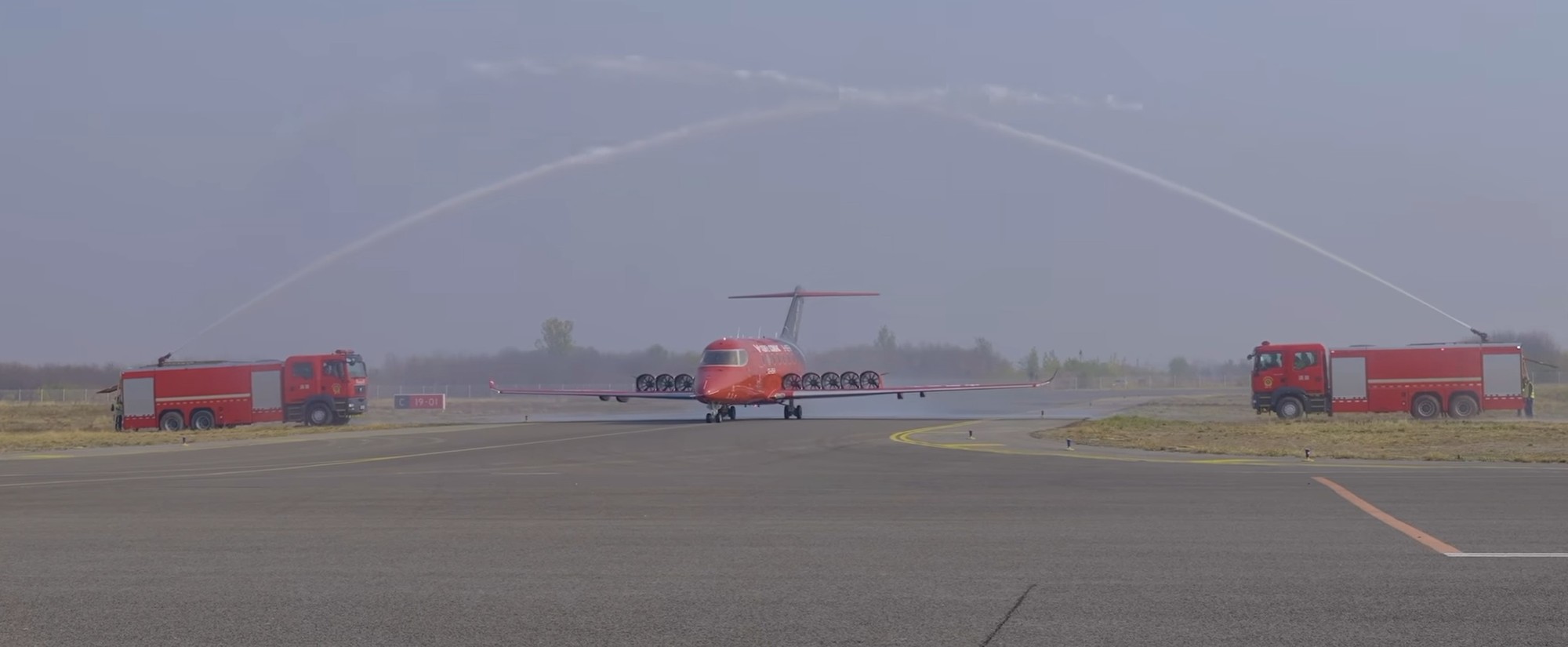
According to COMAC via Xinhua and the Shanghai government release, the CE-25A took off in Binzhou for its first piloted intelligent flight. COMAC and CCTV distinguish 57 minutes 46 seconds block time from 16 minutes 38 seconds airborne, covering 60.4 km before completing its test mission.
The flight follows 19 autonomous uncrewed verification flights since the type’s uncrewed maiden flight on February 2. COMAC described the latest test as the model’s first piloted intelligent flight, a step from remotely supervised testing to onboard crew.
China’s Civil Aviation Administration has accepted the CE-25A type certificate application. Acceptance starts the airworthiness review process. It does not approve commercial service, and COMAC has given no date for passenger operations.
What the CE-25A Is Designed to Be
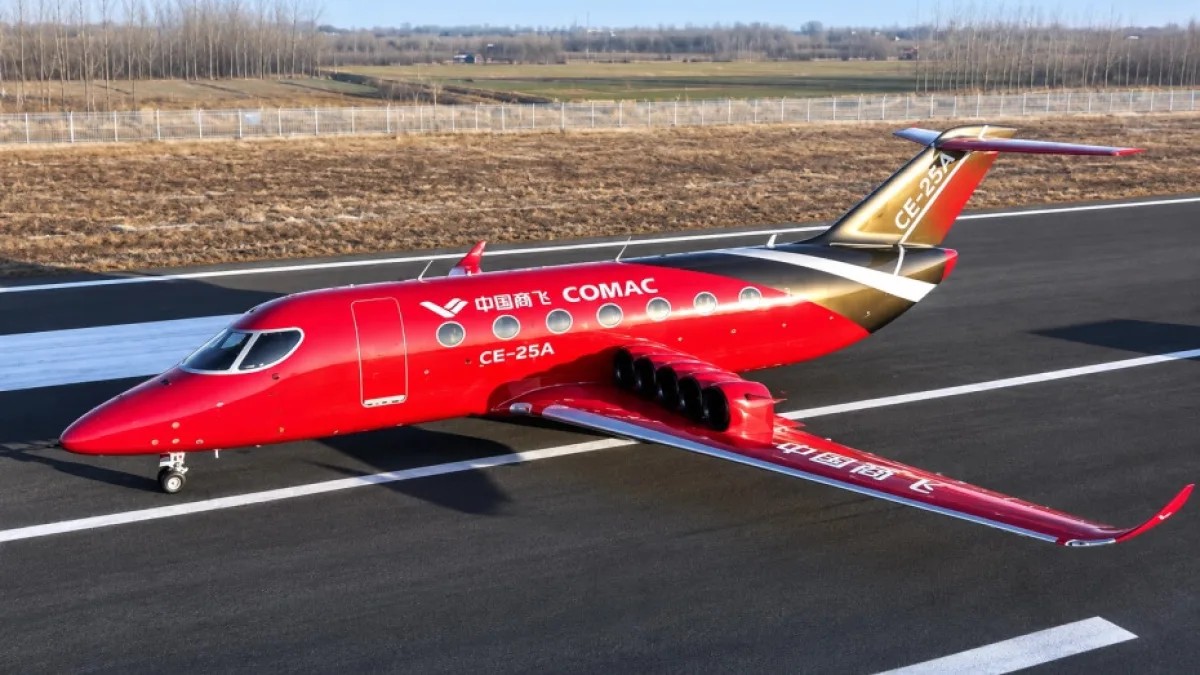
The CE-25A is a T-tail commuter technology demonstrator with 10 electric ducted fans mounted along the wings, five per side, driving fans with electric motors rather than propellers. Its maximum takeoff weight is about 10 tonnes.
COMAC’s listed design targets include up to 19 passengers, a 300 km/h cruise at 2,400 m, and 400 km of range for intercity routes. The full-size test article, registered B-0EFH, follows a model COMAC showed at the 2023 China International Import Expo. Those figures describe the intended configuration under evaluation, not the payload, speed profile, or energy performance of the November 14 flight, for which COMAC has not published payload, altitude profile, or battery state at landing.
A similar battery-electric aviation milestone was the first fully electric commercial-style flight in 2019, which also began with short crewed tests long before any service discussion.
Battery: What Is Verified and What Is Not
COMAC says the aircraft was jointly developed with CATL and Shanghai Jiao Tong University. That partnership is verified through the July 2023 joint venture reporting. What flew inside the aircraft is not.
Neither COMAC nor CATL has confirmed the installed battery chemistry, capacity in kWh, or pack-level energy density for the CE-25A. Chinese industry reports link the program to CATL’s condensed-matter cell work targeting around 500 Wh/kg at cell level, but COMAC’s flight release states no battery specification. That figure should be treated as a technology target, not a verified installation.
This distinction is central to electric aviation. Cell-level density does not equal installed system energy after cooling, containment, monitoring, and reserves. Without published pack capacity and landing reserves, the 60.4 km test cannot be extrapolated to the 400 km design range. For context on how battery weight shapes commuter designs, see Air Canada’s plan for 30 electric aircraft.
Why a 60 km Flight Still Matters
Larger battery-electric aircraft are rare because weight scales brutally. Heart Aerospace’s X1 demonstrator, at about 25,000 lb, flew for 27 minutes in New York in August, and Eviation’s nine-passenger Alice flew in 2022 before that program stalled. Against that record, moving a 10-tonne airframe from 19 autonomous flights to a crewed test is a genuine test-program milestone.
The CE-25A’s 400 km target would also shrink in airline use once regulators require reserves, diversion energy, and battery degradation margins. A conventional 19-seat Beechcraft 1900 turboprop covers well over 1,000 km. The demonstrator is therefore best read as a systems testbed for distributed electric propulsion, flight controls, and certification methods, not a near-term turboprop replacement.


