
Understanding Your Texas Hill Country Wastewater System
In the unique landscape of the Texas Hill Country, aerobic treatment units have become the standard for effective wastewater management. Unlike traditional septic systems that rely solely on anaerobic (oxygen-free) digestion in a single tank, aerobic systems function like a miniature, onsite wastewater treatment plant. They utilize forced air to introduce oxygen into the wastewater, which fosters a robust population of aerobic bacteria. These bacteria break down organic solids much faster and more efficiently than their anaerobic counterparts.
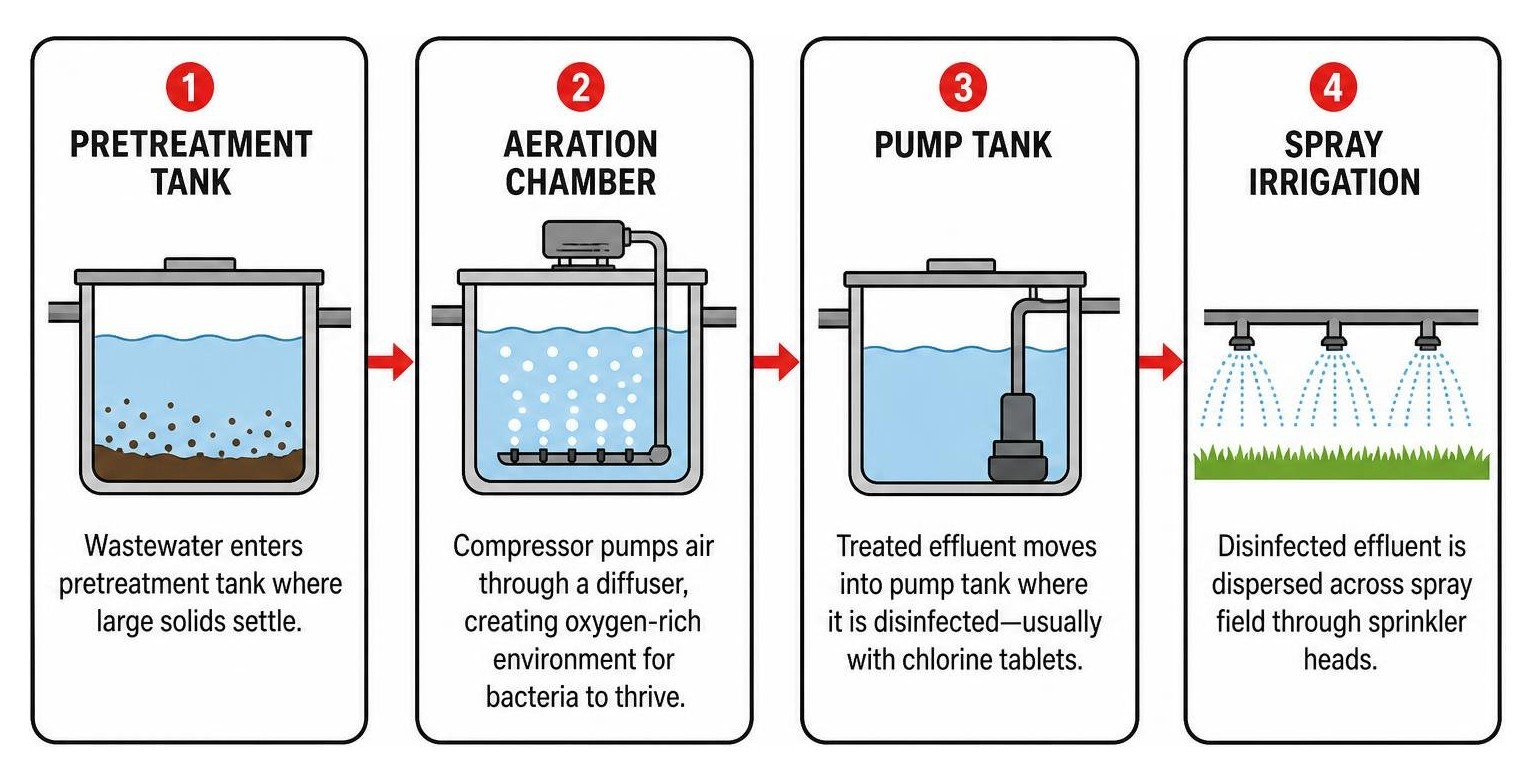
A typical aerobic setup in our region consists of a multi-chambered system. Wastewater first enters a pretreatment tank where large solids settle. It then flows into the aeration chamber, where a compressor pumps air through a diffuser, creating an oxygen-rich environment for the bacteria to thrive. Finally, the treated effluent moves into a pump tank, where it is often disinfected, usually with chlorine tablets, before being dispersed across a spray field through a series of sprinkler heads. Because these systems are mechanical and biological, they are highly sensitive to changes in water usage and component health.
Warning Signs Your Aerobic System Needs Attention
Because aerobic systems are mechanical, they provide feedback when they are struggling. Ignoring these signals often turns a minor maintenance task into a major, costly repair. If you notice any of the following, it is time to contact professional aerobic system cleaning technicians in Boerne, TX.
1. Persistent Odors and Sluggish Household Drainage
If you catch a whiff of sewer gas or “rotten egg” odors near your spray field or around your home, your system’s biological balance may be off. This often happens when the aerator fails to provide enough oxygen, causing the bacteria to die off. Simultaneously, you might notice that your sinks and toilets are draining more slowly than usual, or you may hear gurgling sounds coming from your pipes. These are classic signs of an organic blockage or a system that is struggling to process waste at the necessary speed.
2. Audio or Visual Control Panel Alarm Activation
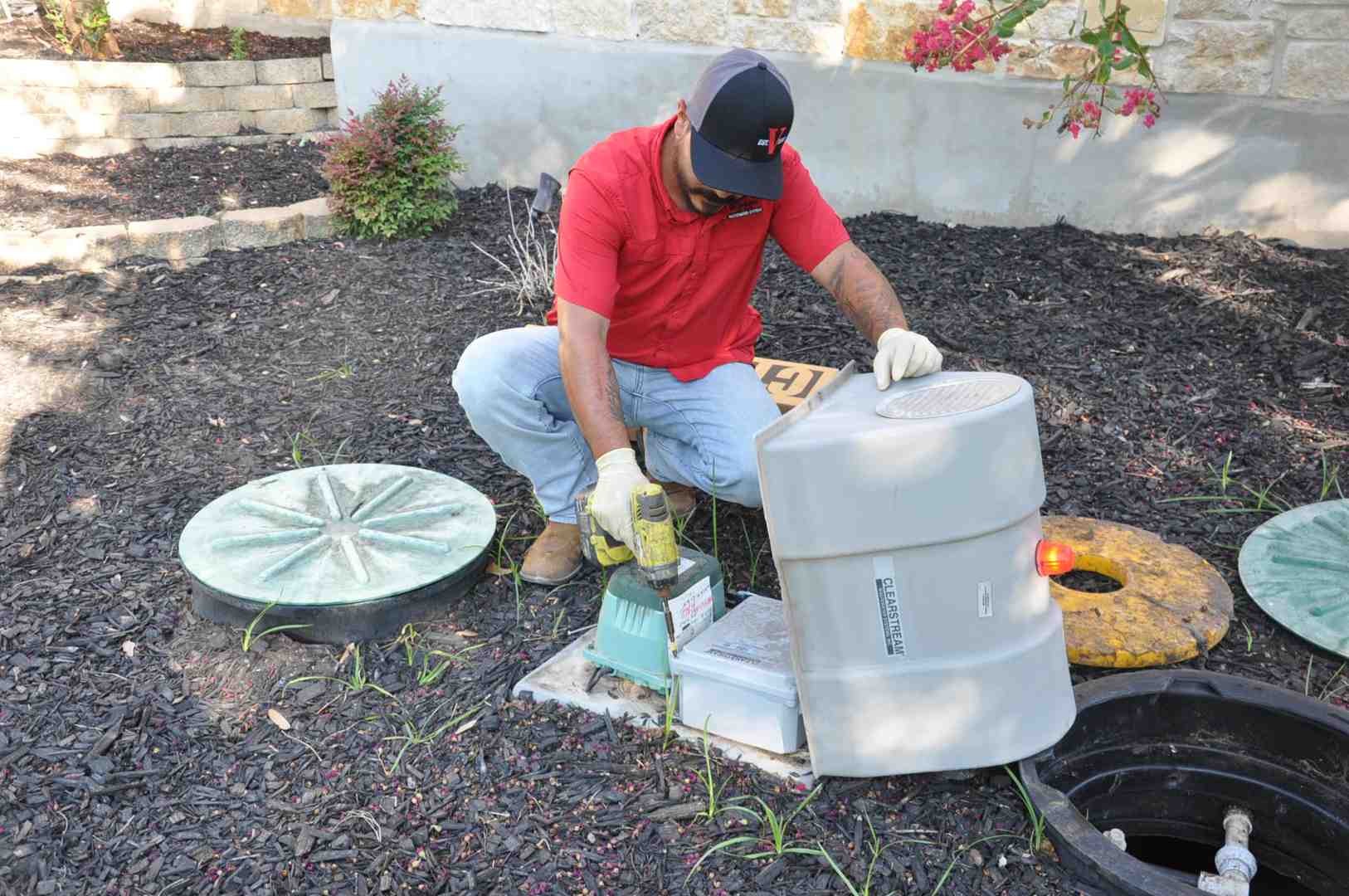
Your aerobic system is equipped with a control panel designed to alert you to malfunctions. If you see a red light flashing or hear a buzzing alarm, do not silence it and walk away. This alarm typically triggers when the water level in the pump tank is too high, indicating that the pump has failed or the system is hydraulically overloaded. It can also signal a failure in the air compressor. Promptly calling a technician allows them to diagnose whether the issue is electrical, mechanical, or a simple float switch error.
3. Saturated Spray Areas and Discolored Effluent
The water dispersed by your sprinkler heads should be relatively clear and odorless. If you notice that your spray field is constantly wet, or if the water being sprayed is dark, murky, or smells foul, your system is not treating the wastewater effectively. This is often a sign that the solids have built up too much or that your chlorine disinfection system is empty or malfunctioning. This not only creates an unsanitary environment but can also lead to significant health code violations.
4. Excessive Sludge Accumulation in the Pump Chamber
Over time, even a well-functioning system will accumulate solids that the bacteria cannot break down. When these solids reach the pump chamber, they can clog the pump and the irrigation lines. Technicians often describe this buildup as having the consistency of a “thick malt.” If you open your pump tank lid and see a dark, heavy sludge layer rather than clear water, the system is overdue for a professional pump-out to restore its capacity.
5. Standing Surface Water and Unusually Lush Turf
While a little water is expected in a spray field, standing water or “ponding” is a major red flag. If you notice that one specific area of your lawn is significantly greener or lusher than the rest, or if there is localized pooling, your drain field or spray area is likely saturated. This indicates that the soil can no longer absorb the effluent being dispersed, often due to a failure in the system’s ability to process or distribute the water correctly.
The Core Pillars of Proactive Aerobic System Maintenance
Proactive maintenance is the most effective way to keep your system affordable. By scheduling routine check-ups, you catch small issues, like a failing filter or a pump under strain, before they become catastrophic failures. As with any buried wastewater line, small symptoms can escalate quietly, which is why learning how hidden sewer line issues go overlooked can help you spot trouble sooner.
When you choose to prioritize aerobic system maintenance, you are essentially investing in the longevity of your home’s most critical infrastructure. Regular cleaning prevents the buildup of solids that cause mechanical wear, ensuring that your system operates within its designed parameters.
Key Components Requiring Professional Aerobic System Maintenance
Every aerobic system relies on several vital components that require periodic inspection:
- Aerator/Air Compressor: The “heart” of the system that provides necessary oxygen.
- Submersible Pumps: These move the treated effluent to the spray heads.
- Electrical Control Panel: The brain of the system that manages cycles and alarms.
- Effluent Filters: These prevent solids from entering the spray field.
- Sprinkler Nozzles: These must remain clear to ensure even distribution.
- Chlorine Tablet Chlorinators: These ensure the water is disinfected before it touches your lawn.
Pumping vs. Comprehensive Cleaning: Understanding the Difference
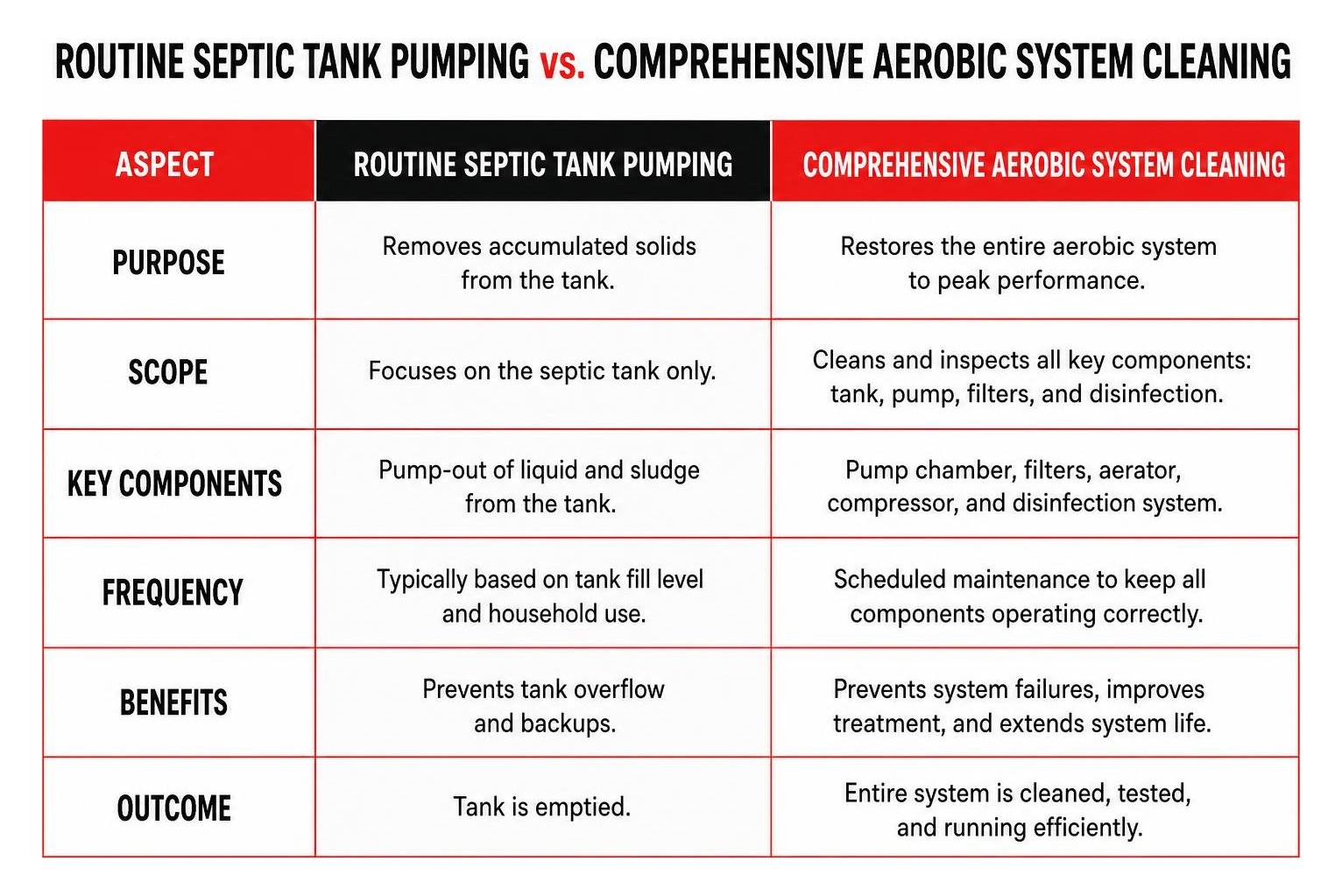
Many homeowners confuse “pumping” with “cleaning.” Pumping is simply the removal of the accumulated sludge from the tank. While necessary, it is only one part of a comprehensive cleaning. A full service includes verifying the pressure at the sprinkler heads, washing the effluent filters, performing clarity tests to ensure the water is being treated properly, and calibrating the mechanical components to ensure the system is running at peak efficiency.
Local Boerne Regulations and What Technicians Inspect
In Kendall County, aerobic systems are subject to strict Texas Commission on Environmental Quality (TCEQ) maintenance rules for on-site sewage facilities. These rules are in place to protect our local water supply, particularly the Edwards and Trinity Aquifers, which are highly susceptible to contamination from untreated wastewater.
Compliance with Kendall County and Texas Health Codes
Professional technicians do more than just clean; they document. When you hire a qualified company, they will provide detailed service forms and photo documentation of your system’s status. This is crucial for staying in compliance with local health department codes. Maintaining a record of your service history is often a requirement for property sales and helps you avoid the legal trouble or fines associated with system neglect.
Why Routine Aerobic System Maintenance Protects Groundwater
Boerne sits on sensitive limestone terrain. If an aerobic system fails, untreated or poorly treated wastewater can quickly leach into the groundwater. By ensuring your system is cleaned and inspected regularly, you are acting as a steward of the Texas Hill Country, preventing harmful bacteria and excess nutrients from entering our precious aquifer recharge zones.
Frequently Asked Questions About Aerobic Systems in Boerne
How often should an aerobic septic system be pumped or cleaned?
While every household is different based on water usage and the number of residents, Texas requires routine professional maintenance visits at least every four months for aerobic treatment units, with reports filed to the permitting authority. Pumping of accumulated solids is separate from those inspections, and timing depends on tank size and household size. For many average households, TCEQ guidance points to roughly every 3 to 5 years, but a technician should monitor your specific sludge levels to give you a schedule tailored to your family’s habits.
Are biological or chemical tank additives necessary?
In a properly functioning aerobic system, the answer is usually no. These systems are designed to be self-sustaining, relying on the natural bacterial flora that develops within the oxygen-rich environment. In fact, some additives can disrupt the biological balance or interfere with the aeration process. It is best to rely on professional maintenance rather than store-bought “miracle” additives.
What qualifications should a professional wastewater technician possess?
When searching for aerobic system cleaning technicians in Boerne, TX, look for companies that employ licensed professionals. A reputable technician should be background-checked and, ideally, non-commissioned. This ensures that their recommendations are based on the actual health of your system rather than a sales quota. Transparency is key—always ask for a detailed service report and photo documentation after every visit.
Conclusion
Your aerobic septic system is a sophisticated piece of technology that works around the clock to keep your home sanitary and your environment safe. By recognizing the telltale signs of trouble and committing to a schedule of proactive maintenance, you can avoid the stress of emergency repairs and the high costs of system replacement. Whether it is ensuring your aerator is functioning or verifying that your spray field is clear, professional care is the most reliable way to protect your investment. A well-maintained system is not just a requirement for compliance; it is a commitment to the health and longevity of your home in the beautiful Texas Hill Country.

