
In Midland, Texas, an industrial site on the edge of the Permian Basin has become the first new American lithium operation to reach the market in more than half a century. Rather than blasting rock or pumping vast evaporation ponds, it pulls battery-grade lithium out of the salty wastewater that oil and gas wells bring to the surface every day.
The plant, built by Fort Worth-based Element3, reported its first commercial-scale production of lithium carbonate in February 2026. It is designed to produce up to 3,000 tons of lithium a year, and it draws on technology licensed from Oak Ridge National Laboratory. According to the laboratory, that single facility’s output is equivalent to nearly half of all the lithium the United States currently produces in a year.
That raises a bigger question: can the country build a domestic lithium supply chain out of water it already brings above ground? The idea is being tested in more than one place. Far to the west, at California’s Salton Sea, a very different project is chasing the same goal from geothermal brine. Together they sketch out two distinct American routes to the same prize.
What the Texas Plant Actually Does
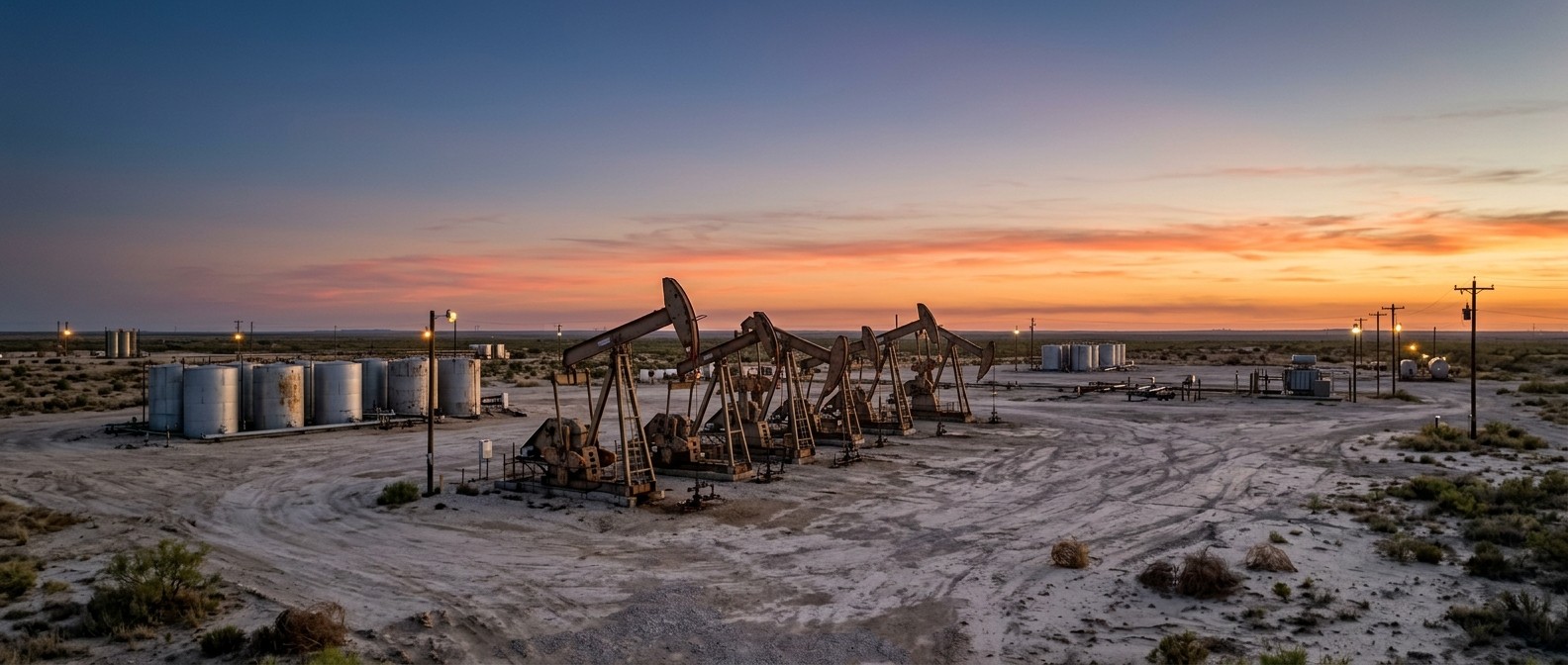
Oil and gas extraction produces enormous volumes of “produced water,” the briny, mineral-laden fluid that comes up alongside oil and gas. For decades it has been treated mostly as a disposal problem. Element3 estimates the Permian Basin generates roughly a billion gallons of oil and gas wastewater a day.
That water happens to contain lithium. The Element3 facility recovers it using a sorbent-based process licensed from Oak Ridge National Laboratory, the national laboratory partnership behind the plant’s lithium-recovery process. The process selectively captures lithium chloride from the wastewater and then converts it into battery-grade lithium carbonate powder, the form battery makers actually buy.
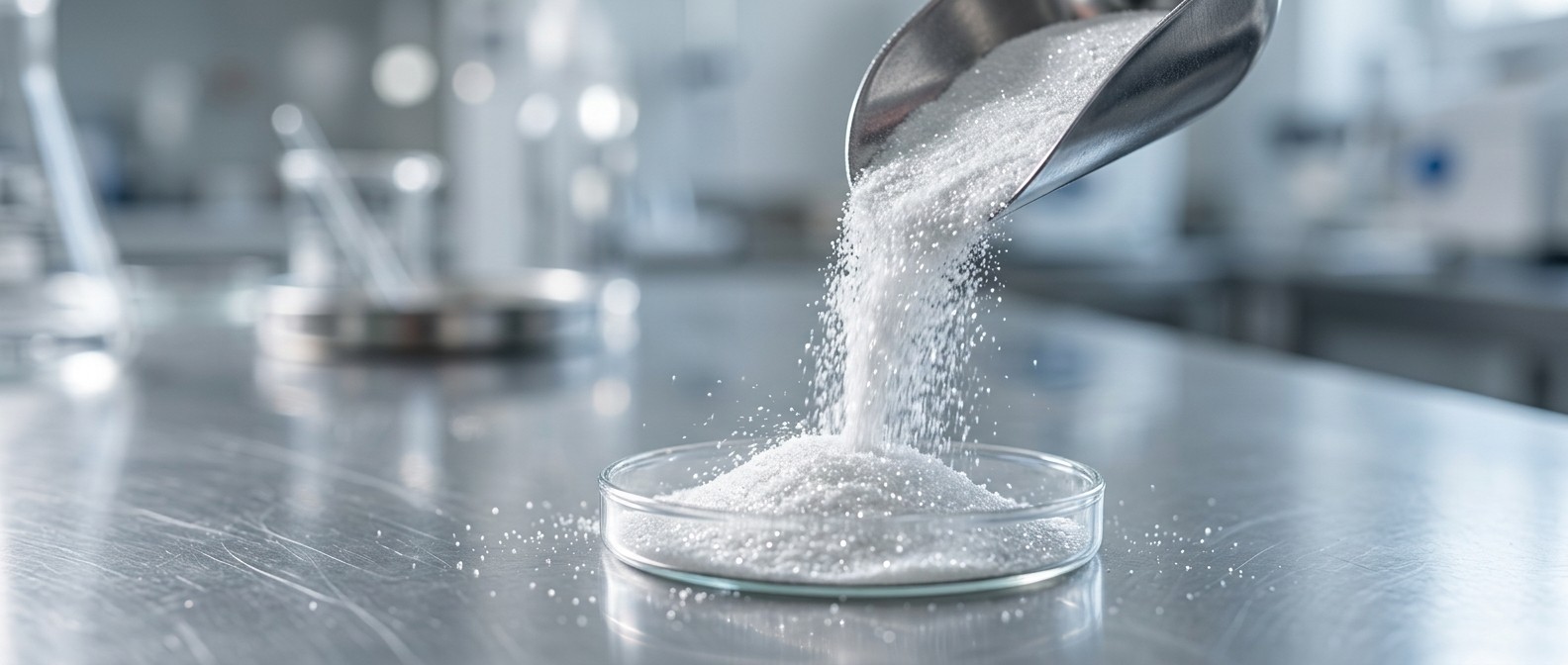
It is worth pausing on how unusual that milestone is. Element3 announced the first lithium carbonate from the Midland facility in February 2026, describing it as the first new domestic lithium mining project to reach market in half a century. That gap spans roughly six decades in which the country leaned almost entirely on imports.
Why Lithium From Wastewater Matters
The United States produces a small fraction of the world’s lithium, well under 1 percent, and domestic output has hovered around 5,000 to 6,000 metric tons a year. The country imports most of what its battery factories need. Chile and Argentina alone supply about 95 percent of those imports, according to US lithium production and import data.
That dependence is the strategic heart of the story. Lithium is a core ingredient in the batteries that power electric vehicles and grid-scale energy storage, two markets growing fast. Every ton recovered at home is a ton that does not have to cross an ocean and is a step toward a more resilient supply chain.
Domestic sourcing is not only a mining story. The US has also been building a domestic lithium supply chain from recycled batteries, another route to the same goal of keeping critical minerals inside the country.
Nor is wastewater the only unconventional source in play. Researchers have also developed ways of extracting lithium from seawater for batteries, part of a wider search for feedstocks that avoid conventional mining altogether.
The Hard Part: Pulling One Element Out of a Messy Brine
Produced water is not a clean feedstock. Alongside lithium it carries dissolved and suspended salts, heavy metals, hydrocarbons, and in some cases, naturally occurring radioactive material. Recovering a single element from that mix, reliably and cheaply, is the central engineering challenge.
Parans Paranthaman, who leads the Extractions and Separations Center at Oak Ridge National Laboratory’s METALLIC critical minerals facility, put the challenge plainly. “The feedstock contains all kinds of elements, so you need to selectively extract the element of interest with high efficiency and low cost as you scale up,” he said.
Selectivity is a familiar problem in lithium chemistry. Separating lithium from chemically similar elements has stalled projects around the world, including the tricky separation of lithium from magnesium in salt-lake brine. Doing it in oilfield water, where the mix is even messier, is a genuinely harder test.
A Second US Project: Geothermal Lithium at the Salton Sea
Roughly 800 miles west, in California’s Imperial Valley, another company is pursuing lithium from water by a different path. Controlled Thermal Resources is developing the Hell’s Kitchen project, an integrated geothermal power and critical-minerals complex on the shore of the Salton Sea, an area now widely billed as “Lithium Valley.”
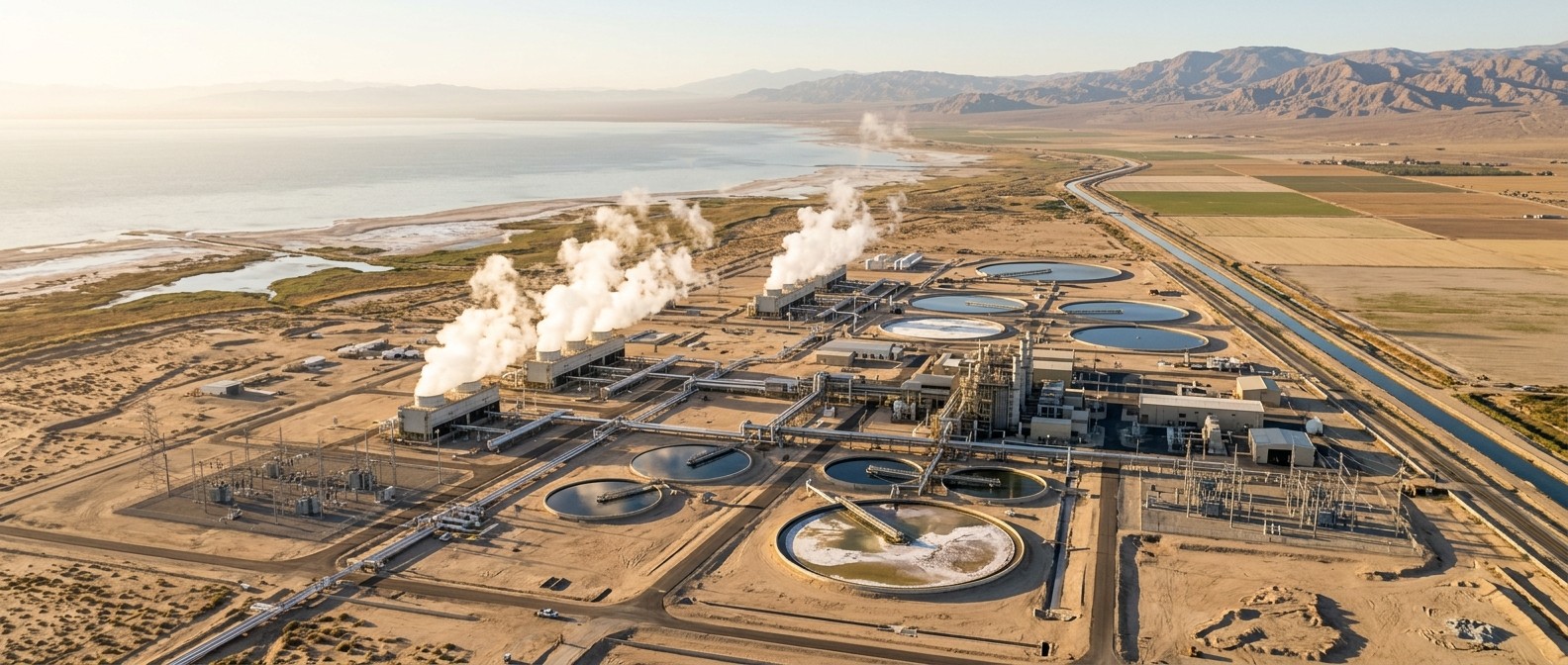
Instead of oilfield wastewater, Hell’s Kitchen draws on hot geothermal brine from deep beneath the Salton Sea field. The company plans to generate clean, round-the-clock geothermal electricity and, from the same brine, recover lithium carbonate along with zinc, manganese, and potash. Its pitch leans heavily on process design: no open-pit mining, no evaporation ponds, and on-site refining rather than shipping material overseas.
How the Texas and California Projects Differ
Both projects take lithium out of water, and both are betting on modern extraction chemistry rather than traditional evaporation. But that shared premise hides some sharp differences.
| Texas (Element3, Midland) | California (CTR, Hell’s Kitchen) | |
|---|---|---|
| Feedstock | Oilfield “produced water” from the Permian Basin | Geothermal brine from beneath the Salton Sea field |
| Location | Midland, Texas | Imperial Valley, California (“Lithium Valley”) |
| Energy profile | Drawn from existing oil and gas operations | Powered by its own geothermal electricity |
| Products | Battery-grade lithium carbonate | Lithium carbonate plus zinc, manganese, and potash |
| Status | Commercial operation since February 2026, about 3,000 tons a year | In development as a multi-phase geothermal and minerals complex |
| Stated footprint | Recovers value from an existing waste stream | No open-pit mining or evaporation ponds; on-site refining |
The distinction matters because the two routes face different risks. The Texas plant starts from a waste stream that already exists. That lowers its land and water footprint but ties it to the oil and gas industry’s ups and downs. The California project is building a much larger, fully integrated complex, which offers scale and clean power but carries the longer timelines and financing risks that come with any big infrastructure bet.
Is Lithium From Wastewater Better for the Environment?
Conventional lithium production has real environmental costs. Evaporative brine operations in South America can consume enormous volumes of water and affect local aquifers, while hard-rock mining is land- and energy-intensive. Those concerns are exactly what make alternative feedstocks attractive in the first place.
Using oilfield wastewater has an obvious appeal: the water is already being brought to the surface, so the operation is recovering value from a stream that would otherwise be disposed of. That can reduce the land disturbance and freshwater demand associated with conventional mining.
It is not automatically clean, though. Separating lithium still takes energy and chemicals, and the leftover brine, which can carry heavy metals and radioactive material, has to be handled responsibly. The honest answer is that this route may be considerably better than business as usual, but the full environmental picture depends on how the waste stream is managed. Approaches such as brine mining for critical minerals and freshwater show how much of that comes down to design choices.
The Economics: Can It Compete on Cost?
Extracting lithium from a complex waste stream is not cheap, and cost decides whether the model spreads. Industry estimates place conventional evaporative brine operations in Chile and Argentina at roughly $3,500 to $5,500 per ton of lithium carbonate equivalent, and hard-rock spodumene projects at around $6,000 to $10,000 per ton. Direct lithium extraction, the family of technologies the Texas plant belongs to, generally falls in between conventional brines and sits higher for oilfield water because of the extra pretreatment and reagents it needs.
That gap is the central commercial question. Produced water is a free feedstock, but cleaning it up is not, so the plant’s economics hinge on keeping reagent use, energy, and waste disposal under control. Element3 says its process is fully US-developed and does not depend on Chinese-made sorbents, a detail that matters in a market shaped by the global scramble for lithium.
Where the US Lithium Race Stands
The Midland plant is not operating in isolation. Several far larger US lithium projects are moving at the same time, and they show how quickly the domestic picture could shift.
- ExxonMobil is drilling direct-extraction wells in Arkansas’s Smackover formation, targeting first commercial production in 2027 and tens of thousands of tons a year by 2030.
- Lithium Americas is building the Thacker Pass project in Nevada, an open-pit clay operation backed by a $2.26 billion federal loan and a General Motors offtake, with a first phase of about 40,000 tons a year.
- Controlled Thermal Resources’ Hell’s Kitchen is targeting roughly 25,000 tons a year in its first stage, alongside geothermal power.
- Albemarle’s Silver Peak in Nevada remains the country’s only long-running commercial lithium operation, at about 5,000 tons a year.
Against those, the Texas plant’s 3,000 tons a year looks small. Its edge is timing and feedstock: it draws on water that is already flowing, so it can produce years before projects that still have to be drilled, permitted, and built.
Does Lithium From Wastewater Actually Scale?
Optimistic headlines tend to skip the harder engineering. Permian produced water is extremely salty, with total dissolved solids that can exceed 150,000 milligrams per liter. It is dominated by sodium, calcium, and magnesium while holding only trace amounts of lithium, so selective sorbents have to work reliably in that environment, cycle after cycle, without fouling or breaking down.
Two more constraints stand out. Pulling lithium back off the sorbents takes acid, base, and fresh wash water, an awkward requirement in water-stressed West Texas. And oilfield water naturally carries radium, a radioactive element that can build up as scale on pipes and media, creating a hazardous-waste problem.
It is also worth reading the fine print on the headline number. The 3,000 tons a year is the plant’s nameplate design capacity, not an audited tally of lithium sold. Element3 has said its first commercial shipments were targeted for the first quarter of 2026, so independently confirmed production will be the real test of whether the model works at scale.
What It Means for the US Battery Supply Chain
For now, the Texas plant is a proof of concept at a commercial scale and a useful one. If lithium can be pulled economically from produced water, the Permian Basin and other oil-producing regions hold a vast, already-flowing feedstock that no one has to drill for.
If the model works, the potential benefits stack up:
- Reduced exposure to overseas supply disruptions
- A new revenue stream from water that is already being pumped
- Battery and technology manufacturing that could co-locate near the resource
- Skilled jobs in existing oil-producing regions
- A smaller land and freshwater footprint than conventional mining
- Continued reliance on imports in the near term
Success could also encourage battery and technology manufacturers to build nearby. That would shorten supply chains and stabilize costs. That is the same logic behind the Salton Sea vision, where power and minerals are meant to arrive together. Neither route removes the need for imports overnight, and both face questions about cost, scale, and consistency, but each one chips away at a dependence the US has carried for decades.
Frequently Asked Questions
How much water does it take to produce a ton of lithium?
It depends heavily on the method. Traditional evaporative brine operations can use on the order of hundreds of thousands of gallons of water per ton of lithium, while hard-rock mining uses less water but far more energy. Extracting lithium from oilfield wastewater is different again, because the water is an existing byproduct rather than fresh water diverted for the purpose.
Where are the biggest lithium deposits in the world?
The largest identified resources sit in the “Lithium Triangle” of Bolivia, Argentina, and Chile. Australia, however, is the world’s largest producer, thanks to its hard-rock spodumene mines, followed by Chile and China. The United States holds meaningful resources too, most famously at the Salton Sea and in Nevada.
Is lithium from wastewater the same as fracking wastewater?
Often, yes, they overlap. “Produced water” is the broad category that includes the briny fluid that returns from oil and gas wells, including water associated with hydraulic fracturing. The Permian Basin feedstock used in Texas falls into that category, which is why some coverage describes it as lithium from fracking wastewater.
How bad is lithium mining for the environment?
It varies widely. Evaporative brine extraction can stress local water supplies, and hard-rock mining disturbs large areas of land and consumes significant energy. Newer approaches, including direct extraction from brines and wastewaters, aim to cut those impacts, but their real-world footprint, including energy, chemicals, and waste handling, is still being measured.
The Bottom Line
The Midland plant is a small facility with an outsized symbolic weight: the first new American lithium operation in roughly 60 years, and one that turns an oilfield liability into a battery input. Meanwhile, the geothermal project at the Salton Sea shows a second, larger vision of what lithium from water could look like.
Neither project will end US import dependence on its own. But taken together, they suggest that the country’s next chapter of lithium production may not come from tearing open new ground at all. It may come from the water we are already pumping.


