
Suppose a solar developer takes an option on 200 acres at an eventual operating rent of $1,200 per acre. The landowner might expect $240,000 a year once the project starts generating electricity. But if the final project uses only 160 acres and rent applies only to those acres, the first annual payment would be $192,000.
That example raises a question worth settling before any agreement is signed: Which acreage receives operating rent, and when does that rent start?
The payment quoted by a developer is only one part of a long-term solar lease. Option periods, grid connections, annual increases, and land restoration obligations can shape solar land lease payments just as much as the headline rate.
What published solar lease rates tell us
There is no reliable nationwide average based on completed private solar leases. Most public references describe regional estimates or offers, often from different years.
The University of Wisconsin–Madison Extension reports that landowners in Wisconsin have discussed operating rent ranging from about $500 to more than $1,500 per acre annually. Those figures come from conversations with landowners, not a survey of executed leases.
Penn State Extension reported typical Pennsylvania offers of $1,000 to $1,200 per acre annually in October 2021, within a wider range of $800 to $2,000. Access to electrical infrastructure, project size, and contracted power sales helped explain the variation.
Purdue University’s March 2026 Ag Economy Barometer provides a newer snapshot. In that survey, 12% of farmers said they had discussed leasing their land for solar in the previous six months. About 21% of reported lease rates exceeded $1,500 per acre. The survey also found that 56% of respondents reported offers with an annual escalator clause, most commonly between 2% and 3%.
These sources describe different markets and different kinds of evidence. A comparison of published solar land lease rates and offer data keeps the figures with their source dates instead of turning them into one national estimate.
An option payment is not operating rent
A developer may need several years to study the property, secure permits, arrange an electricity buyer, and determine whether the grid can accept the power.
An option agreement can give the developer control over the land during that process. Option payments may be considerably lower than the operating rent stated in the proposed lease.
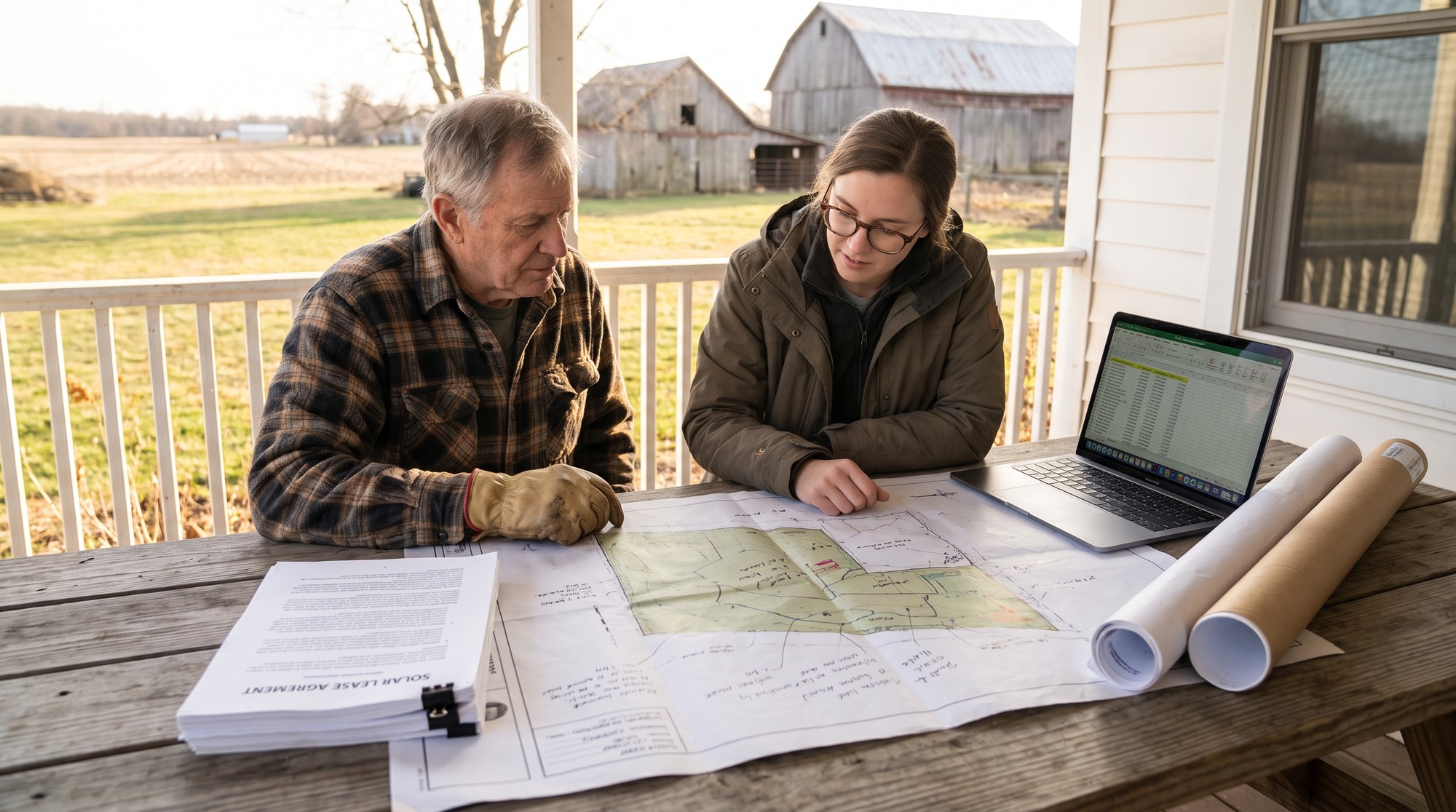
If the project never gets built, the landowner may never receive the operating payments shown in the proposal. The agreement should specify what happens if permits are denied, interconnection costs are too high or the developer decides not to proceed.
The acreage definition also matters. An option may cover the whole property while the final solar facility occupies only part of it. The contract should explain how the paid area is measured and what happens to unused acreage. Access roads, transmission corridors, and other easements can have separate terms.
What a 2% annual increase adds over 30 years
Consider an illustrative lease with 160 paid acres, a starting rent of $1,200 per acre, a 30-year operating term, and a 2% annual increase.
First-year rent would be $192,000. By year 30, the annual payment would be about $341,000. Adding the payments over the full 30 years gives approximately $7.79 million in nominal operating rent.
The same lease without an annual increase would produce $5.76 million over 30 years, a difference of roughly $2.03 million.
These figures assume the project operates for all 30 years and makes every scheduled payment. They exclude option payments, construction payments, taxes, expenses, and changes in the purchasing power of money.
A solar lease payment calculator can show how the totals change when the paid acreage, starting rent, option period, or escalator changes.
A higher projected total is not necessarily a better offer. The timing of payments, the developer’s obligations, and the risks carried by the landowner still need to be compared.
Why two neighboring properties can receive different offers
Grid access is often decisive. A parcel near a substation may be attractive, but the connection can still require upgrades or face delays in the interconnection queue. Developers also consider whether enough of the property can be built on after accounting for wetlands, setbacks, terrain, roads, and local restrictions.
A large property with costly connection work may be less appealing than a smaller one with an easier route to the grid.
The electricity project also has to make financial sense. Power-sale agreements and financing affect how much a developer can pay for land.
Can agriculture continue after the panels arrive?
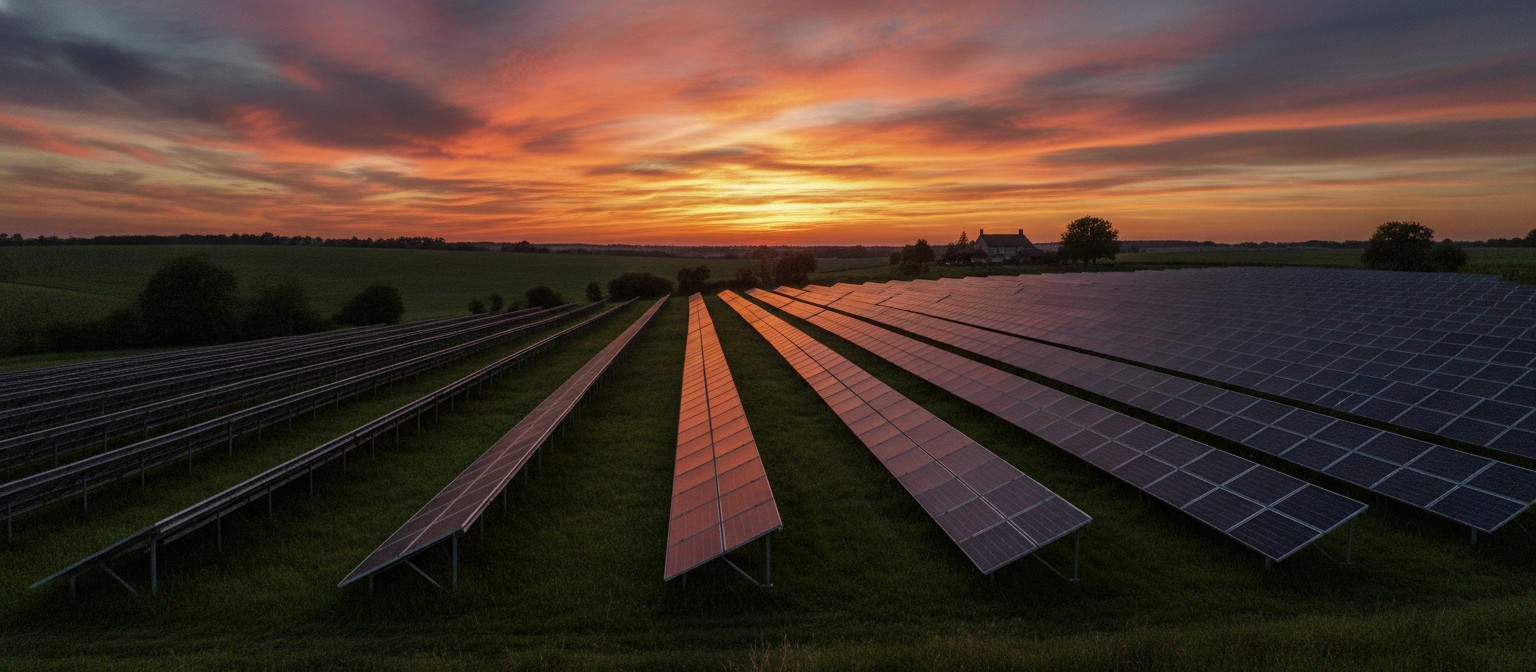
Some projects allow farming or grazing alongside electricity generation. The U.S. Department of Energy calls this agrivoltaics, a category that includes growing crops, grazing animals, and maintaining pollinator habitat beneath or between solar arrays.
Sheep can sometimes graze beneath conventional panels and help manage vegetation. Growing crops beneath panels often requires a different design, including taller structures or wider spacing. Those changes can affect construction costs and electricity output.
Landowners should not assume they can continue agricultural work unless the lease explicitly permits it. Access, fencing, water, insurance and the right to receive grazing or crop income should be addressed in writing.
Read the end of the lease as carefully as the beginning
A solar lease may remain in effect after the property changes ownership. It may also include renewal options that extend the commitment beyond the initial operating term.
Before signing, landowners should know who pays property taxes, who repairs construction damage, what happens to drainage and soil, and how the developer must remove equipment when the project closes. Decommissioning security deserves particular attention because restoration can occur decades after signing.
An attorney familiar with agricultural and energy leases can review those obligations alongside the payment terms. The useful comparison is the full agreement, not just the annual price per acre.


