
What if the same acre of land could produce both food and electricity? That question drives one of the most promising innovations in sustainable agriculture: agrivoltaics. By mounting solar panels above cropland, farmers can harvest sunlight twice, generating renewable energy while maintaining food production beneath the arrays.
The concept has moved well beyond theory. As of 2026, an estimated 18 to 20 gigawatts of agrivoltaic capacity operate worldwide, with the global market valued at roughly $5 to $6 billion. Research from more than 82 experimental studies across 20 countries confirms that, under the right conditions, dual-use land can boost overall productivity by 35 to 73 percent compared to single-use farming or solar generation alone.
This guide covers how agrivoltaic systems work, which crops and livestock thrive under panels, the economic outlook for the industry, and the challenges farmers should weigh before investing.
What Is Agrivoltaics?
Agrivoltaics, also called agri-solar or dual-use solar, is the practice of co-locating solar photovoltaic panels and agricultural activity on the same plot of land. It builds on the same principle behind smart agriculture innovations: maximizing food production per unit of land through technology. The term combines “agri” (farming) with “voltaics” (electricity), and it describes any system where solar energy generation and food production share space intentionally.
Pronunciation tip: agrivoltaics is pronounced agri-vol-TAY-iks, blending “agriculture” and “voltaics” (the term for direct conversion of light to electricity in solar cells).
The concept dates to 1981, when German researchers Adolf Goetzberger and Armin Zastrow published a paper titled “Potatoes Under the Collector,” proposing that elevated solar panels could shelter crops while generating power. The idea remained largely academic for decades until falling panel costs and growing land-use pressure brought it into commercial reality in the 2010s.
By 2019, the definition expanded. Researchers began applying “agrivoltaics” to conventional solar farms that integrate any agricultural activity, including grazing or pollinator habitats, not just purpose-built dual-use structures. Today, the term covers a spectrum of designs, from greenhouse roofs fitted with transparent panels to open fields with elevated arrays towering over vegetable beds.
How Agrivoltaics Works: System Types and Design
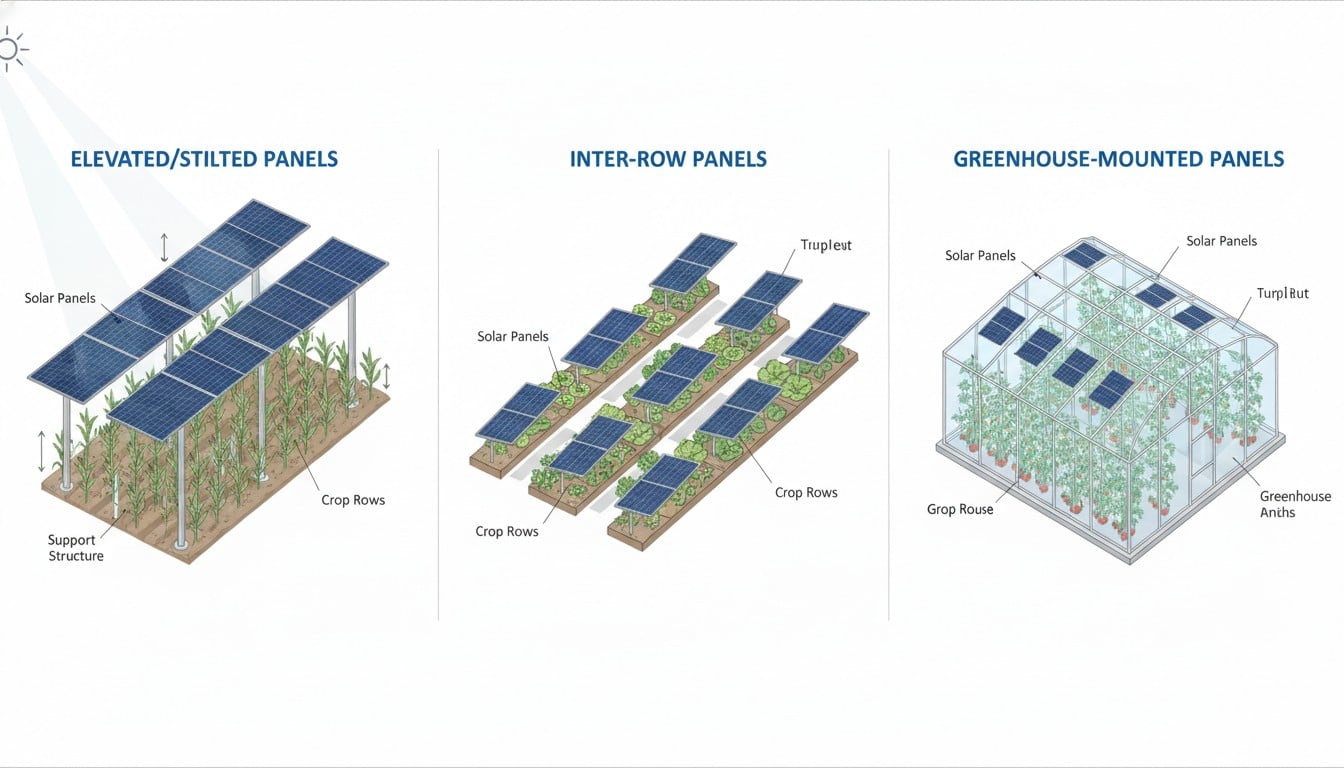
Agrivoltaic systems fall into three main categories, each suited to different crops, climates, and farm operations.
Elevated (Stilted) Systems
Solar panels mount on tall support structures, typically 3 to 6 meters above the ground, allowing farm machinery to pass underneath. This design works well for row crops, orchards, and vineyards where tractor access is essential. The height creates a shaded microclimate below while preserving full cultivation capability.
Inter-Row Systems
Panels sit at conventional heights between crop rows rather than above them. Spacing between panel rows widens to accommodate planting, irrigation, and harvesting. This approach costs less than elevated systems and suits crops that tolerate partial shade but do not need overhead protection.
Greenhouse-Mounted Systems
Transparent or semi-transparent photovoltaic panels replace traditional greenhouse roofing, a concept explored in depth by Dutch greenhouse-renewable integration projects. These systems generate electricity while controlling light levels inside the structure. Some designs use dynamic glazing that adjusts transparency based on sunlight intensity, optimizing conditions for the crops growing below.
Dynamic tracking systems represent a newer category. Panels tilt or rotate throughout the day, balancing energy generation with light delivery to crops. Though more expensive, tracking systems can increase both solar output and crop yields by optimizing shade patterns in real time.
Bifacial panels, which capture light on both sides, have become increasingly popular in agrivoltaic installations. They achieve higher electricity yield per area while allowing more diffuse light to reach plants below.
Regardless of design, every agrivoltaic system manages a tradeoff: panels capture sunlight for electricity, but crops need adequate light for photosynthesis. Successful designs transmit enough photosynthetically active radiation (PAR) to support healthy plant growth, typically allowing 50 to 80 percent of ambient light to reach the canopy.
| System Type | Best For | Height and Spacing | Key Trade-off |
|---|---|---|---|
| Overhead / Stilted | Row crops, vineyards, orchards | High (3-5 m), wide row spacing | Higher steel and installation cost |
| Inter-Row | Cereals, forage, grazing alleys | Standard height, crops between rows | Less light control, limited machinery width |
| Greenhouse PV | Vegetables, berries, seedlings | Roof-integrated, semi-transparent | Light filtering must match crop needs |
| Grazing / Pollinator | Sheep, cattle, native habitat | Low fixed-tilt, seeded understory | Requires grazing management plan |
The Benefits of Agrivoltaics
Agrivoltaic systems generate multiple advantages that extend beyond simple land sharing.
Increased Land-Use Efficiency
Research consistently shows that dual-use land produces more total value per acre than either farming or solar alone. A landmark study by Dupraz and colleagues found that combining crops with solar panels increased overall land-use efficiency by 35 to 73 percent, depending on crop selection and system design. The land produces food revenue plus energy revenue from the same footprint.
Water Conservation
Shading from panels reduces soil evaporation and lowers plant transpiration rates. Field trials demonstrate irrigation water savings of 20 to 40 percent under agrivoltaic arrays, with some systematic reviews finding water-use efficiency improvements of 150 to 300 percent and an average 14 percent reduction in irrigation demand across studies. The biggest synergies appear in arid and semi-arid regions prone to plant water deficit. The plants, in turn, cool the panels through evapotranspiration, improving photovoltaic efficiency by 2 to 3 percent in warm climates.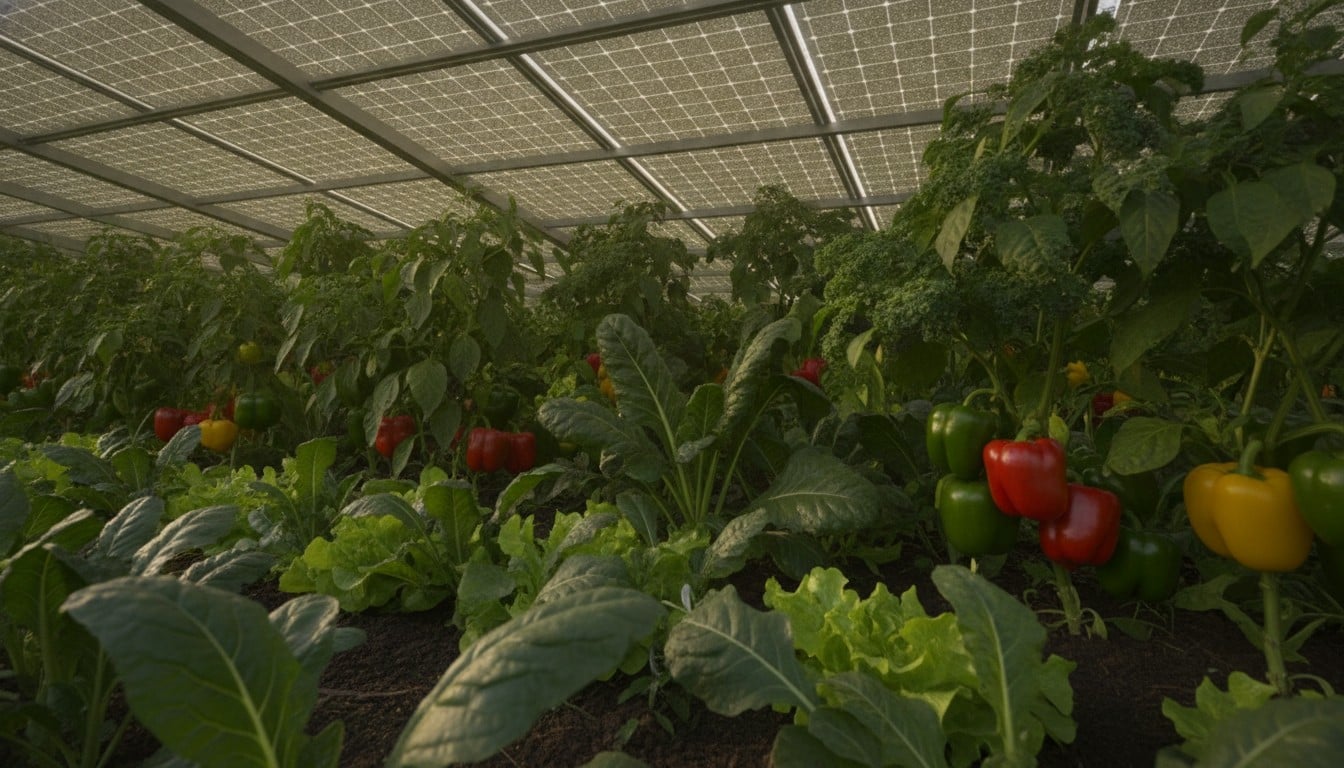
Crop Protection
Panels shield crops from extreme heat, heavy rain, hail, and excessive UV radiation. This protection proves especially valuable in regions experiencing more frequent weather extremes due to climate change. Vineyards in southern France reported grape yield increases of 20 to 60 percent under agrivoltaic covers, partly due to reduced sunburn and heat stress on fruit.
Dual Revenue Streams
Farmers earn from both crop sales and electricity generation, often through power purchase agreements or net metering. In the United States, solar leases typically range from $450 to $2,500 per acre per year, providing steady income that buffers against volatile commodity prices and poor growing seasons, according to the Institute for Energy Economics and Financial Analysis (IEEFA). Some agrivoltaic operators report that energy revenue alone covers their operating costs, making crop income pure profit.
Reduced Carbon Footprint
By generating clean electricity on-site, agrivoltaic farms offset fossil fuel use associated with agricultural operations. The systems also reduce the need for diesel-powered irrigation pumps and can power electric farm equipment directly.
Challenges and Considerations
Agrivoltaics is not universally beneficial. Several factors determine whether a project succeeds or struggles.
Higher Upfront Costs
Elevated mounting structures, specialized racking, and wider row spacing increase installation costs compared to conventional ground-mounted solar. The levelized cost of energy (LCOE) for agrivoltaic systems runs 4 to 148 percent higher than standard solar farms, depending on design complexity. These costs can pay off over time through dual revenue, but the initial capital requirement remains a barrier for many farmers.
Crop-Climate Interaction
A 2026 study published in the Proceedings of the National Academy of Sciences revealed a critical nuance: agrivoltaic outcomes depend heavily on local climate. In the humid eastern Midwest, solar shading reduced maize yields by 24 percent and soybean yields by 16 percent. However, in the semi-arid western Midwest, the same shading alleviated water stress and actually increased soybean yields by 6 percent.
This climate-driven divergence means farmers cannot simply copy designs from one region to another. System design must account for local humidity, rainfall patterns, and temperature extremes.
Equipment Access
Even elevated systems can complicate farm operations, and vegetation management adds ongoing costs. Data from 28 U.S. agrivoltaic sites found vegetation management averaged about $350 per acre per year, while sheep grazing averaged about $300 per acre per year and can reduce mowing costs but requires coordination between energy operators and farmers.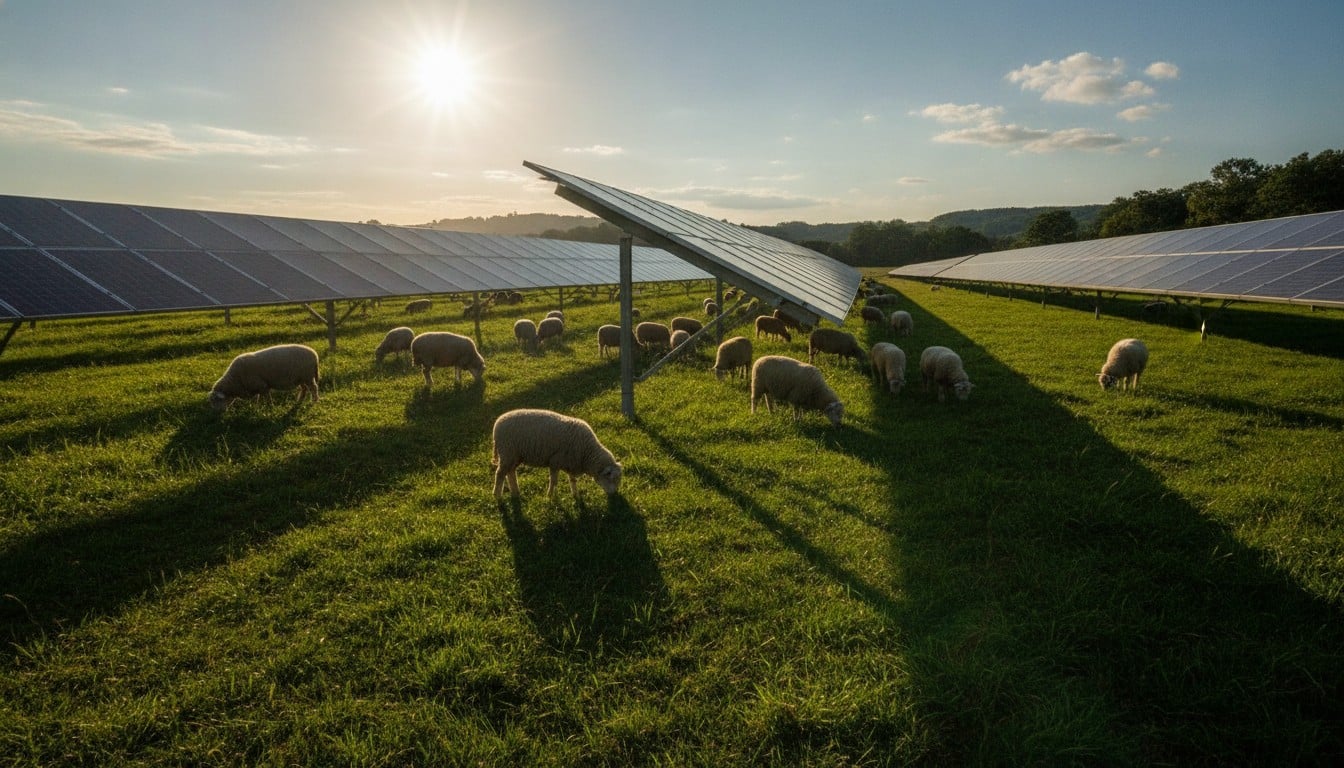 Tractors, combines, and irrigation equipment must navigate around support posts and under panel arrays. Poorly designed systems create bottlenecks that slow planting and harvest operations, reducing overall farm efficiency.
Regulatory Complexity
Zoning laws, agricultural land protections, and solar permitting requirements vary widely by jurisdiction. Some regions actively encourage agrivoltaics through dedicated legislation, while others classify dual-use projects under restrictive solar farm rules that prohibit agricultural land conversion. Farms adopting eco-friendly agriculture trends often look for low-impact ways to add renewable energy, and dual-use solar fits that strategy without taking fields out of rotation.
Best Crops for Agrivoltaic Systems
Crop selection makes or breaks an agrivoltaic operation. Plants fall into three broad categories based on their shade tolerance.
High-Performing Shade-Tolerant Crops
Leafy greens, herbs, and certain root vegetables thrive under panels. A 2026 systematic review of 82 experimental studies found that shade-tolerant crops can match or exceed open-field yields under moderate shading (30 to 50 percent PAR reduction):
- Lettuce and salad greens: Consistently perform well with 20 to 40 percent shade, sometimes showing improved quality due to slower bolting
- Ginger and turmeric: Yield increases of 12.3 percent and 8.7 percent respectively under shaded conditions, as measured in 2024 to 2025 field trials
- Eggplant: French trials reported 50 percent higher yields and improved fruit quality under agrivoltaic covers
- Berries: Blueberries, raspberries, and strawberries benefit from reduced sunburn and moderated temperatures
- Peppers and tomatoes: Achieved good yield levels across all tested conditions in the systematic review. In arid southwestern U.S. trials, cherry tomato yields doubled and chiltepin pepper yields tripled under panels while using roughly half the irrigation water
Moderate Performers
Crops like potatoes, celery, and certain beans tolerate moderate shade but may see 10 to 20 percent yield reductions in the first year before adapting. German field trials found that potato and celery yields dropped approximately 20 percent initially but recovered to within 10 percent by the second year.
Shade-Sensitive Crops to Avoid
High-light cereals and grains struggle under panels unless the system provides very high light transmittance:
- Rice: Yield reductions of 13 to 30 percent across multiple studies
- Soybeans: 18 to 20 percent yield loss in humid climates (though semi-arid regions see gains)
- Maize/Corn: Up to 24 percent yield decline in humid conditions
- Swiss chard, broccoli, spinach: 55 to 85 percent yield reduction under heavy shading
The general rule: if a crop needs full sun to produce marketable yields, it is a poor candidate for standard agrivoltaic designs. Farmers growing shade-sensitive crops should consider elevated systems with panel heights above 2.1 meters and wider spacing to maximize light penetration.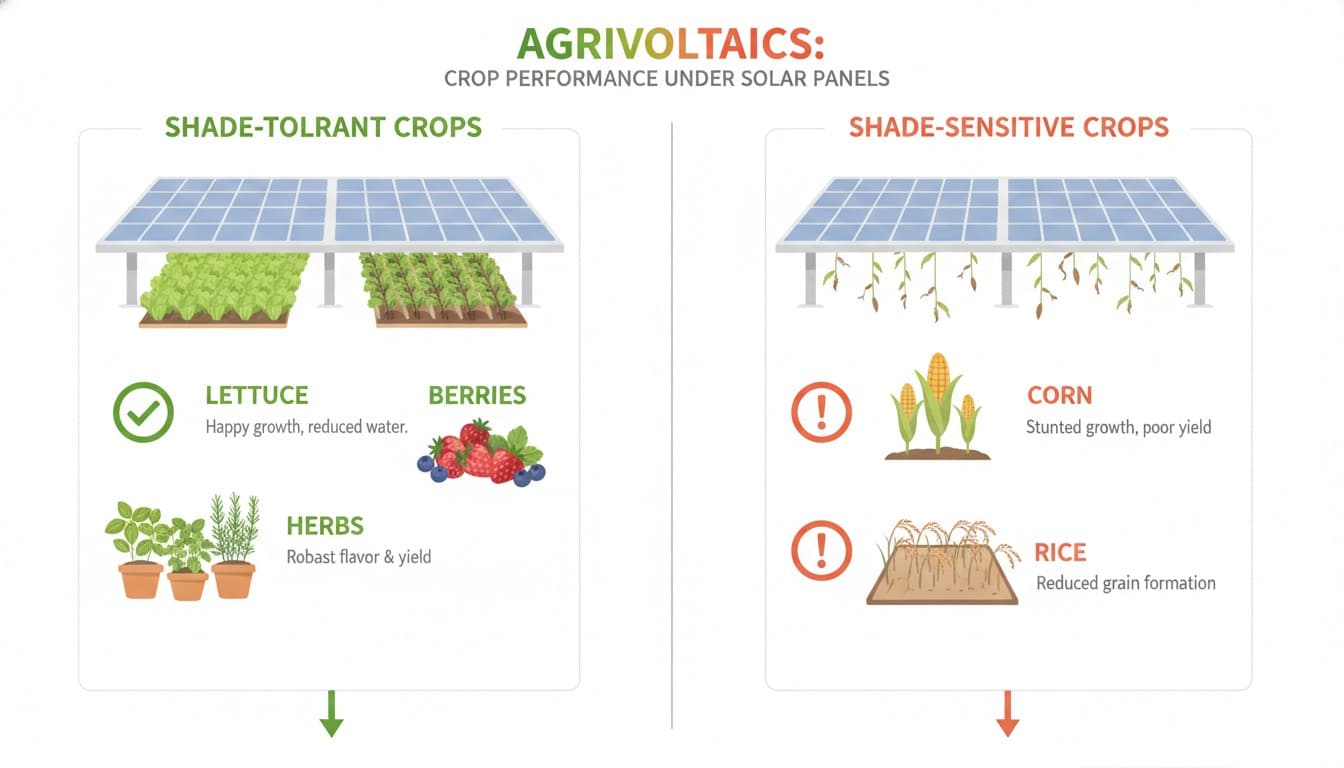
Livestock and Pollinators: Beyond Crops
Agrivoltaics extends beyond vegetable and grain production. Livestock integration and pollinator habitats represent two growing applications.
Solar Grazing
Sheep are the most common livestock used in agrivoltaic settings. They graze naturally between and under solar panels, eliminating the need for mowing and herbicide application. This arrangement benefits three parties: farmers earn grazing fees, solar operators save on vegetation management costs, and the controlled grazing reduces wildfire risk by keeping grass short.
The American Solar Grazing Association reports hundreds of solar farms across the United States now use sheep for vegetation management. Sheep prefer the shade panels provide during hot months, often seeking shelter under arrays during midday heat.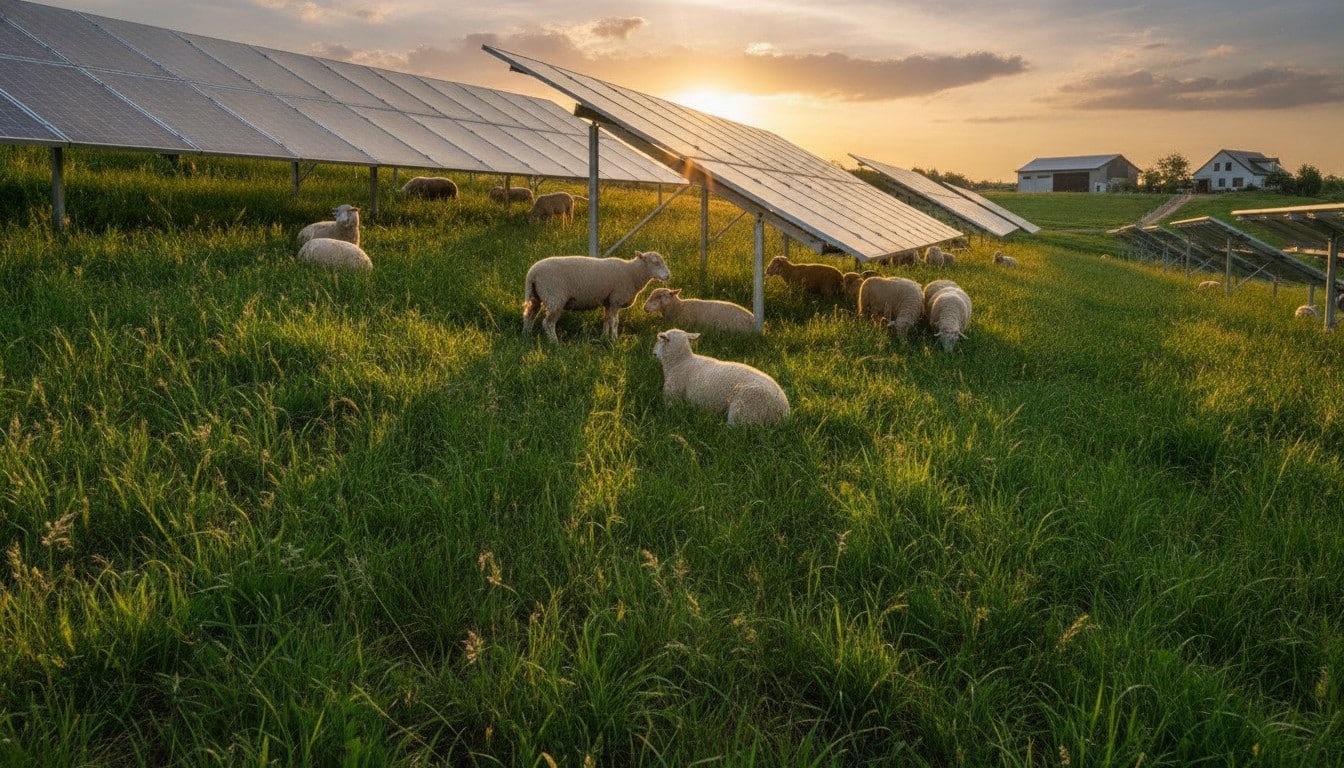
Pollinator Meadows
Some agrivoltaic sites plant native wildflowers and pollinator-friendly species beneath panels instead of cash crops. These meadows support bee populations, which pollinate about 70 percent of plant species and contribute to roughly 35 percent of global food production. Native wildflowers between rows also improve soil carbon sequestration and public acceptance of solar projects. Research shows that pollinators are thriving in solar farms across the U.S., and the DOE’s PHASE (Pollinator Habitat Aligned with Solar Energy) initiative studies how solar sites can serve as corridors connecting fragmented natural habitats.
Beekeeping
A few operations integrate commercial beekeeping into solar farms. Hives placed among pollinator plantings produce honey while benefiting from the sheltered microclimate panels create. Though still niche, this approach adds a third revenue stream to dual-use sites.
Agrivoltaics Around the World
Adoption varies dramatically by region, shaped by policy frameworks, land pressure, and agricultural traditions.
Japan
Japan leads in installed agrivoltaic sites with more than 6,100 projects. The country’s strict agricultural land protection laws require that crop yields under panels must not decrease by more than approximately 20 percent compared to regional averages. This regulatory threshold drives careful crop selection and system design.
Europe
France enacted the APER Law, establishing one of the world’s most comprehensive agrivoltaic regulatory frameworks. The law defines agrivoltaic installations, sets agricultural productivity requirements, and provides subsidy pathways. Germany developed the DIN SPEC 91434 technical standard for agrivoltaic systems, and Italy tendered 1.4 GW of agrivoltaic capacity in recent rounds.
Europe is projected to record the fastest regional market growth at nearly 30 percent CAGR through 2031, driven by aggressive renewable energy targets and agricultural policy alignment.
United States
The DOE’s InSPIRE (Innovative Solar Practices Integrated with Rural Economies and Ecosystems) program operates 22 research sites nationwide. State-level programs are emerging: New Jersey passed its Dual-Use Solar Act in 2021, and Colorado, California, and Maine host pilot projects testing regional crop-panel combinations.
The USDA supports agrivoltaics research through its Climate Hubs and has funded pilot programs exploring blueberry farming in Maine and apple orchard integration in Massachusetts and Vermont.
India and the Global South
India represents an emerging agrivoltaic market driven by massive solar deployment targets and dense agricultural land use. Pilot projects in Bangladesh demonstrated that shade-tolerant ginger and turmeric cultivated under panels on just 45 hectares of existing solar-covered land could produce nearly 594 tonnes of high-value crops annually, worth approximately $560,000.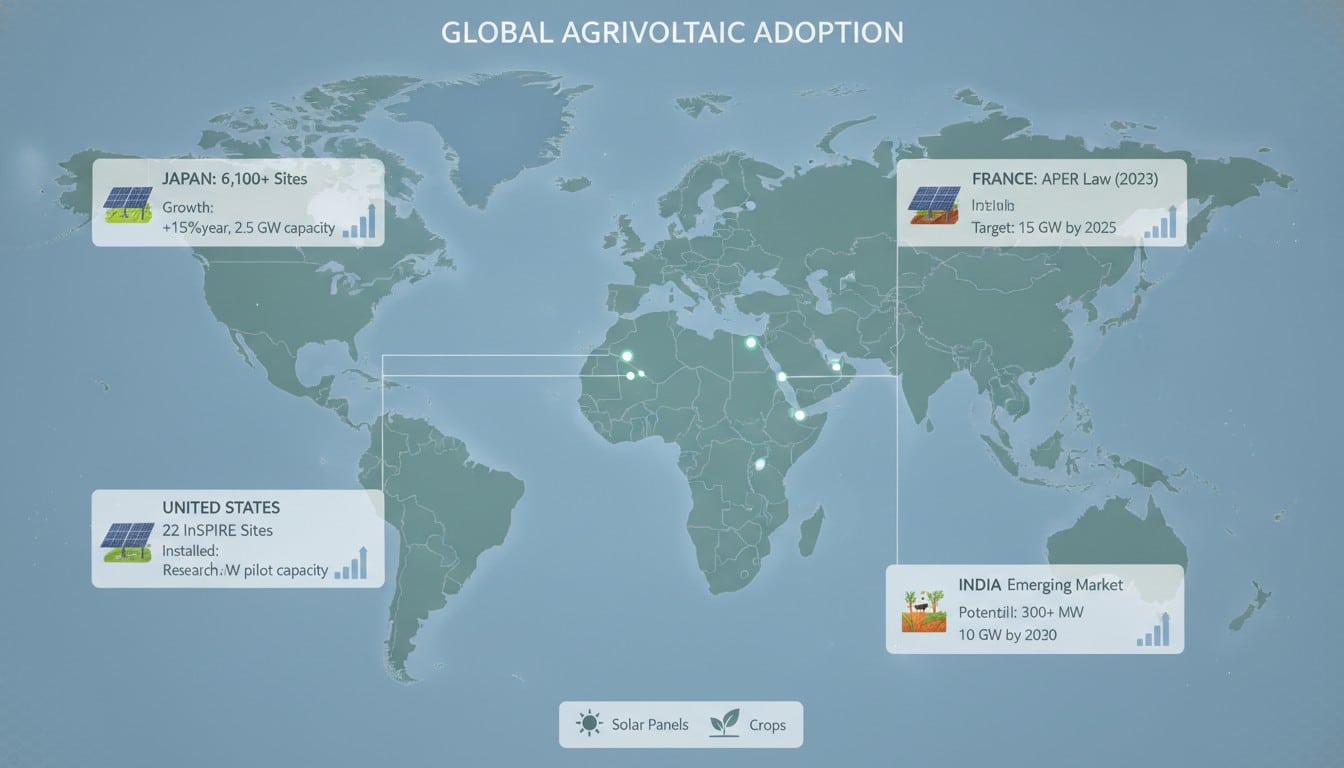
The Growing Market and Future Outlook
Agrivoltaics has transitioned from a research curiosity to a multi-billion-dollar industry.
Current Market Size
Consensus estimates from multiple market research firms value the global agrivoltaics market between $5 and $6 billion in 2026, with installed capacity reaching 18 to 20 gigawatts worldwide. Fixed-panel arrays command roughly 70 percent of current sales, while dynamic tracking systems are growing faster due to specialty-crop adoption.
Growth Projections
Market forecasts project the industry will reach $8.5 to $14 billion by 2030 to 2031, representing compound annual growth rates of 10 to 16 percent. Installed capacity is expected to double to 35 to 40 gigawatts by 2030. Bifacial modules, which capture light from both sides of the panel, currently generate 75 percent of revenue and are the fastest-growing technology segment.
Key Industry Drivers
Several forces accelerate adoption:
- Falling solar costs: Module prices continue declining, making elevated mounting structures a smaller proportion of total project cost
- Land-use competition: As solar deployment expands, agricultural communities increasingly resist losing productive farmland, making dual-use politically attractive
- Policy support: Government incentives in France, Germany, Italy, Japan, and select U.S. states reduce financial risk for early adopters
- Climate adaptation: Farmers facing extreme heat, drought, and unpredictable weather view agrivoltaics as a resilience strategy
Technology Trends
Dynamic tracking systems that optimize shade patterns in real time are expected to capture 35 to 40 percent of the market by 2030. Greenhouse-mounted photovoltaic integration is another fast-growing segment, projected at nearly 29 percent CAGR as transparent panel technology improves.
Frequently Asked Questions
Who invented agrivoltaics?
German researchers Adolf Goetzberger and Armin Zastrow coined the concept in 1981 when they published “Potatoes Under the Collector,” a paper proposing that solar panels elevated above crops could generate electricity while maintaining food production. The idea remained theoretical until the 2010s, when declining panel costs made commercial implementation viable.
What are the main downsides of agrivoltaics?
The primary challenges include higher upfront installation costs (4 to 148 percent more than standard solar), potential yield reductions for shade-sensitive crops, equipment access complications under panel arrays, and regulatory complexity in regions without dedicated agrivoltaic policies. Results also vary significantly by climate zone: humid regions may see greater yield losses than arid areas.
Why do some farmers oppose solar panels on farmland?
Farmers often resist solar development because it can permanently remove agricultural land from production, disrupt soil health during construction, and fragment farming operations. Agrivoltaics addresses these concerns by maintaining agricultural use, but farmers remain cautious about long-term soil impacts, crop compatibility, and whether energy companies will honor agricultural productivity commitments over a system’s 25-year lifespan.
How much does an agrivoltaic system cost?
Costs vary widely by design. Simple inter-row systems may add 10 to 20 percent to standard solar installation costs, while fully elevated structures with 5-meter clearance for tractor access can cost significantly more. The dual revenue stream from energy generation and crop production typically recovers the additional investment within 5 to 10 years, depending on local electricity rates and crop values.
Does agrivoltaics work with cattle?
Cattle are less common under panels because their size risks damaging low mounts and wiring. Sheep are the preferred livestock for solar grazing due to their smaller size and natural grazing behavior. Cattle can work with higher, reinforced overhead systems or by grazing the alleys between panel rows, but sites must be engineered for their weight and movement patterns.
Can any crop grow under solar panels?
No. Shade-tolerant crops like lettuce, herbs, berries, ginger, and turmeric perform best, sometimes exceeding open-field yields. Shade-sensitive crops such as rice, corn, and wheat typically see 15 to 30 percent yield reductions. Crop selection should match the specific light transmission characteristics of the installed system.
Conclusion
Agrivoltaics represents a practical solution to one of the most pressing tensions in the energy transition: how to expand renewable electricity generation without sacrificing productive farmland. The evidence shows that carefully designed systems can increase total land productivity by 35 to 73 percent, reduce water use by up to 40 percent, and provide farmers with diversified income streams.
Success depends on matching system design to local climate, selecting appropriate crops, and navigating regional regulations. As the industry matures, declining costs, standardized designs, and expanding policy support will make agrivoltaics accessible to a broader range of farmers and landowners. Research suggests global agrivoltaic systems could generate 66 to 385 petawatt-hours per year if deployed on the most suitable areas, depending on photovoltaic technology and density. For those weighing options between a conventional array and a dual-use one, advances in agricultural technology such as precision irrigation and light sensors are making it easier to fine-tune the balance between energy and food on the same hectare. For regions facing both food security pressures and renewable energy targets, dual-use solar offers a path that serves both goals simultaneously.


