
Plastic packaging is everywhere, and most of it never truly goes away. An estimated 8 million metric tons of plastic enters the ocean every year, while conventional packaging can linger in landfills for centuries. Biodegradable packaging has emerged as one answer, but the term hides more nuance than most buyers realize.
In 2025, the global biodegradable packaging market was worth about USD 10.3 billion. Projections put it at USD 22.4 billion by 2036. That growth reflects real demand, but it also means more products carrying labels that do not always mean what consumers expect.
This guide breaks down what biodegradable packaging actually is, how it differs from compostable packaging, the main materials available today, and where each one genuinely helps the environment. You will also find a material comparison table, the certification standards to look for, and answers to the most common questions.
What Is Biodegradable Packaging?
Biodegradable packaging is material that microorganisms such as bacteria, fungi, and algae can break down into natural substances. The end products are typically water, carbon dioxide, and biomass.
Whether a material biodegrades depends on its structure, not its source. Microbes can only break down materials with weak molecular chains. That is why paper and cellulose decompose quickly. Conventional plastics have strong carbon chains, so they can last for centuries.
A common misconception is that biodegradable packaging must be plant-based. In reality, some petroleum-derived polymers, such as PBAT, are fully biodegradable because of their molecular structure. The reverse is also true: not every plant-based plastic breaks down quickly. PLA, made from corn or sugarcane, only degrades under specific industrial composting conditions.
Biodegradable vs. Compostable: What’s the Difference?
These two terms are often used interchangeably, but they are not the same.
- Biodegradable describes any material that microorganisms can break down, with no guaranteed timeframe or conditions. A wooden crate and a cellulose wrapper are both technically biodegradable, but one takes weeks and the other takes decades.
- Compostable is a stricter subset. A compostable material must break down within a defined timeframe, under specific conditions, and leave behind non-toxic compost that supports plant growth.
In short, all compostable packaging is biodegradable, but not all biodegradable packaging is compostable.
Compostable materials are divided into two categories:
- Industrially compostable materials break down in large-scale facilities with controlled heat, moisture, and aeration. They will not reliably break down in a backyard bin.
- Home compostable materials break down in a typical home compost pile or bin at ambient temperatures.
Certifications are the only reliable way to verify a claim. The main standards to look for include:
- EN 13432 (Europe): requires 90% disintegration within 12 weeks and full biodegradation within 6 months in industrial composting.
- ASTM D6400 (United States): requires 90% degradation within 180 days in a commercial facility.
- BPI Certified (North America): certifies industrial compostability to ASTM standards.
- TÜV OK Compost HOME: certifies materials that break down in a home compost environment.
Types of Biodegradable Packaging Materials
Several distinct materials fall under the biodegradable umbrella, each with different sources, breakdown timelines, and best uses.
| Material | Source | Breakdown Time | Composting Conditions | Common Uses |
|---|---|---|---|---|
| PLA | Corn starch, sugarcane | 90-180 days | Industrial only | Cups, trays, films, containers |
| PHA | Bacterial fermentation | Weeks to months | Home, soil, marine | Films, cutlery, bottles |
| PBAT | Petroleum-derived polymer | About 6 months | Industrial | Flexible films, mailers |
| Mycelium | Mushroom roots + farm waste | 30-45 days | Home compost | Protective cushioning |
| Seaweed | Farmed algae and kelp | Weeks | Home compost | Edible films, sachets, coatings |
| Bagasse | Sugarcane pulp | 30-90 days | Home compost | Plates, bowls, takeaway containers |
| Paper and cardboard | Wood pulp, recycled fiber | 2-6 months | Recyclable and compostable | Boxes, mailers, cartons |
| Starch peanuts | Corn or wheat starch | Dissolves in water | Home compost | Loose-fill cushioning |
PLA (Polylactic Acid)
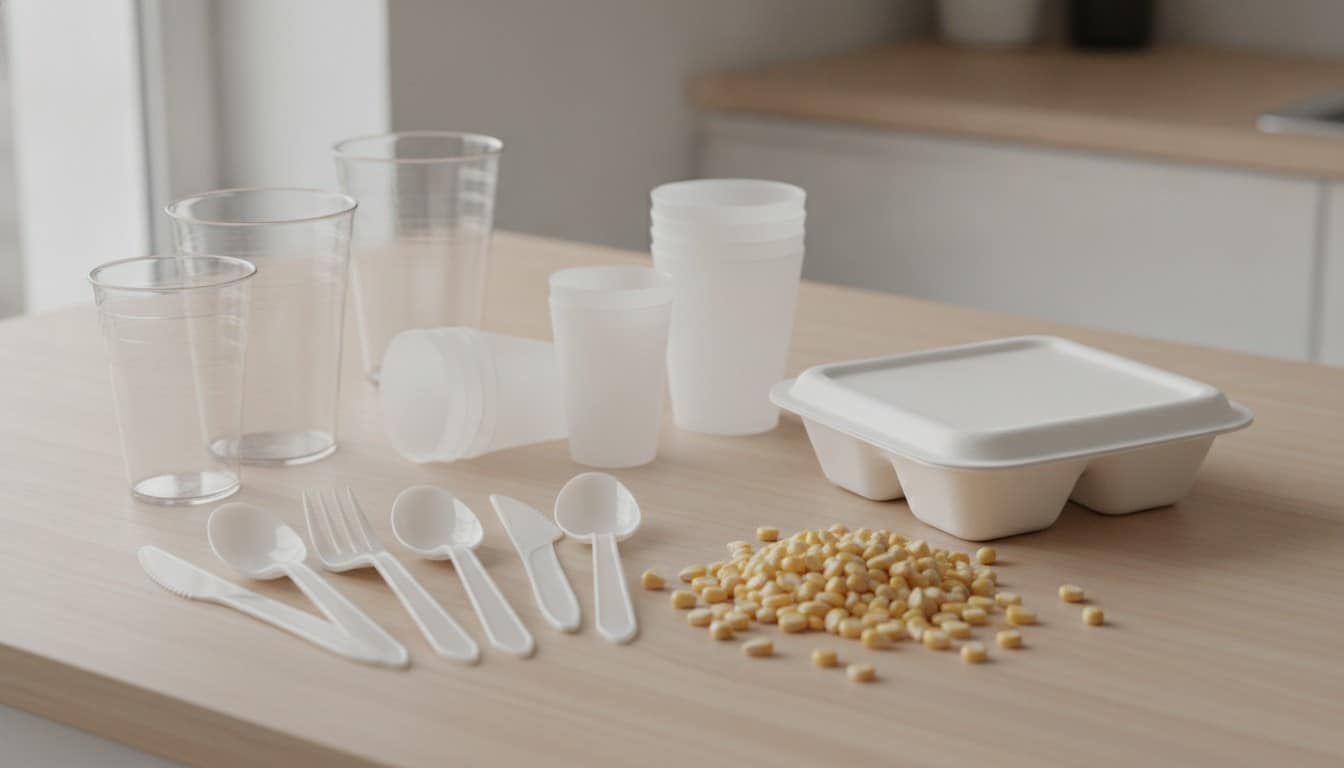
PLA is a bio-based plastic made by fermenting plant starch from corn or sugarcane. It can be molded into cups, trays, films, and rigid containers much like conventional plastic. However, PLA is slow to compost and generally requires industrial facilities at temperatures around 60°C. It rarely breaks down in home compost, soil, or the ocean, which limits its real-world benefits.
PHA (Polyhydroxyalkanoates)
PHA is produced by bacteria that ferment organic matter, including food waste. Unlike PLA, PHA can biodegrade in soil, marine environments, and home compost. It is more expensive to produce today, but its ability to break down in natural conditions makes it one of the most promising alternatives for single-use packaging. Researchers have also engineered bacteria to produce strong, biodegradable silk-based plastic alternatives.
PBAT (Polybutylene Adipate Terephthalate)
PBAT is a petroleum-derived but fully biodegradable polymer. It offers the flexibility and toughness of conventional plastic film while breaking down under industrial composting conditions. It is frequently blended with PLA or starch to make compostable mailers and flexible films.
Mycelium (Mushroom Packaging)
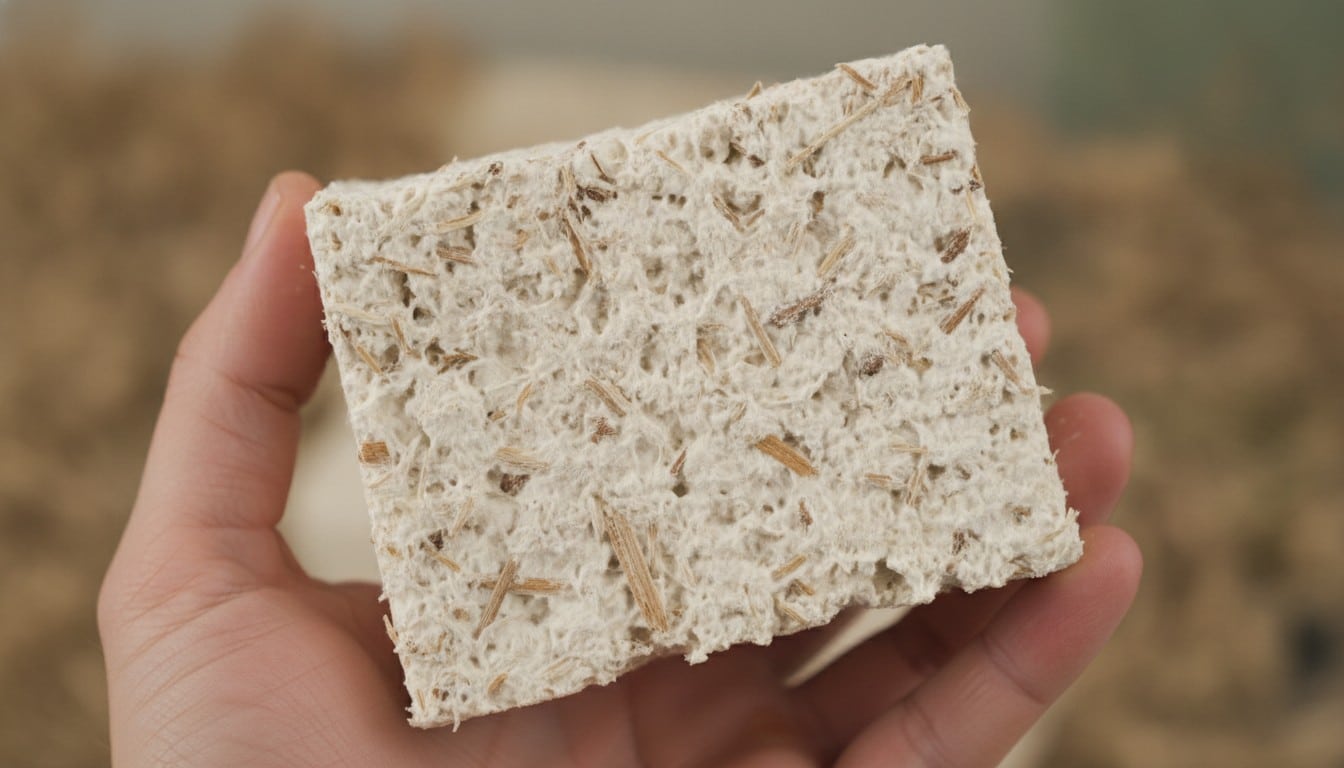
Mycelium is the root network of mushrooms. When grown around agricultural waste such as hemp hurd or corn husks, it forms a rigid, lightweight material that can replace expanded polystyrene foam. It decomposes completely in home compost within roughly 30 to 45 days and requires little energy to produce. Researchers have also developed plant-based alternatives to foam packaging from paper waste.
Seaweed-Based Films
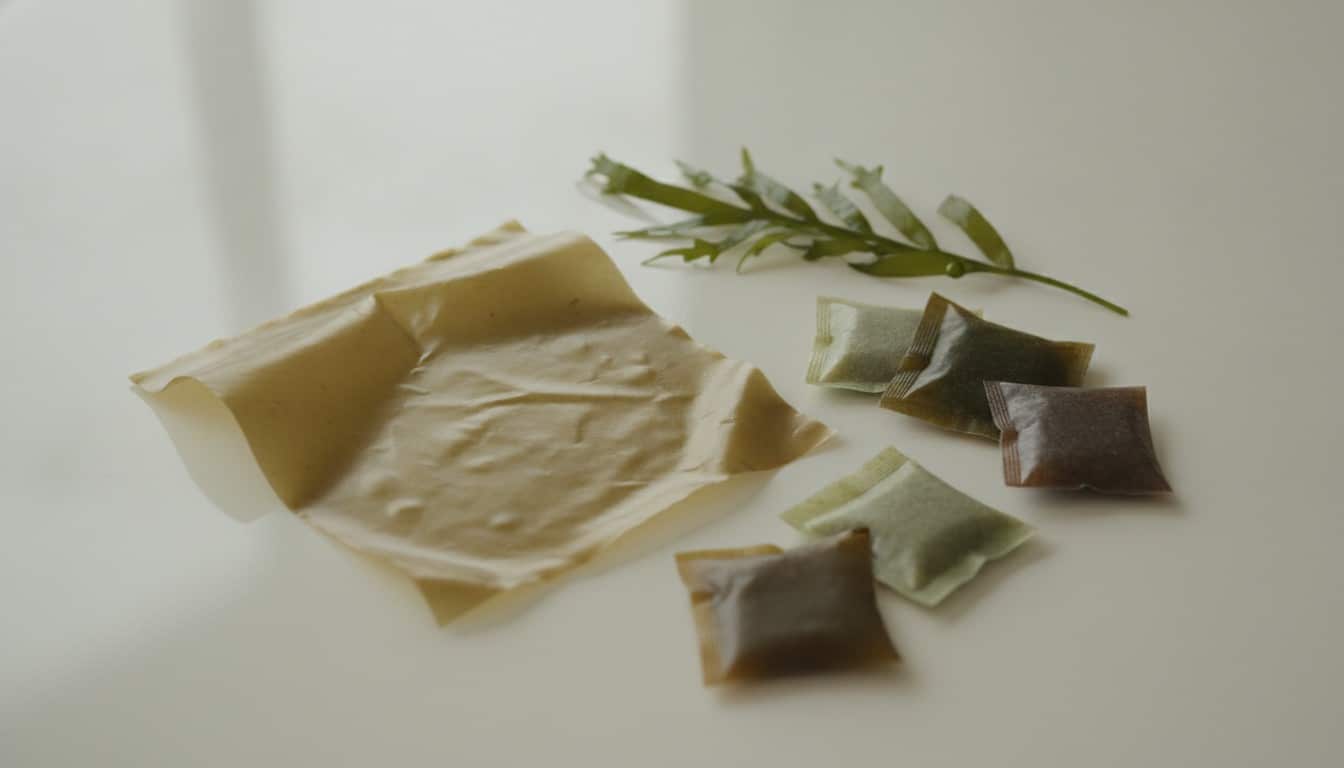
Seaweed and kelp can be processed into films, coatings, and sachets that biodegrade quickly, sometimes within weeks. Some seaweed packaging is even edible. It performs best for short shelf-life uses like sachets and produce wraps, though its moisture sensitivity currently limits broader food applications.
Bagasse
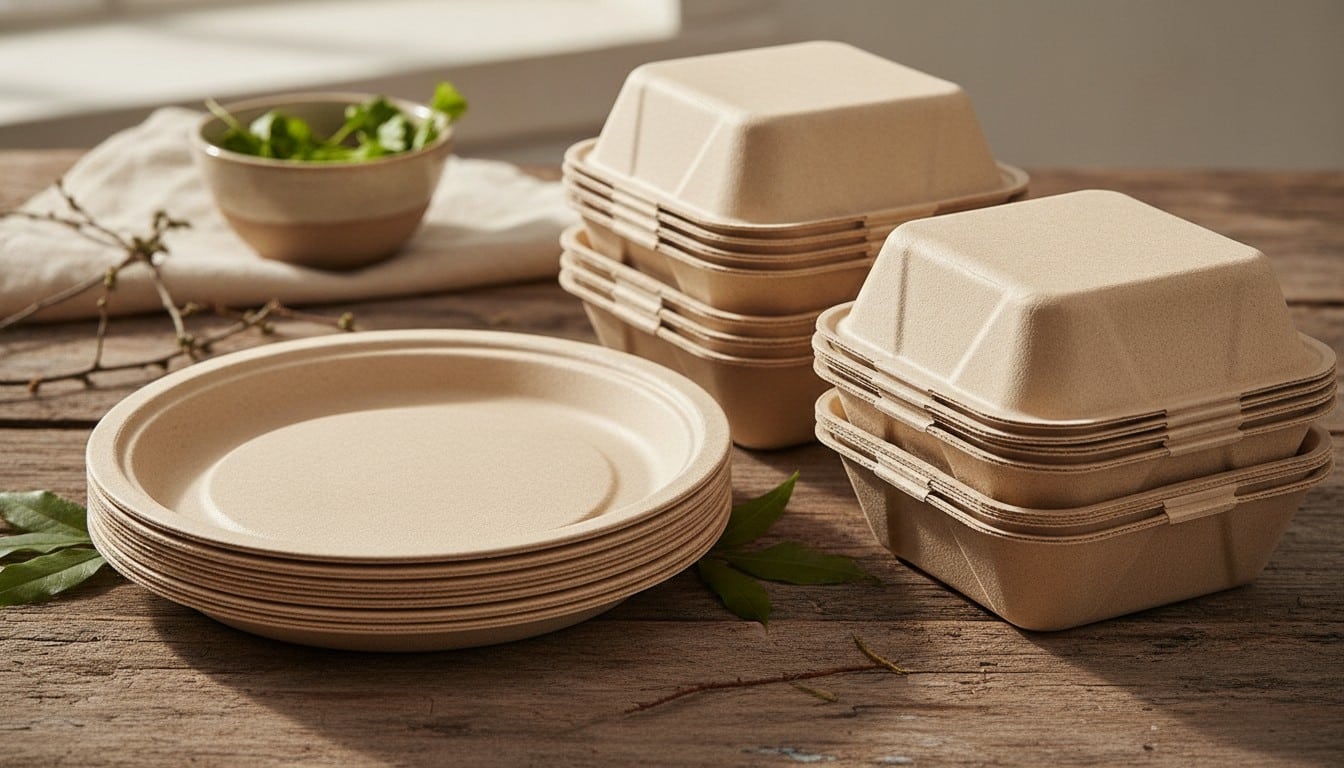
Bagasse is the fibrous pulp left over after sugarcane is crushed for juice. It is molded into plates, bowls, clamshells, and takeaway containers that can withstand hot food and liquids. Bagasse breaks down in home compost within roughly 30 to 90 days.
Paper, Cardboard, and Molded Fiber
Paper and cardboard remain the most widely recycled and compostable packaging materials. Corrugated cardboard provides cushioning for shipping, while molded fiber made from recycled paper can replace plastic trays and inserts. These materials break down within weeks to months and are easy for most consumers to recycle. Some manufacturers have also developed packaging made from grass fibers as another renewable, biodegradable option.
Starch-Based Packing Peanuts
Unlike polystyrene peanuts, starch-based loose fill is made from corn or wheat starch. It dissolves in water and can be added to home compost. It provides similar cushioning performance without the persistent plastic waste.
Benefits of Biodegradable Packaging
Biodegradable packaging offers several advantages over conventional plastic, though the benefits only materialize when the material is disposed of correctly.
- Reduces plastic waste. Biodegradable materials break down into natural substances instead of persisting in the environment for centuries.
- Lowers fossil fuel dependence. Many biodegradable materials come from renewable plant sources rather than petroleum.
- Supports soil health. Certified compostable packaging can return nutrients to soil when composted properly.
- Meets consumer demand. Shoppers increasingly expect brands to use sustainable packaging.
- Builds brand reputation. Eco-friendly packaging helps businesses stand out and attract environmentally conscious customers.
- Aids regulatory compliance. Biodegradable options help businesses stay ahead of single-use plastic bans.
Is Biodegradable Packaging Actually Better for the Environment?
The answer depends heavily on how and where a material is disposed of. Several issues complicate the picture.
Greenwashing is a major concern. Because “biodegradable” has no universal legal definition, some products are marketed as eco-friendly while breaking down only slowly or leaving harmful residues. A claim of “biodegradable” without a certification or timeframe should be treated with caution. Research even suggests that some biodegradable plastics may be worse than conventional plastics when they end up in the wrong disposal stream.
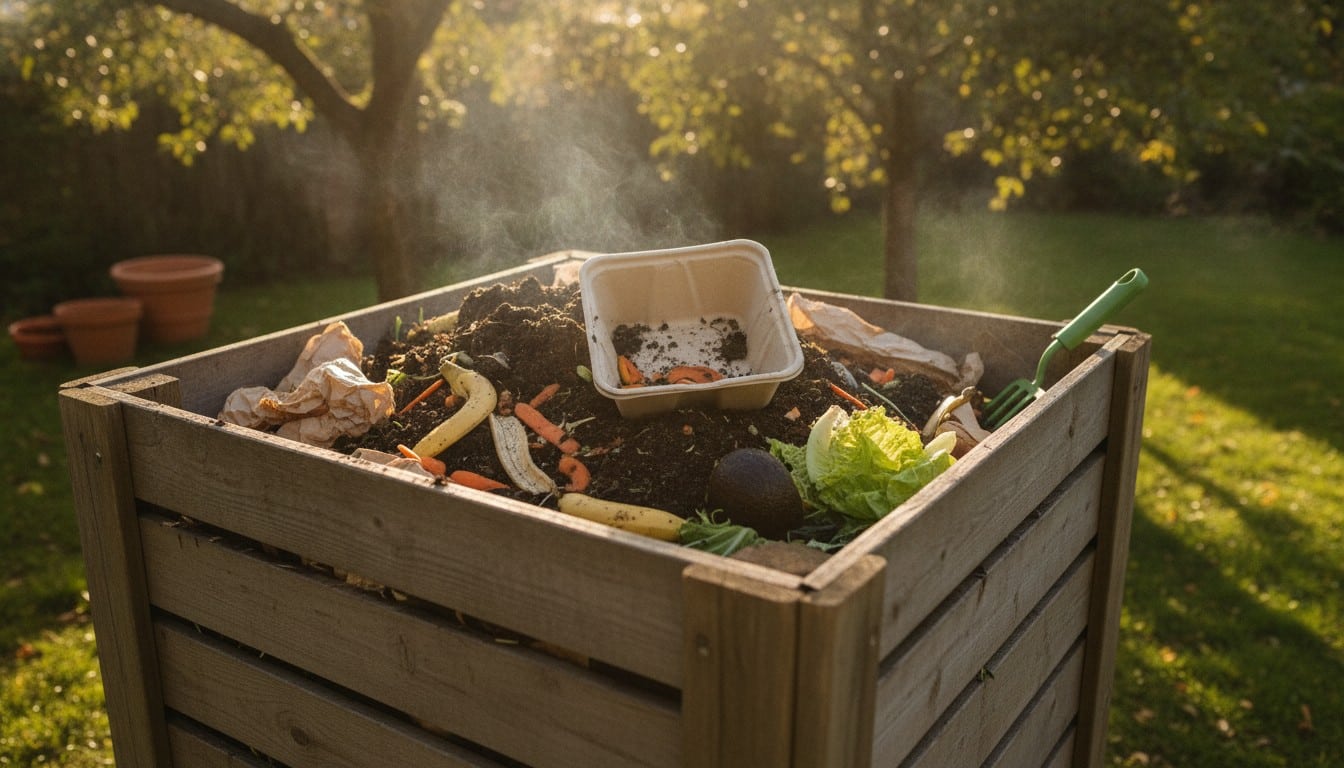
Industrial composting infrastructure is limited in many regions. A certified industrially compostable item still ends up in landfill if no facility accepts it. In a landfill, the anaerobic conditions can cause biodegradable material to release methane, a potent greenhouse gas.
Contamination is another risk. Biodegradable plastics that look like conventional plastic can contaminate recycling streams if consumers sort them incorrectly. PLA, for example, cannot be recycled with PET and can reduce the quality of recycled material.
Finally, some biodegradable plastics still fragment into microplastics under certain conditions, and the additives used in some materials may not fully degrade. The most sustainable choice is often to reduce packaging altogether or choose a material that fits your region’s actual waste infrastructure. For a closer look at how these materials fit into broader sustainability strategies, see Intelligent Living’s guide to biodegradable packaging and sustainable business practices.
To summarize, the main drawbacks to weigh include:
- Greenwashing risk. Vague “biodegradable” labels without certification or a timeframe.
- Limited composting access. Many regions lack industrial composting facilities.
- Methane release. Biodegradable material in landfills can emit methane, a greenhouse gas.
- Recycling contamination. Biodegradable plastics mixed with conventional plastic lower recycled quality.
- Microplastic risk. Some materials fragment rather than fully break down.
- Higher cost. Several biodegradable materials still cost more than conventional plastic.
How to Choose the Right Biodegradable Packaging
Selecting biodegradable packaging takes more than picking a material with the right label. The following checklist helps match a material to your actual needs.
- Match the material to your disposal path. If your region lacks industrial composting, choose home-compostable or widely recyclable options.
- Look for certification. Prioritize materials carrying BPI, TÜV OK Compost, EN 13432, or ASTM D6400 certification.
- Assess product requirements. Consider moisture barrier, shelf life, and temperature tolerance before switching materials.
- Compare total cost. Factor in disposal and recycling fees, not just the sticker price.
- Verify performance. Test strength and durability for your shipping and handling needs.
- Plan consumer education. Add clear disposal instructions so the packaging ends up in the right stream.
- Reduce first. Ask whether packaging can be eliminated or downsized before choosing any material.
Biodegradable Packaging in the Food Industry
Food packaging is the largest application for biodegradable materials. The challenge is that food packaging must protect freshness and act as a barrier to moisture and oxygen, requirements that many plant-based materials struggle to meet.
PLA and PBAT blends are common for flexible food films and compostable mailers, while bagasse and molded fiber dominate rigid takeaway containers. PHA is gaining attention for food contact uses because it degrades in natural environments and can be produced from food waste feedstocks. Researchers have also developed antimicrobial packaging that extends food shelf life, helping cut food waste emissions.
Consumer demand is a key driver. McKinsey research found that a majority of consumers are concerned about the environmental impact of packaging, with many saying they would pay more for sustainable options. Several major food brands have committed to replacing plastic packaging, and researchers continue to develop biodegradable plastic solutions made from nature.
Regulations and Certification Standards
Regulation is beginning to force clarity. The European Union’s Packaging and Packaging Waste Regulation (PPWR) entered into force in August 2026. By 12 February 2028, specific formats, including tea bags, coffee pods, and sticky labels on fruit and vegetables, must be industrially compostable to be placed on the EU market.
Elsewhere, standards such as EN 13432, ASTM D6400, and certifications like BPI and TÜV OK Compost provide the benchmarks for legitimate claims. When evaluating packaging, look for a recognized certification logo rather than a vague “biodegradable” label.
Frequently Asked Questions
What is the most environmentally friendly packaging?
The answer depends on the use case and local infrastructure. For shipping, recycled corrugated cardboard and molded fiber are among the most practical options because they are widely recycled and compostable. For single-use food items, home-compostable materials like bagasse or PHA avoid reliance on industrial facilities.
How long does biodegradable packaging take to decompose?
Timelines vary widely. Paper and cardboard break down within weeks to months, mycelium in about 30 to 45 days, and bagasse within 30 to 90 days. PLA requires industrial conditions and takes roughly 90 to 180 days. Uncertified “biodegradable” materials may take much longer.
Is biodegradable packaging recyclable?
Generally not. Most biodegradable plastics cannot be recycled with conventional plastic and can contaminate recycling streams. Paper and cardboard, however, are both recyclable and compostable. Check with your local facility before placing any biodegradable plastic in recycling.
How can I tell if packaging is truly compostable?
Look for a certification logo such as BPI or TÜV OK Compost, or a claim referencing EN 13432 or ASTM D6400. A vague “biodegradable” label without a standard or timeframe is not a reliable indicator.
What are the downsides of biodegradable packaging?
Common downsides include higher cost for some materials, limited industrial composting access, the risk of greenwashing, methane release in landfills, and contamination of recycling streams. Some materials also offer weaker moisture or oxygen barriers than conventional plastic.
Is biodegradable packaging more expensive?
It depends on the material and volume. Paper and cardboard are often comparable to or cheaper than plastic. Newer materials such as PHA and mycelium can cost more because production is not yet at scale. Prices continue to fall as demand grows.
What is the difference between biodegradable and recyclable packaging?
Recyclable packaging can be collected, processed, and turned into new products, keeping the material in use. Biodegradable packaging breaks down into natural substances instead. The two are not interchangeable, and most biodegradable plastics should not be placed in recycling bins because they contaminate the stream.
The Future of Biodegradable Packaging
Biodegradable packaging is evolving quickly. Three trends are likely to shape the next several years.
- Better materials. PHA production costs are falling as manufacturing scales, and seaweed-based films are moving from prototypes to commercial products.
- Stricter regulation. The EU’s PPWR timeline and similar rules elsewhere will push more packaging formats toward compostability and clearer labeling.
- Smarter disposal. Expanded industrial composting capacity and clearer consumer instructions will determine how much of this packaging actually gets composted.
The market’s growth from roughly USD 10.3 billion in 2025 toward USD 22.4 billion by 2036 reflects this momentum. But the real test is not production volume. It is whether the materials end up in the right disposal stream and genuinely return to the earth without harm.
Conclusion
Biodegradable packaging is a meaningful step toward reducing plastic waste, but it is not a single solution. The term spans materials with very different environmental outcomes, from home-compostable mycelium and bagasse to PLA that only breaks down in specialized facilities.
Choosing well means looking past the label. Prioritize certified compostable materials, match the material to your local waste infrastructure, and remember that reducing packaging in the first place often delivers the greatest benefit. With clearer regulation and better materials such as PHA and seaweed films on the horizon, the gap between promise and performance is closing.


