
Environmental sustainability is the practice of meeting today’s needs without exhausting the natural resources that future generations will depend on. It sits at the center of the global response to climate change, pollution, and biodiversity loss, and it now shapes everything from household habits to corporate strategy and public policy. This guide explains what the term actually means, the principles behind it, the 7 R’s that put it into practice, and the concrete examples, careers, and business strategies built around it.
What Is Environmental Sustainability?
The most widely used definition of sustainability comes from the United Nations: “meeting the needs of the present without compromising the ability of future generations to meet their own needs.” This definition, first popularized by the Brundtland Commission in 1987, remains the foundation for most of the field.
Environmental sustainability applies that idea specifically to the natural world. It means managing natural resources responsibly so that clean air, fresh water, fertile soil, and healthy ecosystems remain available over time. The U.S. Environmental Protection Agency frames the goal as creating “conditions under which humans and nature can exist in productive harmony to support present and future generations.” The EPA’s definition captures the balance between human well-being and ecological health.
Although the term began with a purely ecological focus, it has expanded to overlap with the broader idea of sustainable development. Today environmental sustainability is understood as one of three interconnected pillars, alongside social sustainability and economic sustainability. In practice the three cannot be separated: a policy that protects forests but costs people their livelihoods, for example, is rarely sustainable for long.
Why Is Environmental Sustainability Important?
The stakes are measurable. In 2025, global energy-related carbon dioxide emissions reached a new record of about 38.4 billion tonnes, while atmospheric CO2 concentrations climbed to roughly 427 parts per million, about 50% above pre-industrial levels, according to the International Energy Agency.
Human activity is now pushing several of Earth’s core systems beyond safe limits. Scientists track this through the planetary boundaries framework, which identifies nine systems that keep the planet stable, including climate change, biodiversity loss, freshwater use, and ocean acidification. A 2023 update to the framework concluded that several of these boundaries have already been crossed.
The consequences are not abstract. The World Health Organization estimates that more than 12 million people die each year because they live or work in unhealthy environments, from polluted air and water to exposure to toxic materials. Meanwhile, roughly 2.1 billion people, about one in four worldwide, still lack access to safe drinking water.
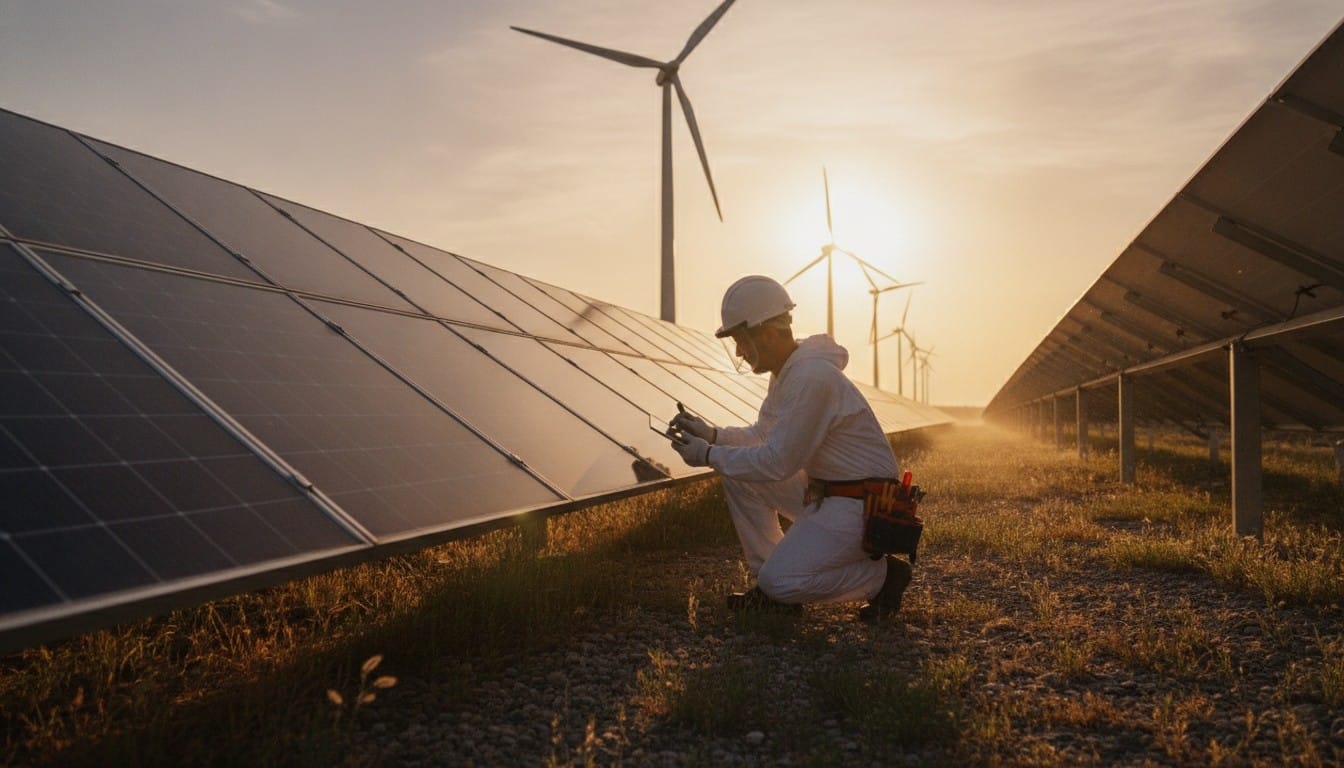
The same data shows why action matters. Renewable energy expanded so quickly that by the end of 2025 it reached 49.4% of global electricity capacity, up from 46.3% a year earlier, according to the International Renewable Energy Agency. Solar, wind, nuclear power, electric vehicles, and heat pumps together avoided about 3 billion tonnes of CO2 emissions in 2025. Environmental sustainability matters because it is the difference between continuing to cross those limits and pulling the planet back within them.
The Four Principles of Environmental Sustainability
Most sustainability frameworks rest on four recurring principles. They help governments, businesses, and individuals weigh whether a decision is genuinely sustainable.
- Ecological integrity: Protecting the health and function of natural systems, from soil and water to biodiversity, so ecosystems can keep providing clean air, food, and climate regulation.
- Social equity: Distributing environmental benefits and burdens fairly, so no community, especially an already-marginalized one, carries a disproportionate share of pollution or resource loss.
- Economic efficiency: Using resources in ways that generate value without waste, supporting prosperity without drawing down natural capital faster than it can regenerate.
- Intergenerational equity: Making decisions today that preserve options for future generations, the principle at the heart of the UN definition.
These four principles overlap with, and are sometimes organized as, the familiar “three pillars” of sustainability: environmental, social, and economic. The fourth principle, intergenerational equity, is what ties the other three to a longer time horizon.
The 7 R’s of Environmental Sustainability
The 7 R’s translate abstract principles into everyday behavior. They are often taught as a hierarchy, from avoiding waste in the first place to recovering value at the end of a product’s life.
| R | What It Means | Example |
|---|---|---|
| Rethink | Question whether you need something at all | Choosing a repair over a new purchase |
| Refuse | Decline items that create unnecessary waste | Saying no to single-use plastics |
| Reduce | Use less of what you do need | Cutting food waste and energy use |
| Reuse | Keep items in service instead of discarding them | Reusable bottles, bags, and containers |
| Repair | Fix broken items instead of replacing them | Mending clothing or electronics |
| Recycle | Convert waste into new materials | Separating paper, glass, and metal |
| Rot | Return organic waste to the soil | Composting food scraps |
The order matters. Recycling sits near the bottom because it still consumes energy and resources, whereas rethinking and refusing prevent waste from being created at all.
Real-World Examples of Environmental Sustainability
Environmental sustainability shows up across sectors, often in overlapping ways. Five of the clearest examples include the following.
- 1. Renewable energy: The rapid build-out of solar and wind power, which reached a combined capacity of more than 4,100 gigawatts by the end of 2025, displaces fossil fuels and cuts emissions.
- 2. A circular economy: Designing products to be repaired, reused, and recycled keeps materials in use. Still, only about 6.9% of materials entering the global economy are recycled, according to the Circularity Gap Report 2026, so this is an area with enormous room to grow.
- 3. Sustainable agriculture: Techniques such as crop rotation, cover cropping, and reduced chemical use protect soil health, water quality, and biodiversity.
- 4. Water conservation: Efficient irrigation, wastewater treatment, and reduced pollution preserve finite freshwater supplies for people and ecosystems.
- 5. Green building and transport: Energy-efficient construction, public transit, and electrified vehicles lower the footprint of the places people live and the ways they move.
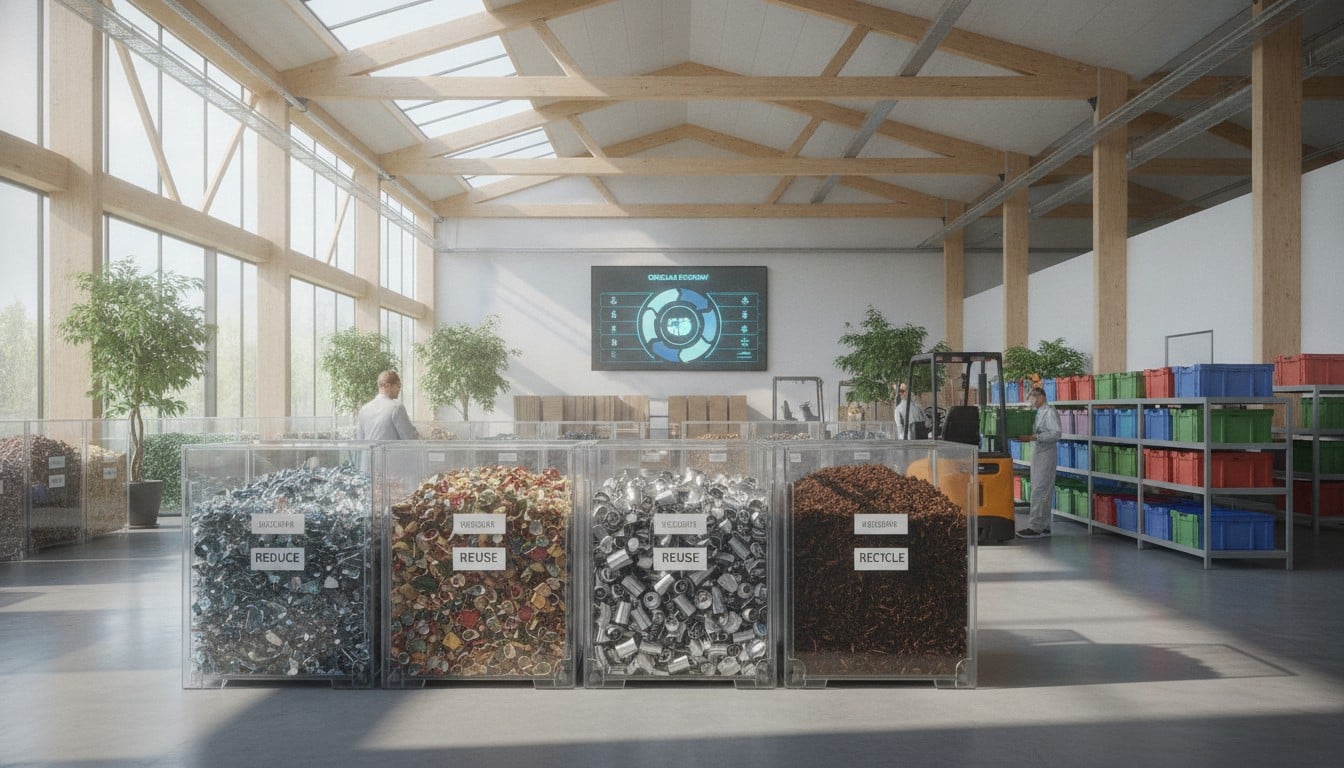
On an individual level, these broad shifts translate into everyday habits such as eating more plant-based meals, using reusable products, and choosing low-emission transport. See our guide to living a more sustainable lifestyle for a practical starting point.
Environmental Sustainability in Business
Businesses are major drivers of both environmental harm and environmental progress. Corporate sustainability strategies now commonly target emissions reductions, responsible sourcing, and waste elimination across supply chains.

Many companies frame this work around ESG (environmental, social, and governance) reporting, which helps investors and customers assess performance. Others adopt circular business models, such as product-as-a-service, repair programs, and take-back schemes, that decouple revenue from raw material consumption.
The business case has strengthened as regulation and consumer expectations have grown. A structured plan helps organizations turn broad goals into measurable results; see our guide to creating a sustainability strategy for the step-by-step approach.
Careers and Education in Environmental Sustainability
As the field has grown, so has demand for skilled workers. Careers span environmental science, renewable energy, sustainable agriculture, green building, policy, and corporate roles such as sustainability managers and analysts.
Common entry points include a bachelor’s degree in environmental science or a related field, a sustainability-focused major, or a graduate qualification such as an MBA with a sustainability concentration. Professional certifications in areas like energy auditing, ESG reporting, and sustainable design can strengthen credentials without a full degree.
Government data projects strong growth in many environmental occupations, driven by the energy transition and rising investment in clean infrastructure. For those weighing a career shift, the field offers pathways from technical roles in engineering and data analysis to strategic and communications positions.
Frequently Asked Questions
What is the difference between environmental sustainability and sustainable development?
Sustainable development is the broader goal of improving human well-being in ways that balance environmental, social, and economic needs. Environmental sustainability is one of its three pillars, focused specifically on protecting natural systems and resources.
What are the three pillars of sustainability?
The three pillars are environmental, social, and economic sustainability, sometimes drawn as overlapping circles. Sustainable development sits where all three overlap.
Is environmental sustainability the same as “going green” or “eco-friendly”?
The terms overlap. “Going green” and “eco-friendly” usually describe individual products or habits that reduce environmental harm, while environmental sustainability refers to the larger, long-term goal of keeping natural systems healthy for future generations.
How can I practice environmental sustainability at home?
Start with the 7 R’s: rethink purchases, refuse single-use items, reduce energy and water use, reuse what you can, repair instead of replace, recycle correctly, and compost organic waste. See our eco-friendly lifestyle hacks for more ideas.
Why are the 7 R’s ordered the way they are?
They are arranged roughly from most to least impactful. Preventing waste through rethinking, refusing, and reducing saves more resources than recycling, which still requires energy and processing.
Conclusion
Environmental sustainability is not a single action but a continuous commitment to living within the planet’s limits. The definition, principles, and practices covered here, from the four principles to the 7 R’s, all point in the same direction: using natural resources in ways that preserve them for the future. With renewable energy approaching half of global electricity capacity and circular-economy thinking spreading through business and policy, the tools to get there already exist. What remains is the collective will to apply them at scale.

