
Arteries stiffen with age, and that stiffening predicts a surprising amount about how the rest of the body fares. This explainer covers the biology of vascular aging in plain English, why researchers increasingly describe it as a breakdown in cellular communication, and what the Russian peptide bioregulator hypothesis does and does not claim about blood vessels.
The quiet measurement
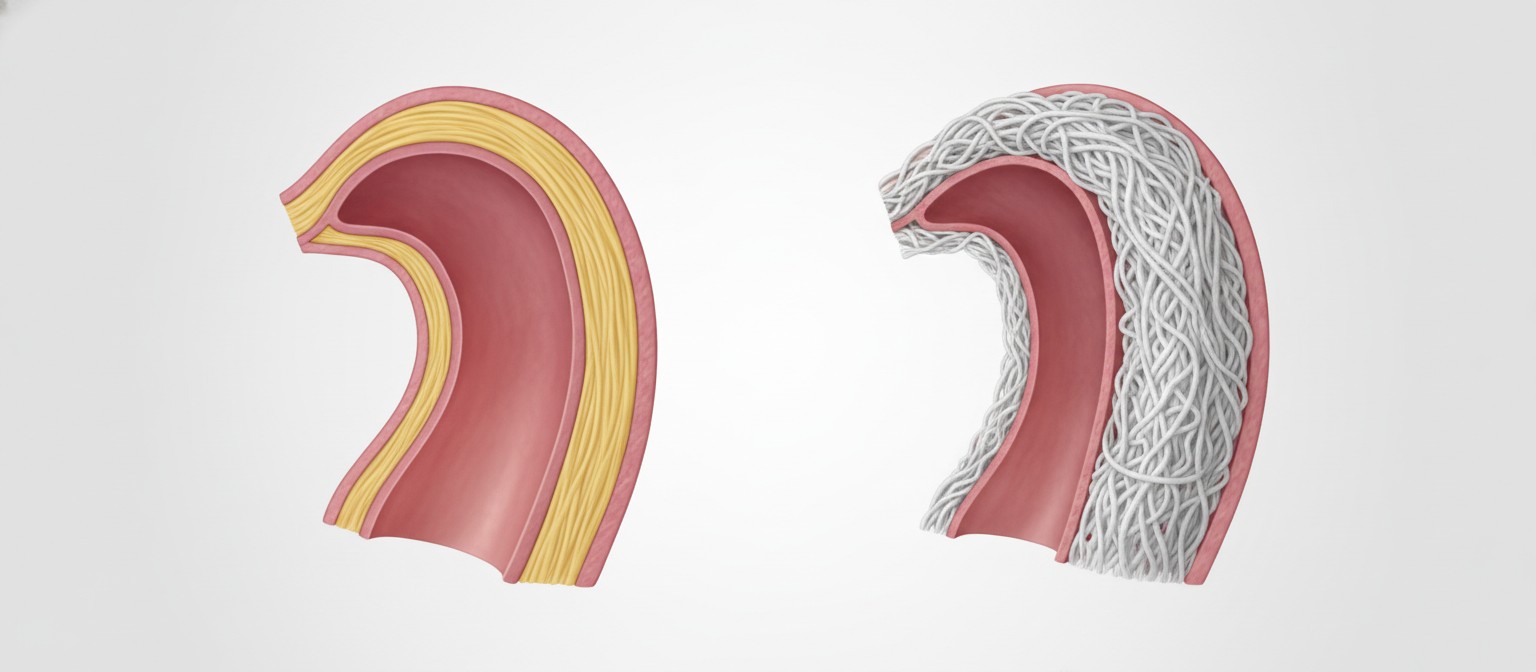
If you wanted one number that summarized how a body is aging, a cardiologist might point you to arterial stiffness: how much the walls of the large arteries have lost their elastic give. Young arteries stretch with each heartbeat and recoil; older ones transmit the pulse more like a rigid pipe. The change is gradual, silent, and measurable, and a 2025 review in Signal Transduction and Targeted Therapy lays out what drives it: changes in the elastin and collagen scaffolding of the vessel wall, inflammation, oxidative stress, and the behavior of the cells lining the vessel.
How it is measured
The standard clinical measure is pulse wave velocity: the speed at which the pressure wave from each heartbeat travels along the arterial tree. Stiffer walls transmit it faster. It can be measured in a few minutes with cuffs or a small probe, it rises predictably with age, and it tracks the risk of cardiovascular events independently of ordinary blood pressure readings, which is why researchers treat it as a kind of vascular age.
Why it is now described as a communication problem
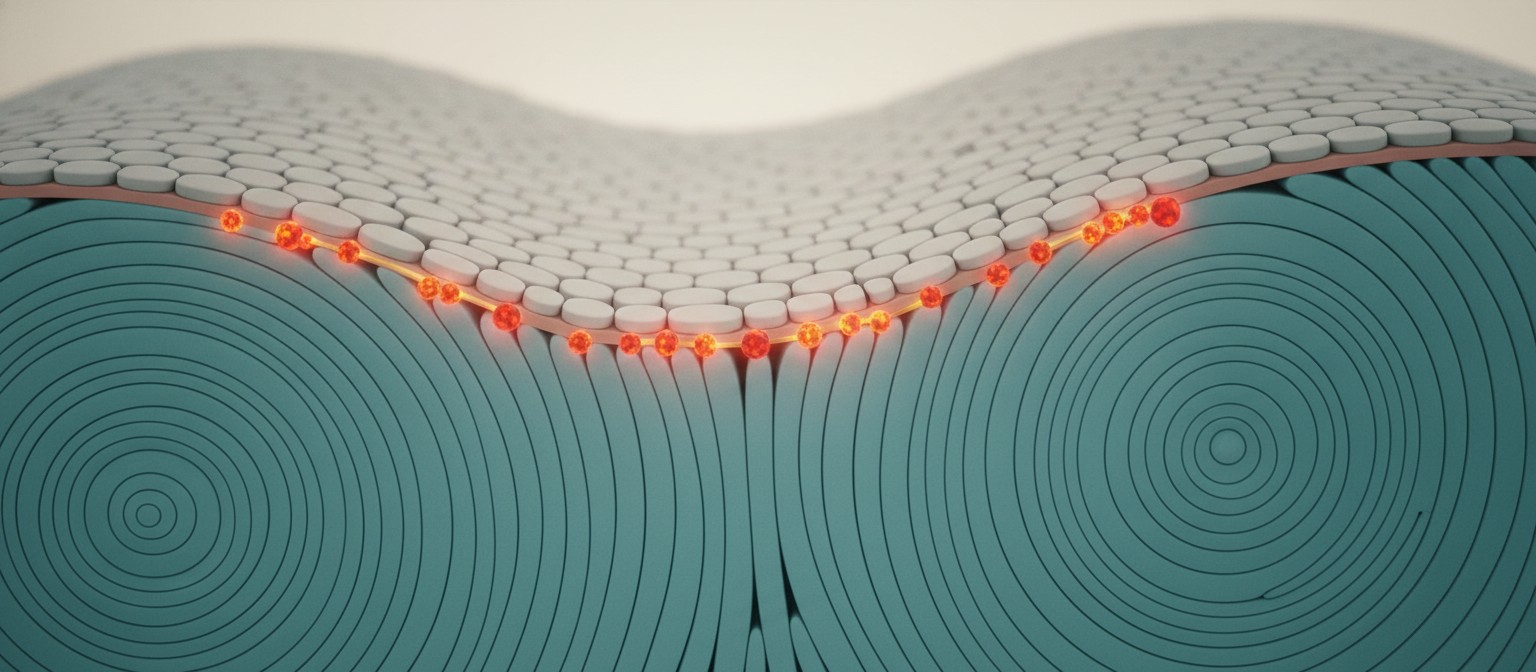
For a long time vascular aging was treated as wear and tear. The more recent framing is that it is also a signaling failure. The endothelium, the single-cell lining of every blood vessel, is a chemical conversation partner: it releases short-lived messengers that tell the muscle layer when to relax, tell platelets when not to stick, and tell immune cells whether to come in. With age those messages become noisier and the responses weaker. The same logic turns up in unexpected places; it is one reason gum recession with age is driven more by tissue signaling and habits than by the calendar alone.
Peptides are the messengers
Many of those messengers are peptides: short chains of amino acids, far smaller than structural proteins. Peptides are made quickly, act locally, and are cleared fast, which suits time-sensitive control of something like vessel tone. This is settled physiology, and it is the reason peptides are studied in cardiovascular research entirely independently of any supplement.
The bioregulator hypothesis
One specific strand of research comes from a group in St. Petersburg, Russia, led by Vladimir Khavinson, which has argued since the 1980s that each tissue produces its own very short peptides, two to four amino acids long, that take part in regulating gene activity in that tissue. Blood vessels were among the tissues the group worked on, and the manufacturer’s vessel-related product sold in the United States is named Ventfort A-3 blood vessel peptide bioregulator, a dietary supplement.
The accurate description of the evidence is “hypothesis under investigation”: cell-culture studies, animal work and small human studies, most from a single research network and much of it published in Russian, with no large independent trials. An interested reader can see the appeal of the idea: the concept is scientifically interesting, but the clinical evidence remains preliminary.
What actually moves the number
The interventions with the strongest evidence for slowing arterial stiffening are unglamorous: not smoking, regular aerobic exercise, blood pressure kept in range, a diet low in salt and heavy in plants, adequate sleep and, where a clinician recommends it, treatment of blood pressure and lipids. Everything else, including the peptide research, sits on top of that list, never in place of it.
This article is for educational purposes only and is not medical advice. It does not recommend the use of any product. Dietary supplements are not intended to diagnose, treat, cure, or prevent any disease. Consult a qualified health professional about your individual situation.


