Plastic in the ocean is a big problem; everybody should know this by now. However, that knowledge doesn’t stop the world from using plastic. This has motivated inventors to come up with different ways to make biodegradable plastic, or bioplastic, from natural resources. Listed below are nine various bioplastic innovations that could save the world’s oceans and marine life.
Starch And Cellulose
A team from Japan’s Osaka University developed an alternative type of transparent plastic made from and starch and cellulose nanofibers, both of which were obtained from plants, including corn, tubers, and potatoes. The team, led by Prof. Hiroshi Uyama and Assoc. Prof. Taka-Aki Asoh, used a proprietary production process, resulting in an excellent water-resistant, durable, and very biodegradable plastic.
Asoh said:
We have great expectations that our material will help solve the growing global problem of marine debris accumulation and have a major societal impact.

Banana Waste
Researchers at the University of New South Wales (UNSW), transformed banana Agri-waste from the banana industry into non-toxic, biodegradable, bioplastic.
Jayashree Arcot, from UNSW, explained:
What makes the banana-growing business particularly wasteful compared to other fruit crops is the fact that the plant dies after each harvest. We were particularly interested in the pseudostems – basically the layered, fleshy trunk of the plant which is cut down after each harvest and mostly discarded on the field. Some of it is used for textiles, some as compost, but other than that, it’s a huge waste.
To bring value to all that waste, the team, led by Prof. Martina Stenzel and Assoc. Prof. Jayashree developed a new kind of recycling process, with successful results. First, the team chopped up the pseudostem into pieces, then dried those pieces in an oven at a low temperature. The baked bits were then crushed into a fine powder and washed via soft chemical treatment. This treatment separates a material called nanocellulose from the rest of the powder. Sheets of plastic are made from that nanocellulose.
When the process is complete, the resulting material has a consistency similar to baking paper and could be used in a variety of food packaging or plastic bags. It can be recycled three times without losing its quality, and when it’s tossed in the soil, it decomposes.

Algae
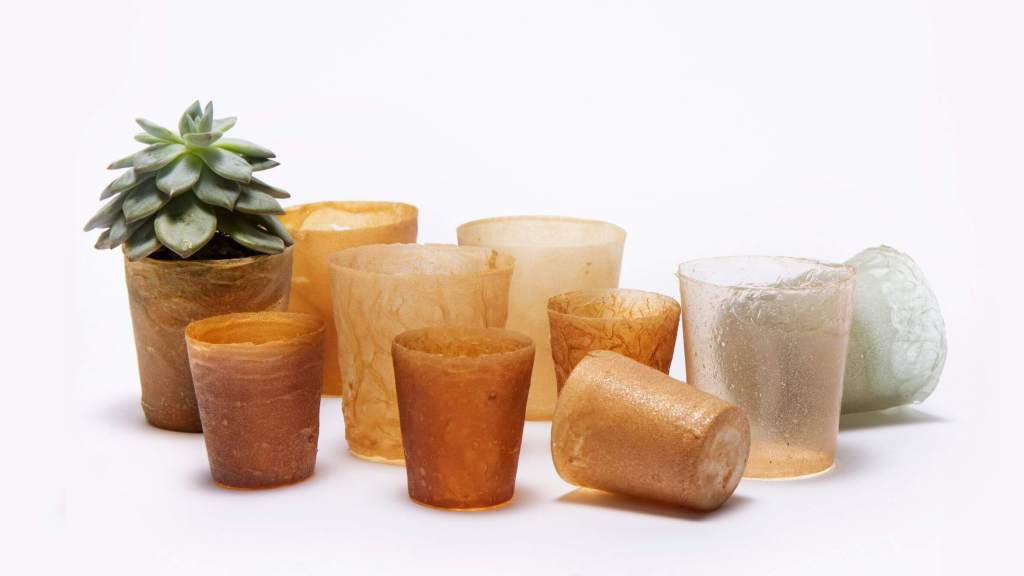
Chile-based designer Margarita Talep developed sustainable, eco-friendly, packaging by using raw material extracted from algae. Not only does the material include only natural matter, but even the dyes used to color it too. Talep’s plastic comes in a rainbow of hues, all made from colors that are extracted from the skins of fruits and vegetables such as blueberries, purple cabbage, beetroot, and carrot. These natural dyes are added modestly, just enough to add a soothing color.
The basic mixture for the bioplastic itself is made up of a polymer, a plasticizer, and an additive. The amounts of each ingredient vary depending on the desired consistency of the final product. The main ingredient is the polymer, which is agar, a jelly-like polysaccharide substance that is extracted from red algae by boiling. The plasticizer is water, and an additive is a natural dye.
Depending on the thickness of the material and the temperature of the soil, Talep’s algae packaging is designed to biodegrade in around two to four months.

Cotton Waste
A team of Deakin University textile and fiber scientists, led by Dr. Naebe, developed bioplastic by repurposing cotton gin trash – the seeds, stems, short fibers, and other waste by-products left behind from the ginning process used to separate cotton fibers.
Dr. Naebe said:
About 29 million tons of cotton lint is produced each year, but up to a third of that ends up as cotton gin trash, where it’s then sent to landfill or burned, representing a major environmental impact and lost material value. Adding value to this waste product will give cotton growers and farmers an additional income stream, while also offering a sustainable alternative to harmful synthetic plastics.
Their achievement in transforming cotton gin trash to bioplastic is part of a project which they have been working on for over 18 months. Here’s how they did it:
- They dissolved the cotton leftovers using environmentally-friendly chemicals.
- Then, they re-cast the recovered biopolymer into a useable bioplastic film.
- What they ended up with was a material that is suitable for a range of applications, such as bale wrap, fertilizer, and cottonseed packaging.

Seafood Shells Waste
Six to eight million metric tons of shrimp, crab, and lobster shell waste gets generated by the food industry every year. Those claws and legs largely get dumped back into the ocean or landfills, depending on the region. However, these shells are not garbage! Langoustine (Nephrops norvegicus) claws are a rich source of chitin and chitosan – both are biodegradable materials with possible applications in eco-friendly food packaging and beyond.
Scientists have been working on developing an efficient and cost-effective method to make use of abundant shell waste resources, while at the same time tackling the world’s plastic pollution crisis.
Crustaceans’ hardy shells contain chitin, a material that, along with its derivative chitosan, offers many of plastic’s desirable properties minus its destructive quality; it takes only weeks or months to biodegrade, rather than centuries. The hard part is getting enough pure chitin and chitosan from the shells to make bio-based “plastic” in cost-effective ways. For now, getting the chitosan is also a complicated process that requires a lot of sophisticated technology.
Sugar Cane Waste
Natupharma, a supplier of sports nutrition, food supplements, pet nutrition, and ECO packaging, developed a new type of recyclable plastic called ”green plastic” for pharmaceutical packaging.
The alternative plastic is made by combining sugarcane with a biodegradable plastic additive. When processed in a certain way, sugarcane can be transformed into a commercial material that is both recyclable and CO2 neutral. The ”green plastic” degrades in 10 years and, therefore, is an ideal solution for pharmaceutical industries worldwide.

Fish Scale And Skin Waste
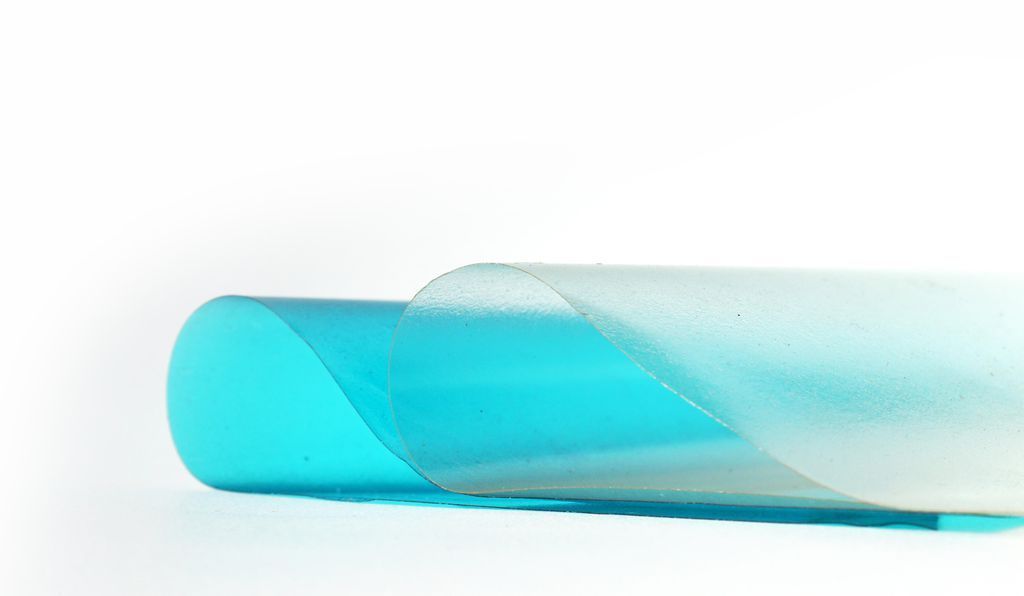
Lucy Hughes is an eco-inventor, graduate from Sussex, who won the James Dyson Award’s international prize for her invention of a biodegradable and compostable plastic made from fish waste, called ”MarinaTex.” She developed this transparent film from fish waste in the hopes of fighting plastic pollution and food waste at the same time.
Hughes used the waste products of the fishing industry, specifically the fish scales and skin. It’s the proteins in them that she needs. After roughly 100 attempts, she perfected the recipe. Much of the work to produce the plastic was done in her own kitchen!
The final product is a compostable substitute for single-use plastic that solves two problems at the same time: the pervasiveness of single-use plastic and fish waste.
Prickly Pear Cactus Juice
Sandra Pascoe Ortiz, a researcher, and professor at the University of Valle de Atemajac in Zapopan, Mexico, developed biodegradable plastic from the juice of the prickly pear. It does not require crude oil like traditional plastics, and it can disappear in three months outdoors or just two weeks if in contact with water.
How It’s Made:
- First, they extract the juice. The raw material of this bioplastic comes from the thickest liquid found in the cactus juice.
- Then, other natural substances such as glycerin and natural proteins are added, and, in some cases, natural dyes are used as well to improve the appearance and consistency of the product.

Walnuts
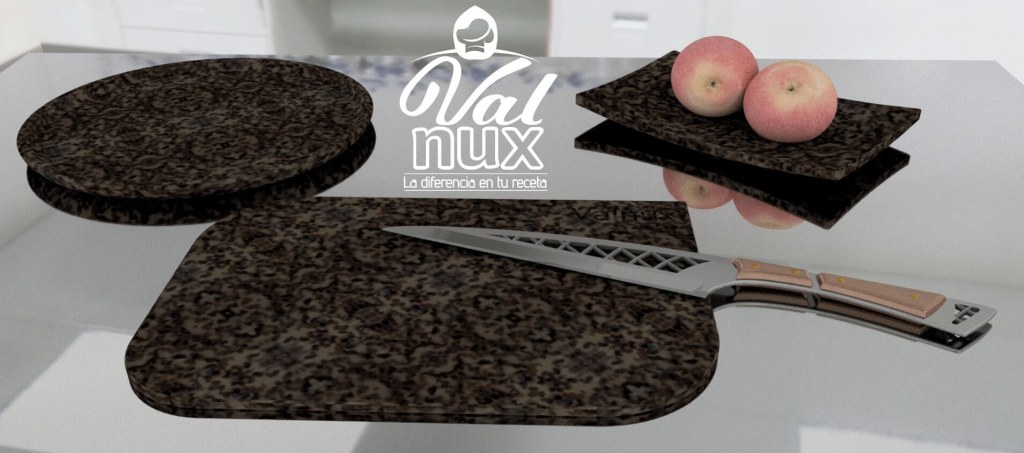
The chile-based startup, Valnux, developed an alternative to plastic using walnut shells. Product design engineer Patricia Olave and chemical engineer Natalia Valencia founded Valnux to reduce waste in Chile. At the same time, they’re providing a unique solution to the global plastic pollution crisis.
To make the material, they grind up the shells and put them through a process used by the plastics industry. The result is a biodegradable thermoplastic that also possesses naturally occurring antibacterial and antimicrobial properties.