
Key Takeaways
- Reserve transportation early for school breaks, holiday weekends, and busy Anaheim travel periods.
- Select a vehicle based on passengers, luggage, strollers, and child-seat needs, not passenger count alone.
- Share complete flight and pickup details before the day of travel.
- Build extra time into the schedule for traffic, airport congestion, baggage claim, and security.
- Know how transportation changes, cancellations, and flight delays will be handled.
Family vacations in Anaheim, California, often begin or end with an airport ride, whether the itinerary includes Disneyland Resort, Orange County beaches, sporting events, or a hotel stay near the convention center. Planning transportation early helps parents avoid making rushed decisions while managing children, bags, strollers, and flight schedules. Families considering an OC car service can use the same preparation steps they would use for any pre-arranged airport ride.
Airport transportation is not only about getting from one address to another. A successful plan accounts for the airport, terminal, flight timing, traffic conditions, vehicle space, child-restraint needs, and a clear backup plan if the schedule changes. A few details confirmed before travel day can make arrival and departure days much easier for everyone.
Why Airport Transportation Planning Matters
Family airport travel has more moving parts than a solo trip. One adult may be checking flight updates while another manages snacks, carry-ons, and a child who is tired before the ride has even started. In Anaheim, families may travel through John Wayne Airport, Long Beach Airport, Los Angeles International Airport, or another Southern California airport, each with its own pickup areas and driving routes. Planning removes uncertainty when the day is already busy.
Start With the Full Travel Itinerary
Begin transportation planning after flights and lodging are confirmed. Gather the airline, flight number, terminal, departure or arrival time, hotel or home address, number of adults and children, and expected bag count. Also note large items such as strollers, wheelchairs, travel cribs, sports equipment, or theme-park souvenirs. These details help prevent a vehicle choice that looks adequate on paper but feels cramped in real life.
Choose the Right Vehicle
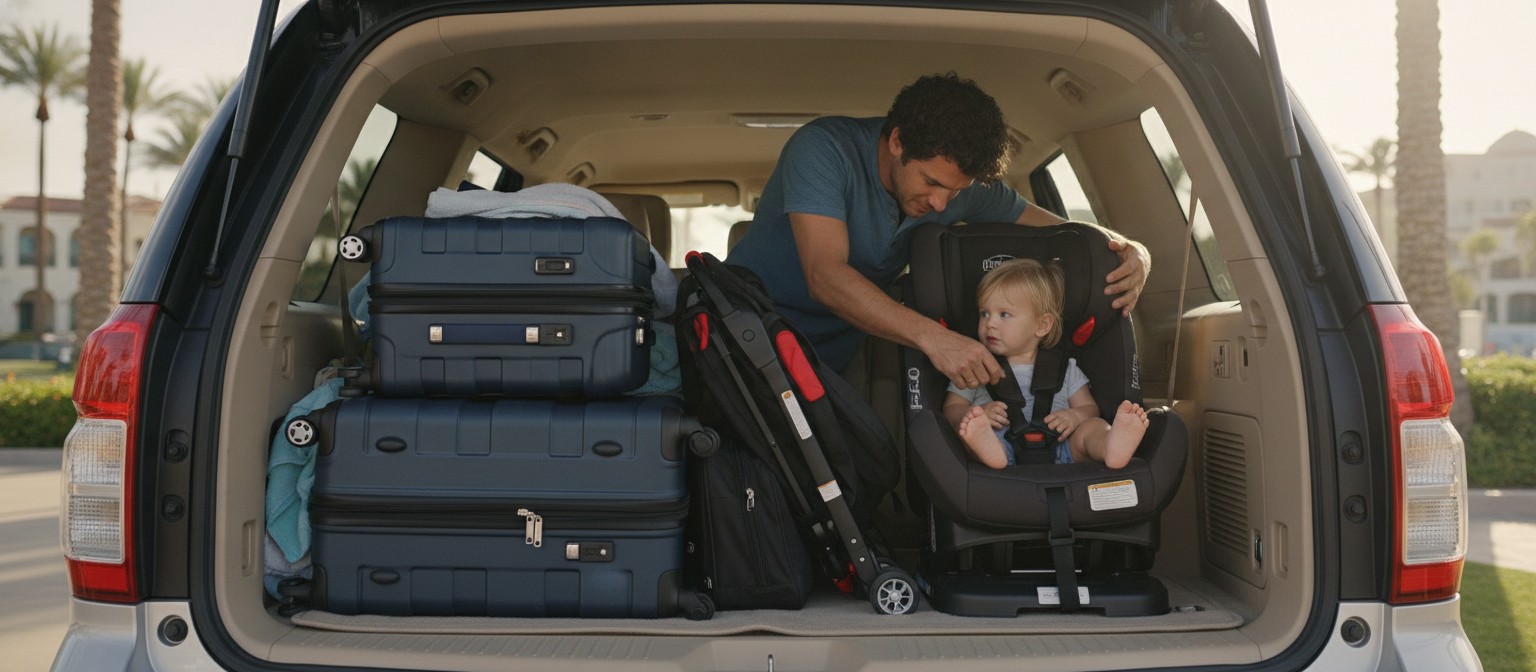
Passenger capacity is only one part of the decision. Count every person, including infants, then consider how much room is needed for bags and equipment.
- Small sedan: Often practical for a small group with limited luggage.
- SUV: May provide more flexibility for families carrying several suitcases, a stroller, or car seats.
- Passenger van: Can be a better fit for larger families, multigenerational groups, or travelers with substantial gear.
When a group is close to a vehicle’s listed limit, choosing more room can reduce stress. Ask whether the capacity estimate includes luggage space and whether the provider has room for every oversized item.
Plan for Child Safety
Discuss child-restraint needs before booking rather than assuming seats will be available. Confirm the number and type of car seats or booster seats required, who will install them, and whether the family prefers to bring its own equipment. Parents should also review applicable California child-passenger safety requirements before traveling.
For younger travelers, keep essentials within reach instead of packing them in the trunk. Diapers, wipes, medication, a change of clothes, water, and familiar snacks can make an unexpected wait more manageable. Explaining the pickup process beforehand also helps children know what to expect.
Count Luggage and Travel Gear
Luggage affects both vehicle choice and loading time. Create a quick list before reserving transportation, including checked bags, carry-ons, backpacks, strollers, car seats, mobility devices, and specialty equipment. Remember that the return trip from Anaheim may require more room if the family brings home souvenirs, gifts, or items purchased during the vacation.
Confirm Pickup Details in Advance
Clear pickup instructions are especially valuable after a long flight. Confirm the terminal, curb level, designated meeting area, driver or vehicle identification method, and the best phone number for day-of-travel communication. Save the provider’s contact information before leaving home, and review whether luggage assistance is part of the arrangement. A defined meeting point can prevent a family from walking between airport areas with tired children and rolling bags.
Build Realistic Time Buffers
Avoid planning around the shortest possible drive. Work backward from the desired airport arrival time, then include time for getting children ready, loading the vehicle, traffic, curb congestion, terminal walking, bag check, and security screening. Early-morning departures deserve extra attention because one forgotten passport, stuffed animal, or jacket can disrupt the entire schedule.
Prepare for Delays and Schedule Changes
Install the airline app, keep a portable charger available, and share the flight number when arranging an airport pickup. Ask in advance how an early arrival, delayed flight, or cancellation changes the transportation plan. Families can also review airline commitments for seating and certain airline-controlled disruptions through the airline customer service dashboard before they travel.
Compare Transportation Options
Personal Vehicle
Driving offers familiar surroundings and control over departure time, but families should consider parking costs, shuttle time, long walks, and the effort of driving home after a return flight.
Public Transportation, Taxi, or Rideshare
These options may work well for travelers with light luggage and flexible schedules. However, vehicle size, availability, transfer requirements, and child-seat arrangements can vary.
Pre-Booked Transportation
A reserved ride allows the family to communicate passenger count, luggage needs, timing, and pickup instructions in advance. Review the total price, cancellation terms, vehicle details, and child-safety options before confirming.
Family Airport Transportation Checklist
- Confirm the airport, terminal, flight number, and travel date.
- Count adults, children, bags, car seats, strollers, and oversized items.
- Choose a vehicle with appropriate seating and luggage capacity.
- Confirm pickup location, contact information, and child-seat needs.
- Review pricing, change policies, and delay procedures.
- Recheck every detail the day before travel.

Final Thoughts
Smoother family airport travel comes from preparation rather than luck. Match the vehicle to the group, leave room for luggage and delays, confirm the pickup plan, and keep essential items close at hand. With transportation organized as part of the Anaheim vacation plan, parents can spend less time solving travel problems and more time enjoying the trip.

