
MarinaTex is a bioplastic made from “fish offcuts” that was designed by University of Sussex graduate student Lucy Hughes. The “translucent and flexible sheet material” is a mixture of “organic fish waste ordinarily destined for landfill or incineration” and locally sourced red algae. It is ideal for disposable packaging items such as grocery bags and perishable food containers and can break down in home composts or food-waste bins within four to six weeks.
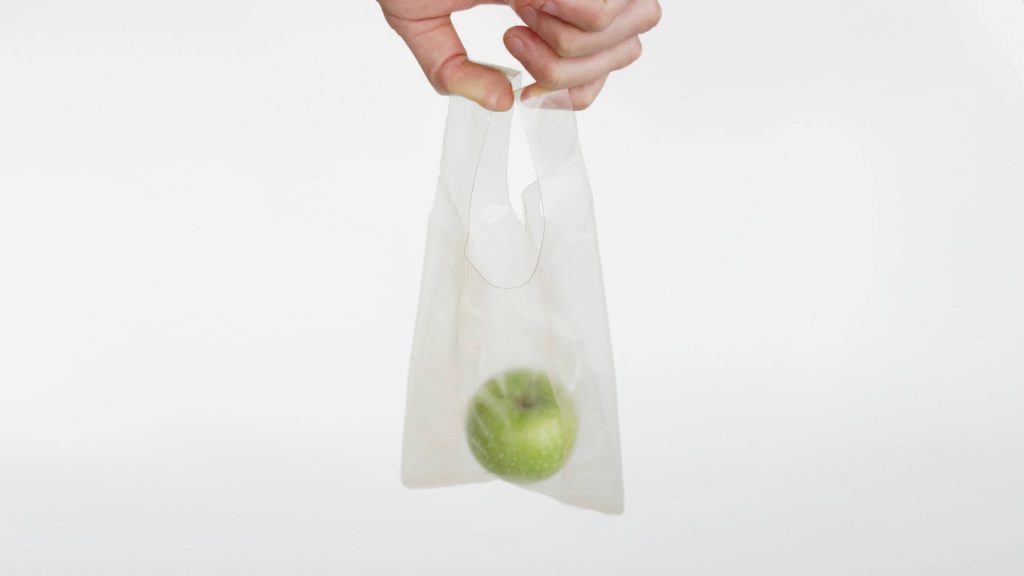
Hughes innovative use of fish waste to create a compostable alternative to single-use plastic has won her this year’s UK James Dyson Award. The annual prize recognizes top inventions from current and recent engineering and design graduates from around the world with a first-place prize of £2,000 and a spot in the international division of the competition, where there is a top prize of £30,000.
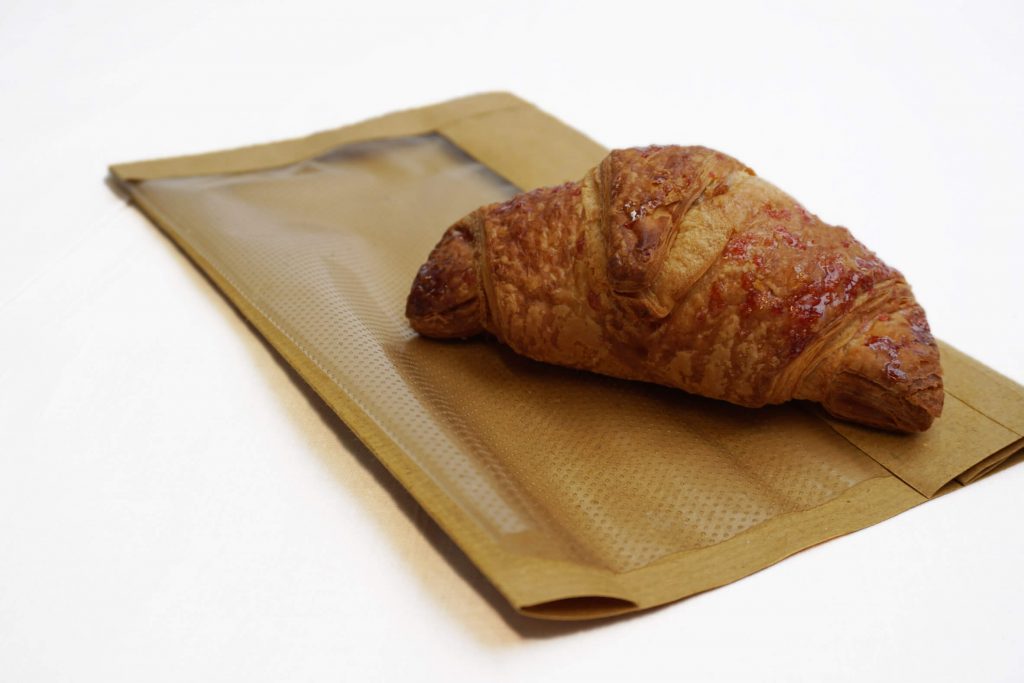
Hughes developed MarinaTex as her final-year project for the product design course she was enrolled in at University. What inspired her was the desire to create something that would have an environmental benefit. Noticing that lots of fish byproduct was just being thrown away, buried in a landfill or incinerated, she decided to focus on finding a way to turning the scales and skin into something useful.
Hughes said:
I didn’t want to use virgin natural materials so I challenged myself with starting with a waste stream. For me a good design is something that bridges the gap between behaviors, business and our planet.
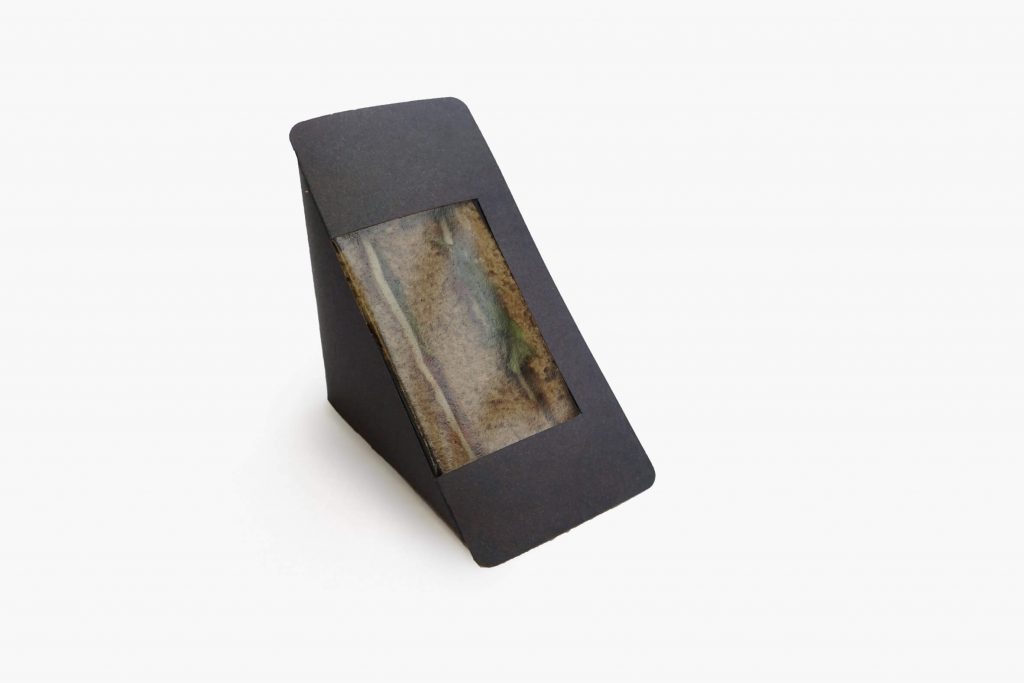
One big benefit of her bio-material is that it wouldn’t require the establishment of a separate waste collection infrastructure for its disposal like some current biodegradable plastics do. A second benefit is that it is low-energy to produce. A third benefit is that since it is based on waste, it wouldn’t strain the earth’s natural resources.
The UK alone produces nearly 500,000 tons of waste annually through fish processing, according to calculations by The UK Sea Fish Industry Authority. What’s most impressive about MarinaTex is that the waste from just one Atlantic cod is enough to produce 1,400 bags! Meaning, her product could be an eco-friendly and lucrative way of using up by-products that would otherwise be headed straight to the landfill.
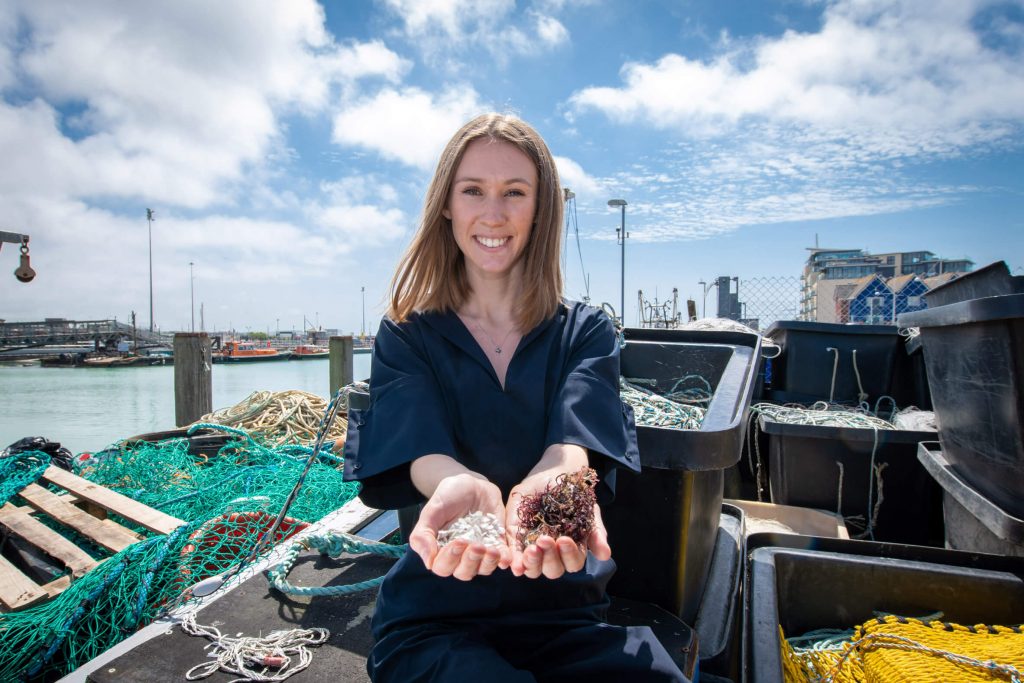
It took over 100 experiments to refine the bioplastic mixture that included an organic binding agent she found locally in the Sussex coastline – agar, a gelatinous substance obtained from the cell walls of some species of red algae. Most of the process was carried out on the kitchen stove in her student accommodation.
The final product boasts a higher tensile strength than LDPE (low-density polyethylene), which is the current most common material for plastic bags. “This shows that the sustainable option does not sacrifice quality,” Hughes said.


