
Most roofing bills run into the thousands when a storm finally forces the issue, and they almost never show up on the calendar. The roof was fine last spring. Then a hailstorm rolled through, a few shingles lifted, and suddenly you’re pricing repairs during the worst possible week of the year. Weather is now the loudest variable in home maintenance budgets, and roofs sit right underneath it.
Here’s the honest version: you can’t control the sky, but you can control how you plan around it. That means understanding which climate pressures hit your roof hardest, how those pressures translate into money, and what a sensible repair budget actually looks like before the damage report lands on your kitchen table.
If you’re already holding a quote, compare it against real local numbers for roof repair cost in Montgomery before you sign anything. Local pricing swings a lot, and knowing the range keeps you from overpaying in a panic.
Why Your Roof Repair Bill Keeps Drifting Upward
Most homeowners treat a repair bill as a one-time surprise. It isn’t. The cost of fixing a roof is really the sum of three things: the damage itself, the labor and materials needed to fix it, and the timing of when you call. Climate change is inflating all three at once, and it’s doing it slowly enough that you don’t notice until you’re writing the check.
According to the National Oceanic and Atmospheric Administration, extreme weather events have grown more frequent and more costly across the United States in recent decades. That trend doesn’t just affect coastlines. It affects inland cities with hot summers, sudden hail, and wind events that pry at every edge of your roof deck. The more of those events you live through, the more repair cycles your roof absorbs over its lifespan.
Arguably the single most underrated cost driver isn’t the storm. It’s the repair after the repair. A rushed patch in June becomes a full section replacement in October because the underlying decking was never dried out properly. Weather creates the wound. Sloppy sequencing makes it worse.
Heat, Hail, and Wind: The Three Pressures You Actually Feel
You don’t need a climate model to understand what’s happening to your roof. You need to know which forces are doing the damage and how each one shows up on an invoice.
Heat
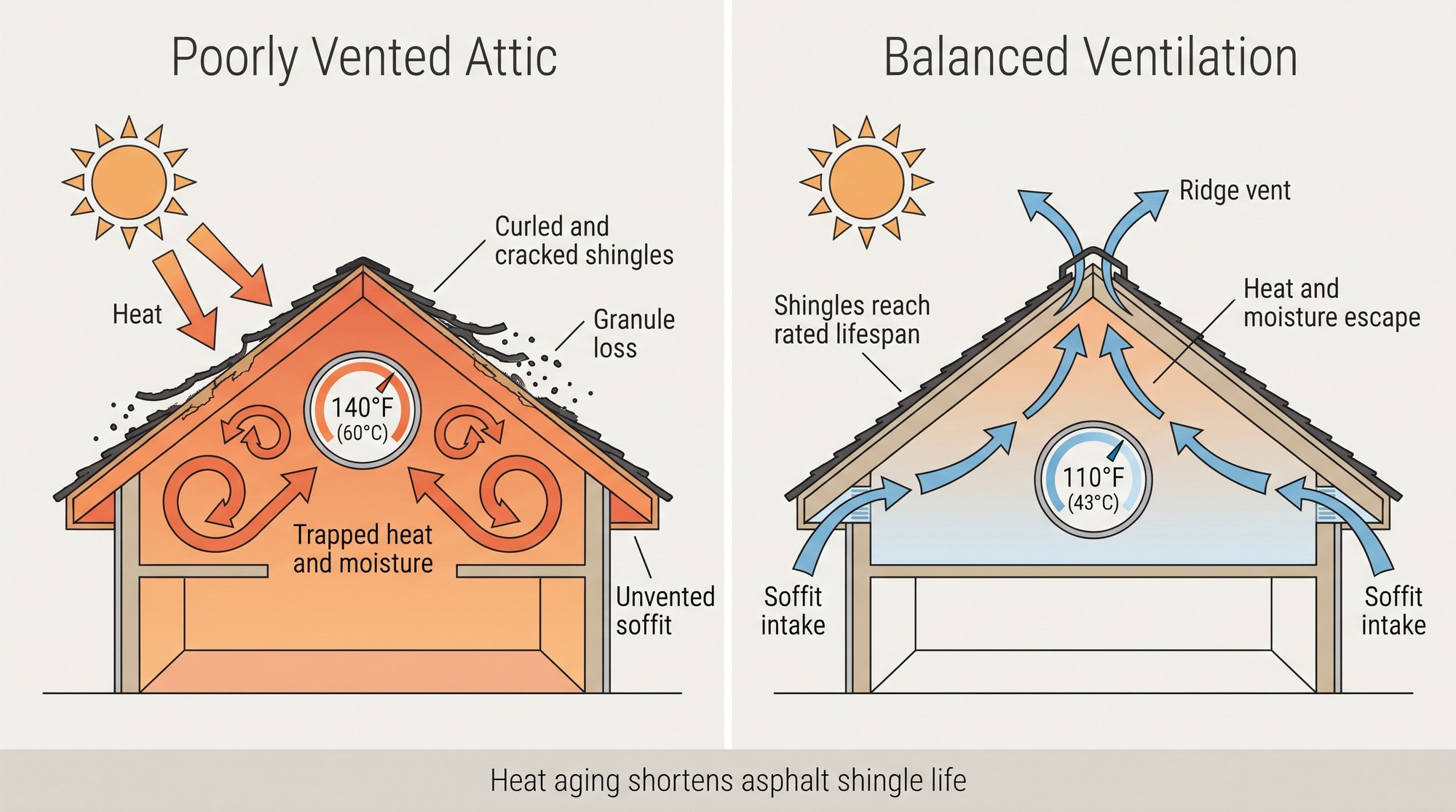
Long, hot stretches cook asphalt shingles and cause them to crack, curl, and lose their granules. Attic heat makes it worse. A poorly ventilated attic can hit temperatures that accelerate the aging process, which means a shingle rated for 20 years in mild conditions can fall years short of that label in a hot climate. Repair costs rise because the damage is spread across many small areas instead of one clean section.
Hail
Hail is the headline cost. It bruises shingles, dents metal, and creates leaks that don’t show up until the next heavy rain. You usually get one inspection window after a hail event before the damage spreads, so timing is everything.
Wind
Wind lifts shingles along the edges and ridges first. Once one shingle goes, the ones behind it take more load, and repairs snowball from a handful of pieces to an entire slope.
Here’s where the planning gets practical. The Environmental Protection Agency notes that resilient building practices and proper ventilation help structures withstand environmental stress over time. In plain terms: a roof that’s vented and maintained correctly takes less damage per event, which keeps your repair numbers lower for longer.
The Seasonal Repair Budget Framework
Budgets fail because people set one number for the year and hope nothing breaks. A better approach is to plan by season, so you’re never caught flat-footed. Call it the Four Quarter Roof Reserve, and it’s the simplest system for homeowners who don’t want to think about roofs until something leaks.
- Spring: set aside your baseline amount. This is the season for a routine inspection, and it’s the cheapest time to fix small issues before summer heat bakes them in.
- Summer: hold a buffer for heat-related wear. Curling shingles and attic heat damage tend to surface now, not in the spring.
- Fall: reserve the largest share for storm season. This is when hail and wind events do the most visible damage and when contractor demand spikes.
- Winter: keep a small emergency slice. Leaks show up late, often after the first hard freeze, and you don’t want to fund them by borrowing.
Nothing about this is scientific precision. It’s a rhythm that forces you to look at the roof four times a year instead of once, which is roughly three more times than most people do. That alone changes how much you spend, because small repairs caught early cost a fraction of the same problem caught late.
What the Money Actually Buys You
Repair pricing is not a mystery once you break it into pieces. Most of what you pay for falls into a few buckets, and knowing them helps you read a quote instead of just trusting it.
| Cost bucket | What drives it | How to keep it down |
|---|---|---|
| Materials | Shingle type, matching the existing roof, quantity needed | Fix small areas early so you don’t replace entire slopes |
| Labor | Roof pitch, access, height, number of layers to remove | Bundle minor repairs into one visit instead of three |
| Timing | Post storm demand, urgency, emergency callouts | Book inspections before the storm rush, not after |
| Hidden damage | Decking rot, water in insulation, flashing failure | Get moisture checked, not just the shingles |
The honest answer is that the “hidden damage” row is the one that wrecks budgets. Everything else you can estimate. Underneath the shingles, you’re guessing until someone opens it up. Pay for the inspection that tells you the truth, even if it costs a little, because the alternative is finding out by surprise.
A Checklist You Can Run Before Calling Anyone
You can do a lot of the early diagnosis yourself, and it makes the contractor conversation shorter and cheaper. Walk your property after any significant weather and look for these:
- Shingles on the lawn, driveway, or in the gutters
- Cracked, curled, or granule-bare shingles on visible slopes
- Dark spots or discoloration on attic ceilings and walls
- Daylight showing through the roof deck from inside the attic
- Gutters draining grit or shingle fragments after rain
Write down what you find and photograph it. A contractor who sees organized notes can quote faster, and you can compare quotes more fairly. When you’re assessing broader environmental forces on your home and neighborhood, data from the Government Accountability Office on how climate risk affects housing and infrastructure is a useful reference for understanding why these costs keep shifting.
When to Repair and When to Plan for Replacement
Climate pressure accelerates the repair versus replace decision. A roof that took one hail hit a decade ago might be perfectly repairable today. A roof that’s taken four hits, in a hot climate, with a poorly vented attic, is probably on borrowed time. If your repair estimate starts approaching a meaningful fraction of replacement cost, it’s worth asking the harder question now rather than after the next storm answers it for you.

Bundling is your friend. If you need shingles fixed, gutters cleared, and flashing checked, do them in one scheduled visit and one invoice. That’s the single easiest way to cut a repair bill without cutting corners. Homeowners planning for the long haul can also weigh roofing upgrades that keep maintenance costs manageable, since durable materials and balanced attic airflow reduce how often weather turns into an invoice.
The Takeaway
Your roof repair budget isn’t really about roofs. It’s about weather, timing, and catching small problems before they get expensive. Plan by season, inspect four times a year, know your local cost range, and ask the uncomfortable questions about hidden damage before you sign. The storms won’t check your calendar. Your budget can be ready anyway.
Frequently Asked Questions
How often should you inspect a roof?
A seasonal walkaround four times a year, plus a professional inspection after any hail or high wind event, catches most problems while they are still small. Ventilated and maintained roofs take less damage per storm, so regular checks stretch the time between repairs and keep repair cycles from stacking up.
Does attic ventilation really affect roof lifespan?
Yes. Trapped attic heat bakes asphalt shingles from underneath, speeding up granule loss, cracking, and curling. Balanced intake and exhaust airflow moves that heat and moisture outdoors, which helps a shingle reach something closer to its rated service life instead of aging years ahead of schedule.


