
Your roof took a direct hit last week, and you still haven’t looked up. That’s the part that costs people in Atlanta the most, and it’s almost never the hail itself. It’s the four to six weeks of silence between the storm and the first real inspection, when a bruised shingle quietly turns into a soaked deck.
I get it. Nobody wants to climb a ladder, and nobody wants a contractor knocking on the door with a clipboard and a flattering smile. But the longer you wait, the more the roof becomes someone else’s problem to price. A proper storm assessment, the kind that documents actual impact marks and not just “wind damage,” is what separates a straightforward repair from a full tear-off and a fight with your insurer.
If you’ve spent the last week squinting at your ceiling and telling yourself it’s probably fine, that’s your sign to get eyes up there. Homeowners who plan ahead and call hail damage roof repair in Atlanta early tend to catch small problems before they snowball into decking replacement. This guide covers what hail actually does to a roof, how to spot it without climbing, and how to think about materials that hold up to the next round.
What hail actually does to a roof (and why Atlanta gets hit so often)
Atlanta sits in a corridor that funnels spring and summer thunderstorms straight up from the Gulf, which means hail isn’t a novelty around here. According to the National Oceanic and Atmospheric Administration, severe thunderstorms are defined in part by hail an inch or larger in diameter, and those storms are a routine feature of the Southeast’s warm season.
So the real question isn’t whether hail will hit your roof. It’s what happens when it does.
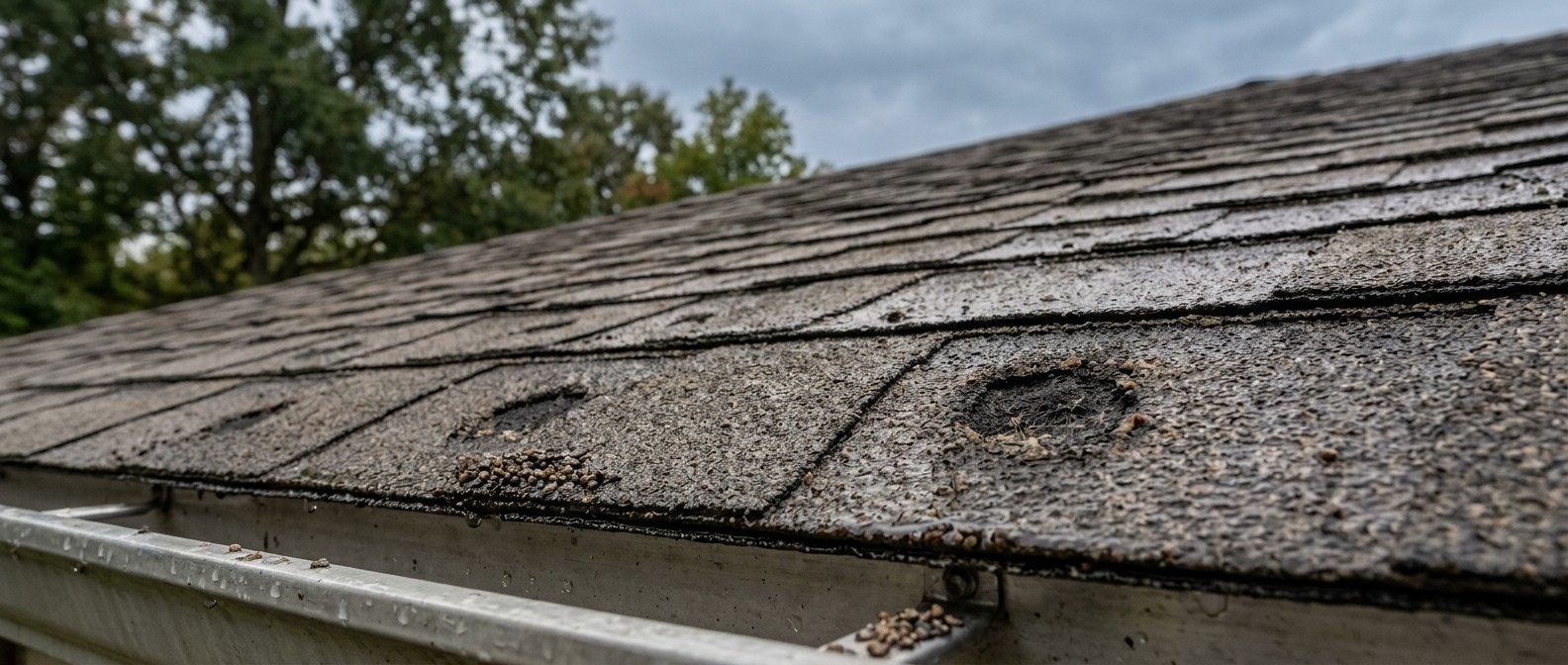
On asphalt shingles, hail knocks away the granules that shield the asphalt from sunlight. A strike leaves a soft spot, sometimes with exposed mat underneath, and that spot becomes a place where water seeps in and the shingle ages twice as fast. On metal roofing, the dent is mostly cosmetic, though it can loosen fasteners and create a spot where moisture collects. On tile, a cracked tile invites water into the underlayment. Each material fails differently, and each one calls for a different repair approach. A single-minded roofer who only works in shingles will look at a metal roof and shrug. Get someone who knows the specific material on your house.
How to check for hail damage without climbing a ladder
You don’t need to risk your neck. You need to know where to look.
- Downspouts and gutter guards: Hail knocks granules off shingles and sends them into gutters. A sudden accumulation of dark grit in your gutters or downspouts is a strong signal.
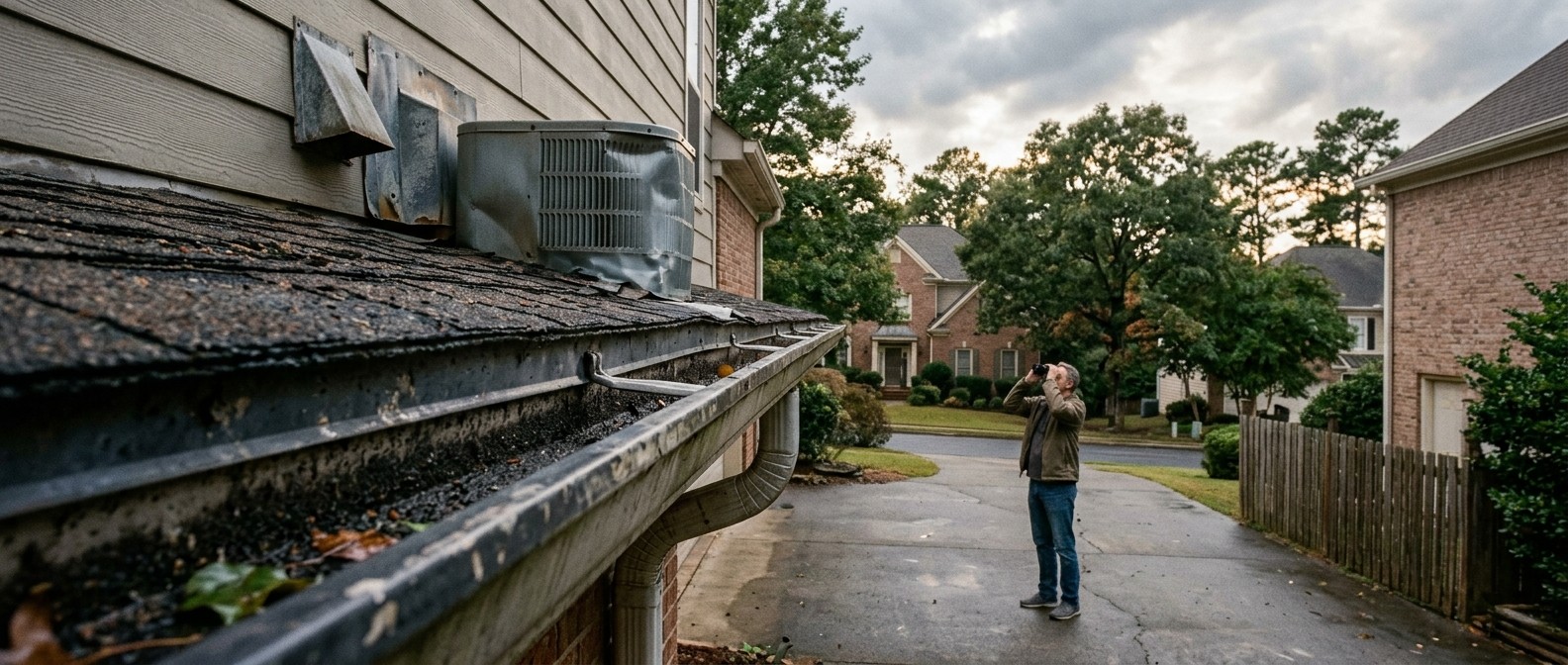
- Metal surfaces: Look at your AC unit, vents, and the metal flashing around chimneys. Dents and dings there are a good proxy for what hit the roof.
- Ceiling stains after the next rain: Brown rings and dark streaks mean water is already inside.
- Shingles from the ground: Use binoculars from a safe spot. Look for dark, soft-looking spots, splitting, or shingles that look like someone scraped the top off.
One afternoon of looking can tell you whether you have a case for a repair, a claim, or just another few months of peace of mind. Do that part before you invite anyone onto the roof. It keeps the conversation honest.
The inspection-and-documentation framework I’d actually use
Here’s the mental checklist I’ve come to rely on, and it’s worth writing down before anyone shows up. I call it the Four Corners test, and it exists because most homeowners get talked into a full replacement without anyone having proven the damage is widespread.
- Corner 1: Coverage. Is the damaged area visible from more than one side of the roof? If you have to squint to find it, it’s a repair, not a replacement.
- Corner 2: Concentration. Are the hail marks concentrated in one band or scattered evenly across the whole slope? Concentrated damage usually comes from wind-blown hail, and it’s very often repairable.
- Corner 3: Condition. How old is the shingle? A ten-year-old shingle with a few bruises is a patch job. A twenty-five-year-old shingle with the same bruises is a candidate for tear-off.
- Corner 4: Consequence. Is water actively getting through? A soft spot with no leak is a ticking clock. A soft spot with a ceiling stain is a repair you should not put off until the weekend.
Run through those four questions with whoever inspects the roof, and you’ll spot the difference between a fair estimate and a sales pitch. The moment an inspector starts talking about a full replacement without showing you photos of every damaged slope, you’ve found your answer.
What documented storm damage does to your insurance claim?
A storm claim lives and dies on documentation. Photographs of the damage, a written estimate, and a clear record of when the storm hit make the process far smoother than a story told from memory three months later, and a checklist for documenting storm damage helps keep those records in one place.
The U.S. Government Accountability Office has reported that homeowners often do not clearly understand what their policy includes and excludes until after an event occurs, which is exactly why you want everything in writing before work begins. Keep your photos, keep the written estimate, and keep the contractor’s notes in one folder.
One more thing that’s easy to forget: ask the contractor to document the damage to the roof decking and underlayment, not just the shingles. If the deck is wet underneath, that’s a different claim than surface scuffs, and it’s the kind of detail that gets missed when somebody just eyeballs the top layer.
Choosing materials that can take the next hit
Here’s where I’ll take a side. If you’re replacing shingles anyway, spend a little more on impact-rated options and don’t overthink it. Asphalt shingles with a heavier granule base, or a decent standing-seam metal roof, both handle hail far better than the standard builder-grade shingle that’s probably on your house right now.
The Insurance Institute for Business & Home Safety has done years of testing on how roofs respond to hail, wind, and impact, and the short version is that the roof’s performance depends heavily on the quality of the material and installation under it. Cheap shingles, poor fastening, and skipped underlayment are the reasons hail damage becomes catastrophic on one house and minor on the neighbor’s. Whichever way you go, ask about the underlayment and the nailing pattern. That’s the part no homeowner sees and every homeowner pays for later.
Where to go from here
Nine times out of ten, the homeowner who handles hail damage well isn’t the one who acted fastest. They’re the one who looked before they called, documented before they signed, and asked about the deck and the underlayment before anyone touched the shingles.
So here’s your next move. Go outside with a flashlight. Look at the gutters, the AC unit, and the metal flashing. If you see grit or dents, get a real inspection and ask about the Four Corners. If you don’t, you’ve got a quiet afternoon and a roof that’s probably fine.
What would you rather do next spring: spend a weekend with a contractor on your roof, or spend it knowing the roof is handled?


