
Power grids face a fundamental physical constraint: electricity must be generated and consumed at the exact same moment, or stored in heavy infrastructure before excess supply goes to waste. To build out that buffer at utility scale, the New York State Energy Research and Development Authority (NYSERDA) has opened its second competitive solicitation for approximately one gigawatt of bulk energy storage. Announced on November 12, 2026, this procurement round is a contract solicitation rather than already built capacity, inviting developers to bid on grid-scale storage projects that will help the state reach its goal of deploying six gigawatts of energy storage by 2030.
Rather than paying developers upfront to build hardware and hoping the systems perform as promised, New York uses a specialized contracting mechanism designed around operational reliability, fire safety verification, and ratepayer protection. Understanding how this second gigawatt-scale buy works shows how state grid planners translate climate targets into bankable utility contracts.
What New York Just Put Out to Bid
Administered through NYSERDA’s Bulk Energy Storage Program, the new solicitation targets utility-scale systems capable of absorbing low-cost power and discharging it back into the transmission and distribution network during high-demand periods. In New York’s program categories as noted in trade coverage of the solicitation, bulk energy storage refers to utility-scale resources with a power output of 5 megawatts (MW) or above, distinct from smaller residential systems and distributed commercial or community-scale retail installations.
The procurement is open to a range of eligible energy storage technologies rather than mandating a single battery chemistry. This round represents the second step in a planned sequence of at least three annual solicitations aimed at procuring three gigawatts of bulk energy storage, advancing Governor Kathy Hochul’s Clean, Highly Affordable, Reliable Grid Expansion (CHARGE) agenda.
Without large-scale storage, grid operators often have to curtail wind and solar generation when supply outpaces local transmission capacity, only to fire up expensive fossil-fuel power plants hours later when evening demand spikes. That dynamic helps explain why utility-scale solar-plus-storage projects are gaining momentum across the United States as grid planners seek to capture clean generation and dispatch it on schedule.
NYSERDA President and CEO Doreen M. Harris said, “Today’s Bulk Energy Storage solicitation is another example of Governor Hochul’s commitment to meeting New York’s growing clean energy demand by putting affordability and reliability front and center. Energy storage reserves power when it is less expensive so that we can limit reliance on the most expensive power during peak hours – reducing the strain on our grid and delivering real cost savings to New Yorkers.”
How the Index Storage Credit Works
Financing a multi-million-dollar grid storage facility carries revenue risk because wholesale electricity and capacity market prices fluctuate from year to year. To make large projects financeable while shielding consumers from underperforming assets, NYSERDA’s Bulk Energy Storage Program uses the Index Storage Credit (ISC) incentive mechanism. As detailed in trade coverage of the solicitation documents, each ISC represents 1 MWh of energy storage capacity that is operational and available for discharge on a given day, a design meant to reward availability and performance rather than nameplate capacity alone.
Authorized by the New York State Public Service Commission’s 2024 Energy Storage Order, the ISC is modeled in part after the Renewable Energy Certificate (REC) and Offshore Wind Renewable Energy Credit (OREC) frameworks used in other NYSERDA clean energy procurements. The mechanism stabilizes project revenues so developers can secure private capital, while tying state incentive payouts strictly to verified physical delivery. As the trade press explains the design, developers and NYSERDA agree a strike price based on developer expectations and NYSERDA value modelling: profits above the strike price are returned, and shortfalls below it are kept, giving developers upside while protecting ratepayers from high costs.
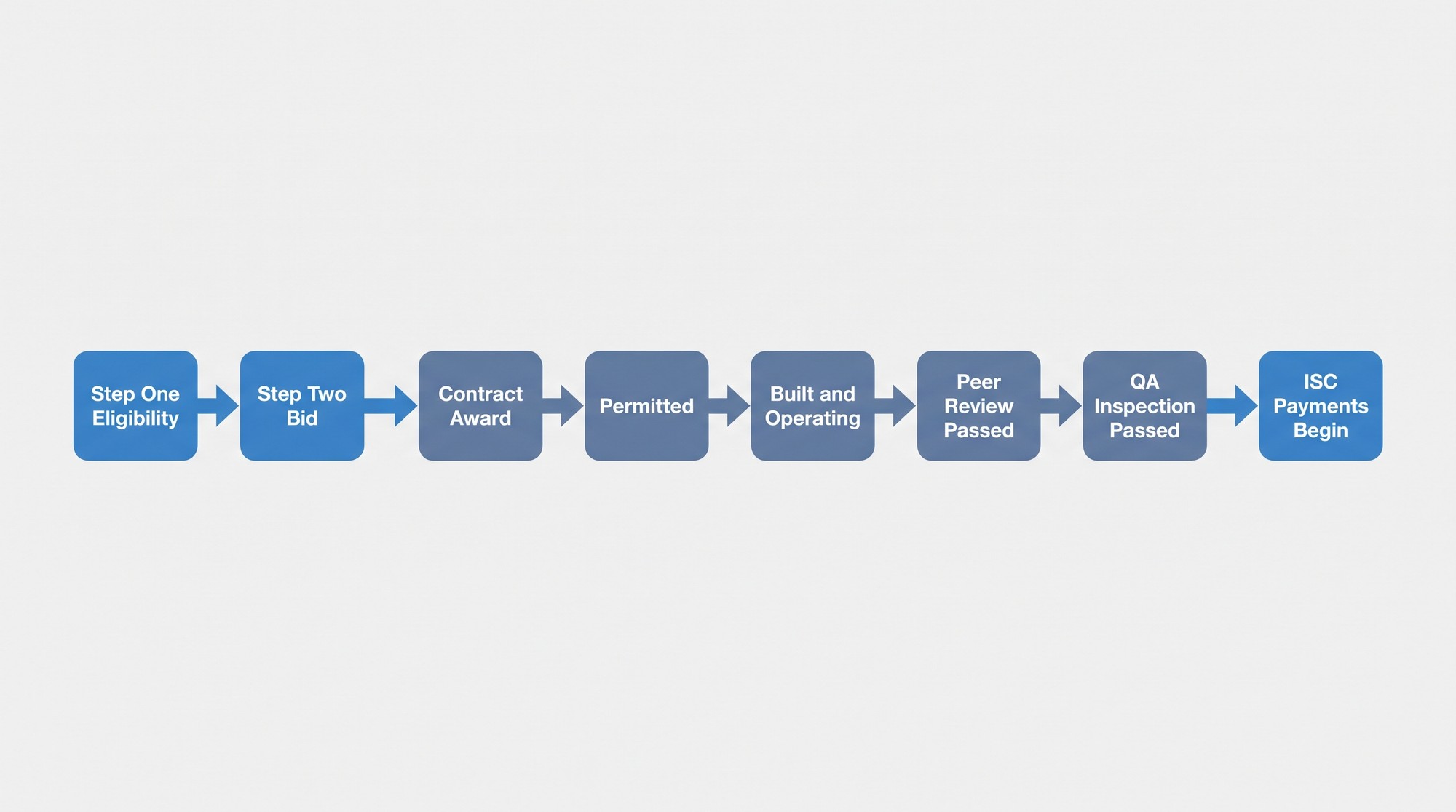
Crucially, winning a bid in this solicitation does not trigger an immediate payout. NYSERDA will not pay out any Index Storage Credits until awarded and contracted projects have met four distinct operational gates:
- Full permitting: The developer must secure all required local and state permits and regulatory approvals.
- Physical installation and operation: The facility must be fully built, interconnected to the grid, and commercially operating.
- Peer review process: The project must pass an independent technical peer review verifying its design and safety systems.
- Quality assurance inspection: The completed installation must pass a formal quality assurance inspection before payments begin.
That structure addresses a New York-specific revenue problem the trade press calls “missing money.” Regional grid operator NYISO sees far less electricity price volatility than markets like ERCOT in Texas, leaving much smaller buy-low, sell-high spreads for storage assets. The strike-price design is meant to make projects bankable despite those thin spreads. The deeper history: the state’s first storage roadmap in 2018 successfully moved residential and retail deployment but struggled to get utility-scale projects built, which is why the 2022 roadmap created the dedicated bulk track.
Two Steps and a December Deadline
Rather than dumping every developer straight into a complex pricing auction, NYSERDA structures the procurement as a two-stage technical and financial filter. This prevents immature concepts from clogging the final evaluation while giving qualified project teams a clear runway.
- Step One Eligibility Applications (Due December 15, 2026 at 3:00 p.m. ET): Proposers must submit initial eligibility packets demonstrating that their projects meet threshold program criteria.
- Step Two Bid Proposals (By invitation only): Only proposers whose projects are deemed eligible in Step One are invited by NYSERDA to submit full Step Two bid proposals for competitive project evaluation.
- Safety and manual compliance: All project proposals must include concrete plans to comply with New York’s updated safety and security requirements as well as all Bulk Energy Storage Program Manual standards.
Trade coverage of the solicitation guidelines by TaiyangNews also notes a duration-based technology readiness rule designed to balance rapid deployment with long-duration storage maturity: projects offering less than eight hours of storage duration must use technology that is already commercially deployed and grid-connected, whereas projects designed for eight hours or longer must demonstrate technology readiness, including evidence of an operational installation of at least 1 MW AC using identical or nearly identical technology (lithium-ion projects at that duration are exempt from separate readiness evidence).
Where This Fits on the Road to 6 GW
The November 2026 solicitation is a critical building block in New York’s 2022 Energy Storage Roadmap, which established a statewide target of deploying 6,000 MW (6 GW) of energy storage by 2030. That goal doubled the earlier 3 GW target set under the Climate Leadership and Community Protection Act, a history the trade press traces to Governor Hochul’s early-2022 State of the State Address. To reach that 6 GW cumulative total from existing baselines, the roadmap recommended procuring 4,700 MW of incremental storage capacity split across three distinct market segments, with bulk transmission-connected and large distribution-connected systems doing the heaviest lifting.
| Program Segment / Solicitation Metric | Capacity and Scale | Key Rules, Geography and Status |
|---|---|---|
| 2030 Statewide Energy Storage Goal | 6,000 MW (6 GW) total deployed | Overarching target under New York’s 2022 Energy Storage Roadmap |
| Incremental Roadmap Allocation (4,700 MW) | 3,000 MW Bulk (5 MW+) 1,500 MW Commercial / Community Retail 200 MW New Residential |
At least 35% of NYSERDA-supported off-site retail and bulk projects planned downstate near disadvantaged communities |
| Round 1 Bulk Solicitation (ISCRFP25-1) | 950 MW contracted across 8 projects (from 46 eligible bids totaling approx. 6 GW / 30 GWh) | Issued July 28, 2025; awards announced September 23, 2026 across NYC, Long Island, Hudson Valley, and Western NY; planned operational before end of 2030 |
| Round 2 Bulk Solicitation (Current Round) | Approx. 1,000 MW (1 GW) target procurement | Announced November 12, 2026; Step One deadline as above; ISC paid only after operation (see How the Index Storage Credit Works) |
From that pool, NYSERDA contracted eight projects totaling 950 MW, detailed above.
A note on round-one figures: contemporaneous trade reporting put the inaugural selection at 719 MW against the annual 1 GW target, while NYSERDA’s later contracting announcements state eight projects totaling 950 MW once operational. The figures reflect different stages (selection versus contracting), so this article uses NYSERDA’s contracted 950 MW as the authoritative round-one result.
Announced on September 23, 2026 alongside 13 large-scale renewable energy awards that brought total combined clean energy procurement to 1.7 GW, over 1,000 jobs, and $3.7 billion in private investment, those eight first-round bulk storage projects span from New York City and Long Island to the Hudson Valley and Western New York. Once permitted, built, and operational before the end of 2030, the eight storage facilities alone are expected to spur over $1.6 billion in private investment, create more than 500 jobs, and deliver over $90 million in commitments to underserved communities.
Safety, Siting, and Who Benefits
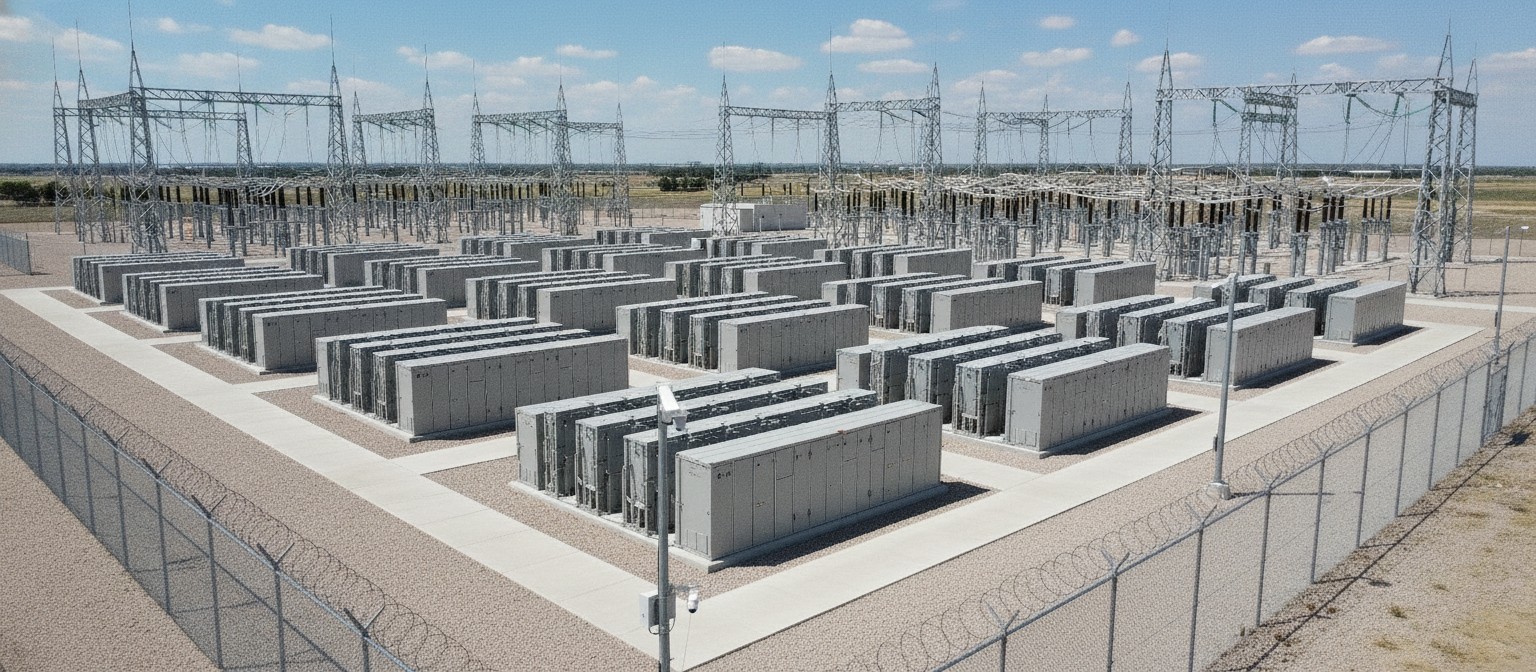
Placing hundreds of megawatts of dense energy storage near population centers requires strict physical and operational safeguards. Every NYSERDA-supported storage project is contractually required to meet updated energy storage safety codes that rank among the most stringent in the nation. Those requirements incorporate the recommendations of the New York State Inter-Agency Fire Safety Working Group, which Governor Hochul convened in 2023 to evaluate fire safety standards, emergency response training, and system inspection protocols.
To prevent local permitting bottlenecks and help municipalities evaluate projects fairly, NYSERDA’s siting team works directly with local governments across the state, offering model local laws and technical clean energy siting resources. Meanwhile, the State Fire Administrator’s office supports first-responder training aligned with the updated fire code requirements.
Where these bulk storage units connect to the grid matters just as much as how they are built. Under the state roadmap, at least 35 percent of off-site retail and bulk storage projects supported by NYSERDA are planned for downstate regions. Concentrating storage capacity in downstate load pockets directly benefits disadvantaged communities by reducing reliance on aging fossil-fuel “peaker” plants that fire up on hot summer afternoons and emit localized air pollutants. By absorbing excess renewable electricity during off-peak hours and injecting it directly into congested downstate zones during peak demand, bulk storage also helps grid operators extract more capacity from existing power lines and reduce the need for costly new transmission corridors.
What Happens Next
For energy storage developers and grid investors, the immediate milestone is the Step One eligibility deadline on December 15, 2026 at 3:00 p.m. ET. After NYSERDA screens those initial submissions for technical and program compliance, qualified proposers will receive invitations to enter Step Two and submit binding competitive Index Storage Credit bids.
Winning round two still means clearing the same path round-one winners face: local siting, environmental permitting, construction, and the four operational gates above before the first Index Storage Credit payment. With 950 MW contracted in round one and approximately 1,000 MW now out to bid, at least one additional annual bulk solicitation will follow to complete the 3,000 MW bulk ladder toward New York’s 2030 grid storage target.

