
After writing about the nearly $1 billion that the US government held back from spending on renewable energies, it’s nice to hear that there is an ongoing increase in industrial-scale batteries being added to solar farms. Power and utility companies along with fund managers and tech companies have all been making financial contributions to back “solar-plus-storage” projects.
This makes a lot of sense, what’s the point of generating a lot of wind and solar energy if there is nowhere to store it? Last year California discarded nearly 1m megawatt-hours worth of energy because they had nowhere to deliver it and not enough storage capacity.
Now investor-owned utilities will be required to have 1,325 megawatts (MW) of storage by the end of the year. They are also looking to add another 3,400MW of solar-plus-storage down the road. The municipal utility in Los Angeles also recently agreed to purchase electricity from Swiss-based fund manager Capital Dynamics.
John Breckenridge, Head of Energy Infrastructure at Capital Dynamics commented as reported by Financial Times:
There has been a massive shift. A 20MW system a couple of years ago would have been a huge system. Now, that’s changed.
The battery market in the US is expected to double this year to around 4,800MW and surpass 32,000MW by 2025, which would be enough to power for 26 million homes.
Currently, there is still a tax credit given in the US, and this includes batteries that are installed with renewables.
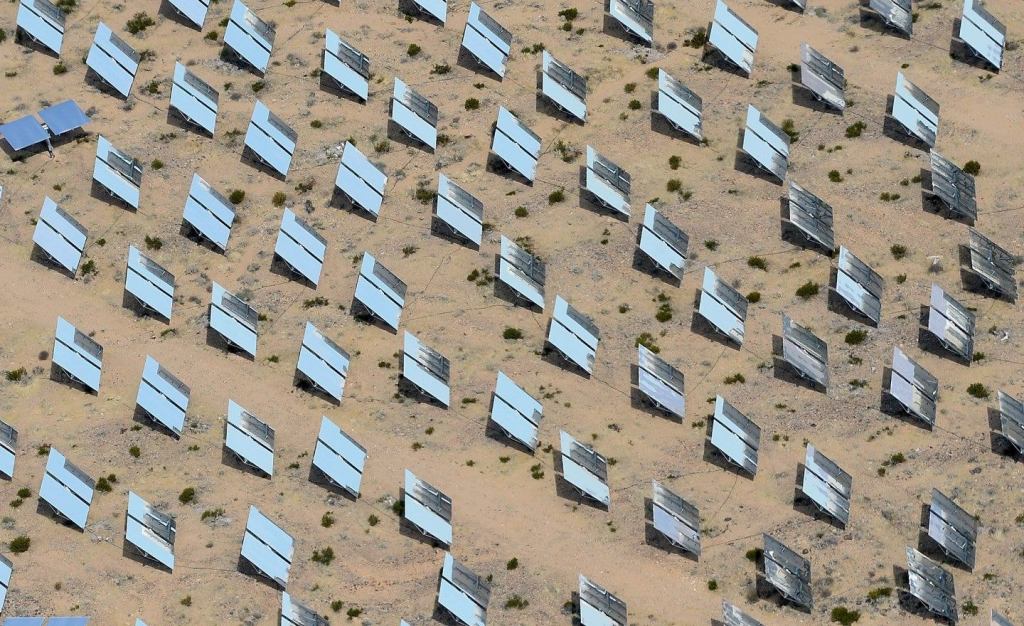
More companies are starting to jump on board and plan solar-plus-storage projects of their own. Tennessee Valley Authority (TVA) announced last week it’s plans for a 200-megawatt solar plant with a 50-megawatt-hour battery system. This will increase their shares of solar generation by 44 percent.
TVA also has a new integrated resource plan (IRP) that will add between 1,500 and 8,000 megawatts of solar by 2028 to go with 2,400 megawatts of battery storage.
In Nevada, they have plans to build a $1 billion solar farm called Gemini that will provide energy to Nevada’s largest public utility, NV Energy. The 7,100-acre solar farm will stretch along interstate 15, 30 miles northeast of Las Vegas and generate 690MW of power.
Also in Nevada, Google and NV Energy are waiting for government approval for a new data center that will provide 350MW of solar and 280MW of battery storage.
Florida’s Florida Power & Light Company (FPL), a subsidiary of NextEra Energy, plans on having the world’s largest solar-powered battery in 2021, with a 409MW capacity. FPL President and CEO Eric Silagy commented:
Replacing a large, aging fossil fuel plant with a mega battery that’s adjacent to a large solar plant is another world-first accomplishment and while I’m very pleased of that fact, what I’m most proud of is that our team remained committed to developing this clean energy breakthrough while saving customers money and keeping their bills among the lowest in the nation.
With more of these projects taking place, this will continue to drop the price of renewable energies so we no longer need to rely on carbon-emitting fossil fuel companies. The US Energy Information Administration said hydroelectricity, wind, and solar will account for around 20 percent of the US electricity this year. This market is still very much untapped, when large companies like TVA and FPL get involved in renewables that 20% could go up in a hurry.


